Meaning at a glance
Emerald is the accepted modern birthstone for May; documented museum and gemological sources describe its long use and evolving role in birthstone lists, while modern guidance focuses on rich green color, inclusive clarity expectations, common oiling treatments that must be disclosed, protective settings for daily wear, and gentle cleaning.
What the historical evidence shows (where it comes from)
The role of emerald as a valuable green gemstone is documented in museum and gemological records rather than in a single unbroken cultural tradition. The Gemological Institute of America (GIA) places emerald in the history of birthstone lists and explains that the idea of assigning gems to months evolved over centuries and changed across regions and periods. The GIA museum exhibit and GIA’s birthstone guides summarize how those lists were revised, reinterpreted, and standardized into the modern lists many jewelers use today.
Archaeological and historical evidence collected and interpreted by museum and gemological authorities shows that people in ancient civilizations valued green stones, including emeralds, as gems and ornaments. The GIA notes use of emeralds in antiquity and traces how European, Middle Eastern, and South Asian gem traditions contributed to the shifting significance of particular gems through the Middle Ages and into modern commercial lists. These institutional sources are the basis for saying that emeralds have long been treasured and later became associated with the month of May in modern birthstone systems.
Documented historical meanings versus modern personal interpretations
Documented historical meanings recorded by museum and gemological sources are usually descriptive: emeralds were prized for their color and rarity and served as status objects, religious or courtly adornments, and trade goods. Institutional summaries focus on who used emeralds, where they were sourced, and how their importance shifted, rather than attributing a single symbolic meaning across cultures.
Modern associations—such as linking emeralds with renewal, growth, or love—are common in contemporary marketing and personal interpretation, but they are not universal or documented as ancient beliefs by the cited museum and gemological sources. When assigning meaning to an emerald gift today, treat symbolic claims as modern, culturally specific interpretations rather than as universal historical facts.
Color, clarity, and common treatments — what to look for
Color is the primary value factor for emeralds: deeper, vivid green or bluish-green hues typically command higher prices. The GIA emphasizes that color is central to an emerald’s appeal, and that buyers should prioritize the hue and saturation that they find most attractive within their budget.
Unlike many other gems, emeralds commonly contain noticeable inclusions and fractures. The GIA explains that these internal features are characteristic of emeralds and are part of how gemologists identify and evaluate the stone. Because eye-visible inclusions are common, an emerald that is eye-clean is rare and more valuable.
Emeralds are also commonly treated. The GIA discusses the long-standing practice of filling surface-reaching fissures with oils or resins to improve apparent clarity and stability. The Federal Trade Commission (FTC) requires that sellers disclose these treatments and that laboratories and merchants be transparent about whether a stone is natural, treated, lab-grown, or an imitation. Ask for treatment disclosure in writing and, for significant purchases, a gemological report that describes treatments and whether the emerald is natural or lab-grown.
How the emerald motif and the gemstone appear in jewelry
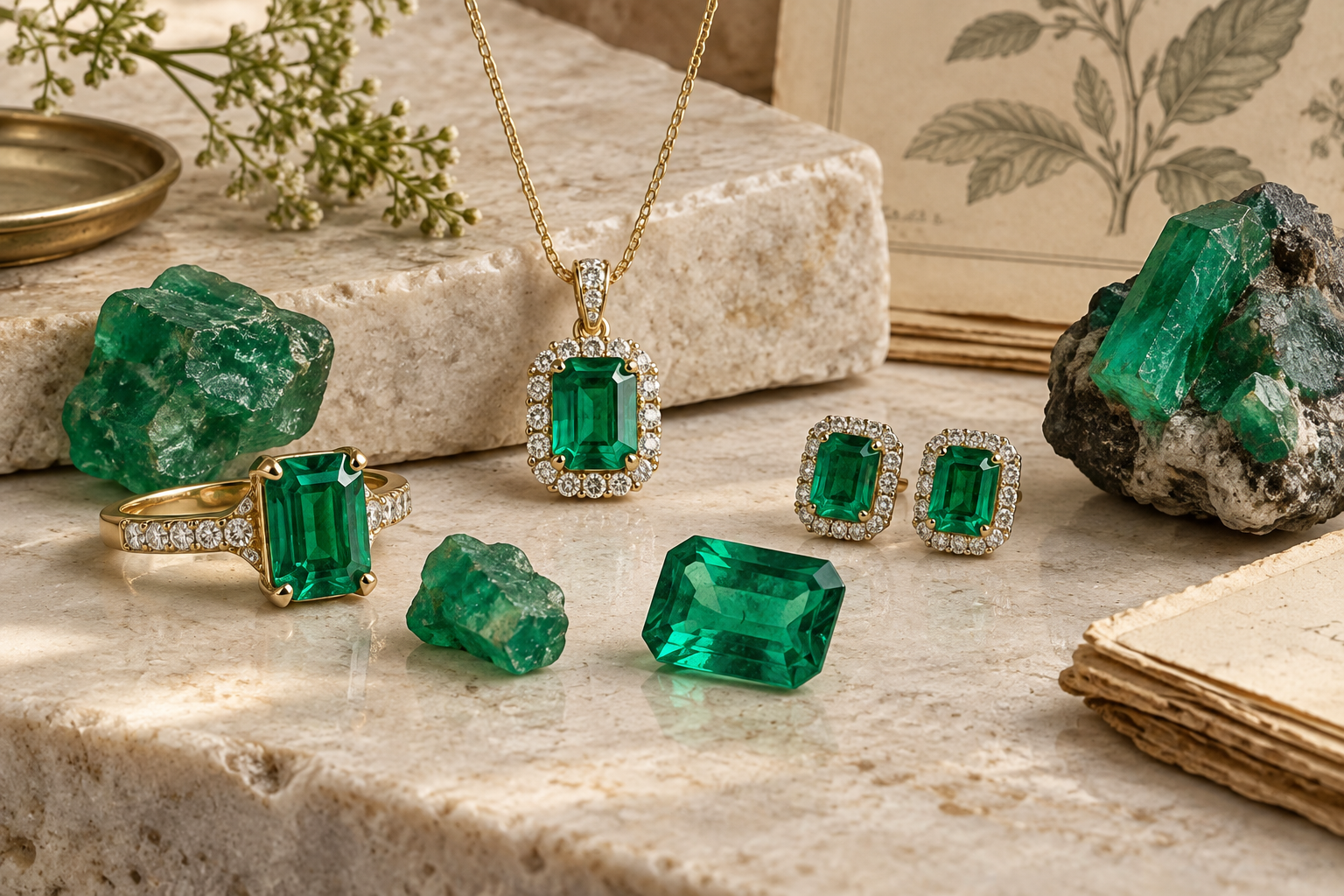
Emeralds appear in a wide range of jewelry forms: as center stones in rings, as paired or clustered stones in earrings and pendants, as accents in multi-gem designs, and as beads or carved elements in historical and contemporary pieces. Jewelers often choose settings that protect the stone’s edges where inclusions can reach the surface; bezel settings, halo settings with protective prongs, and low-profile mounts are common practical choices for rings worn daily.
Designs vary by taste and function. Larger emeralds often headline dress or statement pieces where their color can be admired, while smaller, more affordable emeralds are used as accents or in mixed-gem compositions. Because clarity and color trade-offs affect price, designers sometimes use a halo of smaller diamonds to enhance the perceived color and brilliance of the emerald while also offering additional protection to its setting.
Practical, respectful selection and gifting guidance
When choosing an emerald as a May birthstone gift, first decide how the recipient will wear the piece. For an item intended for everyday wear—especially rings—prioritize durability and choose a protective setting rather than a fragile solitaire with high exposed edges. For pendants and earrings that see less impact, you can be bolder with cut and height.
Set your quality priorities. If color is most important, look for the richest green you can afford and accept that the stone may have visible inclusions. If you prefer clarity, be ready to pay a premium for eye-clean stones or choose a smaller size. For anyone who values ethical sourcing or treatment transparency, request written disclosure from the seller about treatments, origin information, and whether the stone is natural or lab-grown.
Gifting considerations: state your intent clearly in an accompanying note so the recipient understands whether the piece is meant as a symbolic birthstone gift, an heirloom-quality investment, or a fashionable accessory. If the gem is treated or lab-grown, full disclosure preserves trust; the FTC supports clear consumer information on these topics. For special occasions, consider pairing the emerald with an explanatory card that describes the stone’s documented history and your personal reason for the gift.
Care and cleaning: what to do and what to avoid
Emeralds benefit from gentle, regular care because many contain fissures that have been filled and can be sensitive to heat, harsh chemicals, or aggressive cleaning. The GIA’s guidance on durability and care notes that cleaning with mild soap, warm water, and a soft brush is safe for many emeralds, but that more aggressive treatments such as steam cleaning or ultrasonic cleaners can be risky for oiled or resin-filled stones.
Avoid exposing emerald jewelry to high heat or household chemicals and remove emerald rings when doing manual or impact-prone tasks. For oiled stones, custodianship by an experienced jeweler is advisable when the stone needs re-oiling or when you notice a change in appearance. For any cleaning or repair work, disclose any known treatments so the jeweler can choose appropriate methods.
Final note
Emerald is the modern birthstone for May and carries a long recorded history as a valued green gem. Rely on museum and gemological summaries for the documented historical record and treat modern symbolic meanings as personal and culturally specific. When buying or gifting an emerald, prioritize color, insist on treatment disclosure, choose protective settings for everyday wear, and clean gently in line with gemological care recommendations.
Frequently asked questions
Is emerald the official May birthstone?
Emerald is the modern birthstone commonly associated with May. Institutional gemological sources such as the Gemological Institute of America document the modern birthstone lists and the place of emerald within them.
Are emeralds commonly treated and should I be told?
Yes. Emeralds are often treated—most commonly with oils or resins to improve clarity—and sellers are expected to disclose such treatments. The Federal Trade Commission advises clear disclosure about treatments, lab-grown status, and imitations.
What should I prioritize: color or clarity?
Color is usually the primary value factor for emeralds: richer, vivid greens typically command higher prices. Because many emeralds have inclusions, decide whether you prefer a stronger color with visible inclusions or a smaller, clearer stone and set your budget accordingly.
How should I clean emerald jewelry?
Clean most emeralds with warm water, mild soap, and a soft brush, then dry gently with a soft cloth. Avoid steam or ultrasonic cleaners for oiled or filled stones and keep emeralds away from high heat and harsh chemicals, following guidance from gemological authorities.
Is it okay to buy lab-grown emeralds?
Lab-grown emeralds can offer excellent color and clarity at lower prices. The FTC requires that sellers not misrepresent lab-grown stones as natural, so request clear labeling and, for significant purchases, a report that states whether the stone is natural or lab-grown.
What setting is best for an emerald ring?
For rings worn daily, protective settings such as bezels, low-profile prongs, or a halo design that shields the stone edges are sensible choices because they reduce the chance that surface-reaching inclusions will be chipped.
Sources and further reading
- May Birthstone Guide — Gemological Institute of America
- Birthstones — Gemological Institute of America
- Birthstones: Gems Through the Ages — Gemological Institute of America
- Buying Gemstones, Diamonds, and Pearls — Federal Trade Commission