Meaning at a glance
Diamond is the modern birthstone for April; this article explains the documented historical record (as recorded by the Gemological Institute of America), separates historical symbolism from contemporary personal meanings, and covers diamond grading, lab-grown and imitation disclosure (Federal Trade Commission guidance), buying advice, and care.
Historical evidence and where it comes from
The association of specific gems with calendar months changed over many centuries. The Gemological Institute of America (GIA) documents that lists of lucky or protective stones appear in different cultures and periods, and that what we now call “birthstones” evolved through antiquity, the medieval period, and into the modern era. GIA’s museum and its summaries trace how gem lists and meanings shifted as trade routes, religious practices, and lapidary knowledge changed.
Rather than a single continuous tradition, GIA shows that cultures in antiquity assigned magical or healing properties to various gems, medieval and early modern Europe reinterpreted many of those beliefs, and commercial lists—what most people now recognize as month-by-month birthstones—were standardized in the modern period. The modern assignment of diamond to April is part of that more recent, internationally recognized convention documented by GIA.
Documented historical meanings versus modern personal interpretations
Documented historical meanings are those recorded by researchers and museums. GIA’s history of birthstones reports that many cultures attributed protective, medicinal, or religious significance to gems; those attributions were cultural and context-specific. When citing historical symbolism, use GIA’s work as the source for statements about shifting lists and cultural associations.
Modern personal interpretations—what people today feel when they give or wear a diamond—are not the same as historical claims. Contemporary meanings often include ideas such as strength, endurance, clarity, and love, but these are personal or cultural associations shaped by modern marketing, fashion, and individual experience. They are valid as personal symbolism but should not be presented as universal facts about the stone’s inherent powers.
How the diamond motif and gemstone appear in jewelry
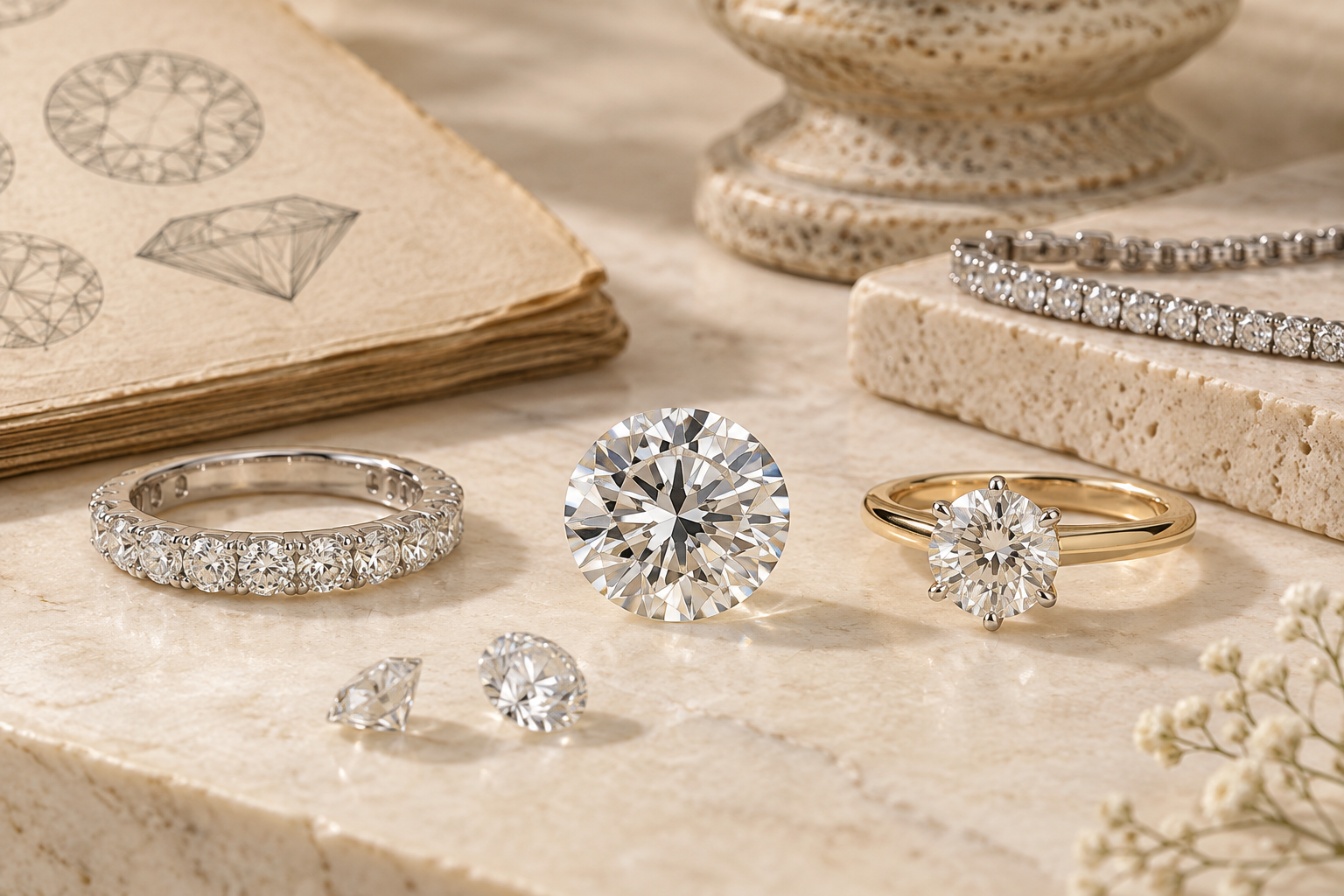
Diamonds are used in many jewelry motifs and settings: solitaires to emphasize a single stone, clusters to increase sparkle, pavé to add continuous brilliance, and accent stones paired with colored gems. The same optical qualities that make diamonds desirable—brilliance and hardness—also make them a frequent choice for engagement rings, anniversary pieces, studs, and fine necklaces.
Designers use diamond cuts and settings to achieve particular visual effects. A high-cut-quality diamond maximizes brilliance and fire, while different shapes (round, oval, princess, emerald, and others) change the perceived size and personality of the gem. Diamond motifs can be literal (a single round diamond) or symbolic (a halo suggesting light or eternity), and jewelers choose metal, setting style, and cut to match the intended aesthetic and wearability.
Grading, treatments, and the role of disclosure
When evaluating a diamond’s gemological quality, the conventional framework is the 4Cs: cut, color, clarity, and carat weight. GIA offers widely used education and grading standards that explain how each attribute affects appearance and value; buyers benefit from understanding these factors to match priorities (for example, cut and sparkle versus size).
Treatments, laboratory-grown diamonds, and simulants are distinct categories that require clear disclosure. The Federal Trade Commission (FTC) emphasizes that sellers must not misrepresent treated or lab-grown diamonds as mined natural diamonds and must be transparent about imitations such as cubic zirconia or moissanite. The FTC guidance is the authoritative U.S. consumer standard on accurate labeling and disclosure when buying gemstones, diamonds, and pearls.
Practical selection and gifting guidance
Decide what matters most to the recipient: appearance, ethical sourcing, budget, or symbolism. If the recipient values tradition or social meanings associated with diamonds, a classic solitaire or a shape they prefer is appropriate. If ethical or environmental concerns matter, ask about the seller’s sourcing practices and whether lab-grown diamonds or responsibly sourced mined stones are preferred.
Set a budget and prioritize the 4Cs according to what the wearer values. For many people, an excellent cut contributes more to visual impact than marginal improvements in color or clarity for the same price. For higher-value purchases, request independent documentation such as a GIA report or another recognized lab certificate and confirm in writing whether the stone is mined, laboratory-grown, or treated, following FTC recommendations.
Consider lifestyle and metal choice when gifting. Settings that protect the stone—bezel or low-profile prongs—are better for active wearers. For sentimental gifts, include a note explaining the personal meaning you attach to the diamond so the recipient understands whether the gesture emphasizes durability, love, achievement, or another sentiment.
Care, cleaning, and maintenance
Diamonds are among the hardest natural materials and resist scratching, but they still require care. GIA’s guidance on quality, durability, and care recommends routine cleaning to maintain brilliance, safe storage to avoid abrasion with other jewelry, and periodic professional inspection of settings and prongs to prevent loss.
At home, clean diamonds with warm water, mild detergent, and a soft brush, rinsing and drying with a lint-free cloth. Avoid harsh chemicals that can damage metal settings. For valuable pieces, schedule professional cleaning and inspection at least annually, and keep purchase documentation and any grading reports stored safely for insurance or resale purposes.
Final considerations
Diamond’s role as April’s modern birthstone reflects a contemporary, standardized convention rather than a single ancient origin. Use the documented history from GIA to understand how lists and meanings developed, and follow FTC guidance when evaluating representation, treatment, and origin.
Whether buying a diamond for April or choosing a different gem, combine factual information about grading, disclosure, and care with respectful attention to the recipient’s tastes and ethics. Present the stone with clear documentation and a note about what the gift is intended to say—this keeps the gesture meaningful and honest.
Frequently asked questions
Is diamond the birthstone for April?
Yes. Diamond is the modern birthstone for April according to contemporary birthstone lists documented by the Gemological Institute of America.
Do diamonds have historical magical powers?
Many cultures historically attributed protective or medicinal properties to various gems; GIA’s museum materials record these cultural beliefs, but such historical attributions are cultural claims rather than proven properties of the gemstone.
How can I tell if a diamond is natural, lab-grown, or an imitation?
Ask the seller for written disclosure and any laboratory report. The FTC requires accurate labeling for treated, lab-grown, and imitation stones. Independent grading reports can confirm natural versus lab-grown origin for higher-value diamonds.
What are the 4Cs and why do they matter?
The 4Cs—cut, color, clarity, and carat weight—are the standard framework for evaluating a diamond’s appearance and value. Cut often has the biggest impact on sparkle, while the other factors affect color, purity, and size.
How should I clean and store a diamond?
Clean diamonds with warm water, mild detergent, and a soft brush, rinse, and dry with a lint-free cloth. Store jewelry separately to prevent abrasion and have settings professionally inspected periodically, following care guidance from GIA.
Are lab-grown diamonds 'real' diamonds?
Lab-grown diamonds are real diamonds in chemical and optical terms, but they differ in origin from mined diamonds. Sellers must disclose whether a diamond is lab-grown, per FTC guidance.
What should I include when gifting a diamond?
Include documentation about the stone’s origin and any lab report, a description of the personal meaning you attach to the gift, and care instructions to help the recipient maintain the piece.
Sources and further reading
- April Birthstone Guide — Gemological Institute of America
- Birthstones — Gemological Institute of America
- Birthstones: Gems Through the Ages — Gemological Institute of America
- Buying Gemstones, Diamonds, and Pearls — Federal Trade Commission