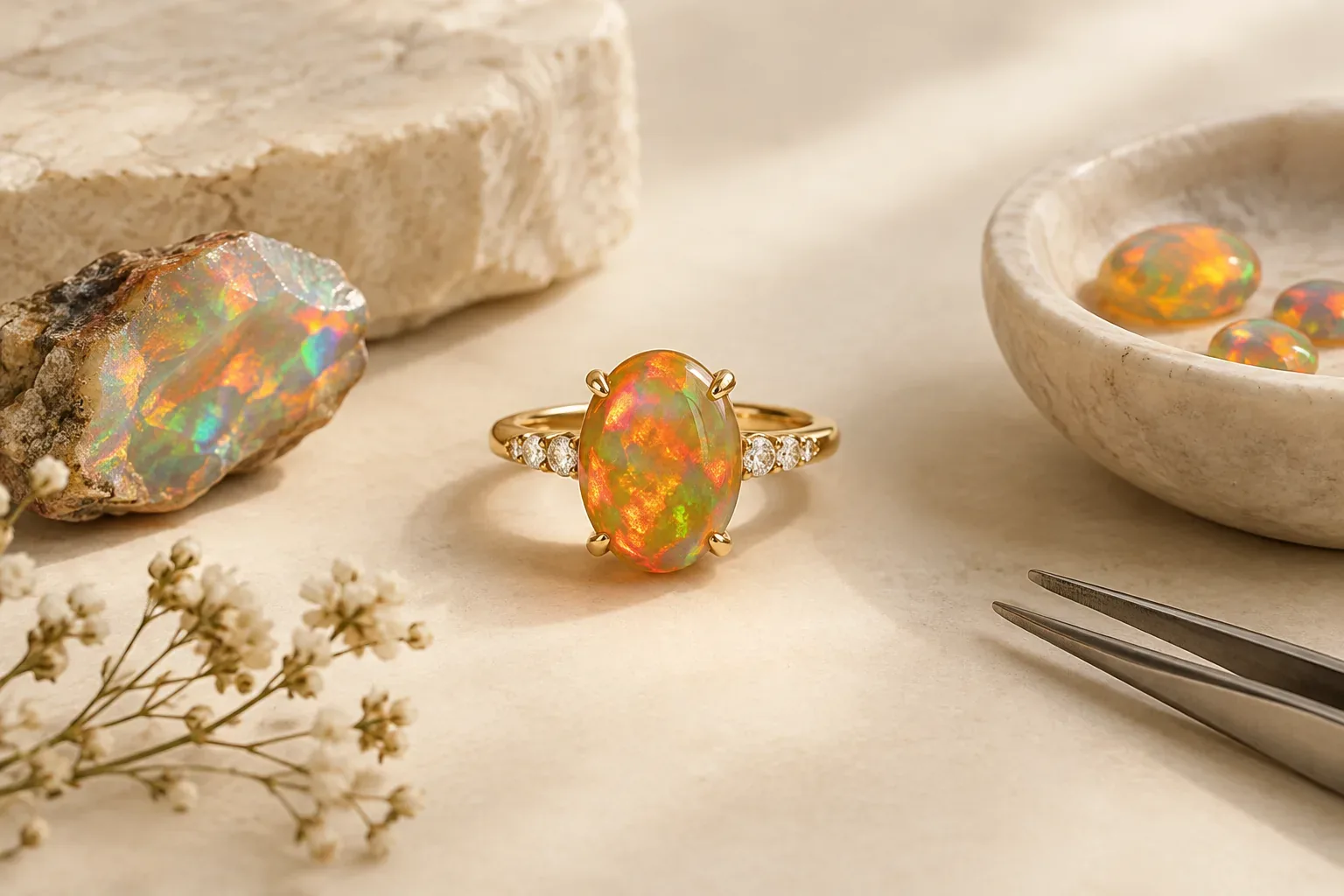
Meaning at a glance
A fire opal engagement ring can be a striking, modern alternative to traditional stones, but buyers must weigh beauty against durability, insist on written disclosure about treatments and origin, choose protective settings for everyday wear, and follow careful cleaning and insurance practices; some questions—such as treatment detection and geographic origin—require a qualified jeweler or gemological laboratory for reliable verification.
Quick answer
A fire opal engagement ring guide should answer four things: whether the gem suits the wearer’s lifestyle, what settings protect and showcase the stone, how to care for it safely, and which claims you cannot verify without expert testing. Evidence-led sources emphasize rising consumer interest in gemstone rings, the need for clear seller disclosures about treatments and origin, and that gems vary in durability and care requirements. Before buying, get written disclosures and consider a protective setting and insurance.
Why fire opal is on shoppers’ radar today
Recent jewelry trend and search reports indicate renewed consumer interest in gemstone engagement rings and in opal specifically. Imaginaire Digital’s 2026 UK search estimates show strong demand for various engagement-ring styles, and Professional Jeweller’s trend insights cite growth in opal and gemstone rings among broader sculptural and vintage-inspired trends. Those industry signals explain why many shoppers are asking for guidance about fire opal in engagement designs.
Historical evidence and cultural claims — what the approved sources do and do not document
The approved sources for this guide (industry trend reports, the Gemological Institute of America, and the U.S. Federal Trade Commission) do not provide primary historical documentation attributing specific cultural beliefs about fire opal to named ancient peoples or historical periods. Because those sources focus on modern market trends, gem treatment and disclosure, and consumer protection, this article separates documented historical evidence (not found in the listed sources) from later or modern interpretations so readers understand which claims rest on verifiable literature and which are contemporary meanings or marketing narratives.
Documented meanings versus modern personal interpretations
Documented meanings for gemstones must be taken from primary historical sources or scholarly work. The approved evidence for this piece does not include such historical sources about fire opal symbolism, so no specific historical meaning is asserted here as universally documented.
Modern interpretations are personal or stylistic and drive many recent purchases. Industry reporting shows opals and colored gemstones are part of contemporary design trends, which often emphasize individuality and expressive color over traditional symbolism. Buyers commonly choose fire opal for its warm color palette and distinctive look; those motivations are contemporary and subjective, not universal cultural facts.
How fire opal appears in jewelry and typical setting choices
Designers use fire opal for its vivid warm tones and because it creates a noticeable focal point in rings. Contemporary listings and trend reportage indicate opal appears in solitaire styles, halo or cluster settings, mixed-metal designs, and sculptural vintage-inspired mounts as designers aim to balance color and protection. Because gemstone rings are a growing category, designers often pair opals with accent stones or protective metalwork to highlight the hue while addressing wearability concerns.
Suitability: decision criteria and practical trade-offs
Choosing a fire opal for an engagement ring is a decision about lifestyle and priorities. Industry and gem-care authorities emphasize several evidence-led trade-offs: visual appeal versus everyday durability, natural versus treated or lab-created material, and the cost of protective settings and maintenance. Buyers who value a unique color and are prepared to wear the ring with care, to arrange periodic professional checks, and to insure the piece may find a fire opal an excellent personal choice. Those who want a low-maintenance, everyday ring should evaluate whether a protective setting and insurance compensate for additional care requirements.
Because treatments and durability affect value and care, the Gemological Institute of America highlights that treatments, detectability, durability and special care create distinct consumer questions for gemstones. The U.S. Federal Trade Commission advises consumers to obtain clear written disclosures distinguishing natural stones from lab-created or treated stones, and to ask sellers for documentation.
Practical selection and gifting guidance
Begin any purchase conversation by asking the seller for written disclosures about whether the fire opal is natural, treated, or lab-created, and whether any stability treatments have been applied. The FTC recommends written disclosure for such distinctions so buyers can compare offers on a documented basis.
Request any available gemological reports and make clear return and warranty terms before purchase. Compare settings: designs that seat the stone within a bezel or that include metal prongs with protective shoulders will better shield the gem from impacts and abrasion than an exposed high-set solitaire. Discuss insurance or appraisal options and confirm the seller’s cleaning and care recommendations in writing so your recipient can follow compatible care instructions.
When gifting, consider the recipient’s lifestyle. If the wearer leads an active life or frequently works with their hands, choose a setting that lowers snag risk and consider adding an extended warranty or insurance to cover accidental damage or loss.
Care, maintenance, and what professional help you’ll need
Because gemstones vary in how they respond to heat, chemicals, and cleaning methods, the Gemological Institute of America cautions that treatments, detectability and durability create specific consumer questions and that special care may be required. Ask your jeweler what cleaning methods are safe for the specific fire opal you are buying, and get those instructions in writing. When in doubt, consult a qualified jeweler before using ultrasonic or steam cleaners and before exposing the ring to household chemicals or extreme temperature changes.
Schedule periodic checks with a reputable jeweler to confirm the setting remains secure and to detect any early wear. Carry comprehensive documentation (receipts, any lab report, and seller disclosures) to streamline insurance and appraisal services.
What you can verify yourself and what requires expert testing
You can verify several practical things without a lab: that the seller provides written disclosure about natural versus lab-created or treated material, that the invoice describes the setting and metal, and that return, warranty, and insurance options are documented. You can also visually inspect the mounting and ask to see the piece under different lighting to get a sense of color and play.
You cannot reliably determine treatment history, origin, or the presence of nondisclosed enhancements without expert testing. The Gemological Institute of America explains that some treatments are detectable only with specialized equipment, and the FTC stresses the consumer need for transparent, written disclosures. For conclusive answers about treatments or geographic origin, plan to obtain a report from an accredited gemological laboratory or a written assessment from a qualified independent appraiser.
Final checklist before you buy
Obtain written seller disclosures that explicitly label natural, lab-created, and treated materials. Request any laboratory or grading reports and confirm return, warranty, and insurance options. Choose a setting that fits the recipient’s lifestyle and ask for written care instructions. If you need definitive answers about treatment or origin, budget for a lab report or independent appraisal. These steps mirror the guidance from the FTC and the Gemological Institute of America and put you in the strongest position to buy with confidence.
Frequently asked questions
Is a fire opal engagement ring suitable for daily wear?
It depends on lifestyle and the specific stone. Industry and gemology guidance stress that gemstones differ in durability and care needs, so choose a protective setting and discuss wearability with the seller; for conclusive advice about a particular stone, consult a qualified jeweler.
How should I clean and care for a fire opal ring?
Because gemstones vary in how they respond to heat, chemicals and cleaning methods, ask the seller or a qualified jeweler for written cleaning instructions for the specific stone and setting. The Gemological Institute of America highlights that special care may be required for some gemstones, and when in doubt you should have professional guidance.
Can I tell if a fire opal is natural or treated myself?
You can request written disclosure and any available laboratory reports, but detecting some treatments or determining origin reliably usually requires testing by an accredited gemological laboratory. The FTC advises consumers to insist on clear written distinctions among natural, lab-created, treated, and imitation materials.
What settings are best to protect a fire opal engagement ring?
Buyers frequently choose settings that reduce exposure and snag risk, such as lower profiles, bezels, or designs with protective shoulders. Discuss options with your jeweler to balance protection, style and the recipient’s daily activities.
Do I need an appraisal or lab report for insurance?
Most insurers require documentation. Request an appraisal from a qualified independent appraiser or a laboratory report when available, and keep receipts and written seller disclosures to support insurance and claims.
Sources and further reading
- Imaginaire Digital — Imaginaire Digital
- Professional Jeweller / PRYA Jewellery Search Insights — Professional Jeweller / PRYA Jewellery Search Insights
- Gemological Institute of America — Gemological Institute of America
- Federal Trade Commission — Federal Trade Commission