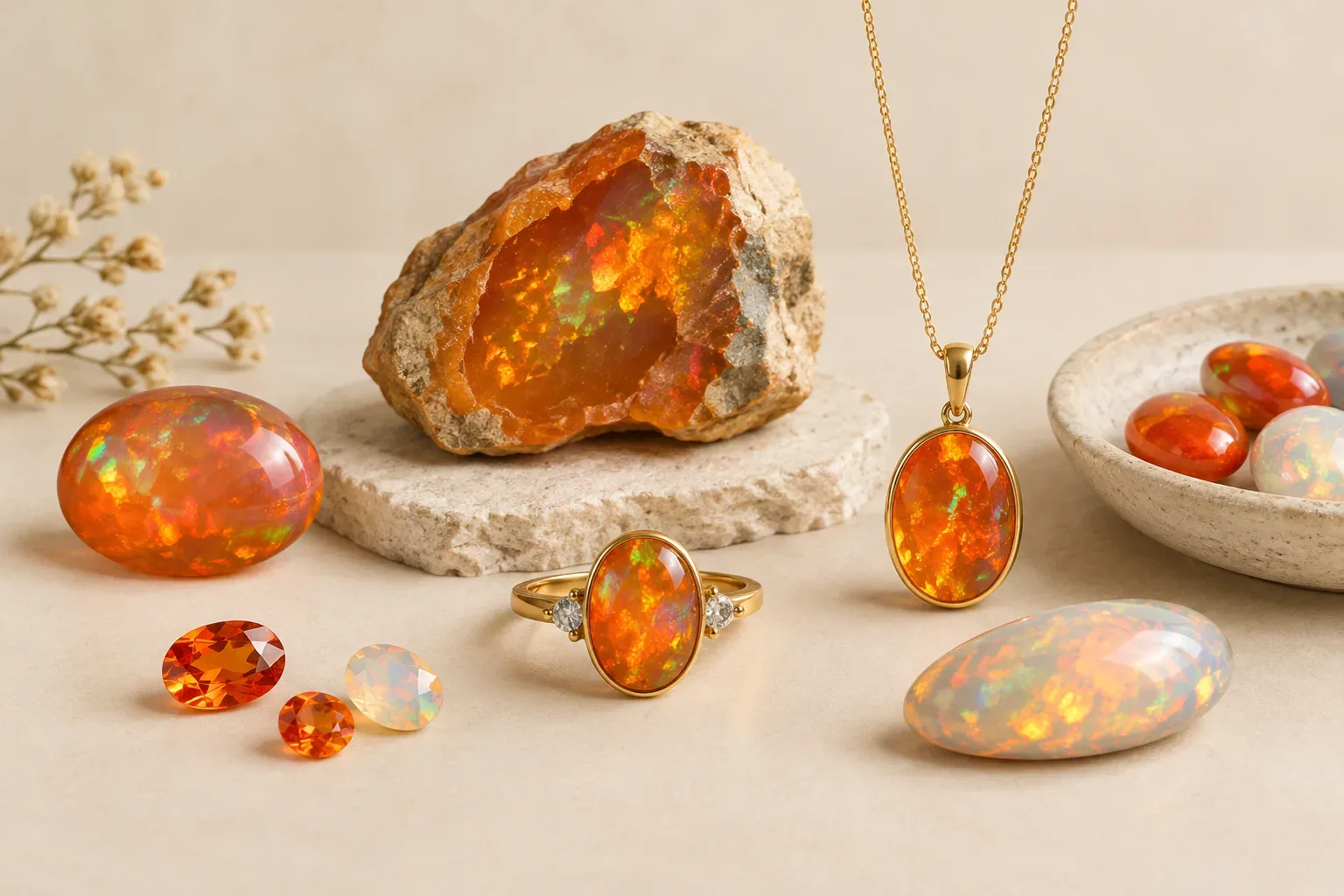
Meaning at a glance
This fire opal authenticity guide defines natural, lab-created, treated and imitation fire opals; lays out decision criteria and trade-offs for buyers; explains safe care; and highlights what only a qualified jeweler or gemological laboratory can confirm.
Short, evidence-led answer
For shoppers asking 'is this fire opal real?': use this guide to understand the distinct categories—natural, lab-created, treated, and imitation—so you can make informed trade-offs. Basic visual checks, seller disclosure rules, and reputable paperwork often separate clearly labeled options, but only a qualified jeweler with instruments or a recognized gemological laboratory can reliably determine origin and many treatments. This article follows the evidence-led approach requested in the thesis: clear definitions, practical decision criteria, trade-offs, safe care guidance, and explicit limits on consumer verification.
Definitions: natural, lab-created, treated and imitation
Natural fire opal is a gemstone that formed in nature with its color and internal structure derived from geological processes. A natural stone may still be stabilized or treated after mining; treatments and the need for disclosure are discussed below.
Lab-created fire opal is a material produced in a controlled environment to recreate optical and chemical properties similar to natural opal. Lab-grown stones are intentionally manufactured and should be disclosed as such by sellers.
Treated fire opal refers to natural material that has been altered after mining to improve color, stability or durability. Treatments can include impregnation, dyeing, backing, or filling. The Gemological Institute of America (GIA) explains that treatments, their detectability, and disclosure are common consumer questions.
Imitation fire opal refers to materials that mimic the appearance of a fire opal but are not opal in composition; examples include glass, plastic or synthetic beads. The Federal Trade Commission (FTC) requires clear distinctions among natural, lab-created, treated and imitation materials and expects truthful, written disclosures from sellers.
Historical evidence and cultural notes — what the approved sources say
The approved sources for this article do not provide an extensive record of ancient cultural uses specific to fire opal. Modern trade and trend research, as captured by Professional Jeweller and Imaginaire Digital, documents renewed market interest in opals and gemstone rings and necklaces, but do not assign precise historical cultural meanings to fire opal in antiquity.
Because the available publisher evidence centers on modern market behavior and consumer guidance rather than ancient lore, this guide keeps documented history distinct from the many personal and modern interpretations you may encounter. Where sources do speak to documented practice, they concern contemporary retail trends, treatment disclosure and consumer protections rather than ancient beliefs.
Documented historic uses versus modern personal interpretations
Documented evidence in the approved sources focuses on modern commerce: opals are part of current jewelry trends and keyword searches for gemstone rings, necklaces and birthstone pieces, according to Professional Jeweller and Imaginaire Digital. These sources support claims about consumer interest and retail visibility rather than historical symbolism.
Modern personal interpretations—such as associating fire opal with passion, protection, or spiritual heat—are common in contemporary jewelry writing and among individual wearers. Those meanings are subjective and cultural, and they are not documented by the approved sources as historically universal attributes. Treat contemporary symbolic claims as personal or stylistic preferences unless you find primary historical documentation from a reliable historical or archaeological source.
How fire opal appears in jewelry today
Retail and editorial trend reporting shows opal and other gemstones appearing across rings, pendants, earrings and charm clusters. Professional Jeweller’s research notes growth in sculptural jewelry and gemstone rings, while Imaginaire Digital’s search insights indicate steady consumer demand for engagement rings, necklaces and studs—categories where opal may be used as a focal stone.
Fire opal is often set in warmer-colored metals that complement its orange, yellow or reddish tones. Designers use solid cabochons, faceted stones, doublets and triplets, depending on the stone’s body color, transparency, and need for backing or protection. Treated or assembled opals (for example, doublets and triplets) are a recognized way to present attractive color while managing cost and durability; such construction must be disclosed under FTC guidance.
Practical decision criteria and trade-offs for buyers
Begin by confirming seller disclosure. The FTC requires sellers to distinguish natural, lab-created, treated and imitation materials in writing. If a listing or seller label is silent or ambiguous, ask for clarification and written confirmation before purchase.
If you want a stone that formed in nature without major post‑mining alteration, prioritize natural, untreated opals accompanied by a reputable gemological report. Expect higher cost and potentially greater sensitivity to heat, chemicals and impacts.
If you want a consistent look at lower cost, lab-created opals offer predictable color and stability and should be disclosed as lab-grown. Lab-created stones can be attractive and durable but are not natural.
If price and appearance are the priority, treated or assembled stones (doublets and triplets) provide vivid color and cost savings but may require different care and may be less valuable. Accepting a treated or assembled stone means trading some long-term value and possibly repair complexity for immediate appearance and lower cost.
Imitations can be the most economical way to achieve a specific look but may lack lasting value and can be easily misrepresented if sellers do not disclose composition. Always require clear labeling.
What you can reasonably verify without a lab or qualified jeweler
You can check seller disclosure, request photographs from multiple angles, ask for a written description of any treatments, and look for obvious signs of assembly such as a visible backing (which signals a doublet) or layered appearance (triplet). Reputable retailers will provide clear information.
Simple observations—weight compared to a known similar-sized stone, magnified surface inspection for glue lines, sharp facet edges, or a uniform pattern that repeats—can suggest imitation or assembly but are not definitive. Documentation and written disclosure are often the most reliable consumer protections before lab testing.
Remember that many treatments and the natural vs lab-grown origin cannot be determined visually. The GIA warns that treatments and detectability are complex; only instrumented examination and gemological testing can reliably identify certain enhancements or confirm natural origin.
When to get a lab report and what labs can confirm
Obtain a gemological laboratory report when you are buying a high-value fire opal, have doubts about origin or treatment, or require proof for insurance or resale. Laboratories will test for natural versus synthetic origin, identify common treatments, and describe assembled constructions such as doublets and triplets.
Keep expectations realistic: a lab report identifies what it can detect and will describe the scope and limits of testing. The FTC’s guidance underscores the role of written disclosure from sellers, and the GIA provides context about which treatments are detectable and how laboratories report findings.
Care and durability: safe handling for fire opal jewelry
Different categories require different care. Natural and untreated opals are often sensitive to heat, sudden temperature changes, strong chemicals and impact; even natural opal can fracture if handled roughly. The GIA emphasizes that treatment, detectability and special care are part of consumer questions for gemstones.
Stabilized, backed or assembled opals (doublets and triplets) may tolerate everyday wear better in some settings, but the assembly layers can delaminate if exposed to solvents or prolonged moisture. Use gentle cleaning methods, avoid ultrasonic or steam cleaners for opal, and store pieces separately to avoid abrasion.
Selection and gifting guidance — practical and respectful advice
If you are selecting a fire opal as a gift, decide whether you want geological authenticity, a striking appearance, or budget value. If authenticity matters to the recipient, ask the seller for a lab report or reputable jeweler verification and present the documentation with the gift. If appearance and affordability are the priority, clearly labeled doublets, triplets or imitations are acceptable and often appreciated for their visual impact.
When gifting, respect cultural and personal meanings. Many wearers assign their own emotional significance to gemstones; avoid claiming universal symbolic properties. Provide care instructions and, if applicable, treatment disclosures so the recipient knows how to maintain the piece. Choose a reputable seller who honors returns and provides written disclosure; the FTC’s guidance supports consumer protection through truthful labeling.
Final practical checklist before you buy
Require clear written disclosure stating whether the stone is natural, lab-created, treated, or an imitation. Ask for lab reports for high-value purchases and confirm the seller’s return policy. Consider trade-offs: natural untreated stones command higher prices but need careful handling; lab-created and treated options give greater visual consistency at lower cost; imitations offer affordability with limited long-term value. If anything about the stone’s description or paperwork seems incomplete, consult a qualified jeweler or submit the piece to a recognized gemological laboratory for testing.
Frequently asked questions
How can I tell if a fire opal is natural without a lab report?
You can check seller disclosure, request detailed photos, and look for visible assembly signs such as a uniform backing or glue lines. These steps can suggest whether a stone is assembled or treated but cannot reliably confirm natural origin or detect many treatments—only a qualified jeweler or gemological laboratory can provide a conclusive analysis.
What should a seller disclose about a fire opal?
Under the Federal Trade Commission’s guidance, sellers should clearly state whether a gemstone is natural, lab-created, treated, stabilized, assembled (for example, doublet or triplet), or an imitation, and provide written information to buyers upon request.
Are lab-created fire opals a good alternative?
Lab-created fire opals offer consistent color and often better stability at lower cost than natural stones. They are an acceptable alternative when you want visual consistency and affordability; just ensure they are labeled and disclosed as lab-grown.
When is a laboratory report worth the cost?
Obtain a lab report for high-value purchases, when origin or treatment materially affects value, or when you need documentation for insurance or resale. Laboratories can identify origin and many treatments, but reports have defined scopes and limits.
How should I care for fire opal jewelry?
Avoid sudden temperature changes, strong chemicals and ultrasonic or steam cleaners. Use gentle soapy water and a soft cloth, store opal pieces separately to prevent abrasion, and follow any specific care advice tied to treatments or assembly described by the seller or laboratory.
What are doublets and triplets and why do they matter?
Doublets and triplets are assembled stones that combine a thin slice of opal with backing or cap layers to enhance color and durability. They are legitimate and often more affordable, but they must be disclosed because they affect care needs, repair options and long-term value.
Sources and further reading
- Imaginaire Digital — Imaginaire Digital
- Professional Jeweller / PRYA Jewellery Search Insights — Professional Jeweller / PRYA Jewellery Search Insights
- Gemological Institute of America — Gemological Institute of America
- Federal Trade Commission — Federal Trade Commission