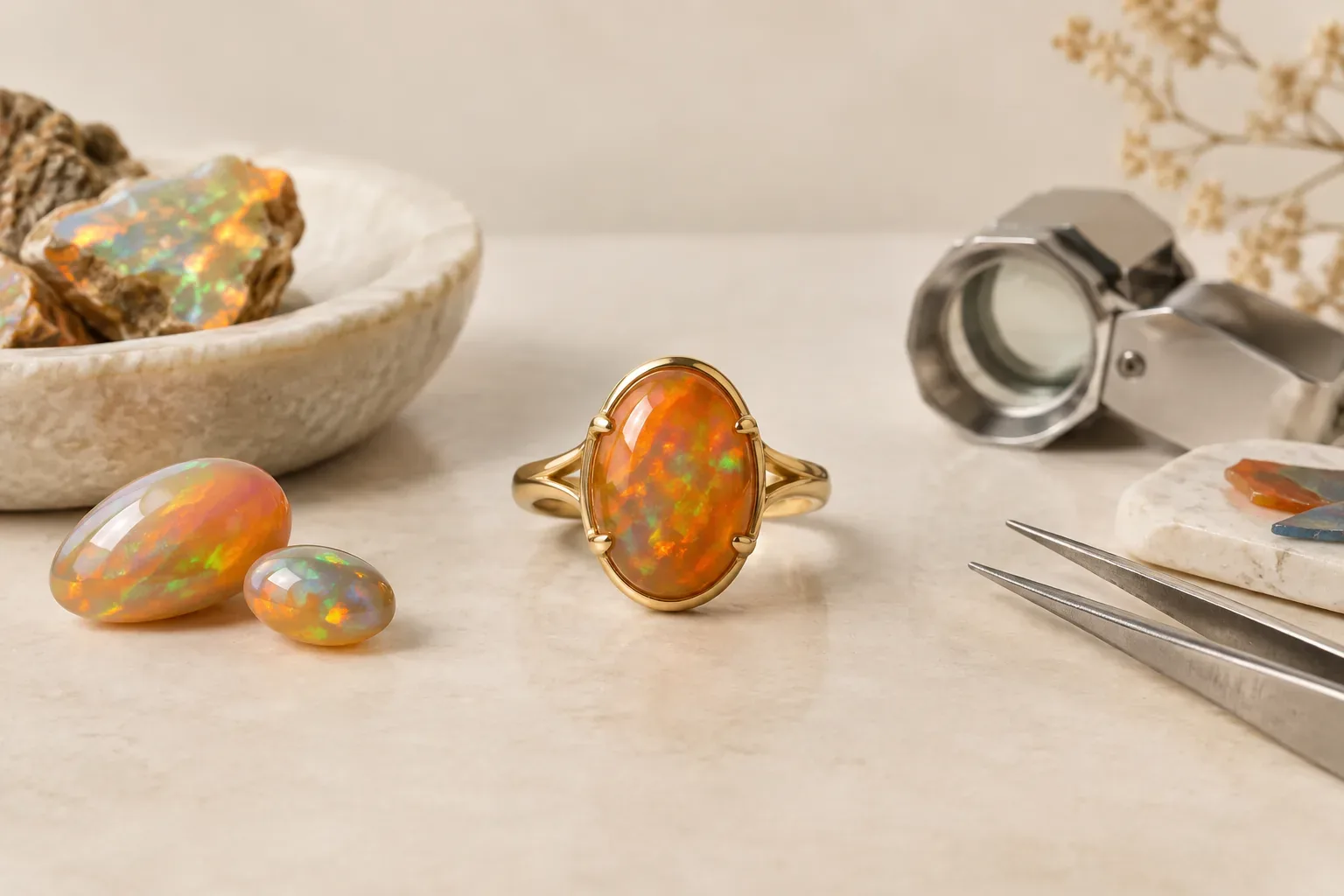
Meaning at a glance
This guide defines common fire opal enhancements, explains practical trade-offs and verification limits, describes how opals appear in jewelry trends, separates documented historical evidence from modern interpretations, and gives selection and care advice grounded in guidance from gemological and consumer-protection authorities.
What the authoritative sources say about treatments and disclosure
The Gemological Institute of America (GIA) summarizes the core consumer issues around gemstone treatments: there are many possible enhancements, some are detectable only with gemological testing, some affect durability, and sellers should disclose treatments because they change value and care needs.
The U.S. Federal Trade Commission (FTC) advises consumers to expect clear written distinctions among natural, lab-created, treated, and imitation materials and emphasizes that buyers should get written disclosures from sellers before purchase.
Trade and search-trend research from industry publishers shows that opals and other gemstones are active categories in consumer jewelry demand; Professional Jeweller / PRYA Jewellery Search Insights reports growth in opal and gemstone rings and birthstone necklaces, while UK search estimates from Imaginaire Digital indicate continued strong consumer interest in gemstone engagement rings and related categories. These market signals explain why many treatment questions matter to shoppers.
Common fire opal enhancements (definitions and decision criteria)
The term "treatment" covers a range of interventions that alter a stone’s appearance, durability or both. For fire opal specifically, shoppers most commonly encounter assembled stones (doublets and triplets), polymer or resin impregnation, smoke or dye procedures, and lab-created opals used as substitutes. An assembled doublet or triplet joins a thin slice of opal to a backing or protective cap and is structurally different from a single-piece natural opal. Impregnation fills pores or surface pits with a stabilizing material. Smoke or dye treatments adjust color. Lab-created opals are manufactured in controlled conditions and are not "natural" opal.
Decision criteria for buyers: clarity on intended use (daily wear versus occasional), budget, desired longevity and resale expectations, and how important an untreated natural piece is to you. Doublets and triplets can be very affordable and suitable for everyday jewelry when set to protect edges, while single-piece, untreated fire opals may be more valuable but also more fragile. Treated stones can offer improved durability but may change how a gem looks and how it needs to be cared for.
Detectability, verification limits, and what you can expect before purchase
GIA notes that some treatments are straightforward to spot with a loupe or standard magnification while others require instruments or laboratory testing. For example, the layered edge of a doublet or triplet is often visible to a careful eye and to a qualified jeweler, but internal impregnation or subtle dyeing can be much harder to detect without lab equipment.
Practical verification steps a shopper can take without a laboratory include asking the seller for a written disclosure, requesting close-up photos of the stone's edge or profile, asking whether the piece is a single stone, doublet or triplet, and seeking any available gemological report from an accredited laboratory. The FTC’s guidance makes clear that written seller disclosures are central: if the seller will not state whether the stone was treated or assembled, that is a major red flag.
Limits: only a qualified jeweler with appropriate instrumentation or an accredited gemological laboratory can conclusively identify many treatments, determine permanence, or certify whether an opal is natural versus synthetic. Expect to pay for such testing if you require definitive proof.
Trade-offs: value, durability and appearance
Untreated, solid fire opals are generally valued higher on the resale market but can be more sensitive to knocks, heat and changes in humidity; buyers seeking maximum long-term value commonly target these pieces but must accept the fragility and special care.
Doublets and triplets lower the per-carat cost and often increase practical toughness when properly set; however, they are classified and valued differently because part of the stone is not solid opal. Resin or polymer stabilization can improve resistance to cracking but alters the natural porosity and may affect how the color plays. The buyer’s priorities—maximum value vs. everyday wearability—should guide the choice.
How fire opal appears in jewelry and current shopper contexts
Industry search and trend reporting shows opals feature strongly in rings, necklaces and birthstone pieces. Professional Jeweller / PRYA Jewellery Search Insights lists opal and gemstone rings and birthstone necklaces among growing consumer search categories. Imaginaire Digital data also highlights sustained demand in engagement-style and sculptural gemstone settings. In practice, fire opals appear in center-stone rings, pendant necklaces, small stud or drop earrings, and as centers in cluster or sculptural settings where designers either showcase a solid opal or use assembled stones to gain brightness at lower cost.
Because of the stone’s sensitivity, designers frequently protect thinner or thinner-backed assembled stones with bezel settings or with a cap (as in triplets) and use protective design choices if a piece is intended for frequent wear.
Care guidance tied to treatment type
GIA warns that treatments, detectability and durability interact: treated stones may need different care to remain stable. As a rule, avoid exposing opals to sudden temperature changes, harsh chemicals, or ultrasonic cleaners; follow any care instructions the seller provides and prefer gentle cleaning with a soft cloth and mild soap when appropriate.
For assembled stones, keep water exposure and prolonged soaking in mind because some adhesives and backing materials can be affected by solvents or heat. If a stone has been impregnated or stabilized, ask the seller how that treatment responds to heat, cleaners and prolonged sunlight.
Selection and gifting guidance — practical and respectful
If you are buying for a daily-wear item like an engagement ring, prioritize structural durability and full disclosure. That can mean choosing a well-set doublet or triplet designed for everyday wear, or a solid opal set within a protective bezel, depending on your budget. If you value rarity and long-term resale, look for untreated, certified solid opals and be prepared for more cautious wear.
Always request written disclosure before purchase and, when possible, a gemological report from a recognized lab if the item’s price justifies it. If the recipient prefers ethically transparent purchases, ask about the seller’s sourcing and treatment policies in advance and present those details as part of the gift. For sentimental gifts where the receiver may not want a fragile daily-wear ring, consider a pendant or earrings with protective settings so the stone is enjoyed with lower wear risk.
When to involve a jeweler or laboratory
If you need a definitive answer about whether a fire opal has been impregnated, subtly dyed, or is lab-created, plan to involve a qualified jeweler or a gemological laboratory. Expect that certain identifications and permanence assessments require instruments and expertise beyond consumer-level inspection. GIA’s guidance explains that detectability varies by treatment and that laboratory reports are the gold standard for verification.
Also involve a jeweler when designing or altering a setting: properly constructed bezels, protective crowns and secure mounting materially extend the life of a sensitive opal, treated or untreated.
Separating documented historical meanings from modern interpretations
The authoritative sources used in this guide focus on treatments, disclosure, detectability and market trends and do not provide a documented cultural history of fire opal symbolism. Because the sources do not supply precise historical cultural evidence linking specific societies or periods to particular symbolic meanings of fire opal, this article does not attribute historic beliefs or rituals to named cultures.
Modern personal interpretations abound—many people describe fire opal as symbolically linked to warmth, passion, creativity or transformation. Those contemporary meanings are individual or cultural-modern layers of meaning rather than documented historical claims, and they should be described to gift recipients as personal or stylistic intent rather than as historically proven associations.
Bottom line for shoppers
A practical fire opal treatment guide means you should expect clear written disclosure from sellers, ask for photographs and any available lab reports, decide whether you prioritize long-term natural-stone value or everyday durability, and understand that some verification requires a qualified jeweler or gemological laboratory. Use protective settings for wear, follow seller care instructions, and treat any nondisclosure as a reason to pause the purchase.
Frequently asked questions
What are the most common fire opal treatments I should know about?
Common interventions include assembled stones (doublets and triplets), impregnation or stabilization with resins or polymers, surface or internal color-changing procedures (such as smoke or dyeing), and lab-created opals. Each has different implications for value and care, and some are detectable only with gemological testing.
Will a treated fire opal last as long as an untreated one?
It depends. Some treatments improve stability and wearability, while others change the stone’s behavior under heat, light or solvents. Untreated solid opals may be more valuable but often require more careful handling. Ask the seller for care guidance tied to the specific treatment.
How can I tell if an opal is a doublet or triplet without a lab report?
A careful visual inspection or close-up photos of the stone’s edge can often reveal layered construction. A qualified jeweler’s loupe inspection is helpful. If you cannot confirm by inspection, request seller disclosure or a gemological report.
Does treatment need to be disclosed in writing?
Yes. The Federal Trade Commission advises consumers should receive clear written distinctions among natural, lab-created, treated, and imitation materials; ask for that disclosure before you buy.
When should I pay for a laboratory report?
If the item’s price or your need for certainty justifies the cost—for example, an expensive center-stone purchase or a piece you plan to resell—request a report from an accredited gemological laboratory to confirm natural status and identify treatments.
Sources and further reading
- Imaginaire Digital — Imaginaire Digital
- Professional Jeweller / PRYA Jewellery Search Insights — Professional Jeweller / PRYA Jewellery Search Insights
- Gemological Institute of America — Gemological Institute of America
- Federal Trade Commission — Federal Trade Commission