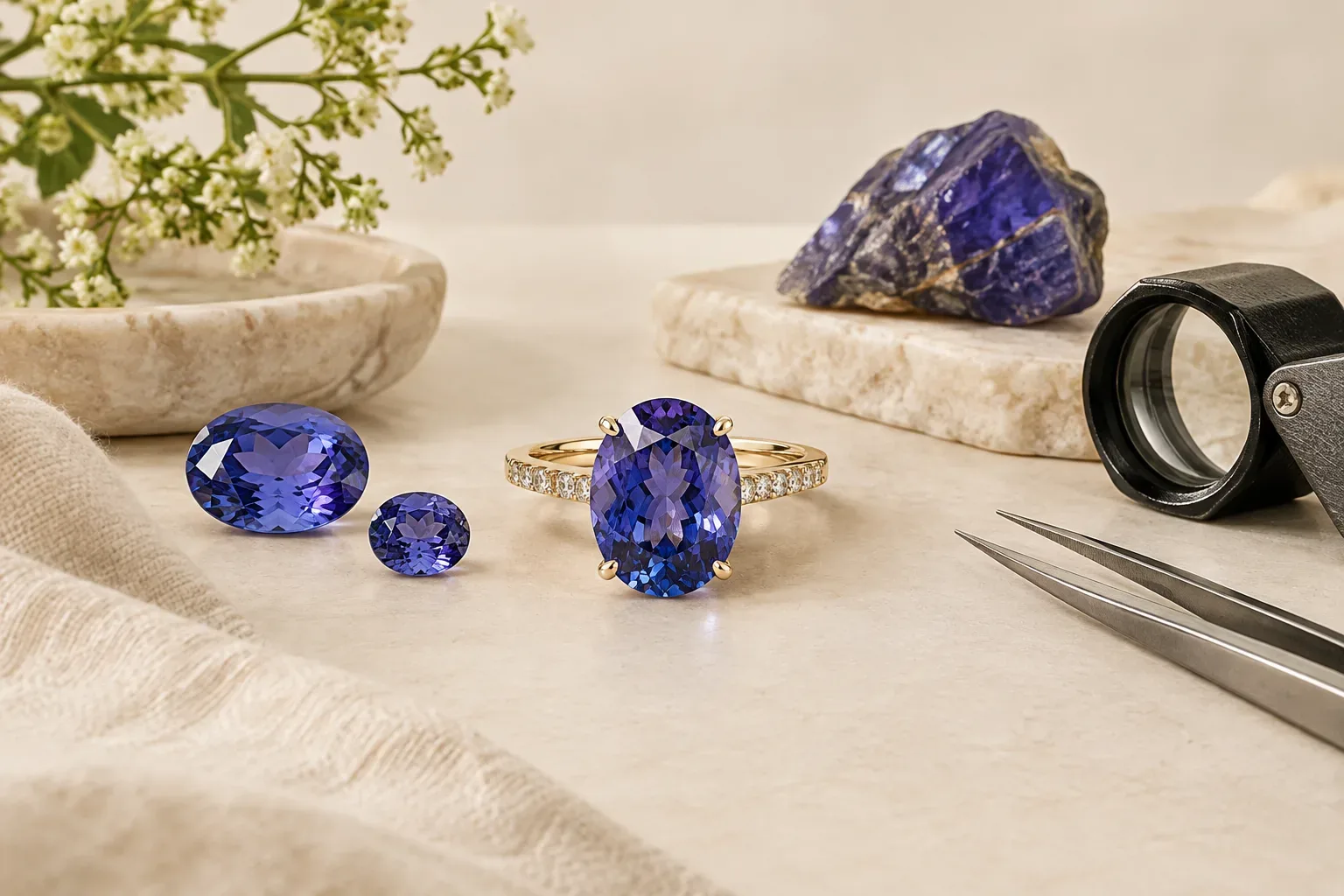
Meaning at a glance
This tanzanite treatment guide explains the typical enhancements used in colored gemstones, the information sellers must disclose, what a shopper can reasonably verify without a lab, practical trade-offs when choosing treated versus untreated stones, and safe care and selection advice.
What the evidence-led definitions mean
The Gemological Institute of America (GIA) defines a gem treatment as any deliberate action that changes a gemstone’s appearance, durability, or value. Common types of treatment used across the trade include heat treatment, fracture filling, irradiation, and surface diffusion; some treatments are easily detectable while others require laboratory analysis. The Federal Trade Commission (FTC) advises that consumers must be given clear information about whether a gemstone is natural, lab-created, treated, or imitated, and that written disclosure is part of fair dealing.
Which enhancements to expect and why
GIA’s guidance on treatments explains that heat treatment is one of the most widely used procedures across colored gemstones because it can improve or stabilize color and clarity. Other procedures used in the broader colored-gem market include fracture filling (to reduce the appearance of surface-reaching fissures) and surface treatments (to alter color or lustre). Because the approved sources address treatments as a class rather than a single gem type, shoppers should approach tanzanite with the same questions they would bring to any colored-stone purchase: was the stone treated, how was it treated, is the treatment stable, and is that disclosed in writing?
How treatments change appearance, durability, and price
Treatments can make a stone appear more intensely colored, clearer, or more uniform. That visual improvement usually reduces the price difference between lower- and higher-grade material, which is why treated stones often carry lower premiums than comparable untreated material. Some treatments are stable under everyday wear and care while others require caution; GIA’s materials on durability and detectability are useful references because they emphasize that treatment type determines long-term performance and necessary care.
What the shopper can — and cannot — verify alone
The FTC’s consumer guidance makes two practical points: sellers must describe whether a stone is natural, lab-created, treated, or imitation, and consumers should ask for written disclosures. Beyond paperwork, a buyer can perform only basic checks without professional tools. Visual inspection with a loupe can reveal surface-reaching fractures, obvious filling residues, or abrasive wear. However, many internal or color-altering treatments are invisible to the unaided eye and require instrumentation or expertise to detect. For definitive answers about specific treatments and their permanence, a qualified jeweler or an accredited gemological laboratory is required.
Historical context and cultural meaning — what the record shows
Among the approved sources consulted for this guide there is no extensive documented history of tanzanite meaning in ancient cultures. The approved references emphasize modern trade issues—treatments, disclosure, detectability, and consumer guidance—rather than longstanding cultural symbolism. Because tanzanite’s documented, global popularity is a modern market phenomenon rather than an ancient cultural tradition, most symbolic meanings attached to it today are contemporary or personal rather than historically rooted in distinct cultures or time periods.
Separating documented fact from modern interpretation
Documented facts in the sources concern treatment types, their detectability, and disclosure expectations. Modern meanings—what a buyer or giver believes tanzanite symbolizes—are personal or marketing-driven and should not be conflated with documented cultural history. If you are seeking a gemstone with deep, multi-century cultural meanings, the approved references suggest framing tanzanite as a modern gem with contemporary associations rather than one with ancient symbolic provenance.
How tanzanite appears in jewelry
In current retail trends, colored gemstones appear in diverse forms: rings, pendants, earrings, and sculptural or cluster designs. Industry trend reports indicate rising interest in gemstone rings, birthstone necklaces, and sculptural pieces, contexts in which tanzanite is often used. Because its color range can be delicate in some lights, tanzanite is commonly set in styles that protect the stone—bezel and halo settings are frequent choices—or paired with accent diamonds and metals that complement its hue. The specific stylistic uses follow broader jewelry trends described in recent industry analyses.
Practical selection and gifting guidance
When selecting or gifting tanzanite, start by asking the seller whether the stone is natural, treated, or lab-created and request written disclosure. For jewelry intended for everyday wear, prioritize stones with documented stable treatments and secure settings. If you value rarity and unaltered material, be prepared to pay a premium for documented, untreated stones and verify that preference with a laboratory report. For a meaningful gift where symbolism matters, frame any personal meaning explicitly rather than assuming an historical consensus; modern gem usage often reflects personal stories more than cultural tradition.
Safe care guidance for treated stones
Care recommendations depend on the treatment. GIA’s general guidance on treatments and durability emphasizes that some enhancements reduce a stone’s resistance to heat, chemicals, and abrasion. Ask the seller how the specific tanzanite was treated and follow tailored care instructions. As a precaution, avoid ultrasonic cleaners and harsh chemicals unless the seller or a qualified lab confirms these are safe for the particular treatment. Regular inspection by a qualified jeweler will help ensure settings remain secure and treatments remain stable in everyday wear.
Decision criteria and trade-offs
Use a short list of decision criteria when comparing options: documented treatment status, presence of a laboratory report, seller reputation and return policy, intended use (everyday wear versus occasional wear), and budget. Treated stones often offer attractive color for less money but may require more cautious care or carry a lower resale value. Untreated stones typically command higher prices and may be preferable if long-term rarity or archival value is a priority. The approved sources underline that disclosure and documentation reduce buyer risk and clarify these trade-offs.
Bottom line
Treatments in colored gemstones are a normal part of the market; this tanzanite treatment guide recommends demanding written disclosure, seeking reputable sellers, and getting a laboratory report if you need definitive proof. Use visual inspection and seller questions for an initial assessment, but rely on a qualified jeweler or accredited laboratory for technical verification of treatment type and permanence. These steps will help you balance appearance, cost, and long-term expectations responsibly.
Frequently asked questions
Is tanzanite usually treated?
Industry materials on gem treatments note that heat treatment is commonly used across colored stones to improve color; whether a specific tanzanite has been treated should be confirmed in writing by the seller or by a laboratory report.
How can I tell if a tanzanite is treated without a lab?
Without a laboratory you can ask for written disclosure, inspect the stone with a loupe for obvious surface treatments or filling, and verify seller documentation and reputation; many internal or subtle treatments require gemological testing to detect.
What disclosure should I expect from a seller?
The Federal Trade Commission advises sellers to clearly state whether a gemstone is natural, lab-created, treated, or an imitation and to provide written information about those facts when relevant to the sale.
Does treatment affect how I should care for the stone?
Yes. Some treatments reduce resistance to heat, chemicals, or ultrasonic cleaning. Ask the seller or a qualified jeweler about care instructions specific to the treatment, and avoid harsh cleaners unless confirmed safe.
When should I request a laboratory report?
Request a report whenever you need authoritative proof of a stone’s natural or treated status, when buying high-value pieces, or when the distinction affects resale, insurance, or intended use; only accredited labs can provide reliable treatment verification.
Sources and further reading
- Imaginaire Digital — Imaginaire Digital
- Professional Jeweller / PRYA Jewellery Search Insights — Professional Jeweller / PRYA Jewellery Search Insights
- Gemological Institute of America — Gemological Institute of America
- Federal Trade Commission — Federal Trade Commission