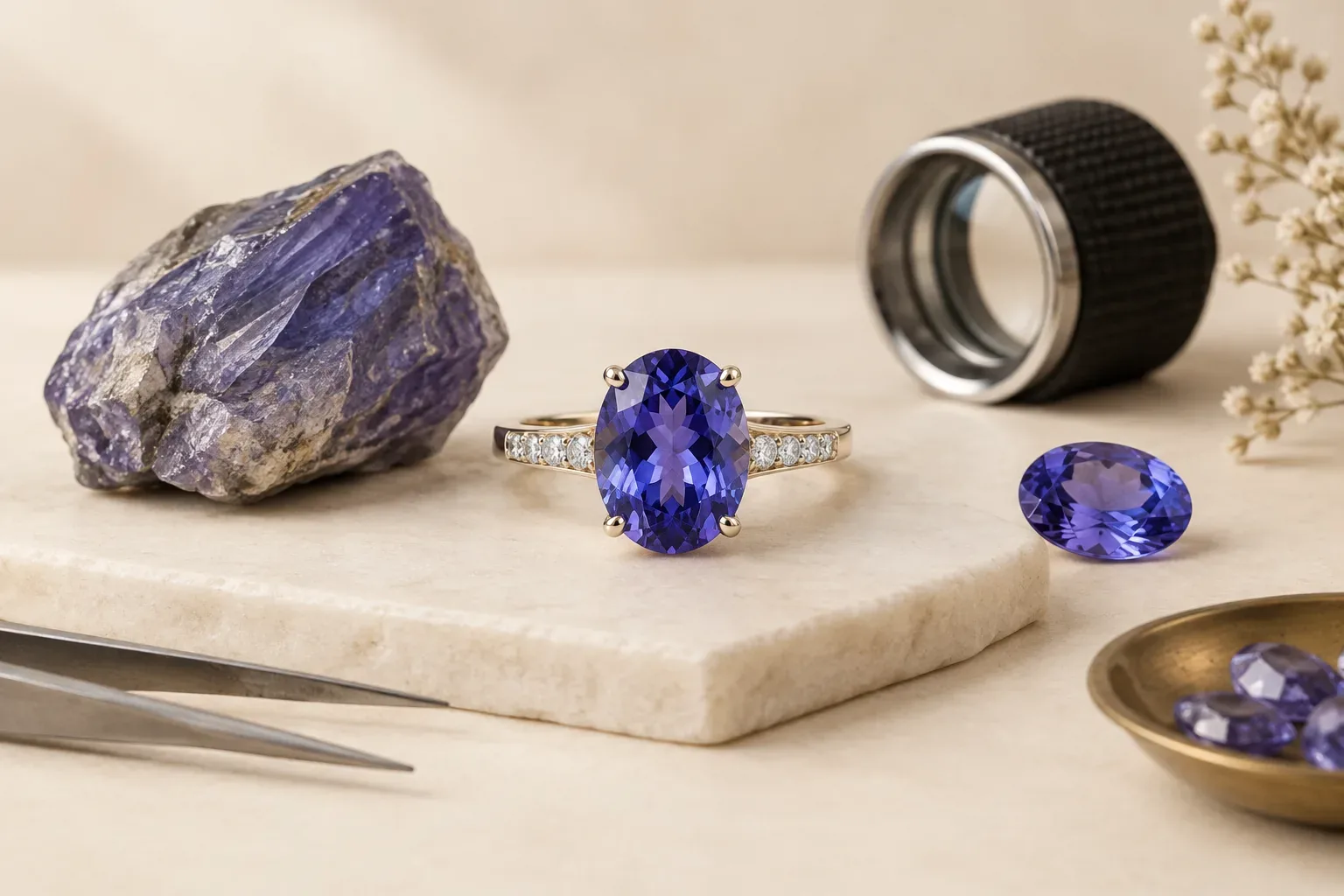
Meaning at a glance
Tanzanite is a visually striking but comparatively delicate gemstone for everyday settings: understand the difference between scratch resistance (hardness) and breakage resistance (toughness), ask for clear disclosure and gem testing, choose protective settings for rings and everyday pieces, and rely on a qualified jeweler or gemological laboratory for identity and durability verification.
Direct answer — should you wear tanzanite every day?
Short answer: tanzanite is best treated as a wear-with-care gemstone. It is prized for its blue–violet color but is not as resistant to scratching and breakage as harder gems used for everyday rings, so many shoppers choose protective settings, occasional wear, or non-ring jewelry for daily use. The guidance below defines the durability terms you need, explains the practical trade-offs, and states what you can and cannot confirm without a qualified jeweler or a gemological laboratory.
Durability terms that matter: hardness, toughness, cleavage and stability
Hardness refers to a stone’s resistance to being scratched by other materials. It is relevant to surface wear, scuffs and loss of polish from contact with harder objects.
Toughness describes how well a gem resists breaking, chipping or cleaving when struck or dropped. Two gems can have similar hardness but very different toughness.
Cleavage is a structural tendency of some minerals to split along specific planes; stones with distinct cleavage planes are more likely to chip or split from impact even if they polish well.
Stability covers how the gem responds to chemicals, heat, and light. Some gemstones undergo treatments to improve color or durability; those treatments and their disclosure affect how a stone should be cared for and what risks remain.
What the authoritative sources say about consumer concerns
Gemological organizations emphasize that treatments, disclosure and detectability shape practical questions for gemstone buyers and owners rather than romantic histories alone. The Gemological Institute of America (GIA) notes that treatments and their disclosure create distinct consumer questions about durability and care, so buyers should expect clear information about any enhancements.
Regulators also stress the buyer’s right to clear statements of identity and treatment. The U.S. Federal Trade Commission (FTC) advises consumers that sellers must clearly distinguish natural, lab-created and treated materials in writing, and that purchasers should seek written disclosure of important facts before purchase.
Documented history and cultural meanings — what is established and what is modern interpretation
There is limited long-standing, cross-cultural historical meaning documented for tanzanite in the way there is for classical gemstones whose histories stretch across many cultures. Authoritative gemology references focus more on modern issues—identity, treatments and consumer disclosure—than on ancient symbolic roles, so much of the symbolic meaning attached to tanzanite is contemporary and individually assigned.
Modern meanings applied to tanzanite—such as associations with new beginnings, spiritual insight, or specific birthstone marketing—are contemporary interpretations and marketing narratives rather than documented cultural traditions transmitted across centuries. Separate these personal or commercial interpretations from objective durability concerns when making a purchase.
How tanzanite typically appears in jewelry today
In recent jewelry markets, gemstone jewelry categories including rings, necklaces, earrings and birthstone pieces have been in strong demand, and tanzanite commonly appears in those formats where its color is showcased. Industry reporting on current trend categories shows growing interest in sculptural jewelry, gemstone rings and birthstone necklaces—contexts where tanzanite is often used for its color impact.
Because of its visual appeal, tanzanite is found in engagement-style rings, cocktail rings, pendants and drop earrings. When set, experienced designers use protective settings or secondary design elements—such as halo diamonds, bezel edges or lower-profile mounts—to reduce exposure to knocks and abrasion.
Practical trade-offs and decision criteria for buyers
Decide your priority: color and rarity versus everyday resilience. If the top priority is vivid color for occasional wear, a high-quality tanzanite in an open setting may be appropriate. If the stone will be exposed to everyday knocks, choose a setting and stone type better suited to daily life.
Ask the seller for written disclosure about whether the stone is natural, treated, or lab-created. The FTC makes clear that these distinctions must be communicated. If a seller cannot or will not provide written disclosure, treat that as a red flag.
Request information about any treatments and how they affect care. The GIA advises that treatments and their detectability influence durability and care recommendations; some color enhancements are stable, others can affect vulnerability to heat or chemicals.
Choose settings and cuts thoughtfully. Protective settings such as bezels, lower-profile prong work, or mounting the gem in jewelry less exposed to impact will materially reduce the risk of chipping or breakage. For very active wearers, consider pendants or earrings rather than rings.
Safe care guidance you can act on at home
Handle tanzanite with care and avoid sudden hard knocks. Store pieces separately or in soft pouches to prevent contact with harder stones or metal that can scratch the surface.
For routine cleaning, use a mild, soapy water rinse and a soft brush, and dry gently with a soft cloth. Because cleaning recommendations depend on whether a stone has been treated, ask the seller or a qualified jeweler for care instructions tied to the stone’s disclosed treatments.
Avoid exposing the gem to harsh chemicals or rapid temperature changes. Avoid ultrasonic or steam cleaners unless a qualified gemological report explicitly states these methods are safe for that specific stone and treatment.
What a shopper can and cannot verify without a lab or qualified jeweler
You can verify certain consumer-facing facts at purchase: whether the seller provides a written disclosure of natural versus lab-created origin, and whether they state known treatments. The FTC expects such disclosures.
You cannot reliably identify treatment status, detectability, specific durability properties (for example, exact cleavage planes or subtle stability limitations) or certify long-term resistance without testing by a qualified jeweler or a recognized gemological laboratory. Ask for a gemological report from a reputable lab for identity and treatment confirmation if that information is material to your decision.
For high-value purchases intended for daily wear, insist on a written return policy and, where feasible, an independent laboratory report that addresses identity, enhancements and any stability limitations. These steps reduce the risk of surprise later and align with best practices advocated by gemological authorities.
Selection and gifting guidance — practical and respectful choices
Match the stone and setting to the recipient’s lifestyle. If the gift is for someone active with hands-on work, select a design that protects the gem or choose jewelry categories less exposed to impact, such as pendants or studs.
Be explicit about origin and treatments in the gifting conversation if the recipient values gemological facts. Ask the seller for written documentation you can pass along as part of the gift, and consider including a note explaining recommended care.
If you want a stone for everyday wear but are concerned about durability, consider alternatives with greater resistance that still provide color and personality. If you proceed with tanzanite, prioritize a low-profile, protective setting and a reputable seller who provides clear, written disclosures and a return window.
Quick checklist before you buy
Confirm written disclosure of natural versus lab-created origin and any treatments, and keep that documentation. Ask whether the seller can supply or recommend a gemological report for identity and treatment confirmation. Choose a protective setting for rings or prefer tanzanite in pieces less likely to suffer impact. Follow care guidance from a qualified jeweler, and avoid ultrasonic/steam cleaning unless the gem’s treatment status is confirmed safe for those methods.
Frequently asked questions
Is tanzanite suitable for an everyday engagement ring?
Tanzanite can be used in engagement rings, but because it is generally less resistant to scratching and impact than the hardest gemstones, many experts recommend protective settings (for example a bezel or halo) or choosing a different, harder stone for a ring that will be worn daily. If you want tanzanite in an engagement ring, insist on written disclosure about treatments and consider a lower-profile, robust setting.
How should I clean tanzanite at home?
For routine cleaning, use warm soapy water and a soft brush, then dry with a soft cloth. Avoid harsh chemicals and rapid temperature changes. Do not assume ultrasonic or steam cleaning is safe—confirm safety only after the seller provides written details of any treatments and a qualified jeweler or lab confirms stability.
Can I tell if a tanzanite has been treated?
You cannot reliably determine treatment status by sight alone. The Federal Trade Commission recommends written disclosure from the seller about treatments, and the Gemological Institute of America emphasizes that detectability and disclosure of treatments are important consumer concerns. For conclusive information, request a report from a recognized gemological laboratory.
What settings best protect tanzanite?
Protective settings such as bezels, lower-profile prong arrangements, halos, or mounting in jewelry less likely to be struck (pendants and earrings) reduce the risk of chipping or fracturing. A reputable jeweler can advise on a setting that balances protection with the aesthetic you want.
Can a jeweler repair or re-polish a chipped tanzanite?
Minor surface scratches and some chips can sometimes be polished or re-cut by a skilled lapidary, but this can reduce the size and change proportions of the stone. Significant fractures may not be repairable. For valuable pieces, consult a qualified jeweler and, if needed, obtain a laboratory report before any significant work.
What documentation should I ask for when buying tanzanite?
Ask for written disclosure of whether the gem is natural, lab-created or treated, details of any known treatments, the seller’s return policy, and, for higher-value purchases, a gemological report from a recognized laboratory confirming identity and treatment status. The FTC advises that consumers receive clear, written information about gemstone identity and enhancements.
Sources and further reading
- Imaginaire Digital — Imaginaire Digital
- Professional Jeweller / PRYA Jewellery Search Insights — Professional Jeweller / PRYA Jewellery Search Insights
- Gemological Institute of America — Gemological Institute of America
- Federal Trade Commission — Federal Trade Commission