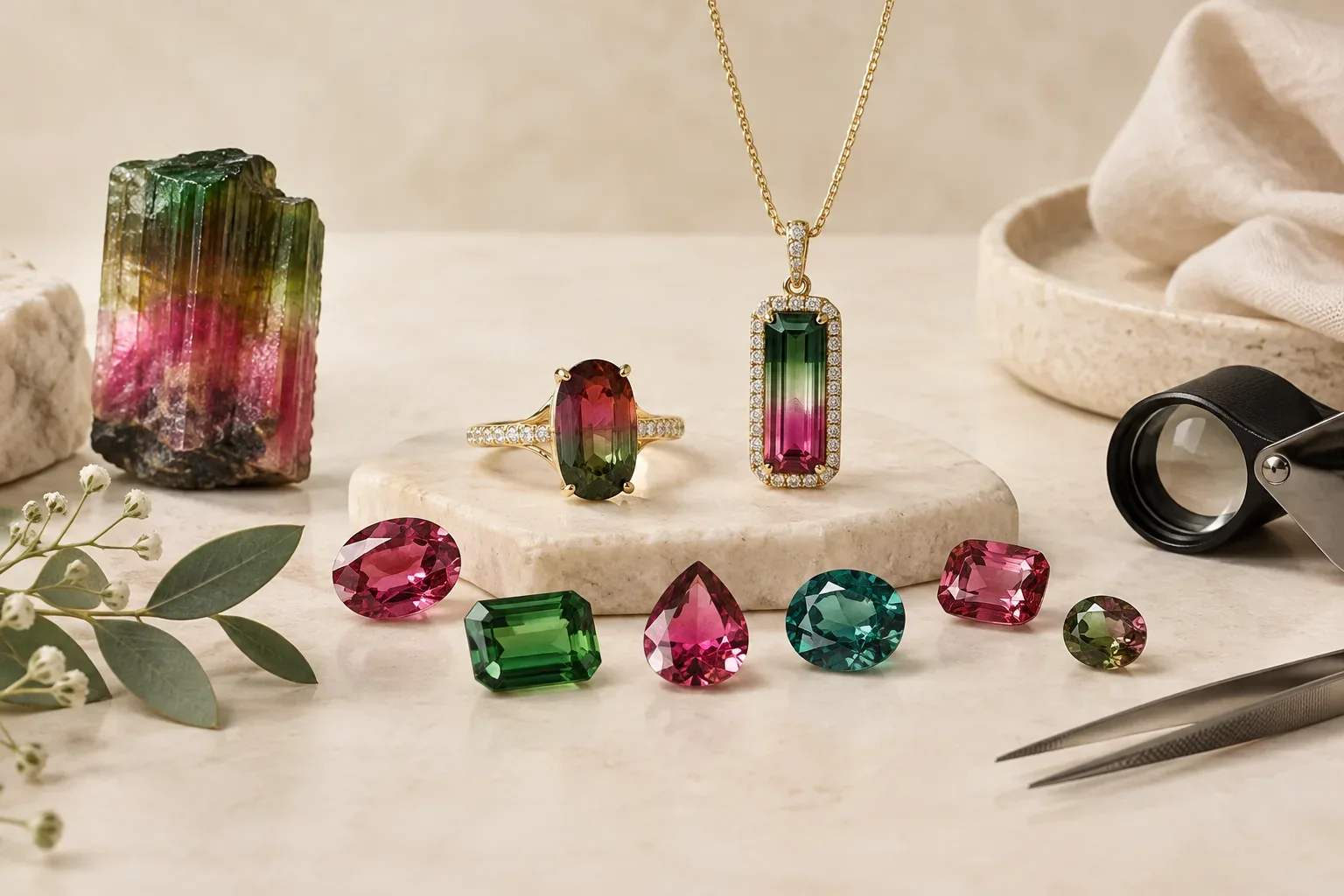
Meaning at a glance
For shoppers the essential tourmaline buying guide is: evaluate color (hue, tone, saturation) first, accept trade-offs between intensity and size, check clarity and cut for durability and sparkle, ask for written disclosure about treatments and origin, and rely on a qualified jeweler or gem lab for certification you cannot verify yourself.
Quick answer
If you want a short version: prioritize color quality (hue, tone and saturation) that matches the look you want, then confirm reasonable clarity and a cut that both shows color and protects the stone, ask the seller for written disclosure of any treatments or lab origin, and expect to pay more for rarer hues and stronger saturation. For any claim about origin, treatment detectability, or precise grading you should rely on a qualified jeweler or an accredited gemological laboratory rather than visual inspection alone.
What this guide covers and the limits of evidence
This guide answers the practical search intent behind “tourmaline buying guide” by giving clear decision criteria, trade-offs to expect, safe care advice, and explicit limits on what a shopper can verify without professional help. The recommendations draw on consumer-protection and gem-treatment principles documented by the Gemological Institute of America and the Federal Trade Commission and on contemporary jewelry market context described by industry publications.
Historical evidence and cultural references
Approved sources for this article do not provide primary historical narratives or culture-specific symbolism for tourmaline. Where historical meanings are offered in other contexts they should be cited to their original cultural sources, but such citations are not available in the selected evidence set for this piece. What the approved sources do document is modern market behavior and consumer concerns about treatments, disclosure and trends in how gemstones are used in jewelry today.
Color: the first decision for buyers
Color is the chief determinant of tourmaline’s appeal and value. Evaluate hue, tone and saturation together: hue is the basic color family, tone is how light or dark the stone appears, and saturation is the intensity of that hue. Strong, evenly saturated colors generally command higher prices; paler or unevenly colored stones cost less but may be desirable for specific styles.
Expect trade-offs between color intensity and carat weight. A deeply saturated smaller stone can be pricier than a larger, washed-out example. Consider the setting and metal as well, because metal color and the cut can either emphasize or mute particular hues.
Clarity: what to inspect and what matters
Tourmalines commonly contain inclusions; a clean stone is often more valuable than one with visible internal flaws, but minor inclusions that do not affect durability or beauty are common and acceptable. Look for inclusions that reach the surface or create structural weakness, especially in stones intended for everyday wear.
When shopping online, request magnified images and a close-up video under consistent lighting. If clarity is a top priority, ask the seller about any clarity grading or whether the stone has been examined by a qualified gemologist.
Cut and shape: balancing sparkle and protection
The cut should maximize color and minimize weak faceting that shows scratches or chips. Faceted cuts emphasise brilliance and hue, while cabochons emphasize color and are less likely to show surface damage. The cutter’s skill matters: well-proportioned facets can make a mid-quality stone look brighter and more valuable.
Choose shapes and bezel or prong settings according to the stone’s hardness and inclusions. A protective setting can reduce the risk of chipping for stones with surface-reaching inclusions or thinner girdles.
Treatments, disclosure and value
Treatments affect price and care. The Gemological Institute of America explains that treatments, their disclosure, detectability and impact on durability are essential consumer considerations. Always request written disclosure of any treatments, enhancements, or whether a stone is lab-created, and compare that disclosure to the seller’s return policy.
The Federal Trade Commission requires clear distinctions among natural, lab-created, treated and imitation materials in sales descriptions, so ask for those written statements and retain them. Treated stones can be more affordable but may require special care or have resale implications compared with fully natural, untreated material.
Durability and care
Follow general gemstone-care principles to prolong a tourmaline’s life. Avoid sudden temperature changes and harsh chemicals, and remove jewelry before strenuous activity. Clean gently with warm soapy water and a soft brush unless the seller specifies otherwise.
If a stone has been oiled, dyed or otherwise treated, the seller or any documentation should state that, because some treatments reduce long-term stability and may require more cautious handling, as noted by the Gemological Institute of America.
How tourmaline appears in contemporary jewelry
Industry trend reports indicate that gemstone rings, birthstone necklaces and sculptural, Art Deco-inspired pieces are strong market categories. Imaginaire Digital’s 2026 search insights and Professional Jeweller’s trend summaries show rising consumer interest in gemstone rings and birthstone necklaces, which places tourmaline well in current jewelry fashions.
Designs range from solitaire rings and stud earrings to clustered charm pieces and multi-stone necklaces. The setting style determines both aesthetic effect and protection; closed-back bezel settings protect edges, while open prong settings let more light in and can enhance color but expose edges to knocks.
Practical selection and gifting guidance
Decide the primary use: everyday wear demands sturdier settings and higher clarity to reduce risk, while occasional-wear or collector pieces can prioritise rare color or size over ruggedness. If buying as a gift, consider the recipient’s metal preference and lifestyle, and choose a setting that offers protection if they lead an active life.
Insist on written disclosures for treatment, origin (if represented), and whether the stone is natural or lab-created. For higher-value purchases consider an independent appraisal or a report from an accredited gemological laboratory to document identity and treatments.
What you can—and cannot—verify yourself
You can verify visual factors such as color, apparent clarity, cut quality, finish and the seller’s written policy directly by inspection, photos and written statements. You cannot reliably verify treatment type, country of origin, or subtle lab-created versus natural indicators with unaided eyes and without proper instruments.
For those claims seek a report from an accredited gemological laboratory or ask for a seller-furnished certificate from a recognized lab. The FTC’s guidance recommends written seller disclosures for material distinctions and the GIA details how certain treatments require expert detection, so rely on professionals for those verifications.
A simple buyer’s checklist
Ask for clear photos and video under neutral lighting, request written disclosure of treatments and origin, compare color quality against your stylistic goals, confirm the setting’s protective qualities, check return and repair policies, and obtain an independent lab report for high-value purchases. Keep all invoices and certificates in case future verification is needed.
Final notes
Tourmaline rewards careful selection: prioritize color, confirm clarity and cut for your intended use, insist on written disclosure about treatments and origin, and use accredited gemological services for verification you cannot do yourself. Recent market reporting shows consumer interest in gemstone rings and birthstone pieces, so tourmaline fits well into both fashion-led and personal-gift choices when you follow these steps.
Frequently asked questions
How should I prioritize color, clarity and cut when buying tourmaline?
Prioritize color first because it most affects appearance and price, then assess clarity for durability and visual impact, and finally choose a cut that enhances the color while offering structural protection appropriate to intended wear.
Can I tell if a tourmaline has been treated by looking at it?
You cannot reliably detect many treatments with unaided visual inspection. Request written disclosure from the seller and consider an accredited gemological lab report for definitive identification, as recommended by the Gemological Institute of America and the Federal Trade Commission.
Is a lab-created tourmaline the same as a natural one?
Lab-created stones can resemble natural stones visually but differ in origin and often in price and resale value. The FTC requires sellers to clearly disclose lab-created versus natural status in writing, so check the seller’s documentation.
What care does tourmaline need?
Avoid harsh chemicals and sudden temperature changes, remove jewelry during strenuous activity, and clean with warm soapy water and a soft brush unless the seller advises otherwise. Treated stones may need additional caution; follow any treatment-specific care instructions you are given.
When should I get a lab report or appraisal?
Obtain a lab report or independent appraisal for higher-value purchases, for insurance purposes, or if the seller makes claims about origin or treatments that you want independently verified.
Sources and further reading
- Imaginaire Digital — Imaginaire Digital
- Professional Jeweller / PRYA Jewellery Search Insights — Professional Jeweller / PRYA Jewellery Search Insights
- Gemological Institute of America — Gemological Institute of America
- Federal Trade Commission — Federal Trade Commission