Meaning at a glance
Amethyst is a durable gemstone for many types of jewelry thanks to its Mohs hardness of 7, but its relative brittleness, potential for surface wear, and common treatments mean buyers should weigh setting style, intended daily wear, and request clear disclosure or testing from a qualified jeweler or laboratory.
Understanding amethyst durability: hardness, toughness and structure
When shoppers ask for an “amethyst durability guide,” they are usually asking how the gemstone handles scratches, breaking, chipping and routine exposure. The primary technical measures are hardness and toughness. Hardness describes resistance to scratching; toughness describes resistance to breaking or chipping under impact. Amethyst sits comfortably in the family of quartz, which is substantially harder than many organic gems and softer gemstones but is not as hard as corundum or diamond.
Because hardness and toughness are different properties, a stone that resists scratches may still chip if struck. Practical durability depends on both the gem’s innate properties and the setting and care the piece receives. Treatments and manufacturing decisions (for example, cutting, facet thickness and mounting style) also affect how a stone performs in daily life.
Historical evidence and cultural notes
Amethyst has a long presence in human material culture and symbolism, and references to its historic uses appear across many sources. Writers and dealers commonly link amethyst to ancient Mediterranean cultures, medieval Europe and later traditions in Asia and the Americas. These cultural associations concern meaning and use rather than durability.
This article focuses on physical durability rather than on interpreting those historic meanings. If you want a cataloged, source-by-source history of amethyst’s symbolic roles in specific cultures or periods, consult specialist historical or museum publications; those details are outside this durability-focused guide.
Documented historical meanings versus modern personal interpretations
Documented historical meanings are statements grounded in primary historical records, archaeological finds, museum catalogues or academic scholarship. Modern personal interpretations are contemporary beliefs, spiritual attributions or marketing narratives that people attach to amethyst today. The two categories sometimes overlap, but they are not the same thing and do not affect the physical durability of the stone.
When deciding whether a piece is right for you or a gift recipient, treat historical claims and modern interpretations as distinct. Historical claims should be checked against reliable academic or museum sources. Modern personal interpretations are subjective; they can be an important part of gifting but do not change how the gem must be cared for or how it will wear over time.
How amethyst commonly appears in jewelry today
In contemporary jewelry the amethyst is widely used in rings, pendants, earrings and bracelets. Industry research and search trends show steady consumer interest in gemstone rings, birthstone necklaces and sculptural gemstone pieces, and amethyst often fills that role as an accessible purple gemstone. Trade reporting on 2026 trends highlights growth in gemstone rings and birthstone necklaces, which are common contexts for amethyst.
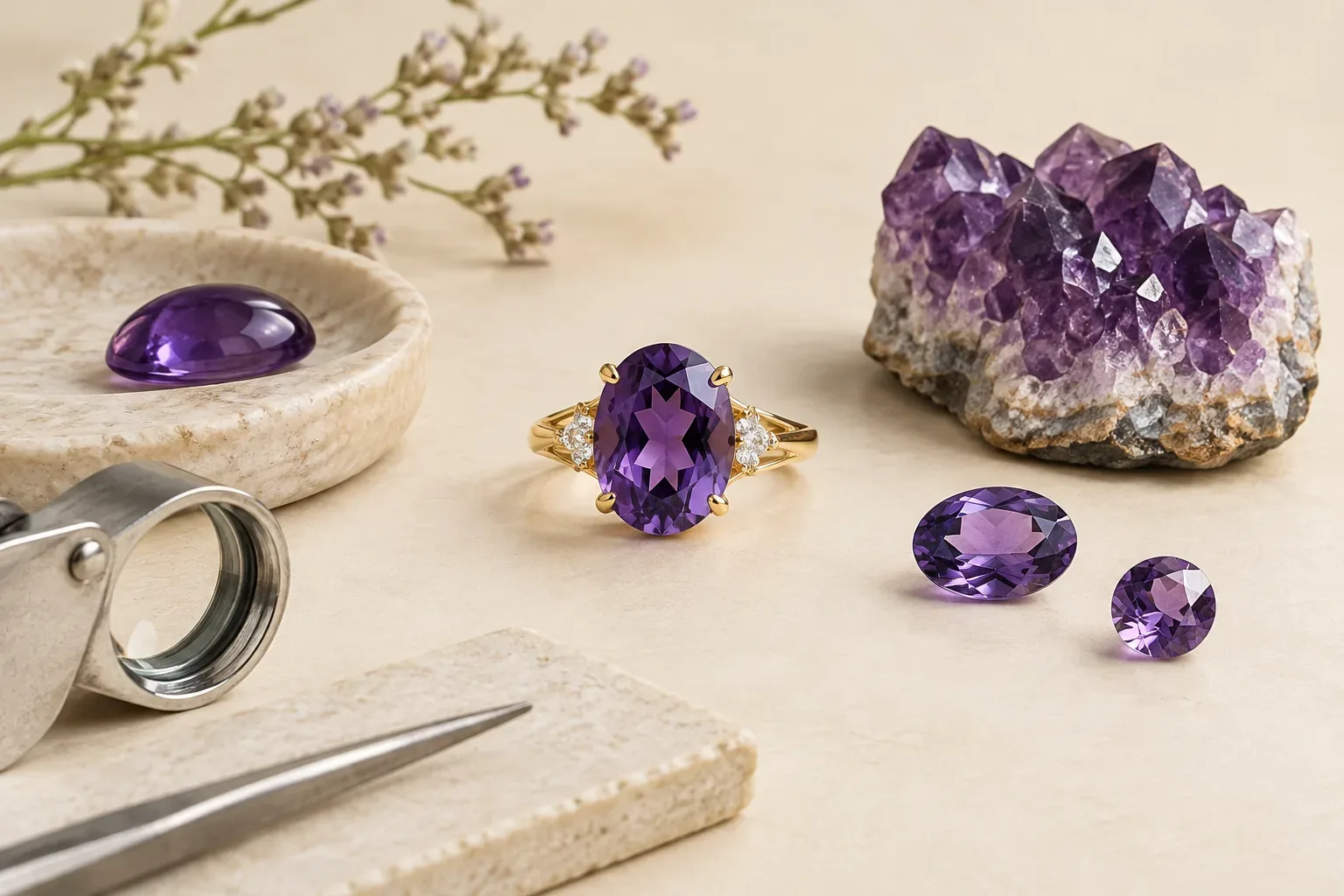
Because amethyst is available in a range of cuts and sizes, designers use it in everything from small studs and cluster rings to larger sculptural pendants. When set in rings, protective design choices—such as bezel settings or lowered prong profiles—are common recommendations for stones that will be worn daily.
Practical selection and gifting guidance
Match your selection to expected wear. For someone who wears rings every day, choose amethyst set in a protective mount (bezel or low prongs) or in a design that shields the pavilion and girdle from direct impact. For pendants and earrings, open settings are acceptable because these pieces generally face fewer direct knocks than rings.
Balance color and durability. Vivid color often commands higher prices and may come in larger or more prominent cuts—both of which increase the chance of exposure to wear. If you prioritize durability over maximum color intensity, favor smaller stones in protective settings or consider designs that place amethyst in secondary position behind a metal halo.
Ask the seller specific, documented questions. Under Federal Trade Commission guidance, sellers should disclose whether a gem is natural, lab-created, treated, or an imitation. If treatment history matters to you, request written disclosure and, when appropriate for the value of the piece, a report from a qualified gemological laboratory or a qualified jeweler’s appraisal.
Care and safe cleaning
Routine care extends the life and appearance of amethyst. Clean amethyst with warm, soapy water and a soft brush or cloth to remove oils and dirt. Rinse well and dry with a soft cloth. Avoid prolonged exposure to household bleach, acids, or abrasive cleaners and remove amethyst pieces before heavy manual work or sports.
Treatments and cleaning methods: treatments such as heating may be used on colored gemstones and must be disclosed. The Gemological Institute of America notes that treatments, detection and disclosure create specific consumer questions. Before using ultrasonic or steam cleaners, ask the seller or a qualified jeweler whether the particular stone and its treatment history make those methods safe. If you cannot obtain reliable disclosure, stick with gentle soap-and-water cleaning.
Trade-offs and decision criteria
Trade-offs include color and size versus everyday durability and cost. Larger, faceted amethysts show surface wear sooner than smaller stones and will show scratches more readily. Highly polished facets can be re-polished by a jeweler if damage is superficial, but deeper chips or fractures require recutting which reduces weight and alters appearance. Protective settings add metal and may change the visual impact of the stone while substantially improving real-world durability.
For gift buyers, consider the recipient’s lifestyle. For someone active or who frequently handles materials that can knock a stone, choose protective settings and smaller stones. For someone who values color and display over rugged day-to-day use, a larger amethyst in an open setting may be appropriate if they understand the care needs.
What shoppers can verify and when to consult experts
A buyer can verify basic, visible things without specialized equipment: whether the stone is mounted securely, whether the setting style is protective, and whether the seller provides written disclosure about natural, treated or lab-grown status. The Federal Trade Commission emphasizes the need for clear distinctions and written disclosure about these categories.
A qualified jeweler can inspect mounting security and recommend setting changes or repairs. Only a recognized gemological laboratory or a qualified gemologist can reliably identify subtle treatments, confirm natural versus lab-grown origin for many gems, or perform graded durability testing. If treatment history or origin materially affects your decision, ask for a laboratory report from a reputable provider and, where appropriate, request that the seller pays or subsidizes testing for high-value purchases.
Concluding practical checklist
For everyday wearers: select protective settings, clean gently, remove before physical work, and keep an eye for surface wear. For gift givers: match the piece to the recipient’s lifestyle and ask for written disclosure about the stone’s status. For any purchase where treatment, origin or durability claims matter, obtain a laboratory report or an independent appraisal. Trade reporting and industry guidance emphasize that these consumer questions remain central in the modern gem market.
Frequently asked questions
Is amethyst suitable for an everyday engagement ring?
Amethyst can be used in an engagement ring, but for everyday wear choose a protective setting such as a bezel or a low-prong mount, accept that the stone may show surface wear over time, and insist on written disclosure about treatment or origin. For high-value purchases, obtain a laboratory report or independent appraisal.
Can I clean amethyst in an ultrasonic cleaner?
Not always. Some amethysts and some treatments are sensitive to ultrasonic or steam cleaning. If the seller cannot confirm treatment history and safety, use warm, soapy water and a soft brush instead and consult a qualified jeweler for confirmation.
How can I tell if an amethyst is natural, treated, or lab-grown?
Visible inspection can reveal some clues but cannot reliably determine treatment or origin. Only a qualified gemologist or a recognized gemological laboratory can provide definitive identification and report on treatments.
What setting styles best protect an amethyst?
Bezel settings and low-profile prong settings that cover the girdle and offer metal protection to the edges are best for protecting amethyst from knocks and chipping during everyday wear.
Should I ask for written disclosure when buying amethyst?
Yes. The Federal Trade Commission requires clear disclosure about whether a gemstone is natural, lab-created, treated, or an imitation. Request written documentation and, for expensive pieces, a laboratory report.
Sources and further reading
- Imaginaire Digital — Imaginaire Digital
- Professional Jeweller / PRYA Jewellery Search Insights — Professional Jeweller / PRYA Jewellery Search Insights
- Gemological Institute of America — Gemological Institute of America
- Federal Trade Commission — Federal Trade Commission