Meaning at a glance
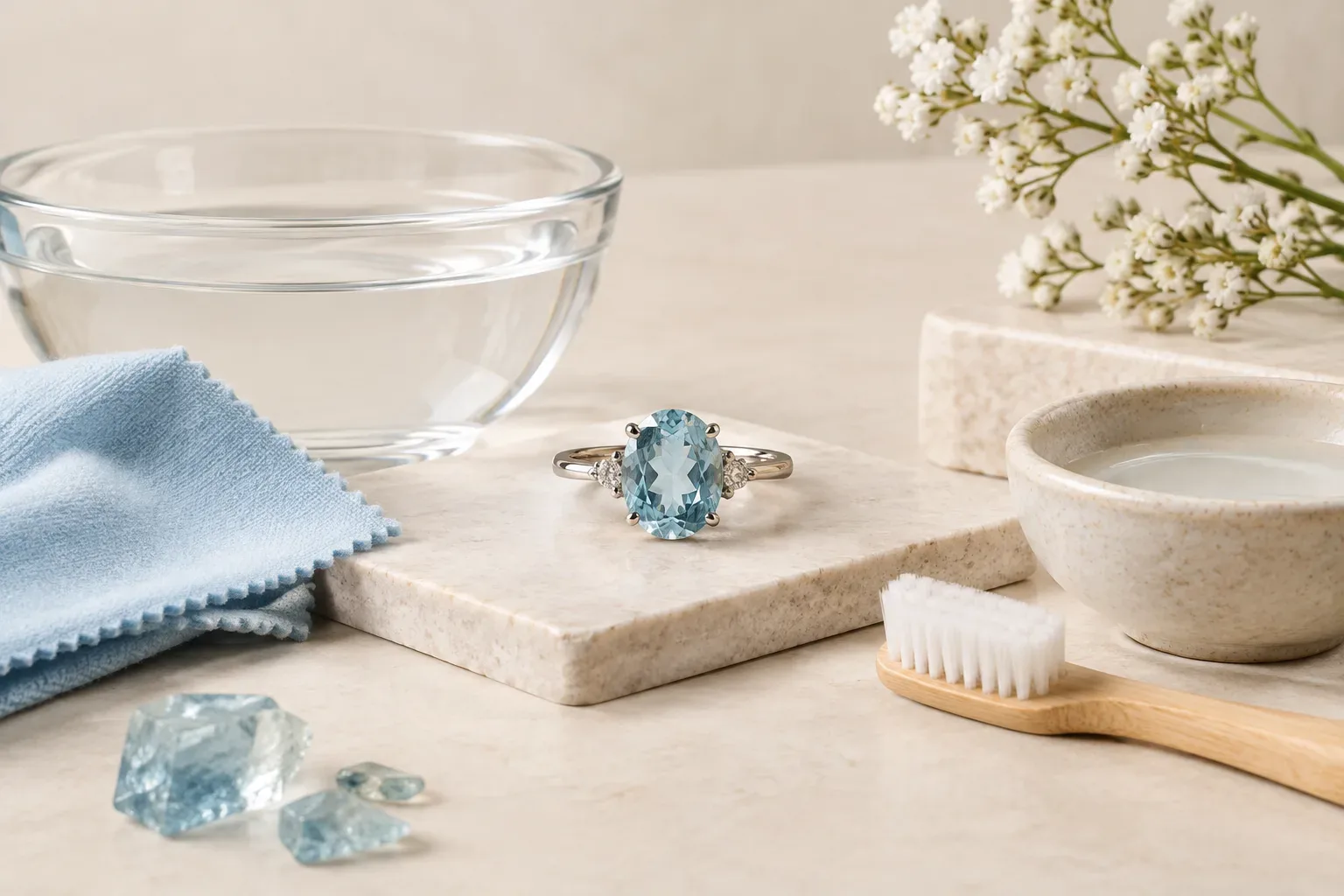
For routine cleaning of most aquamarine jewelry, warm water, mild dish soap, and a soft brush are safe; avoid harsh chemicals, prolonged heat, and machinery such as ultrasonic or steam cleaners unless a qualified jeweler confirms the gem’s treatment status and durability. The Gemological Institute of America notes that treatments and durability affect care needs, and the Federal Trade Commission requires sellers to disclose treatments and origin information so buyers can make informed choices.
Why this specific advice?
Aquamarine belongs to the beryl family and is generally hard and durable for everyday wear, but individual gems vary by clarity, cut, and any treatments they have received. The Gemological Institute of America emphasizes that treatments, detectability, and durability create distinct consumer care questions for gemstones, so cleaning should be matched to what is known about a particular stone.
Historical evidence and limits of the record
The approved sources for this article do not provide new primary historical records that pinpoint exactly how aquamarine was used or symbolized in each ancient culture. Because our evidence set focuses on modern trade, consumer protection, and gemology practice, it does not supply a detailed, culture‑by‑culture catalog of historic meanings for aquamarine.
If you need precise, dated historical evidence for a culture or period, consult dedicated gemological histories, museum catalogues, or academic works. The Gemological Institute of America and specialist libraries maintain more extensive historical bibliographies and can point to documented uses and references in specific regions and eras.
Documented historical meanings versus modern personal interpretations
Documented historical meanings require primary or well‑cited secondary sources such as museum records, contemporary writings, or scholarly analysis. Those are not contained in the approved evidence for this article, so we do not assert particular ancient beliefs or ritual uses here as documented fact.
Modern personal interpretations — for example, treating aquamarine as a stone of calmness or a nautical token — are contemporary cultural framings that many buyers and wearers adopt today. These personal meanings are valid as individual expressions, but they are different from documented historical claims and should not be presented as universal or ancient fact without appropriate historical citations.
How aquamarine appears in jewelry today
Contemporary jewelry uses aquamarine in everything from solitaire rings and stud earrings to cluster necklaces and statement cuffs. Industry trend reporting highlights that gemstone rings and birthstone necklaces are areas of strong consumer interest, and aquamarine commonly appears among those pieces because of its range of pale blue to greenish‑blue hues and its relative durability in daily wear situations, according to professional jewellery trend sources.
Selection and gifting guidance
When selecting or gifting aquamarine, ask the seller for written disclosures about whether the stone is natural, lab‑created, or treated. The Federal Trade Commission requires clear distinctions among natural, lab‑created, treated, and imitation materials, so insist on documentation and return terms before purchase.
Consider the setting and lifestyle of the recipient. Choose protective settings such as bezel or halo mountings for active wearers, and prefer slightly harder metals or protective prongs for rings. If the buyer prioritizes higher clarity or color, request magnified images or an in‑person inspection by a jeweler and ask for any laboratory reports that confirm origin and treatments.
If you want a piece that aligns with current fashion, trade insights show ongoing demand for sculptural and gemstone rings and for birthstone necklaces, so aquamarine can be a timely and personal gift choice.
Step‑by‑step safe cleaning methods
Prepare a bowl of warm (not hot) water with a drop or two of a mild, phosphate‑free dish soap. Avoid strong detergents, bleach, or household solvents because they can affect metal finishes and, in some treated stones, interact with filling materials.
Soak the aquamarine jewelry briefly — usually a few minutes — to loosen surface dirt. Gently scrub with a soft toothbrush or a dedicated jewelry brush, paying attention to the undersides and the setting where oils and debris collect.
Rinse thoroughly in warm running water to remove soap residue, then dry with a clean, lint‑free cloth. Allow rings and bracelets to air‑dry fully before putting them back on to ensure moisture trapped in settings has evaporated.
What to avoid: cleaners, heat, and mechanical risks
Do not use steam cleaners or ultrasonic cleaners for aquamarine unless a qualified jeweler has inspected the gem and the setting. The Gemological Institute of America warns that treatments, fills, and certain inclusions can make gemstones vulnerable to damage from ultrasonic and steam cleaning.
Avoid prolonged exposure to direct heat or sudden temperature changes. While aquamarine is relatively heat‑resistant compared with softer gems, heat can affect some treated stones or cause changes to the setting and adhesives. Also avoid harsh chemicals such as bleach and acids that will damage metal and could affect treated surfaces.
Do not attempt to verify treatments, origin, or laboratory grading at home. Many treatments are detectable only with gemological tools and expertise; the Federal Trade Commission recommends obtaining written disclosure and, when in doubt, a qualified appraisal or laboratory report.
When to consult a jeweler or gemological laboratory
Consult a qualified jeweler if the stone has deep fractures, cloudiness that cleaning does not remove, or visible fillings. A jeweler can advise whether professional cleaning, repair, or a laboratory test is warranted.
If you require definitive answers about whether an aquamarine is natural, heat‑treated, or lab‑created, an accredited gemological laboratory can provide a report. The Gemological Institute of America and other labs explain that treatments and detectability determine consumer expectations, and only laboratory testing can reliably confirm many of these attributes.
Practical trade‑offs and decision criteria for care
Choose simple at‑home cleaning for routine maintenance and reserve professional cleaning for valuable or complicated pieces. The trade‑off is convenience versus certainty: home cleaning is inexpensive and usually safe for intact, disclosed stones, while professional evaluation protects against hidden treatments or structural vulnerabilities.
Make purchasing decisions based on documented disclosures, return policies, and whether a seller will provide pre‑purchase inspection. The Federal Trade Commission advises consumers to insist on clear labeling and written information about treatments and origin so that buyers can set realistic expectations about care and durability.
Final practical checklist
Use mild soap, warm water, and a soft brush for routine cleaning. Avoid ultrasonic and steam cleaners unless a professional confirms the stone is suitable for such methods. Ask sellers for written disclosures about treatments and origin, and seek a laboratory report for high‑value purchases or when treatment status is unclear.
Frequently asked questions
Is it safe to clean aquamarine in an ultrasonic cleaner?
Not unless a qualified jeweler has inspected the stone and confirmed it is free of treatments or fractures that make it vulnerable. The Gemological Institute of America notes that some treatments and inclusions can be damaged by ultrasonic cleaning.
Can I use steam cleaning on aquamarine?
Avoid steam cleaning unless a professional has verified the stone’s stability. Steam can force moisture into fractures or affect certain fills and treatments.
How often should I clean everyday aquamarine jewelry?
For everyday wear, a gentle home cleaning every few weeks or when the piece looks dull is reasonable. More frequent cleaning may be needed for rings or pieces exposed to lotions, cosmetics, or heavy soil.
How can I tell if my aquamarine is treated or lab‑created?
You cannot reliably determine treatment or laboratory origin at home. The Federal Trade Commission advises obtaining written disclosures from the seller and, for definitive answers, a report from an accredited gemological laboratory.
What should I do if my aquamarine becomes cloudy after cleaning?
Stop home cleaning and consult a qualified jeweler. Cloudiness can come from trapped moisture, a reaction with a cleaning agent, or underlying damage that requires professional assessment.
Sources and further reading
- Imaginaire Digital — Imaginaire Digital
- Professional Jeweller / PRYA Jewellery Search Insights — Professional Jeweller / PRYA Jewellery Search Insights
- Gemological Institute of America — Gemological Institute of America
- Federal Trade Commission — Federal Trade Commission