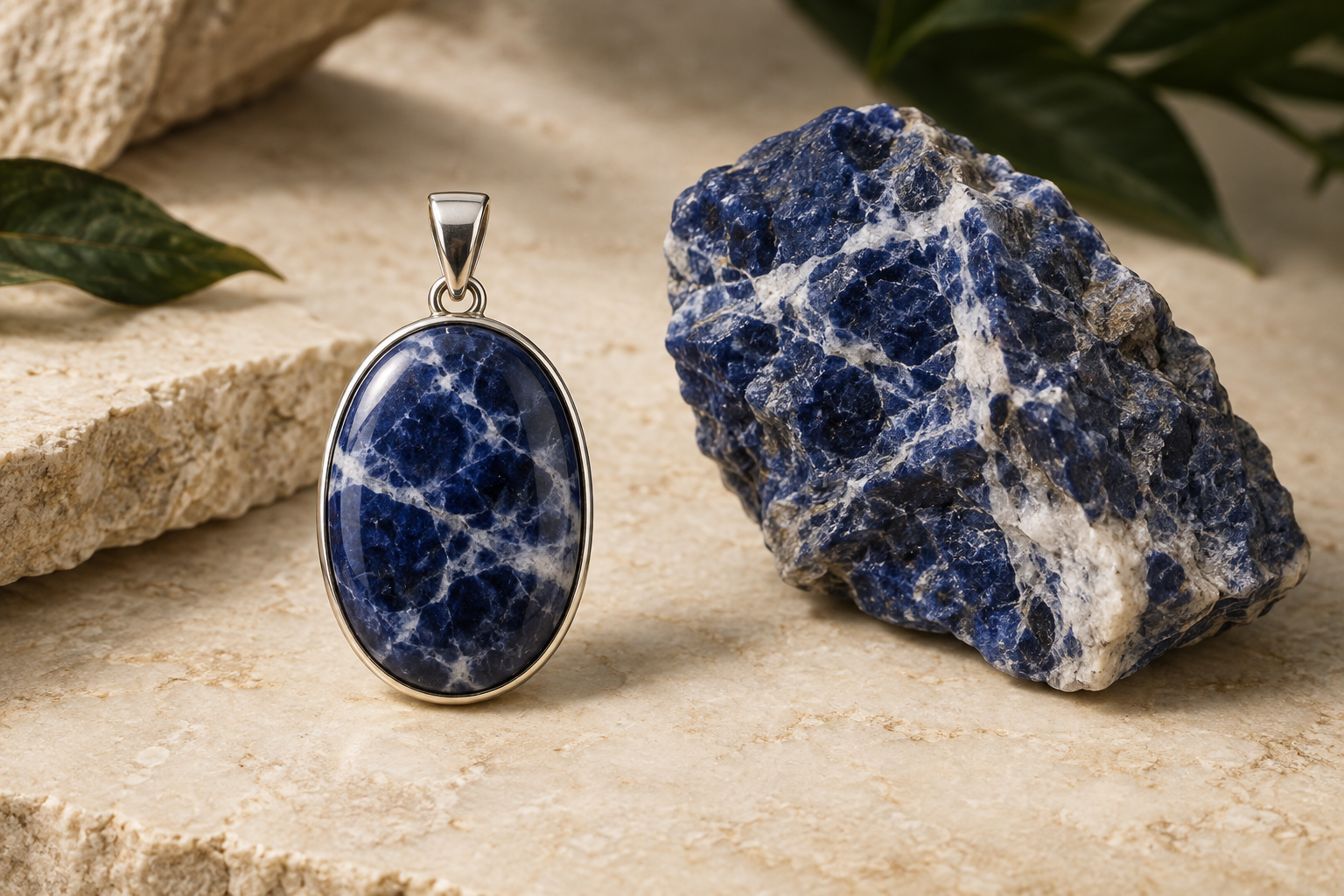
Meaning at a glance
Sodalite jewelry meaning centers on its blue color and mineral identity: sodalite is a blue mineral often veined with white, is in a mineral group that includes photochromic hackmanite, and should not be confused with lapis lazuli, which is a rock; historical symbolic evidence is limited, while contemporary interpretations are personal and stylistic.
What the historical evidence shows (and does not show)
There is relatively little well-documented ancient symbolism attached specifically to sodalite in comparison with long-used materials such as lapis lazuli. The Gemological Institute of America (GIA) treats sodalite primarily as a mineralogical subject, describing its properties, varieties, and localities rather than long histories of ritual symbolism. For example, GIA publications note sodalite occurrences in modern geological localities such as Myanmar and Afghanistan and describe the mineral's physical behavior and its relationship to other members of the sodalite mineral group.
The Smithsonian National Museum of Natural History places sodalite in the broader context of gem materials and minerals, emphasizing how gemologists and collectors classify and value different materials. The Smithsonian's overview helps explain why some materials — those that are distinct minerals versus composite rocks — have different documentary trails in archaeological and historical records. Because lapis lazuli is a rock composed of several minerals and has a long, well-documented history of use in ancient art and decoration, it appears more frequently in historical sources than sodalite, which has a more limited documentary footprint.
In short, the documentary record preserved in the cited professional literature emphasizes mineral identity, occurrence, and properties. When discussing historical meaning, the clear evidence in the approved sources is mainly geological and gemological rather than ethnographic or ritual.
Documented mineral facts versus modern personal meanings
Documented, source-supported facts about sodalite are mineralogical: sodalite is a distinct mineral commonly showing blue color with white calcite veining; it is a member of a mineral group that also contains hackmanite, a variety noted for reversible photochromism, meaning that some specimens change color in response to light. These facts are supported by GIA research on sodalite and hackmanite and by museum resources that explain gem materials in scientific terms.
Modern symbolic uses and personal interpretations are different in kind. Over the past few decades, sodalite has entered the commercial jewelry and new-age markets where sellers and wearers often ascribe contemporary meanings such as calmness, clarity of thought, or enhanced communication to blue stones. Those associations are modern, subjective, and culturally variable; they are not established historical claims about sodalite in the professional literature cited here. Treat modern meanings as personal or stylistic preferences rather than universal or historically documented truths.
How sodalite appears in jewelry
Jewelry designers and manufacturers use sodalite in a range of ways that highlight its blue color and attractive veining. Common forms include polished beads for necklaces and bracelets, cabochons for pendants and rings, and flat or shaped pieces used in inlay work. Sodalite's visual appeal comes from saturated blue tones often contrasted with lighter calcite veins; design choices typically emphasize that contrast to create bold, graphic pieces or softer, marbled looks.
Hackmanite — the photochromic member of the sodalite group — is used less commonly and is generally of interest to collectors and designers who want a novelty or scientific curiosity component in their pieces. The Gemological Institute of America documents hackmanite's reversible color-change behavior and identifies it as a member of the sodalite group, which is useful to know when shopping for jewelry that advertises color-changing properties.
Because sodalite is a distinct mineral and not a rock like lapis lazuli, jewelers treat it differently when designing pieces and when describing material origin. Accurate identification benefits buyers: reputable sellers should be able to describe whether a piece is sodalite, a sodalite group variety, or another blue material.
Selecting sodalite jewelry: practical guidance
When choosing sodalite jewelry, start with the stone's appearance and how it fits the wearer’s style. Look for the depth and uniformity of blue, the patterning of white veining, and the overall finish. Personal preference plays a major role: some people prefer bold, deep blues with minimal veining while others value dramatic contrast and marbling.
Ask the seller for information on the stone's identity and, when relevant, whether the piece contains hackmanite. Because hackmanite's photochromism is a distinct property, buyers who value that effect should request demonstration or documentation. The Gemological Institute of America resources explain hackmanite's behavior and confirm its membership in the sodalite group, so confirming a dealer's identification helps ensure you get the expected properties.
Consider how the jewelry will be worn. If the piece is intended for daily wear, choose styles that protect the stone, such as bezel settings or pendant designs that reduce exposure to knocks. If you are buying for an occasional or decorative piece, you can prioritize visual impact over protective settings. If you are uncertain about a seller's description, ask for provenance details or for a reputable laboratory identification.
Gifting sodalite jewelry respectfully
When gifting sodalite jewelry, be thoughtful about the recipient's beliefs and preferences. If you plan to mention symbolic meanings such as calm, intuition, or communication, frame them as contemporary, personal interpretations rather than historical facts. This respects cultural differences and the distinction between documented mineral history and modern marketing or spiritual associations.
Select a piece that matches the recipient's style and lifestyle. For someone who prefers minimalist jewelry, choose a small pendant or a single-bead bracelet; for someone who likes statement jewelry, choose large cabochons or dramatic inlay work. If the recipient cares about geological authenticity, share the stone's identification and any lab reports or seller details that confirm whether the piece is sodalite or another blue material.
If you are gifting a piece that advertises hackmanite’s color change, make that feature part of the gift presentation: demonstrate the effect and explain that it is a property of certain sodalite-group materials as described in professional gemological literature. This makes the gift both informative and engaging without overstating historical claims.
Care and maintenance (practical tips)
Clean sodalite jewelry gently. Use a soft cloth and mild soap with water for routine cleaning, and avoid strong solvents or prolonged exposure to harsh chemicals that could affect polish or settings. Dry stones and settings thoroughly before storage.
Protect sodalite pieces from hard knocks and sharp impacts. When not worn, keep sodalite jewelry separately from harder gem materials to reduce the chance of scratching or chipping. Choose secure settings and regular inspection if the piece is worn often.
If you own a hackmanite specimen, remember that its photochromic behavior can be a characteristic collectors seek. If you need confirmation of a stone's identity or properties, consult a reputable gemological laboratory or a knowledgeable professional. The GIA resources on hackmanite and on regional sodalite occurrences are appropriate reference points for questions about identification and photochromism.
Final considerations
Sodalite jewelry meaning is best understood as a combination of mineral identity and contemporary personal interpretation. The stone's striking blue and veined appearance makes it a popular choice for designers and wearers, while its membership in a mineral group that includes photochromic varieties adds a layer of scientific interest. Use reputable information, ask sellers for identification when needed, and treat symbolic meanings as personal rather than universal.
Frequently asked questions
Is sodalite the same as lapis lazuli?
No. Sodalite is a distinct mineral commonly blue with white veining, while lapis lazuli is a rock composed of several minerals. They are different materials and are not synonyms.
Does sodalite change color?
Some members of the sodalite mineral group, such as hackmanite, can show reversible photochromism (a reversible color change in response to light). This property is documented in Gemological Institute of America research; not all sodalite specimens are photochromic.
How should I care for sodalite jewelry?
Clean sodalite with mild soap and water and a soft cloth, avoid prolonged exposure to harsh chemicals, protect pieces from hard knocks, and store them separately from harder stones. If you own a piece marketed for photochromic behavior, ask the seller for demonstration or documentation.
What should I ask a seller when buying sodalite jewelry?
Ask the seller to confirm the stone's identification, whether the piece contains hackmanite or another sodalite-group variety, the stone's origin if known, and any lab reports or return policies. If the seller claims special properties such as color change, request a demonstration.
Sources and further reading
- Hackmanite/Sodalite — Gemological Institute of America
- Sodalite from Myanmar and Afghanistan — Gemological Institute of America
- Gems and Minerals: Beauties and Building Blocks — Smithsonian National Museum of Natural History