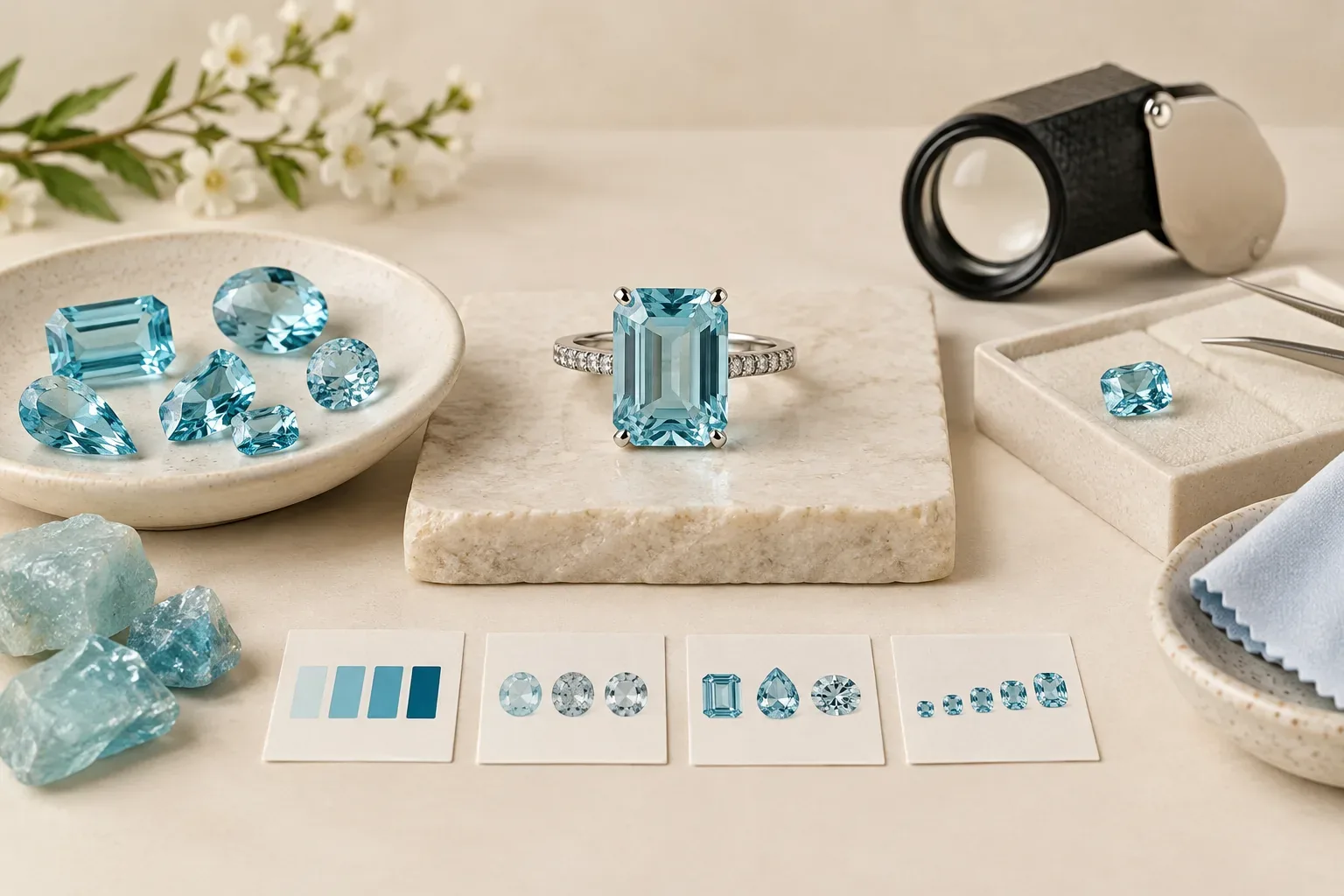
Meaning at a glance
This guide answers the search intent behind "aquamarine buying guide" by defining buyer priorities (color, clarity, cut, carat, treatments), explaining practical trade-offs, offering care and gifting guidance, and setting clear boundaries on what only a qualified jeweler or gemological laboratory can verify.
Quick answer
For most shoppers, an effective aquamarine buying strategy is to prioritize the color tone and saturation you prefer, confirm any treatments and origin claims in writing, ask for a gemological report for high-value stones, and choose a cut and setting that balance beauty with durability. Sellers must disclose treatments and whether stones are natural, lab-created, or imitations; for everything beyond basic visual inspection and seller documentation, rely on a qualified jeweler or a gemological laboratory.
How this guide approaches the question
The aim here is practical: define the decision criteria a buyer uses when choosing aquamarine, describe real trade-offs between color, clarity, cut and price, explain standard care and disclosure issues, and set clear limits on what a consumer can verify without professional help. The guidance reflects consumer-protection principles from the Federal Trade Commission and treatment and disclosure practices described by the Gemological Institute of America, and it also notes contemporary jewelry trends reported by industry publishers.
Historical evidence and cultural context (what the reviewed sources show)
Among the specific sources used for this article, there is little direct documentation of precise historical cultural meanings for aquamarine. The industry and consumer-safety sources consulted focus on treatments, disclosure and contemporary trends rather than detailed cultural histories. As a result, this guide does not assert specific historical beliefs about aquamarine for particular cultures or periods because the approved references do not provide that evidence.
Documented meanings versus modern interpretation
Documented meanings: The reviewed regulatory and gemology sources do not provide primary historical evidence tying aquamarine to particular rituals or precise cultural meanings. Consumer guidance therefore treats historical symbolism as outside the scope of the factual material in these sources.
Modern personal interpretation: Contemporary shoppers and designers often choose aquamarine for its fresh, ocean-like color and for use in birthstone or seasonal jewelry. Trade publications note growth in gemstone rings, birthstone necklaces, sculptural jewelry and antique-inspired styles; these are current market patterns rather than historical symbolic assertions. When selecting or gifting aquamarine, recognize that symbolic meanings people attach today are personal and vary by culture and individual preference.
How aquamarine typically appears in jewelry today
Industry trend reports indicate aquamarine appears across a range of jewelry types that are currently in demand. Professional and trade analysis shows rising interest in gemstone rings, birthstone necklaces and sculptural, statement pieces, which often feature colored gems as focal stones.
In practice you will see aquamarine used in rings, pendants, earrings and multi-stone designs. Designers may set aquamarine as a single centerpiece or combine it with accent diamonds or other colored stones for contrast. Settings and cuts are chosen to showcase color and clarity while protecting the stone from knocks.
Decision criteria: color, clarity, cut, carat, and treatments
Color: Color is usually the single most visible trait buyers notice. Many shoppers prefer a clean, evenly saturated bluish tone, but personal taste matters. Trade sources highlight that gemstones and birthstone jewelry remain a strong retail category, so color trends can be influenced by fashion and seasonal demand.
Clarity: Aquamarine often shows good clarity to the naked eye, but stones with eye-visible inclusions may be priced lower. For a given carat weight, higher clarity typically commands higher prices, though some buyers accept minor natural inclusions to get a larger or more intensely colored stone.
Cut: Cut affects how the stone displays color and how it handles light. A well-proportioned cut can make a mid-tone stone look livelier, while a poor cut may flatten color or reveal more inclusions. For rings and other everyday pieces, choose cuts that balance brilliance with protective settings to reduce the chance of damage.
Carat and size trade-offs: Larger aquamarines may appear lighter in color simply because they show more material. Buyers frequently choose a balance between size and color saturation. If you prefer vivid color, you may accept a slightly smaller stone.
Treatments and disclosure: The Gemological Institute of America explains that some gemstones undergo treatments to improve color or clarity and that these treatments have different detectability and durability implications. The Federal Trade Commission requires sellers to make clear distinctions among natural, lab-created, treated and imitation materials in writing. Always ask the seller to disclose any heating or other treatments and to document those disclosures in the sales contract.
Practical trade-offs and buyer scenarios
Budget-conscious buyer seeking a statement ring: You may accept a slightly lower clarity grade and a larger carat to reach an eye-catching size, while choosing a setting that protects the pavilion and girdle of the stone. Ask for close-up photos and a return policy.
Buyer prioritizing color and resale value: Focus on stones with more saturated and even color, request written disclosure of any treatments, and for higher-value purchases insist on an independent gemological report describing the stone and any treatments.
Gift buyer with unknown taste: Choose a classic cut and a medium tone that photographs well, and include a clear return or exchange policy. If the recipient cares about origin or treatment, ask the seller to provide certificates and documentation you can pass along with the gift.
What you can verify without a lab — and what requires a professional
What you can verify yourself: You can confirm the stone’s weight, dimensions and visual appearance; you can inspect the setting and overall finish; you can test jewelry comfort, wearability and compatibility with the intended wearer. You can also require the seller to provide written disclosure about whether the stone is described as natural, lab-created, treated or an imitation, per Federal Trade Commission guidance.
What requires a qualified jeweler or laboratory: Origin claims, subtle heat or treatment detection in some stones, and mineral identification at a high confidence level typically require gemological testing or a report from a recognized laboratory. The Gemological Institute of America explains that treatments, their detectability and their implications for durability and disclosure create distinct consumer questions that are often resolvable only with professional testing. For high-value purchases, obtain a current laboratory report from a reputable gemological lab.
Care and handling
Follow general gemstone care principles and ask the seller for any stone-specific advice. The GIA highlights that treatment and durability vary by gemstone and that special care may be required depending on whether the stone has been treated. Avoid exposing your jewelry to harsh chemicals, prolonged ultrasonic cleaning if treatments are suspected, and repeated forceful knocks.
When cleaning at home, use a soft cloth and mild soap solution unless a seller or gemological report advises otherwise. For routine maintenance, have prongs and mounts checked by a trusted jeweler and consider professional cleaning when needed.
Selection and gifting guidance — practical and respectful
Ask the seller for clear, written answers on whether the aquamarine is natural, lab-created, treated, or a simulant, and request proof such as receipts, seller guarantees, or laboratory reports for higher-value pieces. For everyday wear, prioritize secure settings and ask about metal hardness and prong protection.
If gifting, include documentation and the seller’s written policies so the recipient can verify or return the stone if they prefer a different color intensity or cut. Respect personal or cultural preferences by asking (when appropriate) about any color or design choices that might be meaningful to the recipient.
Final checklist before purchase
Confirm seller disclosures in writing, ask for lab grading for expensive stones, view the item in good lighting or request accurate photos, compare several stones to evaluate trade-offs, and ensure the return, repair and insurance options meet your needs. For any claim about treatments or origin that you care deeply about, ask for a current laboratory report from a recognized gemological facility because some treatment detection is beyond unaided inspection.
Frequently asked questions
Do aquamarines commonly undergo treatments and must sellers disclose them?
Some gemstones undergo treatments to improve color or clarity; the Gemological Institute of America describes how treatments and their detectability vary, and the Federal Trade Commission requires sellers to disclose in writing whether a stone is treated, lab-created, natural or an imitation.
When should I ask for a laboratory report?
Request an independent gemological report for higher-value aquamarines or when the seller makes specific claims about origin or treatment that you want verified, because many detection questions require laboratory testing.
How do I balance color versus size when choosing aquamarine?
Decide whether color saturation or size matters most to you: more saturated stones often cost more per carat, while larger stones may show lighter tones; compare several stones in similar lighting to judge your preferred trade-off.
Can I verify a seller’s claim about a stone without a lab?
You can verify visual appearance, weight, dimensions and written seller disclosures, but claims about subtle treatments, origin and detailed mineral identification usually require a qualified jeweler or gem laboratory to confirm.
How should I care for aquamarine jewelry at home?
Use a soft cloth and mild soap solution for routine cleaning and avoid harsh chemicals; for any doubt about treatments or durability consult the seller or a professional jeweler before using ultrasonic cleaners or steamers, following the Gemological Institute of America’s guidance on treatment-dependent care.
Sources and further reading
- Imaginaire Digital — Imaginaire Digital
- Professional Jeweller / PRYA Jewellery Search Insights — Professional Jeweller / PRYA Jewellery Search Insights
- Gemological Institute of America — Gemological Institute of America
- Federal Trade Commission — Federal Trade Commission