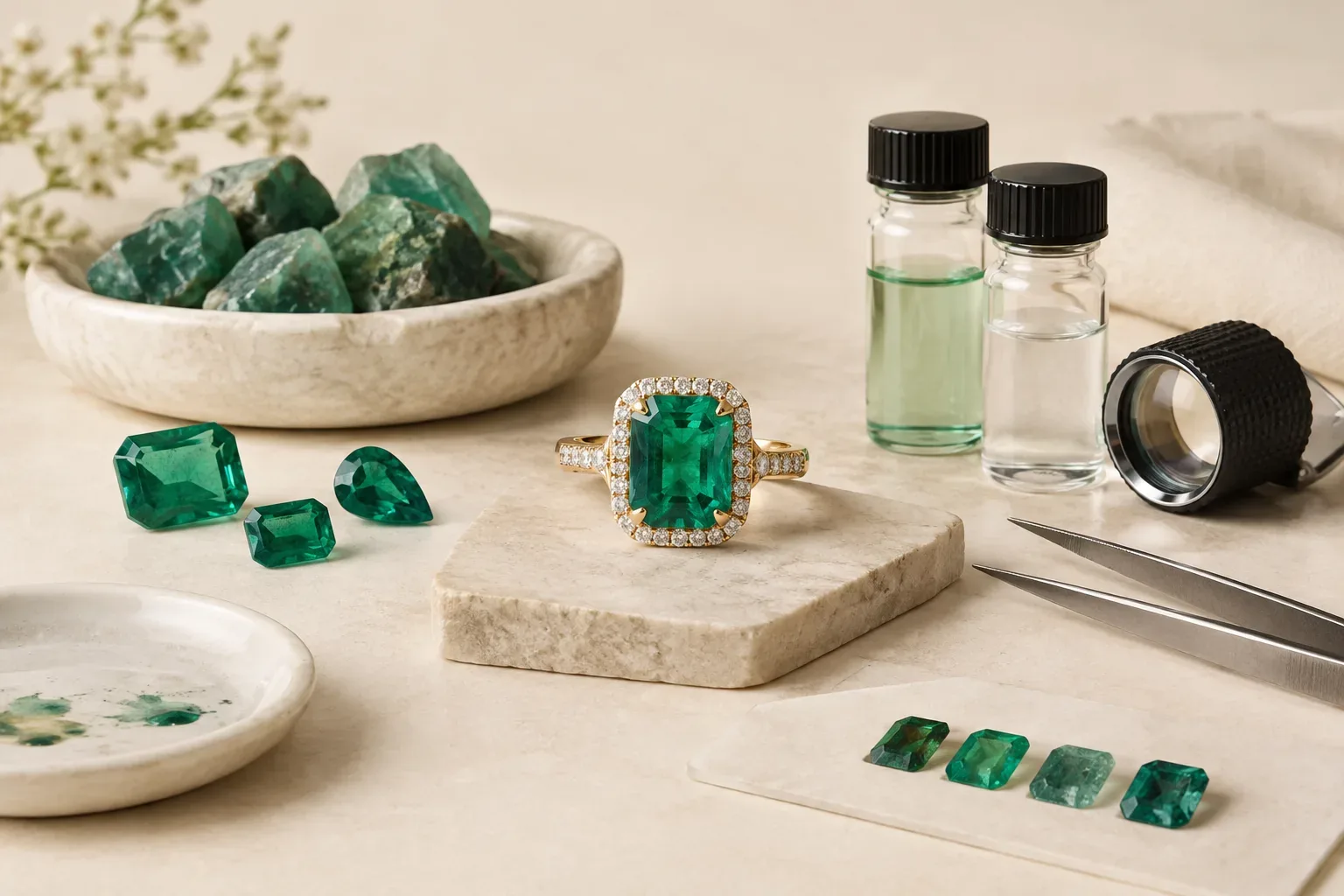
Meaning at a glance
This emerald treatment guide defines common enhancements (traditional oiling, polymer/resin filling and similar clarity treatments, and distinctions from lab-grown or imitation material), explains what treatments mean for durability, value and care, outlines clear decision criteria for buyers and gifters, and states what only a qualified gemologist or lab report can reliably verify.
Quick answer
Emerald treatment guide: most emeralds on the market have undergone some form of clarity enhancement; common, historically rooted options include oiling and modern polymer or resin filling, and these changes affect care, value and disclosure. Consumers should ask for a written disclosure and, when purity or resale value matters, an independent gemological report; only a qualified jeweler or gemological laboratory can reliably identify many treatments and provide permanence assessments (Gemological Institute of America; Federal Trade Commission).
What we mean by 'treatment' and why it matters
In gemology, a treatment is any intentional process applied to a natural gemstone to alter color, clarity, stability or appearance. Treatments range from traditional, low‑technology approaches intended to improve visual appeal to modern laboratory processes. The Gemological Institute of America (GIA) explains that treatments, detectability, durability and care questions are central to consumer decisions about gemstones, because treatments change what a buyer is purchasing and how the stone should be maintained.
Historical evidence and distinct periods
Documentary and gemological records show that practices to improve emerald appearance have a history that spans multiple periods of human jewellery use and technological change. For the purposes of clarity, treat the history in broad, identifiable periods: antiquity and pre‑industrial practice, early modern to 19th‑century trade practices, the 20th‑century expansion of chemical and polymer methods, and contemporary laboratory identification and synthetic production.
The GIA documents that treatments evolved alongside gem trade and technology: longstanding remedies such as oils or organic resins were common in earlier periods and were later supplemented or replaced by synthetic polymers and laboratory techniques as those materials became available. The Federal Trade Commission has focused modern regulation on disclosure to keep pace with this evolution, stressing that consumers must be able to distinguish natural, treated and lab-grown materials in the marketplace.
Separate documented historical meanings from modern personal interpretations
Across cultures and periods people have attached symbolic meanings to emeralds and green gemstones, but symbolic claims are cultural and personal rather than universal. This guide separates documented, trade‑related history about treatments from contemporary personal or cultural interpretations of what an emerald symbolizes. Use specialized historical or cultural sources if you need precise origin stories, religious significances or period‑specific lore; this article focuses on treatment practice, trade implications and consumer advice as documented by gemological and consumer protection authorities.
Common emerald enhancements explained
Oiling: Traditional oiling remains one of the most common clarity enhancements for emeralds. Natural oils can reduce the visual appearance of fractures and improve apparent transparency. The effect is usually reversible, can diminish over time, and may need renewal; oiling may also affect how the stone reacts to cleaning or heat.
Resin or polymer filling: Modern treatments often use polymers or resins to fill surface‑reaching fractures. These materials can be more durable than simple oils and can provide longer‑lasting improvement in clarity, but they are not necessarily permanent and may change how a stone responds to heat or strong cleaning agents.
Surface coatings and dyeing: Less common and generally less desirable from a value perspective are surface coatings or dyes used to intensify color. These treatments can wear with time and are usually detectable by a trained gemologist.
Lab‑grown emeralds and imitations: A separate category from treatments is laboratory-grown emeralds, which are created to be chemically and optically similar to natural emeralds. Imitations and simulants mimic emerald color with different materials. The FTC emphasizes that consumers must receive clear, written disclosure distinguishing natural stones, lab-grown stones, treated stones and imitations.
Detectability and limits of consumer verification
Many treatments can be suggested by visual cues but cannot be confirmed by eye alone. The GIA cautions that detectability varies: some enhancements leave visible signs under magnification, while others require advanced instrumentation. If treatment status materially affects your purchase decision — for example, if you need an untreated stone for a collector’s piece or for insurance/resale reasons — obtain an independent gemological report.
The Federal Trade Commission recommends written seller disclosure for treated or lab‑grown gemstones. A sellers’ statement or a gemological report from a recognized laboratory is the consumer’s best evidence; without that documentation, a buyer cannot reliably verify treatment claims at home. A qualified jeweler can often provide an initial inspection, but only a gem lab can provide definitive identification and details about the nature and permanence of specific treatments.
Practical trade‑offs and decision criteria
Decide what you value most: color and visual beauty, long‑term durability, natural‑untreated origin, or budget. Treated stones typically offer stronger color and better apparent clarity for a lower price than comparably attractive untreated stones, but untreated emeralds command higher premiums and may be more desirable for collectors.
Consider durability versus maintenance. Some modern fillings improve everyday wearability relative to heavily fractured, untreated material, but can react poorly to heat and harsh cleaning. If low‑maintenance wear is a priority, discuss permanence and recommended care for the specific treatment with the seller and the lab report.
Factor resale and documentation. If you anticipate resale or need appraisal for insurance, insist on a report from a recognized gemological laboratory or clear written disclosure from the seller. The FTC stresses that sellers must make meaningful distinctions among natural, treated, lab‑grown and imitation materials in writing.
How emeralds appear in jewelry today
Emeralds are used in a wide range of jewelry applications, from rings and pendants to bracelets and earrings, and are often set in protective designs because many emeralds contain fractures. Current market and search trends show sustained consumer interest in gemstone rings and birthstone jewelry, which influences how retailers present emerald pieces (Imaginaire Digital; Professional Jeweller / PRYA Jewellery Search Insights).
Designers often use bezel settings, halo settings or partial bezels to protect emeralds with surface‑reaching inclusions, and to balance the visual impact of color with structural security. Because emeralds are frequently clarity‑enhanced, settings that protect the girdle and table and limit exposure to household chemicals are practical for daily wear.
Safe care guidance for treated and untreated emeralds
Follow gentle care routines. Whether treated or untreated, emeralds benefit from careful cleaning with mild soap and lukewarm water and a soft brush. Avoid ultrasonic cleaners, steam cleaning, and prolonged exposure to high temperatures where treatments such as oils or polymers might be altered or removed. The GIA lists durability and special care as important consumer concerns for treated gemstones.
Plan maintenance for oils or resins. If your emerald is oiled, expect that the visual benefits may diminish and require re‑oiling by a qualified jeweler over time. If a gem has polymer filling, consult a gemologist about the best cleaning methods and the likelihood of future maintenance or retreatment.
Insurance and professional checks. For pieces that are worn frequently or have sentimental value, obtain a professional appraisal, keep treatment documentation with your insurance policy, and have a trusted jeweler inspect the setting and stone periodically.
Selection and gifting guidance (practical and respectful)
Ask direct questions and request written documentation. Before purchase or gifting, ask the seller to state whether the emerald is natural, treated (and how), lab‑grown or an imitation. If the answer is that it is treated and the treatment matters to you or the recipient, ask for an independent lab report.
Match the choice to the recipient’s values. If the recipient prizes natural, untreated gemstones for cultural, collectible or resale reasons, prioritize stones with laboratory reports describing an absence of enhancement. If the recipient prefers strong color and affordability over untreated origin, a treated emerald can be an excellent, meaningful gift — just disclose the treatment so the recipient understands the piece.
Choose a protective setting and consider lifestyle. For everyday wearers, choose settings that protect the stone and limit exposure to household chemicals. For heirloom or collector gifts, preserve documentation and consider storage away from direct heat or sunlight to protect any treatment.
Be culturally sensitive. Emerald symbolism is personal and cultural. If gifting across cultural lines, ask quietly about any relevant traditions or preferences rather than assuming a universal meaning. When in doubt, include a note explaining the stone’s nature and care instructions to show respect for both the material and the recipient’s values.
Final thoughts
An emerald treatment guide should leave you able to define the main enhancements, weigh trade‑offs between color, durability and value, and know when to require documentation. For purchases where origin, treatment permanence or resale value matters, obtain a report from a qualified gemological laboratory and insist on written disclosure as recommended by the Federal Trade Commission and outlined by the Gemological Institute of America.
Frequently asked questions
What are the most common treatments for emeralds?
Common treatments include traditional oiling to reduce the visibility of fractures, modern polymer or resin fillings to improve clarity and sometimes surface coatings or dyes; laboratory-grown emeralds are a separate category. The Gemological Institute of America notes these types of enhancements and their impact on detectability and care.
How can I tell if an emerald is treated without a lab report?
You can look for visual clues under magnification, but many treatments cannot be reliably identified by eye. Ask the seller for written disclosure and, if necessary, an independent gemological report — the Federal Trade Commission recommends clear written distinctions among natural, treated and lab‑grown gemstones.
Are treated emeralds less valuable than untreated emeralds?
Treated emeralds are generally less valuable than comparable untreated stones because untreated emeralds are rarer. However, treatments can make visually attractive emeralds more affordable. Value depends on treatment type, permanence, overall quality and buyer priorities.
Can I re‑oil or re‑treat an emerald that has been enhanced?
Yes. Traditional oiling can be repeated by a qualified jeweler when the effect fades. Polymer or resin treatments may require different maintenance; consult a gemologist for recommended procedures and to assess potential risks.
What should sellers disclose when selling an emerald?
Sellers should provide clear, written disclosure stating whether a stone is natural, treated (with the type of treatment), lab‑grown or an imitation. The Federal Trade Commission recommends such distinctions in writing so consumers can make informed decisions.
How should I care for a treated emerald?
Use gentle cleaning with mild soap and lukewarm water and a soft brush, avoid ultrasonic and steam cleaners, and protect the stone from high heat and harsh chemicals. For oiled or filled stones, consult a jeweler about future maintenance.
Sources and further reading
- Imaginaire Digital — Imaginaire Digital
- Professional Jeweller / PRYA Jewellery Search Insights — Professional Jeweller / PRYA Jewellery Search Insights
- Gemological Institute of America — Gemological Institute of America
- Federal Trade Commission — Federal Trade Commission