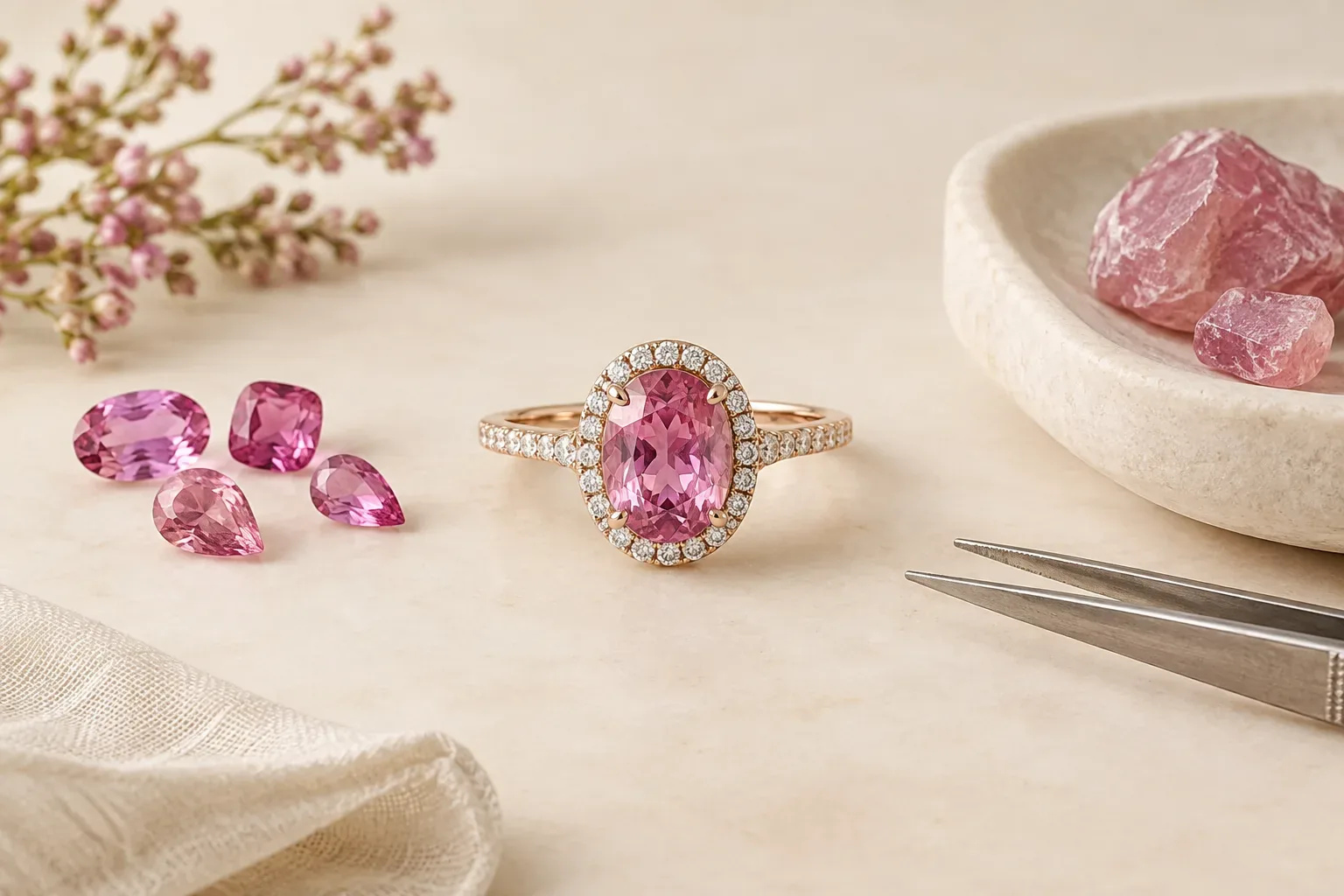
Meaning at a glance
This guide gives a concise decision framework for shoppers: what 'pink sapphire' means in commerce, how to weigh color, durability and treatment trade-offs, setting and style choices that protect the stone, safe care routines, and which claims require a qualified jeweler or gemological laboratory to verify.
Quick answer
A pink sapphire engagement ring guide should help you decide whether the stone’s color, trade-offs around treatments and price, and the ring’s setting suit your lifestyle and budget; it should also tell you what only a jeweler or a gemological laboratory can verify (treatment type, origin, and sometimes natural vs lab-grown status). This article supplies evidence-led decision criteria, practical trade-offs, safe care guidance, and clear limits on verification.
What people mean by "pink sapphire" and key definitions
In jewelry commerce, the term "pink sapphire" is used for sapphires whose dominant color is in the pink range. Sellers may offer natural, treated, lab-created, or imitation materials under that label, so buyer documentation matters. The Federal Trade Commission advises consumers to seek clear distinctions among natural, lab-created, treated, and imitation gemstones and to expect written seller disclosures for important claims.
Because treatment and origin materially affect value and care, the Gemological Institute of America (GIA) emphasizes that treatments, disclosure, detectability, durability, and special care create distinct consumer questions for gemstones. A responsible purchase process therefore begins by asking the seller for written details—preferably a gemological report—from a recognized laboratory when value justifies it.
Historical evidence and cultural notes (what the approved sources show)
Among the sources approved for this article there are contemporary trade and regulatory resources and one gemological reference, but none of the approved sources present primary historical accounts that trace a consistent, culture-wide symbolic meaning for pink sapphires in antiquity. The sources used for this guide do not supply specific ancient or medieval symbolism for pink sapphire across named cultures.
What the trade sources do document is recent market context and style trends. Industry reporting in 2026 shows strong consumer interest in engagement rings and a broader appetite for gemstone engagement styles and sculptural or period-inspired designs. Imaginaire Digital’s 2026 search estimates show sustained demand for engagement rings and oval engagement styles, and Professional Jeweller’s trend reporting links growth to sculptural jewelry and revived period styles like Art Deco and cluster motifs, which informs what shoppers can reasonably expect to find in the market today.
Documented historical meanings versus modern personal interpretations
Because the approved evidence set does not document specific historical symbolic meanings for pink sapphires across named cultures, any symbolic claims about ancient or medieval meanings would be outside the supported material for this article. That leaves contemporary interpretations—romantic association with pink tones, ideas of uniqueness versus a diamond, or birthstone links—as modern, personal, and culturally contingent statements rather than documented historical fact.
Treat modern symbolic meanings as personal or marketing-driven. Shoppers and gift-givers commonly attach meanings (love, compassion, individuality) to pink stones today, but these are modern interpretations. Treat them as useful for personal expression rather than universal or historically documented symbolism.
How pink sapphire appears in engagement jewelry
Retail assortments show pink sapphires used in the full range of engagement styles. You will find them as single-stone solitaires, center stones in halo or three-stone settings, and as accent stones in cluster and vintage-inspired rings. Professional Jeweller’s reporting on 2026 trends highlights growing interest in sculptural and period references—Art Deco geometry, cluster and charm-cluster layouts, and more visible colored gemstones—which explains why pink sapphires now appear in both modern minimal and ornate vintage-style engagement rings.
Common choices for gemstone cuts and placements include ovals and cushions when color saturation is a priority, and round or brilliant cuts when sparkle and light return are the priority. Market demand referenced in industry trend reports also supports a frequent pairing of pink stones with warm metal choices and with halo settings that visually intensify the center color. However, selection depends on the specific stone’s cut, color saturation, and clarity as well as the wearer’s style.
Suitability: decision criteria and practical trade-offs
Start by deciding which matters more to you: color intensity or absolute brilliance and durability for everyday wear. Strong, well-saturated pink color commands higher prices; paler pinks may be more affordable and are often paired with lighter settings. If you prioritize color, choose a cut and setting that show color face-up, such as oval, cushion, or emerald cuts.
Next, consider treatment and origin trade-offs. Many colored gemstones are routinely heat-treated or otherwise treated to improve color and clarity. The GIA explains that treatments, their disclosure, and their detectability are central consumer questions. Treated stones are common and can be an economical, stable option if the treatment is permanent and disclosed; however, some treatments call for special care or may complicate resale.
Budget and ethics choices often raise the lab-grown versus natural question. The FTC urges clear seller disclosures so consumers can distinguish natural, lab-grown, and imitation products. Lab-created pink sapphires typically cost less and can offer consistent color; natural stones may carry greater perceived rarity and value but also greater price variability and potential treatment history.
Setting choices that protect and flatter pink sapphires
Think about everyday wear. Settings that protect the girdle and crown—bezel and cathedral styles, or halos that raise the center with guarded prongs—reduce exposure to accidental knocks. Solitaire prong settings maximize light return and visibility but leave more of the stone exposed to impact.
If you expect heavy daily wear, choose a setting that limits edge contact and elevates the stone above flat surfaces. Ring shoulders, protective bezels, or lower-profile galleries reduce snagging. Also match the metal to the stone’s color and to the wearer’s lifestyle: white metals show wear differently than yellow or rose metals; gold alloys or platinum choices may influence the long-term look and maintenance needs of the ring.
Practical and respectful selection and gifting guidance
Ask the seller for written disclosures about whether the pink sapphire is natural, lab-created, or treated, and request any available gemological reports. The FTC expects clear written distinctions for these categories, and a lab report provides independent verification for higher-value purchases.
Be respectful about cultural and personal meaning. If gifting a pink sapphire for a cultural ceremony or to someone who values specific traditions, ask about their preferences and any cultural expectations rather than assuming a meaning. Use modern symbolism as a personal gesture, not as a claim of universal or historical truth.
When buying as a surprise, document seller claims and return policies so the recipient has the option to verify, resize, or exchange. For custom commissions, establish benchmarks up front: target color range, minimum carat weight or dimensions, setting security, expected treatment disclosures, and timelines for receiving any lab report.
Care and maintenance: safe routines and limits
Routine cleaning: for day-to-day dirt and oils, warm soapy water and a soft brush followed by a rinse and gentle drying is a safe general approach. The GIA notes that treatments and durability determine special-care needs, so confirm with the seller whether the specific stone’s treatment calls for any precautions.
Avoid exposing gemstones with unknown treatments to high heat, harsh chemicals, or aggressive ultrasonic cleaners unless a qualified gemologist has confirmed the treatment is stable. Some treatments can be harmed by heat, steam, or ultrasonic cleaning; GIA guidance on treatments and detectability explains that these are important consumer considerations.
Regular inspection matters. Have a jeweler check prongs and settings annually if the ring is worn daily, and remove the ring during heavy manual work, sports, or when using chemicals or solvents. If the stone was treated and the seller provided care instructions, follow them; when in doubt, treat the stone more conservatively.
What a buyer can verify without a laboratory, and when to call in experts
You can verify basic, observable things without a lab: weight (carat), measurements, whether the seller labels the stone natural, lab-grown, or treated, the existence of a gemological report, and the ring’s metal type as indicated on hallmarks or documentation. The FTC requires sellers to make clear distinctions among natural, lab-created, treated, and imitation materials in writing.
You cannot reliably verify some claims by eye alone. Detecting certain treatments, origin, or differentiating some natural stones from high-quality lab-created stones typically requires gemological instruments and an expert. The GIA and other labs are the appropriate resources when you want authoritative confirmation of treatment type, stability, or geographic origin. For high-value purchases, insist on a reputable lab report before finalizing the purchase.
Putting it together: a practical checklist for shoppers
Before buying, decide the balance you want among color, durability, and budget, and whether a lab report is necessary for your purchase. Ask the seller for written treatment and origin disclosures and for any available gemological reports. Choose a setting that protects the stone if the ring will be worn daily, and adopt mild cleaning practices unless the seller or a lab advises otherwise.
Final note
A pink sapphire engagement ring can be a beautiful and personal alternative to traditional diamond engagement rings. Use the decision framework above to match the stone and setting to the recipient’s lifestyle and taste, insist on clear seller disclosures as the FTC recommends, and rely on qualified jewelers or gemological laboratories for verification beyond simple, observable facts. Trade and trend reporting from industry sources can help you identify styles currently available, while gemological guidance informs care and disclosure expectations.
Frequently asked questions
Are pink sapphires durable enough for an engagement ring?
Pink sapphires are commonly used in engagement rings and many are suitable for regular wear, but durability depends on the individual stone and any treatments it has received. Confirm treatment disclosure with the seller and choose protective settings if the wearer leads an active lifestyle. For treatment-specific care advice consult the seller or a qualified gemologist; the GIA notes that treatments and durability create distinct consumer care questions.
How can I tell if a pink sapphire is natural, treated, or lab-created?
You can ask the seller for written disclosures and any available gemological reports. The FTC expects sellers to clearly distinguish natural, lab-created, and treated stones. Definitive determination of some treatments, origin, or whether a stone is natural versus lab-grown often requires a gemological laboratory or a qualified gemologist with proper instruments.
What cleaning methods are safe for pink sapphire rings?
A safe routine for many pink sapphire rings is warm soapy water and a soft brush followed by a gentle rinse and drying. Avoid high heat, harsh chemicals, and aggressive ultrasonic cleaning for stones with unknown or unstable treatments; the GIA advises caution because some treatments can be affected by such methods.
Do I need a lab report for a pink sapphire engagement ring?
A lab report is highly recommended for higher-value purchases or when the seller claims no treatments, a special origin, or natural status. A reputable gemological laboratory can provide authoritative verification; for lower-cost purchases, clear written seller disclosures and return policies may be sufficient.
What setting is best to protect a pink sapphire?
Protective settings such as bezels, lower-profile galleries, or halos that guard the girdle reduce the chance of chips and snags. Solitaire prongs show the stone at its brightest but expose more of the stone to potential impact. Match setting choice to the wearer’s lifestyle and the stone’s size and cut.
Sources and further reading
- Imaginaire Digital — Imaginaire Digital
- Professional Jeweller / PRYA Jewellery Search Insights — Professional Jeweller / PRYA Jewellery Search Insights
- Gemological Institute of America — Gemological Institute of America
- Federal Trade Commission — Federal Trade Commission