Meaning at a glance
This teal sapphire buying guide defines what buyers mean by "teal," lays out decision criteria for color, clarity, cut and value, explains the trade-offs among size, color saturation, and treatments, gives safe care and gifting guidance, and makes clear what cannot be confirmed without a qualified jeweler or a gemological laboratory report.
What the historical record shows (and what it does not)
Within the set of vetted sources for this guide there is no specific historical documentation that treats "teal" sapphires as a separate symbolic category. Buyers should not assume that a distinctive, long-standing cultural meaning for the color teal attached to sapphires exists in the checked evidence. If you are researching historical meanings for sapphires generally or for green‑blue stones in particular, that requires direct consultation of museum catalogues, period jewel inventories or specialist histories, none of which are represented in the approved sources for this article.
Documented meanings versus modern personal interpretations
Separating documented history from contemporary personal meaning is important. The approved trade and regulatory sources used here do not record a historical culture that consistently assigned a unique meaning to teal sapphires. Modern buyers and designers often apply personal or marketing meanings—such as calm, renewal, or uniqueness—to teal sapphires today, but those are contemporary interpretations rather than documented historical attributions in the sources checked for this guide. Treat symbolic meanings you hear from retailers as personal or brand narratives unless they are explicitly supported by cited historical scholarship.
How "teal" is used and evaluated in sapphires
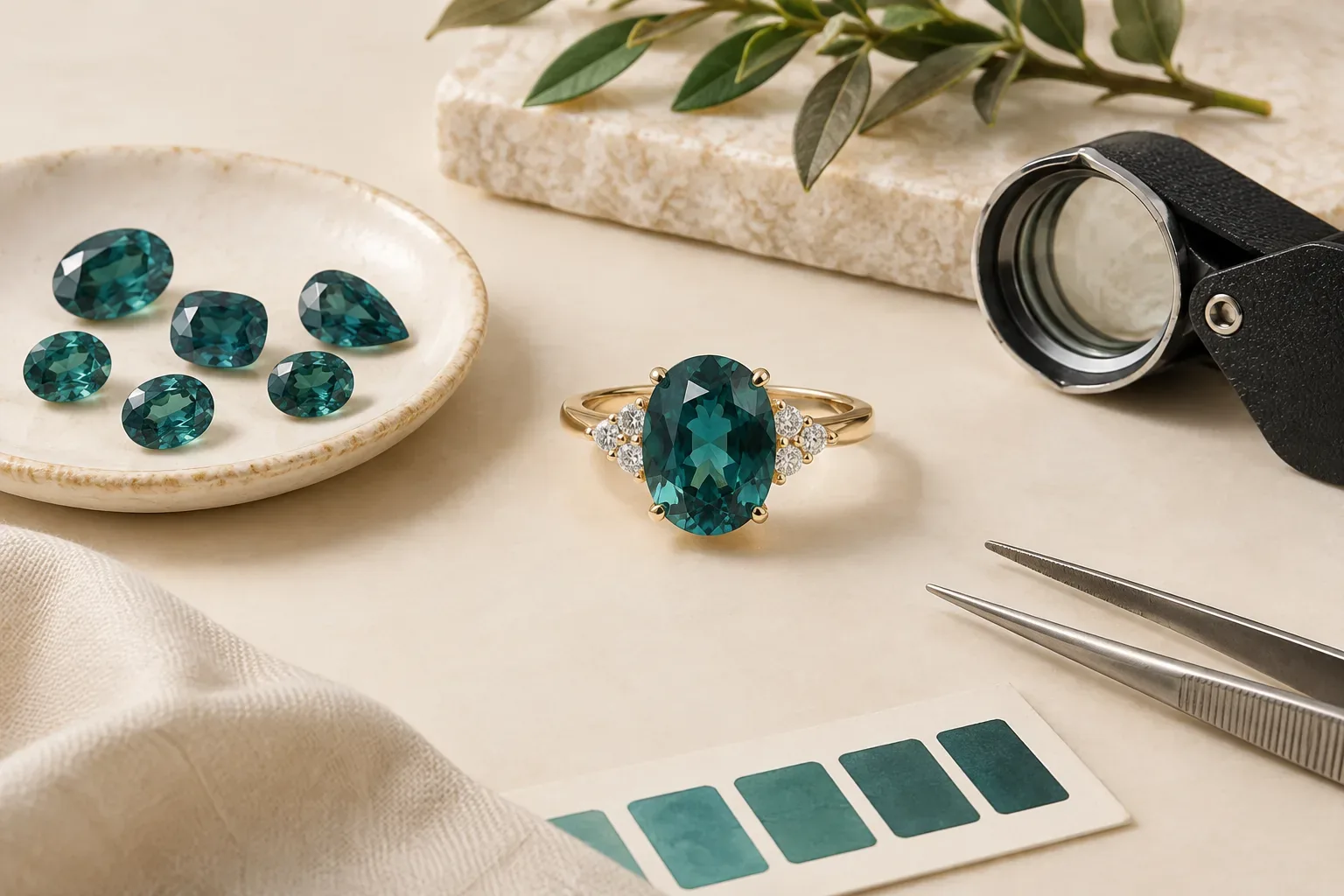
In the trade, "teal" describes a balance of blue and green where neither color overwhelms the other; tone (light to dark) and saturation (vividness) determine whether a stone reads as teal. Buyers should evaluate color under multiple lights because a stone can look more blue in daylight and greener under incandescent light. High saturation can make a smaller stone appear more valuable than a larger, washed‑out example. Expect natural color zoning and variations across a single crystal; cutters sometimes orient a stone to maximize a desirable hue at the cost of carat weight.
Clarity expectations and visual impact
Sapphires commonly contain inclusions that can help gemologists identify origin and treatment, but many attractive sapphires are eye‑clean. For teal sapphires, the presence, size and placement of inclusions will affect how evenly the color reads across the table. Some inclusions cause light scattering that softens saturation; others can be masked by a deeper tone. If you need to prioritize visual purity—for example, in a solitaire engagement ring—ask to view the actual stone or high‑resolution, calibrated photos and request magnified images showing inclusions. Sellers should disclose whether a stone is eye‑clean or whether inclusions are visible without magnification; however, only a qualified grader or laboratory report can reliably characterize inclusion types and their implications for durability.
Cut and shape: how cutting influences color and brilliance
Cutters balance color, weight retention and brilliance. Shapes with broader tables such as ovals and cushions tend to show color more evenly, which can be an advantage for teal tones, while brilliant cuts emphasize sparkle and can make a lighter or less saturated stone appear livelier. A shallow cut may spread color across the face but reduce depth and life in the stone; an overly deep cut can concentrate color into a windowed center and reduce perceived size. Decide whether you prefer a larger face‑up appearance, deeper color, or greater brilliance, and choose the cut that reflects that priority.
Treatments, lab-grown stones, and what sellers must disclose
Treatments for sapphires—especially heat treatment—are commonplace in the trade and directly affect both price and care. The Gemological Institute of America explains that treatments, disclosure, detectability and durability are essential consumer questions when buying gemstones. The U.S. Federal Trade Commission requires clear distinctions among natural, lab‑created, treated and imitation materials and expects written seller disclosures. Ask any seller for full disclosure of treatments, whether a stone is natural or lab‑grown, and for a laboratory report for higher‑value stones. Be aware that certain diffusion treatments are more aggressive and can be harder to detect without advanced testing; only a qualified gemological laboratory can reliably determine some types of treatment and origin.
Value: what drives price for teal sapphires
Price for teal sapphires is driven by a combination of color quality (hue, tone, saturation), clarity, cut, carat weight and treatment status. Untreated stones with evenly saturated, desirable teal tones and good clarity command a premium. Market demand influences prices too: trade research cited by Imaginaire Digital and Professional Jeweller indicates strong consumer interest in gemstone rings and sculptural, Art Deco and cluster styles, which can increase demand for eye‑catching colored stones like teal sapphires. Provenance claims may add value but verifying origin requires laboratory analysis, so treat origin premiums cautiously unless supported by credible lab documentation.
How teal sapphires appear in jewelry designs
Teal sapphires appear across many jewelry types: engagement rings, halo and three‑stone settings, pendants and cluster necklaces, and statement earrings. Designers often pair teal stones with yellow or rose gold to emphasize warmth or with white metals to accentuate the bluish aspect. Current trend reporting from Professional Jeweller and PRYA Jewellery Search Insights highlights growth in gemstone rings, sculptural jewelry and Art Deco influences, which helps explain the popularity of colored stones as centerpieces or accent gems in contemporary designs. When choosing a setting, think about how the metal and setting style will affect perceived color and protection for the stone.
Care, durability and safe cleaning
General care questions for gemstones are discussed by the Gemological Institute of America, which emphasizes that treatments and material properties affect durability and care needs. Ask a seller whether a teal sapphire has undergone treatments that could change how you clean it. For routine care, many sapphires tolerate gentle cleaning with mild soap and a soft brush, but if a stone has surface treatments or fracture‑filling, avoid ultrasonic or steam cleaning unless a qualified jeweler has confirmed it is safe. Store sapphires away from harder stones to avoid abrasion and ask for care instructions specific to your piece.
Practical selection and gifting guidance
Start by defining the recipient’s style, the intended use (daily wear versus occasional), and your budget. Prioritize color if you want the most striking visual impact, then clarity and cut. Always request written disclosure about treatments, and for higher‑value pieces ask for a recognized laboratory report. Confirm the seller’s return policy and ask to see the actual stone or calibrated photos. If you are gifting an engagement ring or another significant purchase, include a budget for a professional appraisal and consider insuring the piece. Remember that you cannot reliably confirm many treatment or origin claims at home; rely on reputable sellers and third‑party lab reports for those aspects.
Limits on verification without a jeweler or laboratory
Without a qualified jeweler or a gemological laboratory, a buyer cannot reliably confirm certain critical facts: whether a teal sapphire is natural or lab‑grown, the presence and exact nature of diffusion or other treatments, and certified origin claims. The Federal Trade Commission expects sellers to disclose these facts in writing, and reputable sellers will provide laboratory reports for higher‑value stones. If a seller refuses disclosure or cannot provide a reliable report for a valuable stone, treat that as a red flag.
Final checklist before you buy
Before purchasing, view the actual stone under multiple lights if possible, confirm written disclosure of treatments and origin claims, request a gemological report for meaningful purchases, check the seller’s return policy and warranty, match the setting and metal to the stone’s intended use, and budget for care and insurance. Follow up with a qualified jeweler for any questions about durability, re‑setting or repair before committing to the purchase.
Frequently asked questions
What exactly makes a sapphire "teal"?
A teal sapphire shows a balance of blue and green hues with an overall tone and saturation that makes neither blue nor green dominant; lighting and cutting influence how strongly the teal reads.
Can I tell if a teal sapphire is treated by looking at it?
No. Some treatments have visible effects, but many are not obvious to the unaided eye; only a qualified jeweler or gemological laboratory can reliably identify many treatments, which is why you should request written disclosure and, for higher‑value stones, a lab report.
Should I ask for a lab report for every teal sapphire purchase?
Request a reputable laboratory report for significant purchases where treatment, origin or value affects price; for smaller, low‑cost fashion pieces a lab report may be unnecessary, but you should still ask the seller to disclose treatments and whether the stone is natural or lab‑grown.
How do I care for a teal sapphire ring?
Follow the seller’s care instructions and avoid aggressive cleaning methods if the stone has surface treatments or fracture fills; many sapphires can be gently cleaned with mild soap and a soft brush, but if in doubt consult a jeweler—treatment status can change cleaning recommendations.
Does provenance (country of origin) matter for price?
Provenance can affect price for some buyers and markets, but origin claims should be supported by credible laboratory documentation because origin is difficult to verify by sight alone.
How do current market trends affect teal sapphire prices?
Demand for gemstone rings and sculptural, Art Deco‑influenced designs has been growing, which can increase interest in colorful center stones; consult current market reports and reputable sellers to understand demand‑driven pricing in your region.
Sources and further reading
- Imaginaire Digital — Imaginaire Digital
- Professional Jeweller / PRYA Jewellery Search Insights — Professional Jeweller / PRYA Jewellery Search Insights
- Gemological Institute of America — Gemological Institute of America
- Federal Trade Commission — Federal Trade Commission