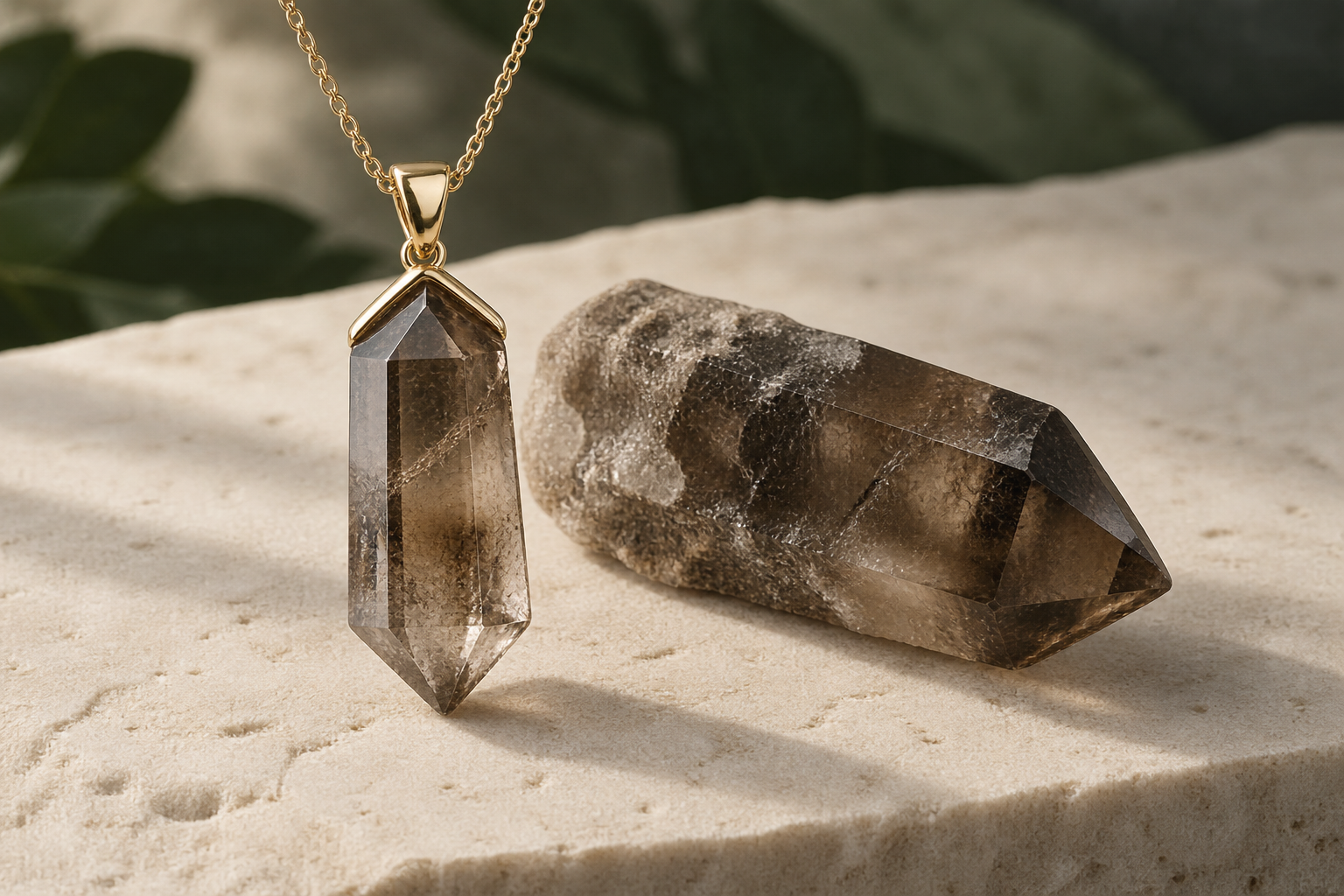
Meaning at a glance
Smoky quartz is quartz colored by natural or laboratory irradiation-related processes; grounding symbolism should be kept distinct from treatment disclosure and care.
Color and formation: what makes smoky quartz smoky?
Smoky quartz is a variety of quartz whose brown-to-gray tones result from exposure to natural radiation in the ground or from laboratory irradiation applied to clear or lightly colored quartz. The coloration is due to changes at the crystal-lattice level in silicon dioxide (quartz), not to surface staining or inclusions. Information about quartz varieties and how they are identified is summarized by the Smithsonian National Museum of Natural History, which places smoky quartz within the broader family of quartz minerals and notes the range of naturally occurring varieties.
Documented historical evidence (what the sources actually say)
When we look for historical documentation about smoky quartz, authoritative mineral and museum records focus on identification, occurrence, and use as a gem material rather than on a single, consistent cultural symbolism. The Smithsonian National Museum of Natural History documents quartz varieties and their use as gemstones and carving materials, which shows that people have valued smoky quartz for its color and workability, but it does not present a single, universal symbolic meaning tied to a specific culture or era.
Because the reference material available for this article is concentrated on mineralogy and gemology rather than on anthropological beliefs, precise claims about what a given culture believed centuries ago about smoky quartz are not supported here by the named sources. In short: the physical history of smoky quartz as a gem is well-documented; specific, consistent symbolic assignments across named historical cultures are not documented in the sources used for this article.
Historical use versus modern interpretation
Documented use: Museums and gemological resources show smoky quartz has been used historically as an ornamental stone and for carved objects and jewelry. This is a statement about practice—people used smoky quartz because they liked its color, worked it readily, and could set it into decorative and wearable items. The Smithsonian’s materials describe quartz varieties and their roles as gems and carvings, which supports these observations about use.
Modern interpretations: Many contemporary writers, designers, and wearers attribute metaphysical meanings to smoky quartz—most commonly themes like grounding, emotional balance, and protection. These are modern personal or community interpretations rather than documented historical facts in the museum and professional gemology sources cited here. If symbolism matters to you or a gift recipient, treat these contemporary meanings as personal or cultural choices rather than as universal historical claims.
How smoky quartz appears in jewelry
Smoky quartz is made into many types of jewelry. It is commonly faceted for rings and pendants because its clarity and refractive properties take a good cut, and it is also cut en cabochon for softer, more diffuse color in earrings, brooches, and beads. Because quartz ranks around 7 on the Mohs scale, it is hard enough for everyday jewelry when set appropriately, though it is not as hard as sapphire or diamond and needs reasonable protection from hard knocks and abrasive wear.
Designers use smoky quartz both as a focal stone and as an accent. Its neutral brown-gray palette pairs well with warm metals such as gold and with cooler metals like sterling silver or white gold. The stone’s color range—from very light 'smoky' tints to deep espresso browns—makes it versatile in both minimalist contemporary pieces and in more ornate vintage-style settings.
Buying guidance: disclosure, treatment, and quality factors
Ask about treatment and disclosure. The Gemological Institute of America (GIA) emphasizes that gem treatments must be disclosed to buyers; laboratory irradiation or other treatments can be used to generate or deepen smoky color. When shopping, request clear disclosure from the seller about whether the color is natural (from ground radiation), the result of laboratory irradiation, heat-treated, or otherwise enhanced. This information can affect long-term stability, care requirements, and price.
Consider color, clarity, cut, and size. Color preference is personal: some buyers prefer pale, warm browns while others like near-black tones. Clarity in smoky quartz is often quite good, so visible inclusions may lower value. A skilled cut will maximize brilliance and color saturation without making the stone look flat. Size matters: large stones show color and character more plainly, so examine examples in person if possible.
Buy from reputable sellers and check return policies. Ask for any available gemological reports when purchasing high-value pieces, and choose vendors who clearly state treatment history and offer a reasonable return period. The GIA’s guidance on gem treatment and disclosure is a good baseline for questions to ask and documentation to seek.
Gifting guidance: selection and presentation
Match the stone to the recipient’s style and lifestyle. Smoky quartz’s neutral tones suit many wardrobes, but consider the recipient’s favorite metal, everyday habits, and whether they prefer bold or subtle jewelry. For someone who works with their hands or is frequently outdoors, choose protective settings like bezel or halo mounts that shield the stone.
Be transparent about treatment if the recipient might care. If you know the smoky quartz has been irradiated or otherwise treated, include that information with the gift—either on a small card, in a note from the seller, or verbally. Some people prefer natural, untreated stones while others prioritize appearance and value; respectful disclosure lets the recipient appreciate the piece fully and make informed decisions about future care or resale.
Care and maintenance
General cleaning: Clean smoky quartz with warm water, mild soap, and a soft brush, then rinse and dry thoroughly. For most pieces, this simple approach removes oils and surface dirt without risk.
Be cautious with more aggressive cleaning and repairs. Because treatments can affect a stone’s stability, ask the seller whether ultrasonic or steam cleaning is safe for a specific smoky quartz item. The GIA advises consumers to seek treatment disclosure so they and their jewelers can choose appropriate cleaning and repair methods. If you can’t confirm treatment history, err on the side of gentler care.
Storage and protection: Store smoky quartz jewelry separately from harder gemstones to avoid scratching. Use a soft pouch or lined compartment, and consider removing smoky quartz rings during heavy manual tasks to reduce the risk of chips or fractures.
Putting symbolism in context
If you value smoky quartz for symbolic reasons, do keep two things separate: the gem’s physical history and treatment status, and the symbolic or emotional meaning you or someone else attaches to it. The mineralogical and gemological record—represented here by the Smithsonian and by professional advice from the GIA—documents what smoky quartz is and how it is treated and used. Symbolic attributions (for example, using smoky quartz as a talisman of grounding) are contemporary cultural or personal practices that sit alongside, rather than inside, the technical record.
Treat symbolism as a personal or cultural gift layer. When buying or gifting smoky quartz for meaning, choose wording that clarifies whether the meaning is a modern spiritual association, a family tradition, or an aesthetic choice.
Bottom line
Smoky quartz is a quartz variety colored by natural or laboratory irradiation-related processes and valued for its range of warm, neutral tones and good workability. The Smithsonian provides authoritative context about quartz varieties, and the GIA provides practical guidance about treatment disclosure and buying. If symbolic meaning matters, present it as a contemporary or personal layer separate from the stone’s documented mineralogy and any treatments it has undergone.
Frequently asked questions
Is smoky quartz a natural gemstone or lab-created?
Smoky quartz can be either. Natural smoky quartz gains its color from exposure to natural radiation in the ground, while clear or lightly colored quartz can be given a smoky tone by laboratory irradiation. Ask sellers to disclose whether a stone’s color is natural or the result of treatment.
Does treatment affect the value of smoky quartz?
Treatment can affect value and should be disclosed. The GIA advises that gem treatments be clearly stated to buyers; in some markets untreated natural color can command a premium, while treated stones may be priced for appearance rather than natural origin.
How should I clean and care for smoky quartz jewelry?
Clean smoky quartz with warm water, mild soap, and a soft brush. Rinse and dry thoroughly. Because some treatments can influence which cleaning methods are safe, confirm treatment history before using ultrasonic or steam cleaning and follow the seller’s recommendations.
Is smoky quartz durable enough for everyday wear?
Quartz rates around 7 on the Mohs hardness scale, which generally makes smoky quartz suitable for everyday jewelry. However, it can chip or fracture from hard knocks and should be set and worn with reasonable care, especially in rings and bracelets subject to impact.
Will smoky quartz color fade in sunlight?
Color stability depends on how the color was produced. Natural and laboratory-induced colors can vary in stability, and treatment disclosure helps determine risk. If you are concerned about fading, ask the seller about color stability for the specific piece before purchase.
Are the grounding and protective meanings of smoky quartz historical facts?
Grounding and protective meanings commonly associated with smoky quartz are modern personal or cultural interpretations rather than universally documented historical facts in the mineralogical and gemological sources cited here. If symbolism matters to you, treat it as a contemporary or individual layer added to the piece.
Sources and further reading
- All Sorts of Quartz — Smithsonian National Museum of Natural History
- Gem Treatment — Gemological Institute of America