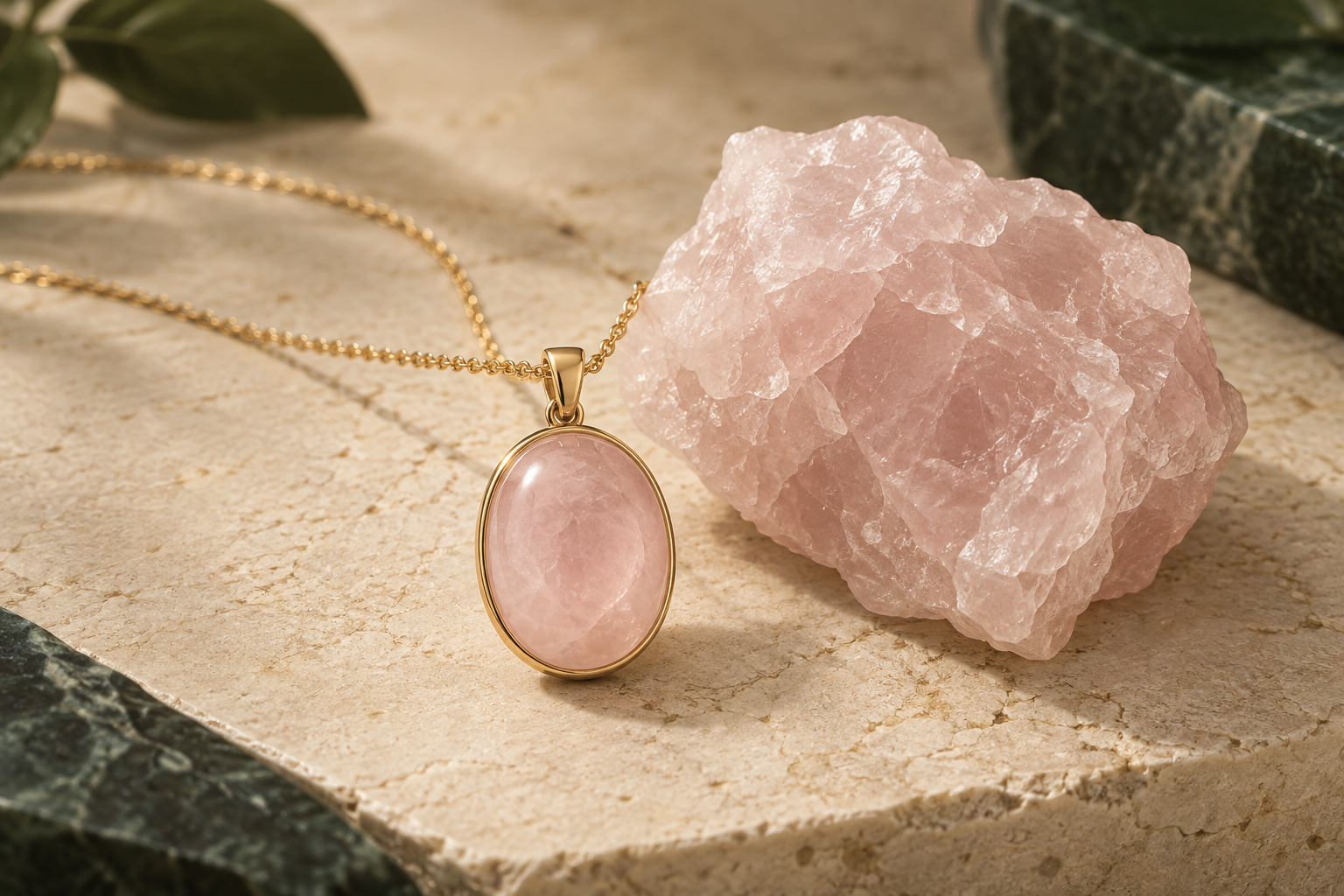
Meaning at a glance
Rose quartz is a pink variety of quartz often associated with love in many modern and popular traditions; this association is cultural rather than a scientific healing claim, and buyers should weigh color, treatments, durability, and care when selecting or gifting rose quartz jewelry.
What rose quartz is (material and color)
Rose quartz is a variety of the mineral quartz. Its pink color comes from structural defects or microscopic inclusions in the crystal that interact with light, giving the material its characteristic hue. The Smithsonian National Museum of Natural History places rose quartz within the broader context of gems and minerals, noting how mineral chemistry and inclusions create a wide range of colors across gem species.
Because rose quartz is still quartz at the chemical level, it shares quartz’s physical properties, including a relatively high hardness compared with many common jewelry materials. Those physical properties affect how the gem is cut, set, worn, and cared for.
Historical evidence and where it appears in the record
Historical evidence for the use of rose quartz in human ornamentation is available primarily through museum collections and archaeological reports rather than a single continuous written tradition. Institutions that document gems and minerals, like the Smithsonian National Museum of Natural History, show that quartz varieties—including pink examples—appear in ancient jewelry and carved objects across multiple regions and periods. These finds demonstrate the stone’s long value as an ornamental material without proving a single, universal meaning across cultures.
Gemological literature also records rose quartz’s presence in historic and vernacular jewelry forms, and modern gemological organizations discuss how the stone has been used and marketed across time. Such records are best read as evidence that rose quartz has long been appreciated for its color and workability rather than as documentation of any single, consistent symbolic meaning.
Documented historical meanings versus modern personal interpretations
Documented historical meanings for rose quartz are not uniform. Museums and archaeological records indicate that the stone was used in personal decoration, but these records rarely provide direct testimony that a specific culture consistently associated the stone with one symbolic idea across generations. Where historic written sources exist, they tend to be fragmentary or local in scope. For that reason, careful accounts separate archaeological and museum evidence of use from later interpretive layers.
Modern personal and commercial interpretations often emphasize rose quartz as a symbol of love, compassion, and emotional healing. These associations are widespread in contemporary popular culture and in some modern spiritual practices, but they are cultural interpretations rather than scientifically proven therapeutic effects. The distinction matters: wearing rose quartz can have personal or symbolic meaning for the wearer, and those meanings are valid as personal or cultural expressions, but they should not be presented as medically demonstrable healing properties.
How rose quartz appears in jewelry
Rose quartz is commonly cut and used in jewelry as beads, cabochons, carved elements, and occasionally faceted stones. Because many rose quartz crystals are included and somewhat cloudy, cabochon and carving styles are popular; where transparent material is available, faceting can produce attractive brilliance. The Gemological Institute of America (GIA) describes these practical choices for cutter and designer based on the stone’s optical and material characteristics.
Design motifs that lean into the stone’s modern symbolic associations—such as hearts, lockets, and floral shapes—are common in contemporary jewelry, but such motifs are design choices rather than fixed historical meanings. Whether set in silver, gold, or mixed metals, rose quartz is often paired with settings that protect the stone (bezel settings, halo-style mounts) because inclusions and internal fractures can make some pieces more vulnerable to impact despite the mineral’s overall toughness.
Buying rose quartz: color, treatment, and value
When buying rose quartz, prioritize color, transparency, and disclosure about treatments. The GIA Rose Quartz Buyer’s Guide recommends evaluating the stone’s hue (the basic pink color), saturation (intensity of color), and tone (lightness or darkness) as the core visual factors. Richer, evenly distributed color and pleasing tone typically command higher prices within the market.
Treatments and enhancements can affect both appearance and value. The GIA advises buyers to ask whether a stone has been treated to alter or intensify color. Heat treatment, irradiation, or dye can be used in some markets to change or stabilize color in gemstones; reputable sellers should disclose such treatments. Because rose quartz can be sold as either natural, treated, or even assembled material, clear disclosure is important for a fair purchase.
Value for rose quartz is driven more by color and size than by rarity in a geological sense. Large, attractive rose quartz beads or cabochons are common and generally affordable compared with many faceted gem types. If you want a transparent, facetable piece for high-end jewelry, be prepared to pay a premium relative to typical rose quartz beads and cabochons.
Selecting and gifting guidance (practical and respectful)
Choose a piece that fits the recipient’s style rather than assuming symbolic meaning. If you intend to gift rose quartz for its modern association with love or emotional care, mention that association politely and acknowledge that such symbolism is cultural and personal rather than an assured therapeutic effect. Small notes or cards that explain why you chose the piece—color, design, or personal significance—often make the gift more meaningful.
Inspect the stone and setting. For wearable pieces like rings or bracelets, select settings that offer protection (bezels, low-profile prongs) and avoid extremely soft or exposed placements for stones with heavy inclusions. Ask the seller for information about treatments and for a clear return policy. For higher-value transparent rose quartz, consider requesting documentation or verification from a reputable gemological laboratory if the provenance or treatment history is important to you.
Care and cleaning
Rose quartz is quartz and shares quartz’s general care considerations. The GIA Rose Quartz Care and Cleaning guidance recommends cleaning with warm, soapy water and a soft brush, rinsing thoroughly, and drying with a lint-free cloth. This simple approach is appropriate for routine care of set stones and loose material.
Avoid prolonged exposure to intense heat and strong household chemicals. The GIA also cautions that light stability varies among gemstones; prolonged exposure to strong sunlight or high temperatures over long periods can fade some colored stones. For rose quartz specifically, avoid unnecessary exposure to intense heat or oxidizing chemicals and remove jewelry before heavy manual work or contact sports to reduce the risk of chips or fractures.
Ultrasonic and steam cleaners are not universally recommended for all rose quartz pieces, especially stones with fractures, fillings, or surface-reaching inclusions. If you are unsure about a particular item, ask a trusted jeweler for guidance before using mechanical cleaners.
Summary and practical takeaway
Rose quartz is a wearable, often affordable pink variety of quartz with a long presence in decorative traditions. Its modern reputation as a symbol of love and emotional connection is culturally meaningful to many wearers, but such symbolic meaning should not be conflated with a claim of guaranteed healing.
When choosing rose quartz jewelry, balance aesthetic preferences with questions about color, transparency, and disclosed treatments. Use protective settings for daily wear, clean gently with soap and water as advised by the GIA, and be clear about the meaning you intend when gifting so the recipient can appreciate the piece on their own terms.
Frequently asked questions
Is rose quartz a real gemstone or just a decorative stone?
Rose quartz is a real variety of the mineral quartz and is used widely as a gemstone. Institutions that document gems and minerals, such as the Smithsonian, treat rose quartz as a legitimate gem material used historically in ornamentation.
Does rose quartz fade in sunlight?
Light stability varies among colored gems. The GIA advises avoiding prolonged exposure to intense sunlight or heat for colored stones; lengthy exposure can affect some materials. For routine wear, keep rose quartz out of continual, intense sunlight and avoid unnecessary heat.
Are rose quartz’s 'healing' or 'love' properties scientifically proven?
Associations between rose quartz and love or emotional healing are cultural and personal rather than scientifically established therapeutic effects. Many people find symbolic or emotional value in the stone, but it should not be treated as a medical treatment.
How should I clean rose quartz jewelry at home?
The GIA recommends cleaning rose quartz with warm, soapy water and a soft brush, rinsing thoroughly, and drying with a lint-free cloth. Avoid strong chemicals and consult a jeweler before using ultrasonic or steam cleaners on stones with fractures or treatments.
How can I tell if rose quartz has been treated?
Ask the seller for disclosure about treatments. The GIA’s buyer guidance notes that treatments (heat, irradiation, dyes) can be used to change or intensify color in some gemstones, and reputable dealers should disclose such information; for high-value pieces, consider asking for lab verification.
Sources and further reading
- Rose Quartz Buyer’s Guide — Gemological Institute of America
- Rose Quartz Care and Cleaning — Gemological Institute of America
- Gems and Minerals: Beauties and Building Blocks — Smithsonian National Museum of Natural History