Meaning at a glance
This guide defines cloud inclusions as clusters of tiny internal crystals that can cause haziness, explains how they are recorded on diamond reports, sets decision criteria and trade-offs for buyers, shows how cloud inclusions appear in finished jewelry, and clarifies what a shopper cannot verify without a qualified jeweler or a gemological laboratory.
Direct answer — what this guide will give you
Short answer: a diamond cloud inclusion report guide should tell you what a cloud is, how and when a cloud is noted on a laboratory or seller report, how clouds usually affect appearance and durability, which trade-offs buyers commonly make (price versus eye-clean appearance), what safe care looks like, and the clear limits on what you cannot reliably verify without a qualified jeweler or a gemological laboratory. This article follows that evidence-led structure and points to consumer-protection guidance where appropriate.
What is a 'cloud' inclusion on a diamond report?
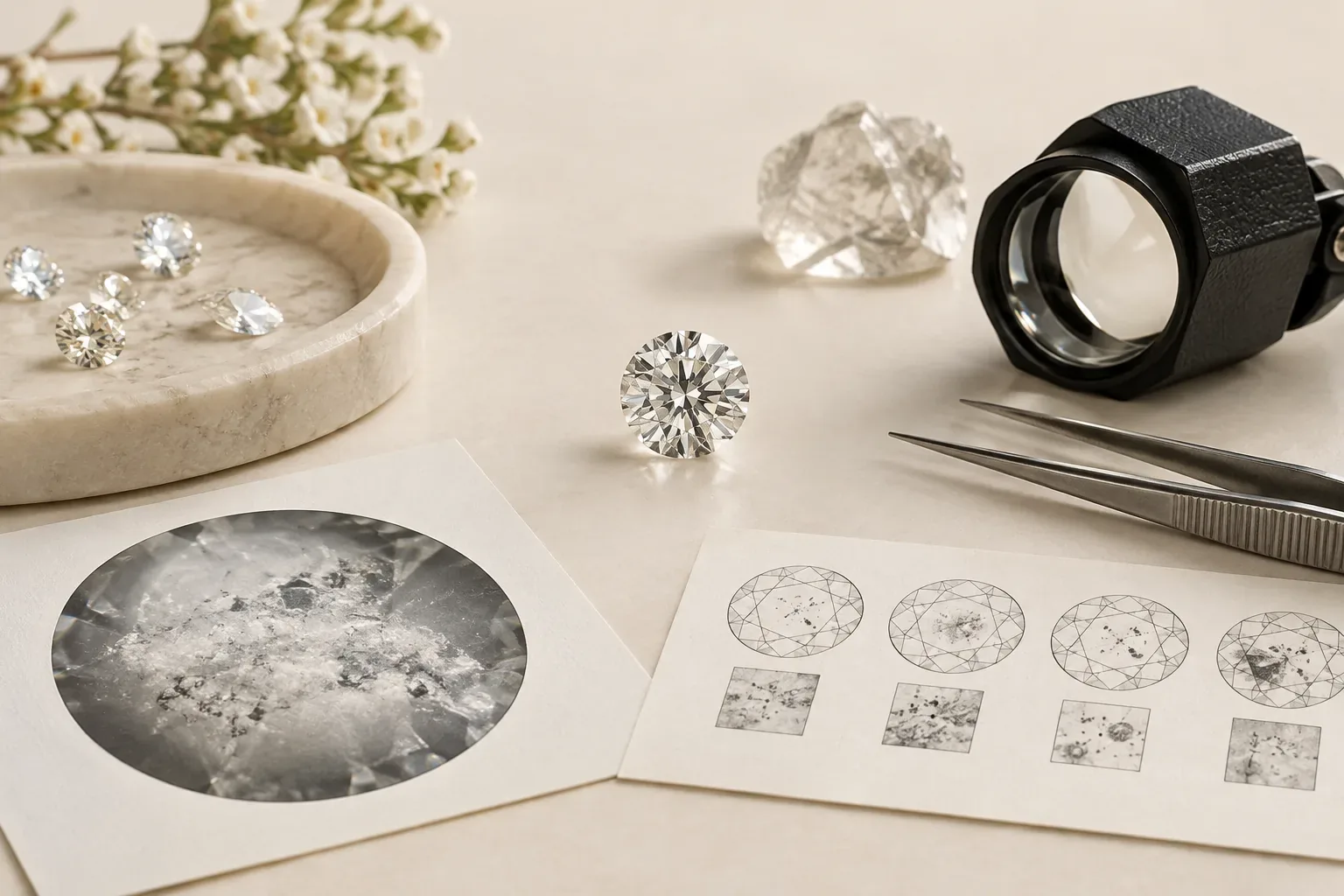
In gemological reports the term cloud is used to describe a grouping of numerous very small inclusions—often pinpoint crystals—that together create a localized haze, milky patch, or loss of transparency. On a laboratory plot a cloud is typically indicated as a marked area rather than individual pinpoint marks. A cloud’s visual effect depends on its size, density, location within the stone, and the diamond’s cut and size; small, sparse clouds are often not visible to the naked eye, while larger or centrally located clouds can soften brilliance.
Historical evidence and cultural context
There is little documented historical evidence that any pre-modern culture assigned a consistent, specific symbolic meaning to the technical inclusion type called a 'cloud.' Modern gemological terminology and standardized inclusion reporting are products of scientific gemology and consumer-protection developments of the 20th and 21st centuries, rather than ancient cultural practice. For practical consumer guidance on disclosure, detectability, and how treatments and inclusion reporting affect buying decisions, consult authoritative organizations such as the Gemological Institute of America (GIA) and consumer-protection resources such as the U.S. Federal Trade Commission (FTC). Those institutions frame the modern, documented context in which cloud inclusions are described today.
Documented history versus modern personal interpretation
Documented, evidence-based history concerns how laboratories and regulators define and disclose inclusions, how treatments are detected and reported, and how that affects consumer rights. For those documented aspects you should rely on gemological and legal sources such as GIA and the FTC. Modern personal or symbolic interpretations—calling a cloud a charm of imperfection, a sign of authenticity, or a sentimental mark—are contemporary and subjective. They may be meaningful to an individual but are not documented historic meanings and should not be presented as universal or factual claims about value or origin.
How cloud inclusions appear in jewelry
Visually, a cloud can create a localized milky or hazy area when light passes through the stone, which can soften contrast and reduce perceived sparkle in that region. The visual impact is amplified in open or shallow cuts and in larger-diameter stones where the cloud occupies a greater proportion of the viewing area. In finished jewelry the setting and metal color can also affect how noticeable a cloud is; closed-back settings or halo settings can mask a cloud, while solitaire mounts and white metal settings tend to show inclusions more readily.
When a diamond with a cloud is set, the jeweller’s finishing, the ring’s profile, and the stone’s alignment influence whether the cloud is visible from top view. Images and video from multiple angles under consistent lighting are essential when assessing how a cloud will look in actual wear.
Reading a diamond cloud inclusion report: definitions and decision criteria
A lab or seller report will usually combine a clarity grade with a plotted diagram and, in some cases, written comments. The clarity grade gives an overall assessment, while plotted diagrams show approximate location and type of inclusions. Look for whether a cloud is plotted and whether the report’s comments describe it as affecting the clarity grade or the stone’s transparency. If the report is silent, ask the seller for a loupe-view photograph and for the lab report that was actually used to grade the diamond.
Decision criteria to weigh include: whether the diamond is 'eye-clean' (no inclusions visible to the unaided eye at normal viewing distance), the clarity grade versus price premium, the stone’s size and intended setting, documentation (a reputable lab report versus a seller’s own paperwork), and resale considerations. Imaginaire Digital’s market data shows strong consumer demand for particular ring styles and settings; matching the cloud’s visual effect to the chosen style (for example, halo versus solitaire) is part of practical selection.
Practical trade-offs buyers commonly face
Many purchasers accept visible inclusion trade-offs to meet budgets or to attain other attributes such as carat weight or color. Choosing a diamond where the cloud is present but not visible face-up (eye-clean) can deliver savings while preserving sparkle. Conversely, if clarity purity is the primary priority, selecting a higher clarity grade or a stone with a cloud located near the girdle or pavilion—where it is less visible—may be preferable.
Ask for close-up images taken under standardized lighting, a loupe-view video, and a plotted laboratory diagram. If resale value is a concern, prefer stones with reports from established gemological laboratories and clear disclosure of any significant inclusions, because documented grading and public perception influence secondary-market pricing.
Safe care guidance and when to involve a professional
Clouds are internal features and in most cases do not change routine care: clean your diamond with mild soap and a soft brush or a commercial jewelry cleaner intended for diamonds and store pieces separately to avoid scratches. The Gemological Institute of America emphasizes detectability and durability concerns for treated and altered gems; when you suspect a treatment, fracture, or a significant inclusion that may imply structural weakness, consult a qualified jeweler or gemological laboratory.
If a cloud is associated with feathers, surface-reaching fissures, or signs of fracture, professional evaluation is important because fractures can affect durability. The FTC’s consumer guidance makes clear that sellers must disclose material facts about origin, treatments, and any conditions that could affect the gem’s appearance or durability; if a seller is evasive about a cloud or refuses to provide a lab report, walk away.
Limits on what a shopper can verify without a lab or qualified jeweler
Without gemological training and instruments, a shopper cannot reliably determine whether a cloud is due to natural crystal inclusions, the result of treatment, or the presence of separate clarity-impacting phenomena. Neither can a typical buyer conclusively confirm certain treatments or the stone’s origin without laboratory analysis. The FTC stresses the need for written disclosure from sellers about treatments, and the GIA describes what treatments are detectable in a lab, underlining that laboratory verification matters when provenance or treatment status affects value.
A simple loupe or macro photos can help determine if a cloud is visible face-up, but only a qualified gemologist or an accredited laboratory report can provide a definitive map of inclusions, an authoritative clarity grade, and disclosure of treatments. For any claim about origin, enhancement, or long-term durability related to inclusions, insist on written documentation from an established laboratory.
Practical selection and gifting guidance
When selecting or gifting a diamond with a cloud inclusion, begin with the recipient’s priorities: do they prize visual sparkle and face-up appearance, or do they prefer a high clarity grade as a sign of purity? For recipients who value appearance, prioritize an eye-clean stone rather than the highest grade. For recipients who value technical perfection or investment potential, choose a stone with a higher clarity grade and a report from an established gem lab.
Always request the original laboratory report, good-quality photographs or videos, and a seller return policy and written disclosures. Consider setting choices that mask or minimize visible clouds if appearance is paramount, such as halo or pavé settings, and secure insurance and an independent appraisal for higher-value pieces. If the stone’s documented condition or treatment status is crucial to you, budget for a pre-purchase inspection by a qualified gemologist or for buying only stones accompanied by a current report from an accredited laboratory.
Closing recommendations
A 'diamond cloud inclusion report guide' should empower you to read evidence: know what the report diagrams and comments say, judge whether a cloud is visible in practical wear, weigh trade-offs between price and appearance, and understand that final determinations about treatment or durability require a qualified professional. Use reputable lab reports, demand clear seller disclosure as the FTC recommends, and consult or commission a gemological opinion if the cloud’s nature or the stone’s value is material to your decision.
Frequently asked questions
Will a cloud inclusion make my diamond weaker?
Not usually. A cloud is typically a cluster of very small internal crystals that create haziness rather than a structural fracture. Clouds by themselves rarely reduce durability, but if a cloud is associated with fractures or surface-reaching inclusions, a qualified jeweler should evaluate the stone for strength concerns.
Can I see a cloud with the naked eye?
It depends on size, density, location and the diamond’s cut. Many clouds are too small or sparse to be visible face-up, while larger, centrally placed clouds can produce a milky area visible at normal viewing distance. Request face-up photos and loupe-view images to judge visibility.
Does a lab report always list clouds?
Reputable laboratory reports will plot and describe inclusions that affect the clarity grade or visibility. Some seller or non-accredited reports may be less detailed. Always ask for the exact lab report used to grade the diamond and, where clarity is important, choose an accredited laboratory report.
Can I tell if a cloud is due to treatment without a lab?
No. Determining whether an inclusion or appearance is a result of treatment or a natural feature typically requires specialized instruments and training. The FTC emphasizes written disclosure for treatments; if a seller cannot or will not provide documentation, seek a lab test.
How should I clean a diamond with a cloud?
General diamond care applies: use warm, soapy water and a soft brush or a commercial cleaner made for diamonds, avoid harsh chemicals, and store jewelry separately to prevent scratches. If you suspect structural issues, have a professional inspection before wearing regularly.
What should I ask the seller about a cloud inclusion?
Request the original laboratory report, close-up face-up and loupe-view photographs or video, an explanation of any written comments on the report, the seller’s return policy, and disclosure of any treatments. If the seller is evasive, consider a different stone or buyer.
Sources and further reading
- Imaginaire Digital — Imaginaire Digital
- Gemological Institute of America — Gemological Institute of America
- Federal Trade Commission — Federal Trade Commission