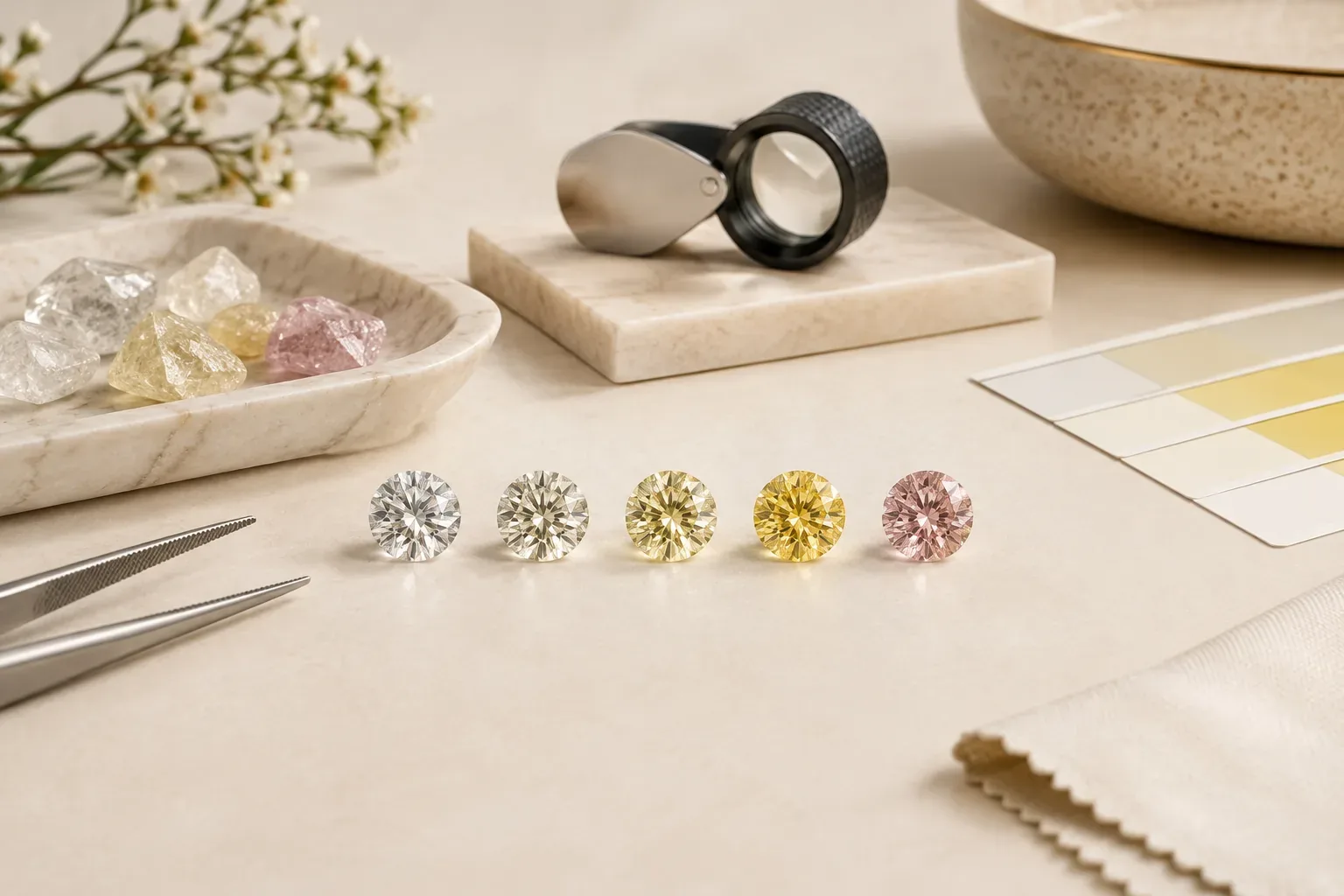
Meaning at a glance
Diamond color treatment explained: treatments are intentional processes that change or enhance a diamond’s color; common methods include irradiation, high-pressure high-temperature (HPHT) processing, coatings and filling, each with distinct trade-offs in permanence, detectability and care; disclosure by sellers is legally and ethically required, and only a qualified jeweler or gemological laboratory can reliably verify many treatments.
Quick answer
Diamond color treatment explained in one sentence: these are deliberate, human-applied processes that alter or improve a diamond’s color or appearance, and they vary in permanence, detectability and effect on value—buyers should expect clear seller disclosure and lab documentation for important purchases, and understand that only trained gemologists or laboratories can reliably confirm many treatments.
What "color treatment" means and common methods
In simple terms, a color treatment changes or enhances a diamond’s natural color. The Gemological Institute of America (GIA) describes a range of treatments used on diamonds and other gems to alter appearance, detectability and durability, and notes that different techniques produce different results and have different care requirements.
Commonly reported methods include irradiation to create or shift color, high-pressure high-temperature (HPHT) processing to modify or remove brownish tones, surface coatings that add visible color, and filling or laser drilling to affect apparent clarity and sometimes color. Each method operates by different physical means: irradiation changes atomic structure, HPHT reorganizes crystal defects, and coatings or fills manipulate the surface or fractures rather than the diamond’s core.
Historical evidence and documented development
Scientific and industry discussion of deliberate color alteration of diamonds is largely a 20th- and 21st-century phenomenon because the technologies—industrial irradiation sources, controlled high-pressure high-temperature apparatus, and modern coating technologies—became practical only in that era. The Gemological Institute of America provides the documented technical context for these treatments and their introduction into the trade.
What this means for historical jewelry: older pre-industrial pieces that show unusual color generally reflect naturally colored diamonds, dyeing of organic gems, or later restoration; systematic, laboratory-style color modification as a trade practice is documented and described by modern gemological laboratories rather than by pre-industrial cultures or periods.
Documented history versus modern personal interpretation
Documented history focuses on the technical facts about how and when treatments were developed and how they behave. The GIA and other gemological authorities document the methods themselves, their detectability and the trade practices that should accompany them.
Modern personal interpretation is different: people may assign symbolic meaning to a colored diamond—pink for romance, blue for rarity, or a treated fancy color as a personal style choice—but such meanings are contemporary and subjective. These interpretations are not universal and are cultural or personal expressions rather than documented historical meanings tied to a treatment itself.
How treated diamonds appear in jewelry
Treated diamonds are used across jewelry categories: as colored center stones for fashion or engagement rings, as accent stones in pendants or earrings, and in designs that prioritize color and affordability. Market analysis shows steady consumer demand for engagement rings and classic diamond styles, and treated or color-enhanced options are often presented as cost-effective alternatives when a colored look is desired.
Surface coatings and filled fractures can be visible under magnification and may alter how light interacts with the stone. Permanent changes such as HPHT or irradiation that alter the crystal lattice usually yield more stable color and are preferred when a lasting colored appearance is intended. Coated stones are more common in fashion jewelry where price and visual effect matter more than permanence.
Decision criteria and practical trade-offs for buyers
When evaluating a diamond that’s been color treated, consider these evidence-led criteria: permanence (will the treatment last with normal wear?), detectability (can a trained jeweler or lab confirm the treatment?), disclosure (has the seller stated the treatment in writing?), and value (how does the treatment affect resale or insurance?). The Gemological Institute of America emphasizes that treatments differ in durability and detectability, and the Federal Trade Commission requires clear distinctions among natural, lab-created, treated, and imitation gems in consumer transactions.
Trade-offs are straightforward: permanent treatments such as HPHT or irradiation (when properly performed and documented) can offer long-term color stability and generally command better buyer acceptance than surface coatings, which can wear off or be altered by cleaning. Coated or fracture-filled diamonds may be less expensive up front but can present problems for repair, cleaning and resale.
What you can and cannot verify without a lab
Some things a consumer can reasonably check without a laboratory: ask for written disclosure and any available gem lab reports, inspect the seller’s return and disclosure policies, and look for obvious surface coatings or discoloration under good light and a loupe. The Federal Trade Commission advises that consumers receive clear written information that distinguishes natural, lab-created, treated and imitation materials.
However, many treatments are not reliably detectable by eye or by an inexperienced buyer. Only qualified gemological testing and instruments—available from trained jewelers or gemological laboratories such as the GIA—can confirm the presence, type and permanence of many color treatments. For significant purchases, insist on an independent lab report or examination.
Care and durability guidance
Care instructions depend on the treatment. GIA guidance notes that treated gems can have different durability and special care needs. Surface coatings and fracture fillings can be damaged by ultrasonic cleaners, steam cleaning or harsh chemicals, so gentler cleaning and professional advice are advisable for such stones.
In contrast, diamonds altered by HPHT or stable irradiation that have fully integrated into the crystal lattice typically require the same basic care as untreated diamonds, but buyers should still follow the seller’s specific care guidance and verify with a jeweler before using aggressive cleaning methods. When in doubt, consult the jeweler or a gemologist.
Selection and gifting guidance
If you’re selecting a diamond as a gift and color is an important part of the choice, decide first whether permanence or price is the priority. For a long-term heirloom where color stability and resale value matter, prefer diamonds with laboratory documentation of stable treatments or naturally occurring fancy colors. For fashion-forward gifts where color and cost are priorities, well-disclosed coated or filled stones may be acceptable but communicate the nature of the item to the recipient.
Always ask for written disclosure and any available laboratory reports before purchase, keep receipts and documentation for insurance, and consider whether the recipient would prefer a natural fancy color, a lab-grown colored diamond, or a color-treated option. The FTC’s guidance on buying gemstones recommends that sellers provide clear written distinctions so buyers can choose with full information.
Practical next steps before you buy
Ask the seller to explain the exact treatment and provide any lab reports. Verify return, repair and cleaning policies for treated stones. If the purchase is important, obtain an independent gemological report from a recognized laboratory that states whether a color treatment was applied and its nature.
Remember that a well-documented treated diamond can be a good value when you understand the trade-offs; an undocumented or undisclosed treatment is the real risk. Insist on disclosure and documentation to protect your purchase and the intended recipient.
Conclusion
Diamond color treatment explained: treatments are technical interventions with real trade-offs in permanence, detectability and value. Use seller disclosures, independent lab reports and professional advice to make an informed choice, and treat symbolic meanings as personal interpretations rather than universal facts.
Frequently asked questions
Are color-treated diamonds less valuable than untreated diamonds?
It depends on the treatment and market expectations. Permanent, well-documented treatments such as HPHT or stable irradiation can command better acceptance and higher prices than temporary surface treatments, but natural fancy-color diamonds typically retain the highest market value. The Gemological Institute of America explains that treatments affect value differently depending on permanence and detectability.
Can you tell if a diamond has been color treated by eye?
Not reliably. Many treatments are not detectable to an untrained eye. The Gemological Institute of America notes that trained gemologists and laboratory instruments are often required to identify specific treatments. For important purchases, obtain an independent lab report.
Will color treatments wear off or change over time?
Some treatments are stable and long-lasting (for example certain HPHT and irradiation results), while surface coatings and some fillings can wear off or be altered by cleaning or repair. The GIA advises checking the specific treatment and following recommended care guidance.
What disclosure should I expect when buying a treated diamond?
You should receive clear, written disclosure identifying whether a diamond is natural, lab-created, treated or an imitation, plus any available laboratory reports. The Federal Trade Commission requires sellers to make such distinctions in consumer transactions.
Can lab-grown diamonds be color treated?
Yes. Both natural and lab-grown diamonds can be subjected to color-altering processes. The specific treatment, its permanence and its disclosure should be documented; ask the seller and request laboratory verification if needed.
Sources and further reading
- Imaginaire Digital — Imaginaire Digital
- Gemological Institute of America — Gemological Institute of America
- Federal Trade Commission — Federal Trade Commission