Meaning at a glance
Obsidian is natural volcanic glass whose use as jewelry and amulets is documented in museum collections; historical meanings vary by culture and period, and contemporary protective symbolism is a modern, personal interpretation rather than a universal fact.
What obsidian is (material context)
Obsidian is a natural volcanic glass. As explained by the Smithsonian National Museum of Natural History, gem and mineral context helps place obsidian among other naturally occurring materials used for ornament and toolmaking rather than a crystalline mineral species. Its glassy origin affects how it looks and how it behaves: it takes a high polish and can be shaped and carved, but it is structurally glass and not the same as crystalline gemstones.
Historical evidence: museum objects and what they show
The archaeological record for obsidian in personal ornament and ritual objects is substantial and is visible in museum collections. The Metropolitan Museum of Art catalogs multiple objects described simply as "Obsidian Pendant" and "Obsidian Amulet," which demonstrate that people across different regions and times shaped and wore obsidian pieces. These museum object records are primary evidence that obsidian has been employed as both jewelry and amuletic material rather than a modern invention.
Documented historical meanings (what museums and objects show)
Museum object records show that obsidian was used in ways that indicate personal adornment and likely symbolic or ritual functions. The Metropolitan Museum of Art’s entries for obsidian pendants and amulets document objects made from obsidian and collected or recovered in archaeological contexts, which supports the statement that obsidian served both decorative and amulet-like roles in specific historical settings. Those object pages provide provenance and object descriptions that researchers use to interpret former meanings and uses of the pieces.
Modern meanings versus historic evidence — keep them distinct
Contemporary sellers, crystal enthusiasts, and many wearers often attribute meanings to obsidian such as protection, grounding, or emotional clarity. Those are modern interpretations and personal or cultural beliefs of present-day communities. They are valuable for the people who hold them but are not the same as the documented historical uses recorded in archaeological collections. Where museums document that an object functioned as an amulet or pendant, that fact is evidence; modern symbolic claims about invisible effects are interpretive and subjective.
How obsidian appears in jewelry
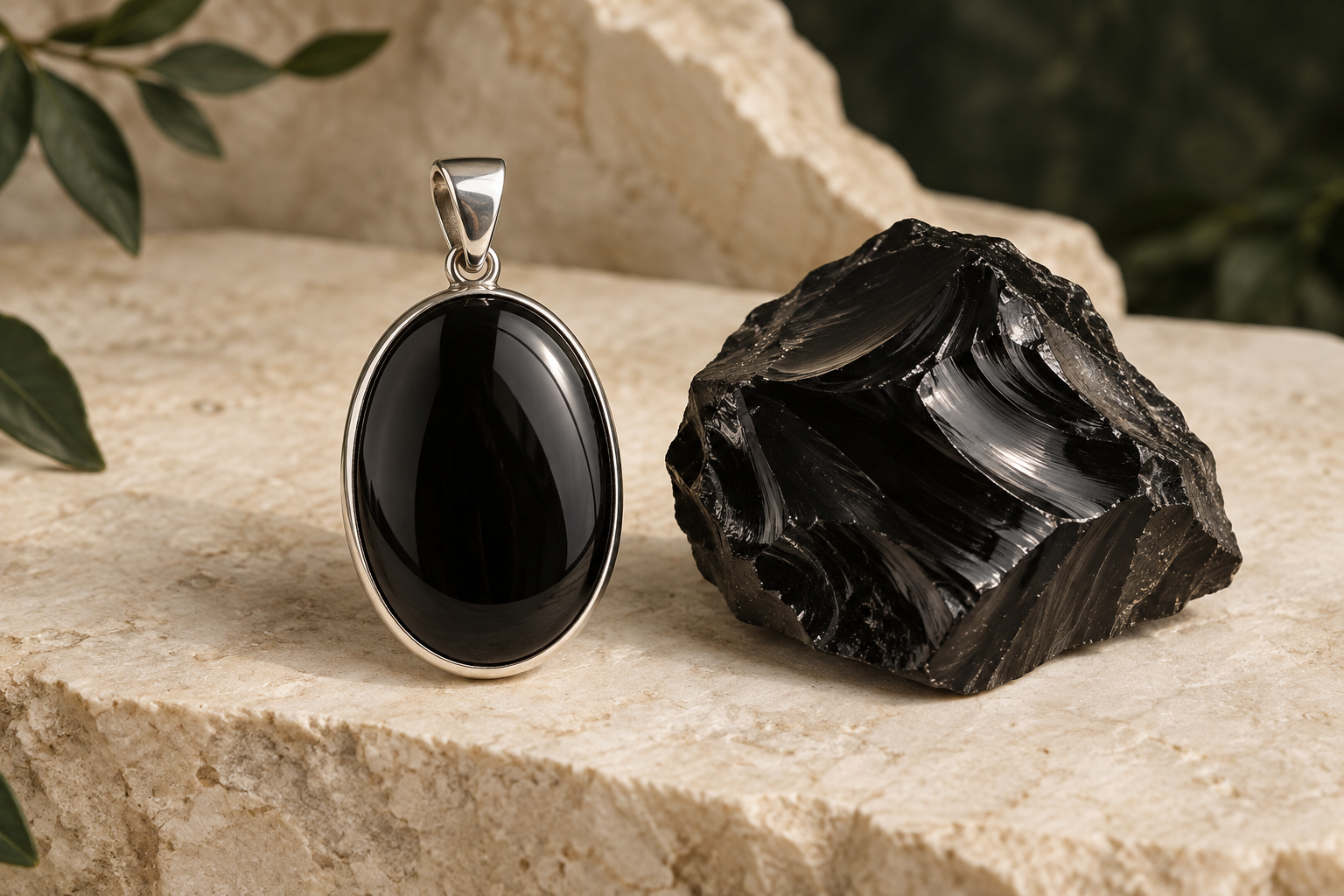
Obsidian is most commonly fashioned into polished cabochons, beads, pendants, carved amulets, and small inlay pieces. Because it polishes to a high luster, jewelers often use it where a glassy black or dark sheen is desired. Archaeological and museum pieces show historic pendants and small carved objects made of obsidian, indicating continuity in some forms: flat or rounded pendants, drilled beads, and carved amuletic shapes. In modern markets, you will also find beads, tumbled pieces set in silver, and simple bezel-set polished stones that highlight obsidian’s smooth, reflective surface.
Selecting obsidian: practical buying guidance
When buying obsidian jewelry, rely on reputable sellers who provide clear material descriptions and return policies. Ask whether the piece is natural obsidian, whether it has been heat-treated, dyed, or combined with resin for stability, and request photographs or provenance if the seller offers them. Because obsidian is a natural glass, look for the even glassy luster and the way surfaces fracture rather than crystalline cleavage. If a specimen is offered as an ancient artifact, ask the seller for documentation or provenance; museum object records show how archaeologists and curators document provenanced pieces.
Gifting obsidian respectfully
If you choose obsidian as a gift, consider the recipient’s beliefs and sensitivities around symbolic meanings. Frame any protective or grounding language as a personal or contemporary interpretation rather than an archaeological fact. If the recipient values ethical sourcing, ask the seller about origin and whether the material was responsibly collected. For gifts that reference cultural practices, make sure you are not appropriating sacred symbols: learn what a motif or design means to the culture of origin and prefer pieces made by or sold with permission from knowledgeable artisans.
Care and safe handling
Because obsidian is natural glass, it behaves more like glass than many crystalline gems. It can take a high polish but is prone to chipping or fracturing if dropped or struck. Clean obsidian jewelry gently with a soft cloth and mild soap and water, rinse thoroughly, and dry immediately. Avoid harsh chemical cleaners and rough abrasives. When in doubt about professional cleaning methods, check with the seller or a qualified jeweler before using ultrasonic or steam cleaners, because glassy materials can be sensitive to sudden temperature changes and mechanical shock. Store obsidian pieces separately from harder gemstones and metal fittings that might abrade their surfaces.
Final considerations
Obsidian occupies an interesting place between geological material, archaeological artifact, and contemporary accessory. The Smithsonian’s gems and minerals context and the Metropolitan Museum of Art’s object records together show that obsidian is a natural volcanic glass with longstanding use as ornament and amulet. If you value obsidian for its historical resonance, consult museum records and reputable scholarship to learn how specific pieces were used; if you value it for modern symbolic meanings, present those meanings as personal or cultural interpretations. Above all, treat obsidian pieces as glass objects in terms of handling and care.
Frequently asked questions
Is obsidian a gemstone or a glass?
Obsidian is natural volcanic glass rather than a crystalline mineral. The Smithsonian National Museum of Natural History places it among gem and mineral materials by geological origin and usage.
Did ancient people use obsidian as jewelry or amulets?
Yes. Object records in the Metropolitan Museum of Art include obsidian pendants and amulets, which document the material’s use in personal ornament and likely symbolic roles in specific historical contexts.
Does obsidian have a universal protective power?
No. Modern claims that obsidian confers protection or grounding are contemporary interpretations held by some people. Those meanings are personal or cultural today and are not universal historical facts.
How should I clean obsidian jewelry?
Clean obsidian gently with a soft cloth and mild soap and water, rinse and dry thoroughly. Avoid harsh chemicals, rough abrasives, and consult a jeweler before using ultrasonic or steam cleaners.
How do I tell if an obsidian piece is natural?
Ask the seller for clear material descriptions, provenance, and return policies. Reputable dealers will state whether a piece is natural obsidian, and museum catalogs can help you compare appearance and workmanship for historically documented examples.
Is obsidian suitable for everyday wear?
Because it is a natural glass, obsidian can chip or fracture if struck; it can be worn daily with care, but avoid situations where the piece might be dropped or hit hard, and store it separately from harder stones.
Sources and further reading
- Obsidian Pendant — The Metropolitan Museum of Art
- Obsidian Amulet — The Metropolitan Museum of Art
- Gems and Minerals: Beauties and Building Blocks — Smithsonian National Museum of Natural History