Meaning at a glance
A diamond certification report guide should define the report's issuing laboratory, the key measurements and statements it contains, the disclosure of treatments or origin, the limits of visual verification by a buyer, and practical selection trade-offs; regulators and gemological authorities require written disclosure of treatments and material type, and only qualified laboratories or jewelers can perform definitive testing.
Direct answer — what a diamond certification report guide must do
A diamond certification report guide should tell you which laboratory issued the report, list the measured attributes reported (weight, dimensions, optical and clarity observations, and any treatments or enhancements), explain what the laboratory will and will not certify, and describe what you can reasonably confirm as a shopper versus what requires qualified testing. That is the practical promise of this guide: to give evidence-led definitions, decision criteria, trade-offs, care notes and clear limits on verification without a qualified jeweler or gemological laboratory.
What a certification report is and why it matters
A certification report is a written statement from a gemological laboratory or qualified authority describing what the examiner observed, measured, or tested in a particular diamond. Reports vary in format and content; they are tools for transparency and market trust, not absolute proofs of value on their own.
Regulatory guidance emphasizes the importance of disclosure. The U.S. Federal Trade Commission stresses that consumers need clear distinctions among natural, lab-created, treated, cultured and imitation materials and that sellers must provide written disclosures. Treat the report as part of the transaction record: it documents what the laboratory tested and the conclusions it reached, and it flags areas where further testing or disclosure is required.
How modern practice and historical evidence are different
Certified gem reports are a product of modern gemology and the institutional laboratories that developed testing standards. The Federal Trade Commission’s consumer guidance reflects modern legal expectations for written disclosure rather than ancient practice; written certified reports and formal disclosure requirements are features of contemporary commerce and consumer protection.
The Gemological Institute of America (GIA) documents how laboratory testing and disclosure interact with treatments, detectability and durability issues today. Use historical references only as cultural context: documented historical uses of diamonds or cultural meanings are different from what a laboratory report claims about a stone’s physical or treated condition.
Typical report elements explained in plain language
Issuing laboratory and report number: The lab’s name and the unique report number identify who examined the stone and let you request confirmations or reprints if necessary. Different labs use different testing equipment and standards; knowing the lab helps you understand the report’s scope.
Measurements and weight: Reports list weight (carats) and physical dimensions. These are measured values the laboratory records. A buyer can confirm these numbers with a jeweler’s scale and calipers, but only the lab provides the tested report tied to the specific stone.
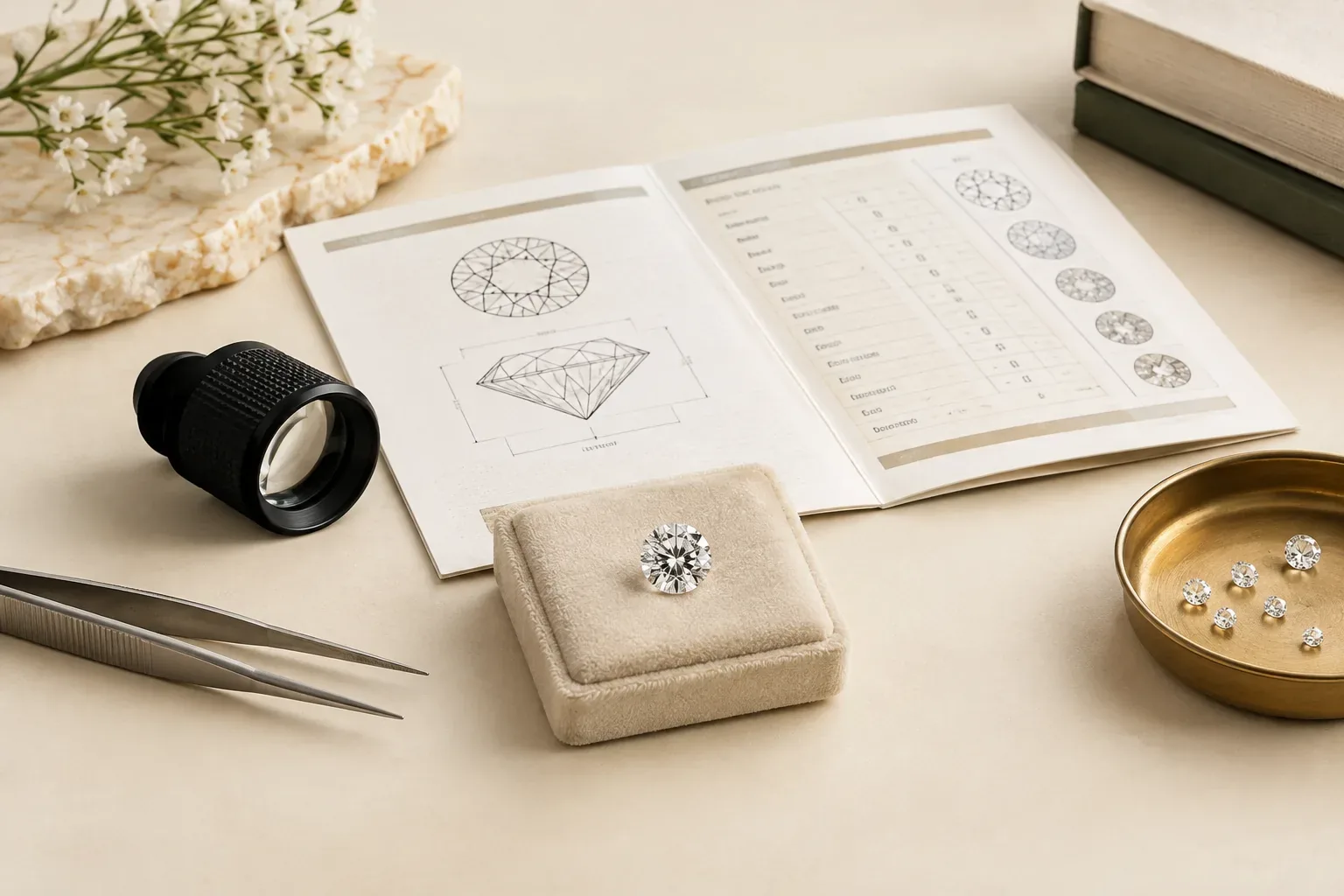
Clarity, color, cut descriptors and plots: Reports commonly include descriptions or grades for clarity and color and diagrams that show any inclusions or features. These are expert observations or graded judgments; laboratories may differ in grading thresholds and notation.
Comments and treatment disclosure: A critical portion of any report is disclosure of treatments, enhancements or clarity/appearance modifiers the lab detected or the seller disclosed. The Gemological Institute of America highlights that treatments and their detectability affect care and durability, so disclosures are essential for informed purchases.
What a report can and cannot verify for a shopper
What you can verify yourself: You can read and compare the report’s stated numbers and descriptions. You can check that the report number is present, confirm the issuing laboratory, and visually compare the diagram to the stone. You can also ask a qualified jeweler to confirm measurements or to compare the stone visually to the report while the lab report is present.
What requires a qualified jeweler or laboratory: Definitive tests for natural versus lab-grown origin, for many types of treatments, and for the existence of certain enhancements often require laboratory-grade equipment and expertise. The FTC advises that consumers rely on written disclosures and that a seller should not misrepresent material type; if a report does not explicitly state origin or treatments, assume further testing may be needed.
Decision criteria and practical trade-offs when choosing a diamond
Define your priorities: Are you prioritizing size, optical performance, certification from a particular lab, or budget? Imaginaire Digital’s market research points to strong consumer demand for engagement rings and diamond studs; use that market context to decide where to direct your budget—center stone quality for an engagement ring versus matching and finish for studs or bracelets.
Accept trade-offs: A certified diamond that rates slightly lower on one attribute may present better overall value if its optical performance is pleasing to the eye. Certification provides a baseline for comparison; it does not replace personal inspection or expert appraisal for subjective qualities like sparkle or brilliance.
How the motif and diamond appear in jewelry and what that means for reports
Diamonds appear across jewelry types: in solitaire engagement rings, in cluster settings, as accents on bracelets and in studs. Imaginaire Digital’s 2026 market report shows sustained consumer interest in engagement rings, tennis bracelets, diamond studs and certain popular cuts; the setting and intended wear change how durability and treatments matter.
Setting effects: Report notes about durability or treatments influence setting choices and care. For example, problems flagged in a report—such as surface-reaching fractures or certain treatments—may affect how a jeweler recommends setting, repairability, and everyday care. Use the report to discuss mounting and maintenance with a jeweler before purchase.
Safe care guidance tied to report findings
Follow laboratory and seller notes: If the report or seller disclosure mentions treatments, special care or limited durability, follow those instructions. The Gemological Institute of America explains that detection of treatments and recommendations about durability create distinct consumer questions for gemstones; treat such notes as important care guidance.
Everyday care: Even for untreated, high-quality diamonds, routine maintenance (cleaning, checking the setting, and safe storage) preserves appearance and security. For stones with identified treatments or inclusions near the surface, ask a jeweler about secure mounting, protective settings, and any temperature or chemical exposures to avoid.
Selection and gifting guidance that respects both evidence and sentiment
Use the report as an informed foundation for gifting: If the gift is symbolic—such as an engagement ring—balance the emotional intent with the evidence in the report. Choose a lab you trust, confirm the report number with the seller, and ask for written confirmation of any seller statements that go beyond the report.
Respect privacy and expectations: Some recipients prefer surprise; where possible, obtain the report copy in advance and confirm return and exchange policies if the recipient prefers a different stone or cut. The FTC’s consumer guidance underscores the buyer’s right to accurate written disclosure; use that right to secure documentation for gift recipients and for resale or insurance needs.
When to seek a second opinion or laboratory re-analysis
Ask for a second opinion when the report is ambiguous or missing critical disclosures about origin and treatments. If a report’s language is unclear about treatments or if the seller makes claims inconsistent with the report, obtain an independent appraisal or request verification from a recognized laboratory.
Use certified labs for definitive questions: Only a qualified gemological laboratory can run the specialized tests required to confirm origin, to detect some treatments, or to generate a baseline report for insurance. The FTC advises reliance on written disclosures and recognized lab reports as part of consumer protection.
Frequently asked questions
What is the single most important item to check on a diamond certification report?
Confirm the issuing laboratory and the unique report number, and ensure the report explicitly states any treatments or whether the stone is natural or lab-created; regulators emphasize written disclosure as essential for consumer protection.
Can I trust every laboratory’s grading the same way?
Laboratories use differing equipment and grading approaches; a report is a statement from a specific laboratory and should be interpreted in that context—if consistency across labs matters to you, seek reports from the labs you trust or request independent verification.
Does a certification report prove a diamond’s origin or treatment status beyond doubt?
No. A report records what the issuing laboratory tested and concluded; some origin and treatment questions require specialized testing that only qualified laboratories can perform, so treat a single report as strong evidence but not an absolute, unconditional proof in every technical sense.
If a report doesn’t mention treatments, does that mean the stone is untreated?
Not necessarily. The absence of a treatment statement is not definitive. The Federal Trade Commission advises buyers to rely on explicit written disclosures and to request clarification or further testing if the report is silent on treatments or origin.
Should I choose a diamond with a certificate from a particular lab?
Choose a lab whose methods and reputation you understand and whose report format answers the questions you care about; for emotional purchases like engagement rings, balance lab selection with overall appearance and budget considerations.
How should I care for a diamond when the report notes a treatment or fragility?
Follow the laboratory’s and seller’s notes: ask a jeweler about secure setting and cleaning limitations, avoid extreme temperatures and harsh chemicals if recommended, and schedule periodic setting checks to protect the stone and mounting.
Can I verify the report number and lab myself?
Yes. A buyer can read the report number and contact the issuing laboratory or check the lab’s online verification tools where available, but for conclusive testing of origin or concealed treatments, only qualified laboratory analysis is definitive.
Sources and further reading
- Imaginaire Digital — Imaginaire Digital
- Gemological Institute of America — Gemological Institute of America
- Federal Trade Commission — Federal Trade Commission