Meaning at a glance
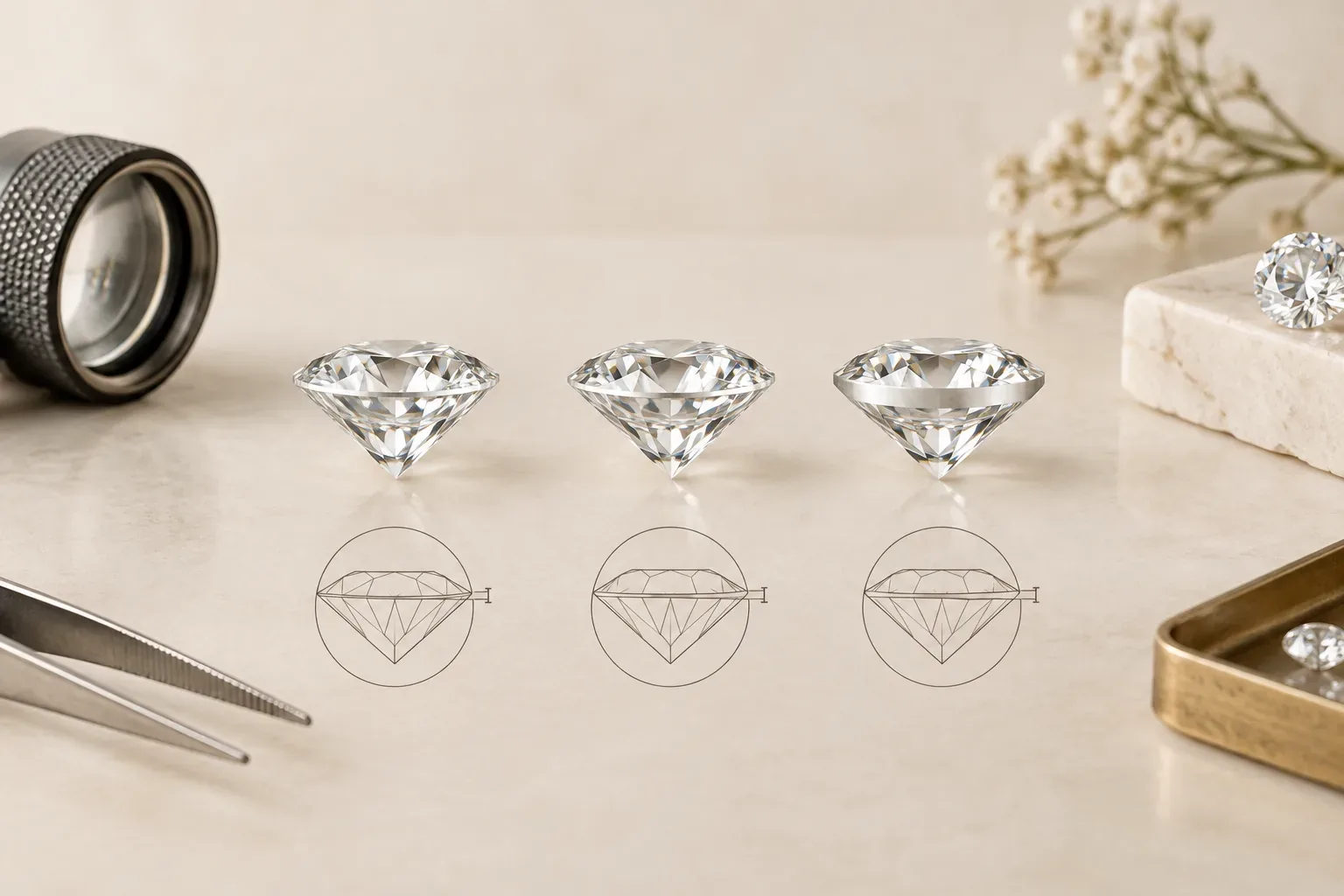
Diamond girdle thickness explained: the girdle is the thin edge between a diamond’s crown and pavilion; its thickness is a measured, graded characteristic that influences durability, mounting choice, small visual effects, and potential price trade-offs, and it is best assessed via a jeweler’s inspection or a gemological report rather than by unaided guessing.
Direct answer: what 'diamond girdle thickness explained' means
Concise answer: a diamond’s girdle thickness is the measured width of the stone’s outer edge where the crown meets the pavilion. It is described using standardized grades (from very thin to very thick) because those grades help predict how the stone will perform in a setting, how vulnerable it is to chipping, and whether its proportions affect face-up appearance and weight. Practical decisions about girdle thickness balance durability, appearance, and budget, and the most reliable information comes from a qualified jeweler or a gemological laboratory report rather than unaided inspection.
What the girdle is and how thickness is described
The girdle is the narrow band that forms the diamond’s perimeter between the crown (top facets) and the pavilion (lower facets). When people ask for "diamond girdle thickness explained," they are usually asking two things: how the thickness is described technically, and why it matters for wear and appearance.
Girdle thickness is described using relative grades rather than a single universal millimetre number. Industry grading reports and jewelers use terms that range from very thin or extremely thin up to very thick, with neutral grades such as thin or medium sitting in the middle. Those descriptive grades exist because identical millimetre measurements mean different things on diamonds of different diameters, so the comparative scale is more useful for shoppers and setters.
Historical evidence and cultural context
When assessing historical meaning, it is important to separate documented evidence from modern notions. There is little to no documented historical tradition that assigns symbolic or ritual meaning specifically to a diamond’s girdle thickness. Gemological and consumer-protection literature focuses on physical and disclosure questions rather than symbolic meanings for girdle measurements, and does not record culture-specific symbolism for the girdle as a feature distinct from the gemstone as a whole.
Authoritative sources that guide modern consumers treat girdle thickness as a technical attribute tied to durability, treatment disclosure, and lab grading rather than a bearer of cultural symbolism. For example, gemological authorities emphasize detection and disclosure of treatments and durability concerns (Gemological Institute of America), and consumer-protection regulators emphasize clear seller disclosures about material, origin and treatments (Federal Trade Commission). These modern professional perspectives are what most buyers should rely on when the question is simply "diamond girdle thickness explained."
Documented historical meanings versus modern personal interpretation
Documented historical meanings: professional gemological and consumer-protection publications do not attribute cultural meanings to girdle thickness. Historical literature about diamonds more commonly records ownership, cutting styles, and trade rather than specific symbolism attached to microscopic cutting details.
Modern personal interpretation: in contemporary practice some people assign symbolic or sentimental value to technical features of a stone—choosing a very thin girdle to emphasize light performance, or a thicker girdle because it 'feels more substantial.' Those are personal or stylistic choices rather than historically documented symbolic meanings. When you read opinions online, treat them as individual preferences, not as universal or historical facts.
How girdle thickness appears in jewelry and how it affects settings
Girdle thickness has practical consequences for how a diamond is mounted and how the finished piece behaves in daily wear. A very thin or extremely thin girdle increases the risk of chipping at the edge, especially in high-impact settings or when prongs are not perfectly placed. Therefore, very thin girdles are often avoided for rings that will be worn every day unless the stone is protected by a robust setting.
Conversely, stones with very thick girdles can look slightly smaller face-up for their carat weight because more of the diamond’s weight is concentrated in the girdle rather than in crown or pavilion. Very thick girdles can also complicate bezel settings or cause a visible unsightly rim if not well handled by the setter. Most setters and buyers prefer a thin-to-medium girdle because it offers a compromise between face-up appearance and structural safety.
Different mounting styles interact with girdle thickness in distinct ways. Prong settings can protect slightly thinner girdles but require careful prong placement; bezel settings offer strong edge protection and can be a good match for slightly thinner girdles; tension settings can be sensitive to irregular girdles and usually require precise measurements that are best confirmed with a lab report or an experienced setter.
Decision criteria, trade-offs, and practical examples
When you evaluate the trade-offs, ask four practical questions: how often will the piece be worn, what type of setting is planned, how important is maximum face-up diameter for the carat weight, and are you buying from a seller who provides clear disclosures and lab reports? If the ring will be worn daily, prioritize durability; for occasional-wear stones, you may accept slightly thinner girdles to maximize appearance.
Budget trade-offs: a stone with a thicker girdle may cost less per apparent face-up millimetre of diameter because some of its carat weight is 'hidden' in the girdle. Conversely, stones with very thin girdles that maximize face-up diameter can command higher prices because buyers perceive more visible size for the same carat weight. Those are market trade-offs; modern search and buying trends show strong consumer demand for engagement rings and particular cuts (Imaginaire Digital), which drives sensitivity to how a diamond looks on the finger as well as its listed carat weight.
Practical example: if you choose a 1.00 ct round brilliant intended for daily wear in a solitaire setting, most setters and gemologists will advise selecting a stone with a thin-to-medium girdle to balance durability and face-up size. If you prefer a low-set bezel or a fashion pendant, you may accept a slightly thinner girdle because the setting itself provides protection.
Care, treatment, disclosure, and what you can (and cannot) verify
Care and durability: the main practical concern linked to girdle thickness is vulnerability to chipping. Treat the edge with the same general caution you would any gemstone: avoid heavy knocks at the rim, inspect prongs periodically, and ask for professional tightening of settings when you notice movement. The Gemological Institute of America notes that treatments, detectability and special care questions are central to consumer decisions, and those considerations extend to how a stone is set and maintained.
Disclosure obligations: the Federal Trade Commission requires clear seller disclosures about whether a gemstone is natural, lab-created, treated, or imitation. While the FTC guidance does not prescribe grading language for girdle thickness, it does put the onus on sellers to be transparent about any attribute that affects value or durability. Ask the seller for a written statement or a lab report if you need precise confirmation.
What you can verify yourself: you can visually inspect a stone for obvious chips or an excessively thick rim and you can compare face-up appearance across stones of similar listed carat weights. What you cannot reliably verify without tools or expertise is the exact technical girdle grade or whether a tiny edge nick happened during cutting or later wear.
What requires a qualified jeweler or lab: precise girdle grading, measurements in millimetres, and an objective assessment of how a particular girdle will behave over time are tasks for a trained professional and, when necessary, a gemological laboratory. If a seller provides a reputable lab report, it will include measured dimensions and an expert description of girdle characteristics; otherwise, request a pre-purchase inspection from a qualified independent jeweler.
Practical selection and respectful gifting guidance
Selection guidance: when choosing a diamond, focus first on how the stone will be used and who will wear it. For daily-wear engagement rings, favor a thin-to-medium girdle for most shapes because that range balances durability and face-up size. For fashion pieces or stones that will be set and protected by heavy bezels or metalwork, you can be more flexible.
Gifting guidance: be respectful of the recipient’s lifestyle and preferences. If the recipient is very active or works with their hands, choose a safer girdle grade and a protective setting. If they prioritize maximum visible size for carat weight and rarely wear the piece, a thinner girdle may be acceptable. Always ask the seller for documentation and keep purchase receipts and any lab reports in case later appraisal or resizing requires professional work.
Ask for disclosures and documentation: before finalizing any purchase, request a gemological report or a written statement that includes the stone’s dimensions and a description of any treatments. The FTC highlights the importance of clear seller disclosures about origin and treatments; sellers who can’t document basic facts about the stone’s technical attributes should be treated with caution.
Final checklist: what to do when buying
Before you buy, get a clear statement about the stone’s girdle description and ask to see either a jeweler’s measurement or an independent lab report. Inspect the mounting and discuss how the chosen setting protects the girdle. Consider lifestyle and setting type first, then balance face-up appearance and price. If in doubt about a stone’s vulnerability or its grading, insist on a pre-purchase inspection by a qualified jeweler or request stones with lab reports that include dimensions and a descriptive girdle comment.
Remember: "diamond girdle thickness explained" is ultimately about a measurable, technical attribute. Its importance is practical—durability, appearance, and how a setter manages the edge—not symbolic in historical sense. Use reputable documentation, professional advice, and clear seller disclosures to make a confident decision.
Frequently asked questions
Can I tell girdle thickness by looking at a diamond?
You can make a rough visual judgment—very thin or very thick girdles are often noticeable to the trained eye—but precise grading or millimetre measurements require magnification and tools, and the most reliable confirmation is a professional assessment or a lab report.
Does a thicker girdle make a diamond stronger?
A slightly thicker girdle can add resistance to chipping, but an excessively thick girdle can negatively affect face-up appearance and may create setting problems. The goal is a balanced girdle grade, not simply 'thicker is better.'
Will a very thin girdle make my diamond chip easily?
Very thin or extremely thin girdles are more vulnerable to edge damage, especially in rings worn daily. Protective settings like bezels or careful prong placement reduce the risk, and a pre-purchase jeweler inspection helps assess suitability.
Does girdle thickness affect a diamond’s price?
Yes—girdle thickness can affect price indirectly because it influences face-up appearance for a given carat weight and perceived durability. Market demand for certain looks can make thin-to-medium girdles more desirable for many buyers.
What documentation should I ask for when buying a diamond?
Request a written description of the stone, a reputable lab report if available (which includes measurements and a girdle description), and a seller disclosure confirming whether the stone is natural, lab-grown, or treated, in line with FTC guidance.
Who can provide an authoritative girdle grade?
A qualified gemological laboratory or an experienced independent jeweler with proper tools can provide an authoritative girdle description and assess how that girdle will behave in your chosen setting.
Sources and further reading
- Imaginaire Digital — Imaginaire Digital
- Gemological Institute of America — Gemological Institute of America
- Federal Trade Commission — Federal Trade Commission