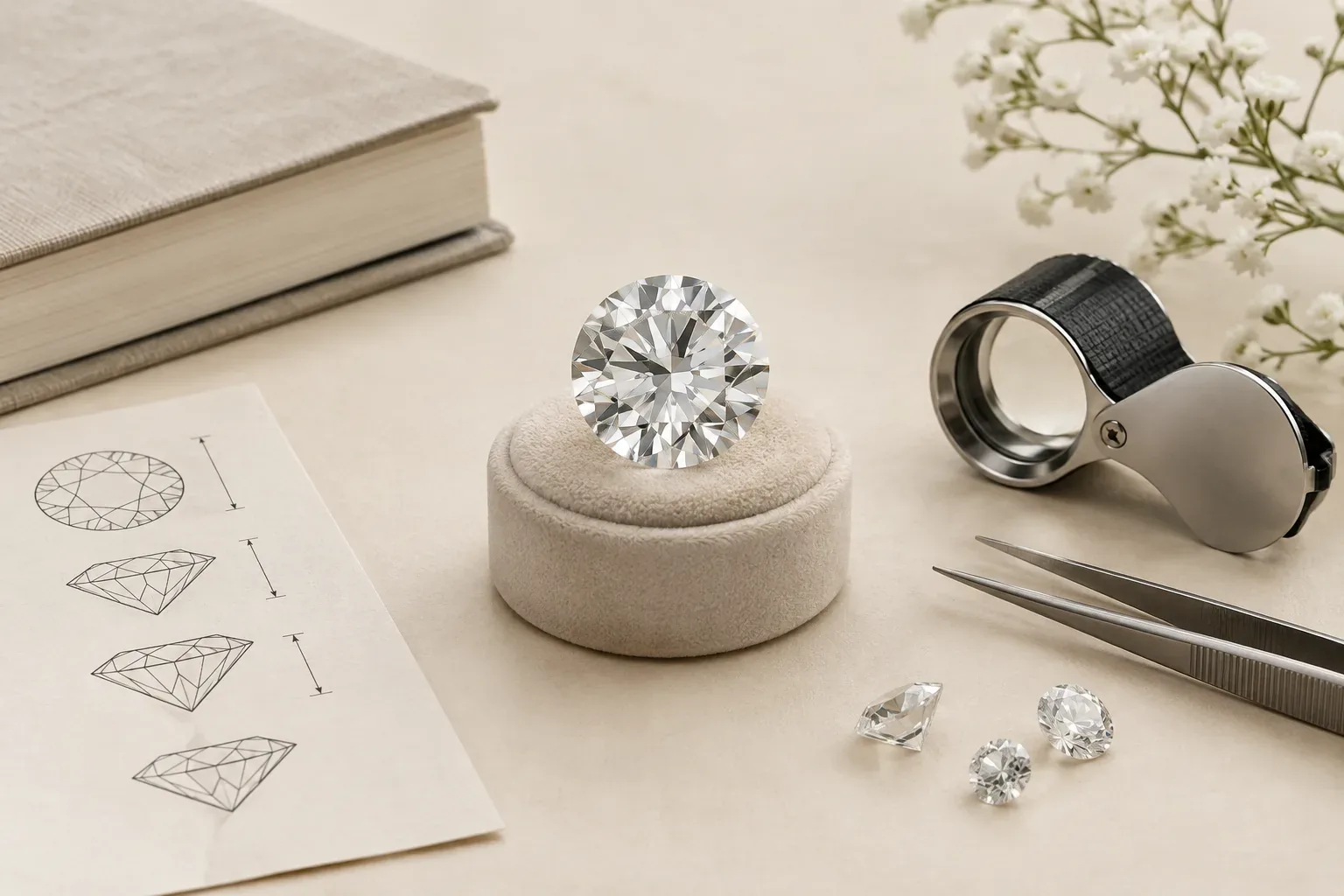
Meaning at a glance
Diamond depth percentage is a laboratory-measured proportion that helps describe how a diamond is cut; it is a technical metric used in modern gemology to help predict face-up size and light performance, but it should never be the sole basis for purchase. Buyers should rely on a qualified gemological report, visual inspection of light performance or images, clear seller disclosure about origin and treatments, and a jeweler or laboratory when in doubt.
Quick answer
Diamond depth percentage is a modern, lab-measured proportion that describes a diamond’s total depth relative to its width; it is a technical metric that contributes to—but does not alone determine—value, face-up size, or brilliance. Use a trusted gemological report, inspect the stone visually (or request light-performance imaging), weigh trade-offs between apparent size and brilliance, and confirm origin and treatments with written disclosures or a qualified laboratory.
What the metric is and why it matters
Depth percentage is calculated from measured dimensions on a gemological report and reported as a percentage. It describes how tall the diamond is relative to its diameter, and the figure is used alongside other measured proportions to help evaluate how light may travel inside the diamond and how large the stone appears "face up."
That measurement is a technical tool for describing cut and is most useful when read together with other proportion data, cut grades, and objective imaging or light-performance reports rather than used in isolation as a single decision rule.
Historical evidence and period attribution
There is no historical cultural tradition tied to the numeric metric called "depth percentage"—this specific proportion is a modern gemological concept used in trade, grading and sales. The notion of measuring and standardizing diamond proportions belongs to modern gemology and the laboratory era rather than to historic or pre-industrial jewelry practices.
Because the available, approved sources for this guide focus on modern consumer protections and gemological practice, this article treats depth percentage as a contemporary, technical descriptor rather than a historical or cultural symbol.
Documented history versus modern personal meaning
Documented history for the depth percentage is limited to the modern practice of laboratory measurement and reporting; it is not a traditional symbolic attribute that carried cultural meaning in older periods. Any symbolic or emotional meanings people attach to depth percentage today—such as associating a specific number with quality or luck—are personal or retail-driven interpretations and should be separated from the technical facts on a report.
If you are looking for historical or cultural symbolism connected to diamonds in general, treat that as a different question from cut metrics. The cut and proportions are practical, measurable attributes, whereas cultural meanings are created by people and vary by culture and era.
How depth percentage appears in jewelry and listings
In jewelry listings and certificates, depth percentage usually appears on a gemological report alongside other dimensions, total carat weight, and any cut grade. Retail photos, videos, or light-performance imagery may be supplied to show how the stone looks when mounted.
In practical terms, depth percentage influences how much of the diamond’s weight contributes to what you see face up. That can affect buyers’ impressions in settings where face-up spread matters—such as solitaire engagement rings or studs—while other elements like cut quality and light return influence perceived sparkle.
Practical trade-offs buyers should understand
Depth percentage is a trade-off between how large a diamond appears from above and how well it returns light. A very shallow or very deep proportion can reduce desirable optical performance, but a single percentage cannot predict light return without reference to the full set of proportions and visual evidence.
Because depth is one of several proportion metrics, prioritizing lower price or bigger face-up appearance can mean compromising on light performance or durability. Conversely, prioritizing the maximum brilliance may mean choosing a proportion that carries slightly less apparent spread for the same carat weight.
Decision criteria: what to prioritize
Decide first what you want most from the diamond: maximum face-up size for a given weight, maximum scintillation and brightness, or a balance of both. Your priorities will determine whether depth percentage is a major factor in the purchase decision.
When comparing stones, always look at the full report, photographs or videos that show how the diamond performs in real light, and any published cut or light-performance analysis. Use these combined data points to judge whether a particular depth percentage supports your objective.
What you can and cannot verify without a lab or qualified jeweler
You can verify a seller’s written disclosures, the presence of a recognized laboratory report, the reported dimensions and depth percentage on that report, and return or inspection policies on your own. The Federal Trade Commission emphasizes that consumers should expect clear written disclosure about natural, lab-created, treated, or imitation materials, and you should receive those disclosures before purchase.
You cannot reliably verify microscopic clarity features, the full accuracy of cut-related light performance, or certain treatments and origin claims without a qualified gemologist or laboratory. For questions about detectability of treatments, durability or special care, consult a recognized lab or gemological authority rather than relying solely on marketing images or spot checks.
Questions to ask sellers and labs
Ask for the full, named laboratory report and verify the lab name and report number. Request a measurement chart that includes depth percentage and other proportions, and ask whether the seller can provide standardized light-performance images or a video of the stone mounted and unmounted.
Ask for written disclosure about whether the diamond is natural, lab-grown, treated, or simulant, and request documentation that explains treatments if any. Confirm the seller’s return policy and any independent inspection options, and ask whether a qualified jeweler or gemological laboratory can re-measure or re-evaluate the stone after purchase.
Selection and gifting guidance
When selecting a diamond as a gift, align the choice with the recipient’s priorities: if they prize a large face-up look, discuss whether maximizing spread is important; if brilliance and sparkle are the priority, focus on light performance and overall cut quality. Remember that a certified lab report and honest seller disclosures are crucial to protect both buyer and recipient.
If you are unsure, buy from retailers who provide clear return windows and encourage an independent inspection by a reputable jeweler or laboratory. Present the certificate and any seller-provided imaging with the gift so the recipient has the documentation needed for future care or resale.
Care, durability, and special considerations
Depth percentage itself does not change a stone’s care routine, but treatments and the overall mounting can affect durability. The Gemological Institute of America notes that treatments and detectability affect care and disclosure expectations, so ask about any treatments and follow the laboratory’s or jeweler’s care recommendations.
Protect your diamond from hard knocks and chemical exposure, and have prongs and settings inspected periodically by a professional. For issues related to treated stones or special care, rely on written guidance from the seller and confirmed laboratory documentation.
Final checklist before purchase
Obtain the named laboratory report and confirm the reported depth percentage and other dimensions. Request images or video showing the stone’s face-up appearance and, if offered, standardized light-performance imaging.
Confirm written disclosure of origin and treatments as required by consumer protection guidelines, understand the return or exchange policy, and plan for an independent inspection if you need confirmation beyond seller-provided documents.
Frequently asked questions
What is diamond depth percentage and why should I care?
Depth percentage is a lab-measured proportion comparing a diamond’s total depth to its width; it is one of several measurements that inform cut and how a stone may appear face up and return light. It is useful when combined with other proportions and visual evidence but should not be the only factor in your purchase.
Can I rely on depth percentage alone to choose a diamond?
No. Depth percentage is only one metric. Reliable decisions also require the full set of proportions, a named laboratory report, visual evidence of light performance, and seller disclosures about origin or treatments.
What can I verify without a jeweler or laboratory?
You can verify the presence of a named laboratory report, the reported dimensions including depth percentage, the seller’s written disclosures about origin and treatments, return policy terms, and any photos or videos provided by the seller. For microscopic features or treatment detectability you will need a qualified professional or lab.
What questions should I ask the seller before buying?
Ask for the full lab report and report number, measurements and depth percentage, any treatment or origin disclosures in writing, standardized imaging or video, and the seller’s return or independent-inspection policy.
How does consumer protection affect my purchase?
Consumer protection guidance requires clear disclosure about whether a diamond is natural, lab-grown, treated, or a simulant and encourages transparent written information. Use those disclosures and a named laboratory report to support your purchase decisions.
Sources and further reading
- Imaginaire Digital — Imaginaire Digital
- Gemological Institute of America — Gemological Institute of America
- Federal Trade Commission — Federal Trade Commission