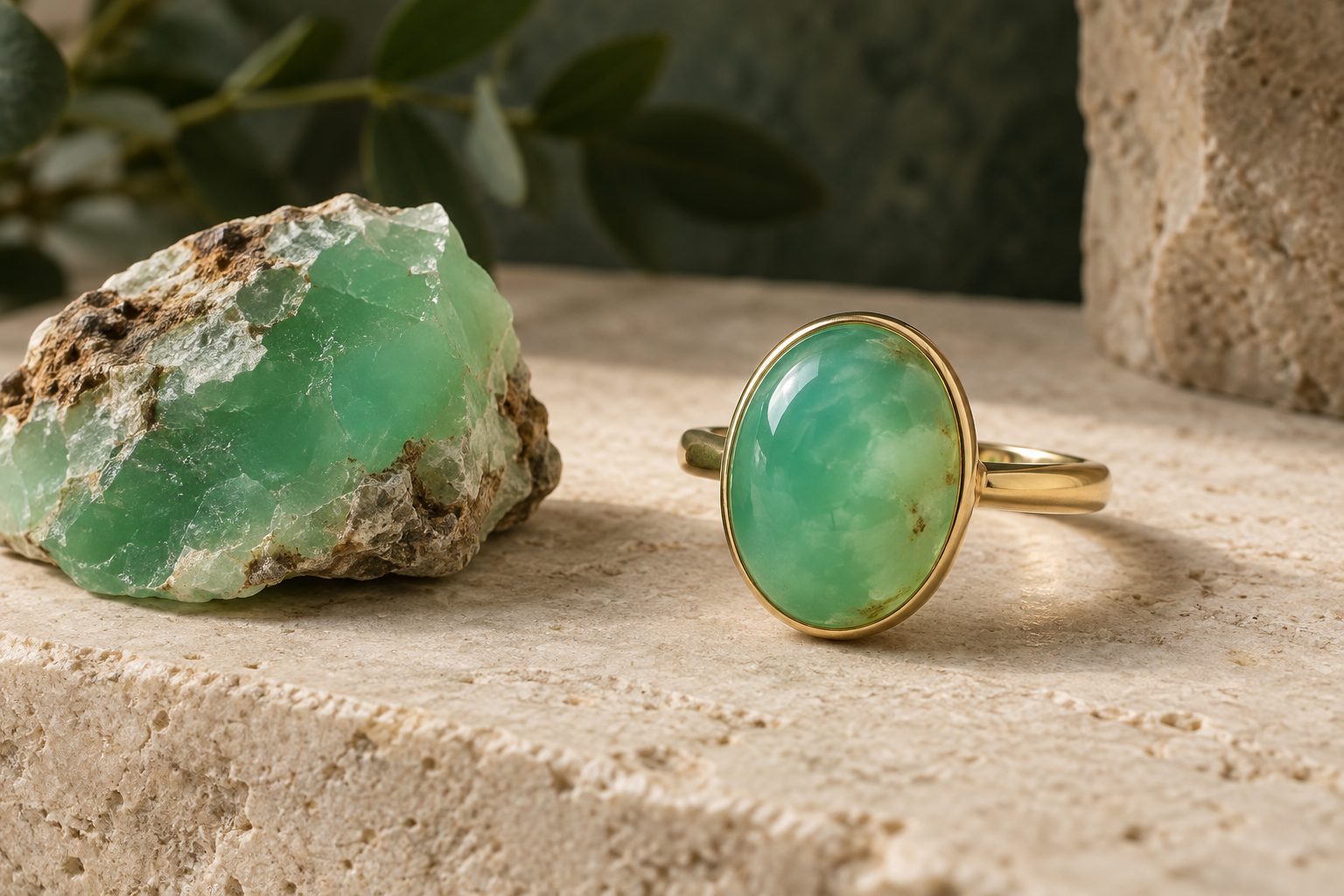
Meaning at a glance
Chrysoprase jewelry meaning rests on two layers: the documented mineral identity (a nickel‑green chalcedony with notable Australian sources and subject to potential treatments) and a separate, modern layer of personal symbolism such as hope or renewal; responsible guidance distinguishes the physical facts (identity, locality, treatment, care) from contemporary meanings people attach to the stone.
Quick answer
Chrysoprase is the nickel‑green variety of chalcedony; responsible guidance separates its mineral identity, locality and any treatments from modern symbolic or personal meanings such as hope or renewal.
What chrysoprase is — mineral identity and color
Chrysoprase is a variety of chalcedony, the microcrystalline form of quartz, whose distinctive apple‑to‑emerald green comes from nickel in the stone's structure. Professional gemological reporting treats chrysoprase as a color‑defined variety of chalcedony rather than as a separate mineral species. The Gemological Institute of America (GIA) describes chrysoprase by its nickel‑derived green tone and notes new documented production localities in recent reporting, underscoring that color and locality are key identifiers for the material.
Documented historical evidence and localities
Scholarly and institutional sources that focus on gem material and occurrences emphasize chrysoprase as a gem material rather than as a widely recorded cultural symbol. The Smithsonian National Museum of Natural History provides context on gems and minerals, explaining chalcedony’s place among microcrystalline quartz varieties and the kinds of scientific and museum documentation typically available for gem materials. The GIA's report on new chrysoprase production in Australia documents modern mining and occurrences; that kind of publication is the basis for claims about where noteworthy supplies have come from and how new finds change market availability. In short, professional bodies document the material’s properties and localities; published, peer‑reviewed or institutional evidence for fixed, culture‑wide symbolic meanings of chrysoprase is limited in those sources.
Documented meanings versus modern personal interpretations
When discussing what chrysoprase 'means,' it is important to separate two things: documented historical meanings (what contemporaneous sources recorded people in a given culture saying about the stone) and modern personal or marketing interpretations. The approved institutional sources for this article concentrate on gem science, locality and treatment rather than on broad cultural symbolism. Many contemporary sellers, writers and wearers attribute meanings to chrysoprase such as renewal, emotional healing, or prosperity. Those are modern personal interpretations and popular associations; they are not the same as historically documented, culture‑specific beliefs recorded in primary historical sources. Treat modern symbolic claims as contemporary cultural or individual practice rather than as universal, historically proven facts.
How chrysoprase appears in jewelry
Chrysoprase is most often cut and set to highlight its even, translucent‑to‑opaque green color. The stone is commonly fashioned as cabochons and beads, and it is also carved and used in inlays and small carved objects. In jewelry, chrysoprase cabochons appear in rings, pendants and earrings where the uniform green can provide a strong color field. Because chalcedony has a finely textured, microcrystalline structure, chrysoprase polishes to a lustrous surface that is attractive for both simple, modern settings and for hand‑carved or artisanal work.
Buying guidance: identity, treatments, and documentation
Because chrysoprase is a variety of chalcedony and chalcedony is commonly treated or dyed in some market segments, the Gemological Institute of America advises buyers to ask sellers about any treatments and to seek disclosure. For chrysoprase, color is central to value: look for a vivid, even green without obvious surface dye concentrations or streaks. Ask whether the stone has been treated, whether stabilization or dyeing has been used, and request written disclosure. For higher‑value pieces, consider asking for testing or a report from a reputable gemological laboratory that can confirm identity and note any treatments. The GIA’s general guidance on gem treatment and disclosure is the appropriate model for responsible buying: demand transparency, documentation where appropriate, and buy from dealers who will answer treatment and origin questions directly.
Selection and gifting guidance
When selecting chrysoprase for yourself or as a gift, start with the recipient’s taste: Chrysoprase’s green range suits many palettes but is not a neutral like diamond or clear quartz. Choose a cut and setting appropriate to the recipient’s lifestyle; cabochons and bezel settings protect the stone while open prong settings show off more light. For sentimental gifting, be explicit about whether you are invoking a modern symbolic meaning—such as renewal—and recognize that such meanings are contemporary and personal rather than universally historic. If provenance matters to you or the recipient, ask about the stone’s origin: reputable sellers will know whether the material is from Australia or another documented source and will provide that information when available.
Care and maintenance
Chrysoprase, as a chalcedony, is a relatively durable gem material, but like all gems it benefits from sensible care. The Smithsonian's materials‑focused resources explain that microcrystalline quartz varieties are generally resistant to everyday wear but can be damaged by hard knocks or by exposure to strong acids or alkaline chemicals. Clean chrysoprase with warm soapy water and a soft brush; avoid steam cleaning or harsh chemical cleaners unless you have documentation confirming the stone has not been treated in ways that make such methods unsafe. Store chrysoprase jewelry separately to avoid abrasion from harder stones and check settings regularly; if a piece has been treated, follow any specific care instructions the seller provides.
When to get professional help
If you believe a chrysoprase piece may have been treated in an unusual way or if the stone is a high‑value antique, seek a written assessment from a qualified gemological laboratory or an independent appraiser. Laboratory reports can describe identity, treatments, and sometimes locality information; they are also useful when insuring significant pieces. For conservation of antique chrysoprase jewelry, consult a professional conservator or a jeweler experienced with historic materials before attempting cleaning or repair.
Summary
Chrysoprase jewelry meaning has two separate layers: the material facts, which are scientific and documentable—chrysoprase is a nickel‑green chalcedony, with known localities and subject to possible market treatments—and the modern layer of symbolic meaning that people and sellers assign today. Use institutional, gemological guidance when buying and caring for chrysoprase, request disclosure of any treatments as the GIA recommends, and treat modern symbolic attributions as personal or cultural practice rather than as historically universal.
Frequently asked questions
What exactly is chrysoprase?
Chrysoprase is the nickel‑green variety of chalcedony, a microcrystalline form of quartz; the green color is due to nickel impurities. Professional gemological sources treat it as a color variety of chalcedony rather than a separate mineral.
Does chrysoprase have a historical symbolic meaning?
Institutional and gemological sources emphasize material properties and occurrences more than long, well‑documented cultural symbolism for chrysoprase. Many modern writers and wearers ascribe meanings such as renewal or emotional healing, but those are contemporary personal or commercial associations rather than universal historical facts.
Are chrysoprase stones treated?
Chalcedony varieties can be treated in some market segments. The Gemological Institute of America recommends asking sellers about any treatments and seeking written disclosure; for high‑value pieces, consider laboratory testing or a report to confirm identity and treatment status.
How should I clean chrysoprase jewelry?
Clean chrysoprase with warm water, mild soap and a soft brush. Avoid harsh chemicals, strong acids or alkaline cleaners, and do not assume steam or ultrasonic cleaning is safe without confirmation that the stone has not been treated in ways that make those methods unsafe.
Is chrysoprase suitable for rings and everyday wear?
Chrysoprase is generally durable as a chalcedony, but like all gems it can chip if struck. For rings or pieces exposed to impact, choose protective settings such as bezels and inspect settings regularly; follow any care guidance from the seller, particularly if the stone has documented treatments.
Where does chrysoprase come from?
Chrysoprase has been documented from several localities; recent professional reporting from the Gemological Institute of America highlights new chrysoprase production in Australia. Ask sellers about documented origin if locality matters to you.
Sources and further reading
- New Chrysoprase Production in Australia — Gemological Institute of America
- Gem Treatment — Gemological Institute of America
- Gems and Minerals: Beauties and Building Blocks — Smithsonian National Museum of Natural History