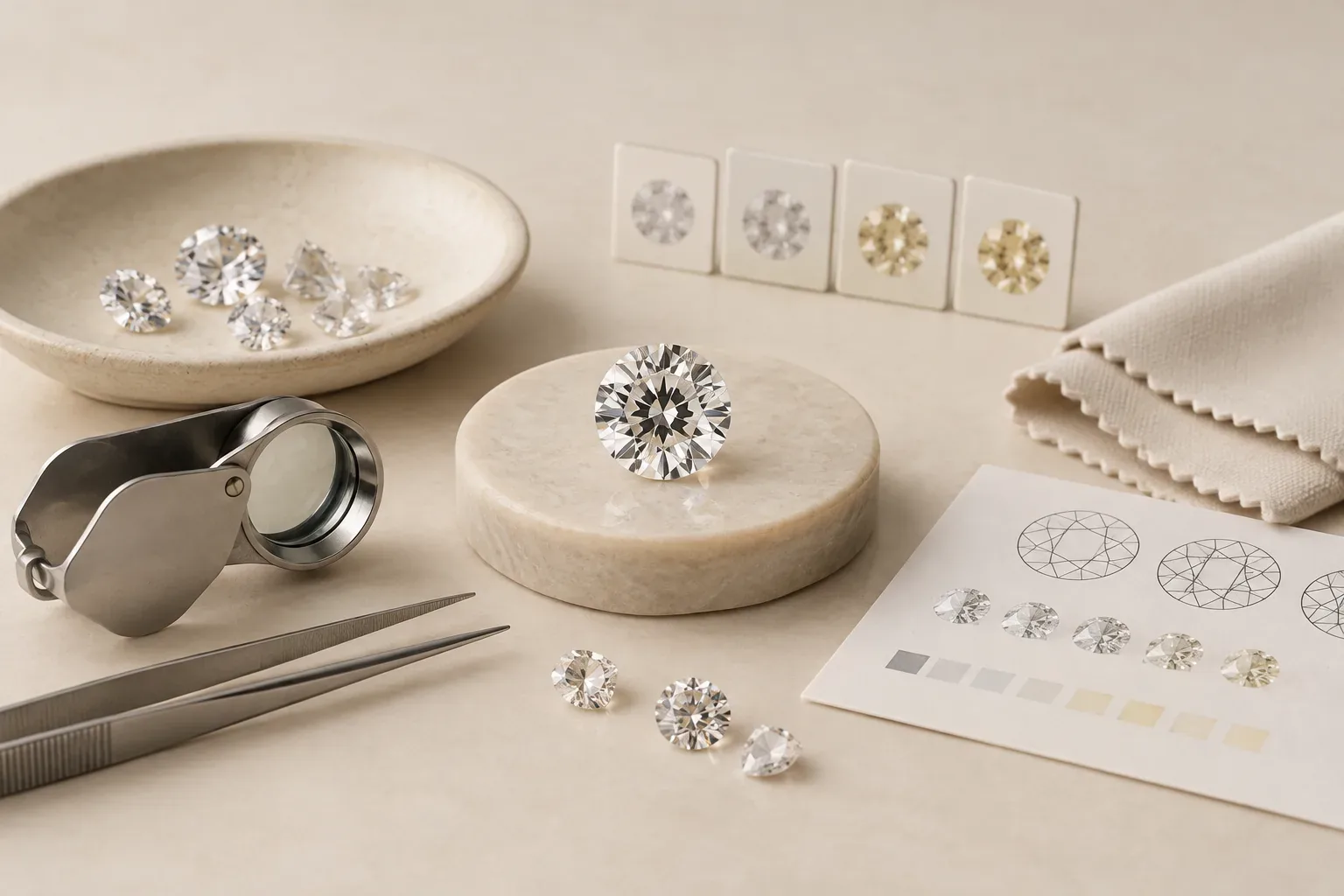
Meaning at a glance
This diamond polish buying guide defines polish and polish grading, explains how polish affects light performance and value, lays out practical trade-offs and care, and lists the precise questions to ask sellers while clarifying what requires a qualified jeweler or a gemological laboratory to verify.
Direct answer — what this guide helps you decide
Diamond polish refers to the quality of the facet surfaces after cutting and finishing; it is one of several grading factors that affect appearance and value. Use this guide to understand what polish grades mean in practice, how much polish should influence your purchase relative to cut, carat, color and clarity, what trade-offs are realistic for budget and style, how to care for polished surfaces, and exactly what you can and cannot verify without a qualified jeweler or a gemological laboratory.
What ‘polish’ means in evidence-led terms
In gemological practice polish describes how smooth and free of surface blemishes the facets are after a diamond is cut. Grading systems typically record polish on a scale such as Excellent (or Very Good), Good, Fair and Poor; those labels indicate how surface irregularities might scatter light or show under magnification, and therefore how the diamond will look to a seller, a grader, and to most buyers at normal viewing distances. Grade terms and their impact on appearance are defined by gem laboratories and industry bodies and used by sellers to communicate condition.
Documented history and evidence (what the record supports)
The aspects of diamond finishing that matter to buyers today—surface condition, intentional surface treatments, laboratory grading and rules for disclosure—are well documented by modern gemological and consumer-protection authorities. The Gemological Institute of America (GIA) explains treatments, their detectability, and how durability and special care can change consumer expectations. The Federal Trade Commission (FTC) requires clear distinctions among natural, lab-created, treated, cultured and imitation materials and expects written seller disclosures. These modern documents form the evidence base for buyer protections, grading terminology and the verification steps described below.
Separating documented historical meanings from modern personal interpretation
Historical uses and symbolic meanings of diamonds vary by region and period and are best handled as cultural history rather than as buyer guidance; this guide focuses on documented, buyer-relevant history such as the evolution of grading and treatment disclosure. Modern personal interpretations—why a buyer may prefer a very high polish because it makes a ring feel newer, or why a family might accept a lower polish for a sentimental heirloom—are legitimate but subjective. Distinguish between the factual record about grading, treatments and legal disclosure, which is documented by organizations such as GIA and the FTC, and individual aesthetic or emotional reasons for choosing a particular polish grade.
How polish appears in jewelry and in everyday viewing
Polish affects the look of all facet-based diamond jewelry: engagement rings, studs, pendants and bracelets. A well-polished diamond will show clean facet junctions and bright reflections at normal viewing distances, while a diamond with poorer polish can show furrows, scratches or burn marks that reduce sparkle and create a slightly hazy appearance under close inspection. In finished jewelry settings, the interplay of metal, setting style and lighting can mask or highlight polish differences, so the same polish grade may be more noticeable in solitaire rings than in heavily pavé or halo designs.
Value and trade-offs to consider when buying
Polish is one of several value-driving factors. For most buyers, an Excellent or Very Good polish is a reasonable target because the visual difference above that level is often subtle to the unaided eye, while a downgrade to Fair or Poor can produce a perceptible loss of brilliance. Trade-offs include allocating budget to a higher cut grade or larger carat weight versus insisting on top polish. You should also consider setting and lifestyle: a top-polished stone makes sense for a solitaire engagement ring worn daily, but for a fashion piece or an heirloom where size and color are priorities, a slightly lower polish may be acceptable.
Another trade-off concerns treated and lab-created diamonds. Treatments and lab creation can reduce price but raise questions about disclosure and long-term durability; the GIA explains that treatments affect detectability and care, and the FTC requires clear disclosure of treated status. Decide whether the cost savings of a treated or lab-grown stone are worth potentially more complex disclosure and, in some cases, different care requirements.
Practical questions to ask sellers — exact wording that helps
Ask for the diamond’s polish grade and which laboratory issued the grade report. Ask whether any surface treatments, laser inscriptions, or re-polishing have been performed and request that these be disclosed in writing. If the diamond is lab-created or has been treated, ask for specific disclosure language used by the seller and whether an independent laboratory report accompanies the stone. Request close-up photos or videos and, if buying in person, examine the diamond under a loupe; if you cannot view it yourself, ask for a return policy that allows inspection by an independent jeweler.
Finally, ask about care instructions and warranty coverage for setting wear or accidental damage. These concrete questions are grounded in disclosure principles that the FTC expects from sellers and in the treatment-detection and care guidance published by GIA.
What you can verify yourself, and what requires a jeweler or laboratory
Without specialized equipment you can verify basic, buyer-relevant facts: you can confirm the presence of a grading report, read the polish grade listed on that report, and visually inspect for obvious surface scratches or cloudiness. You can also verify seller-provided disclosures in writing and test return or warranty policies. However, you cannot reliably detect most treatments, confirm natural versus lab-grown origin, or spot microscopic polish defects to the standards used by gem labs without a qualified jeweler using a loupe or a gemological laboratory report. For anything beyond surface-level inspection or for high-value purchases, obtain an independent grading report from an accredited laboratory.
Care and safe handling for polished diamonds
Better polish does not eliminate the need for care. Diamonds with good polish still collect oils, dust and scratches from daily wear. Routine cleaning with a mild soap and warm water solution and a soft brush restores brilliance without harming polish. The GIA notes that some treatments and enhancements change durability and special care requirements, so follow any care guidance tied to a diamond’s reported treatment status. For heavily soiled or impacted stones, seek a professional jeweler for ultrasonic or steam cleaning and to avoid risking damage to the setting.
Selection and gifting guidance — respectful and practical tips
When selecting a gift, balance polish against the recipient’s style and the piece’s intended use. For an everyday engagement ring, prioritize a high polish and a reliable laboratory report to ensure long-term appearance and transparent provenance. For a fashion or seasonal piece, consider whether size, color or design will be more meaningful than a top polish. If you are gifting a family heirloom, discuss polish and potential re-polishing with the recipient or a trusted jeweler, as re-polishing can remove small amounts of material and slightly change carat weight. Always accompany a significant purchase with clear documentation and a reasonable return or inspection window so the recipient can have the stone independently examined if they wish.
Summary: how to use this guide at the point of purchase
Treat polish as one important factor among cut, carat, color, clarity and provenance. Expect sellers to provide polish grades and written disclosures; use those as a starting point. Ask the exact questions listed above, request images or an independent lab report for high-value stones, and accept that only an accredited laboratory or qualified jeweler can confirm many technical attributes. Finally, match your decision to the setting and intended use so that the polish level you choose aligns with aesthetics, budget and long-term care.
Frequently asked questions
What is the difference between polish and cut?
Cut refers to the proportions and angles that determine how a diamond returns light; polish refers to the smoothness of the facet surfaces after cutting. A very good cut with poor polish can still lose light to surface blemishes, while superb polish on a poorly proportioned stone will not correct weak light performance. For a balanced choice, prioritize cut quality and then confirm polish is at least Very Good.
How much does polish affect price?
Polish can influence price, but its effect is generally smaller than carat, cut and color. Top polish grades command higher prices among informed buyers, while lower grades may be discounted. For substantial purchases, rely on an independent laboratory report to see how polish contributes to the overall grade and price comparison.
Can I tell polish grade from photos or video?
Photos or video can show obvious surface problems but are not reliable for final grading. Laboratory reports or inspection by a qualified jeweler are needed to confirm polish to industry standards. Request a lab report for high-value purchases or a return window that allows independent inspection.
Are treated or lab-created diamonds acceptable if polish is good?
Treated and lab-created diamonds can have excellent polish, but they raise separate questions about disclosure, durability and resale. The GIA explains that treatments affect detectability and care, and the FTC requires clear written disclosure of these attributes. Consider whether the cost savings align with your priorities and insist on full documentation from the seller.
What care does a well-polished diamond need?
Even well-polished diamonds collect oils and grime. Clean them regularly with mild soap, warm water and a soft brush, and have settings professionally checked. For any stone with recorded treatments, follow the specific care guidance provided by the laboratory or seller to avoid damage.
When should I get a laboratory report?
Obtain an independent laboratory report for diamonds of significant value, for stones sold as untreated natural gems when identity matters, or when any treatment or origin claim is central to your purchase decision. A lab report is the reliable evidence buyers need for provenance and technical attributes.
Sources and further reading
- Imaginaire Digital — Imaginaire Digital
- Gemological Institute of America — Gemological Institute of America
- Federal Trade Commission — Federal Trade Commission