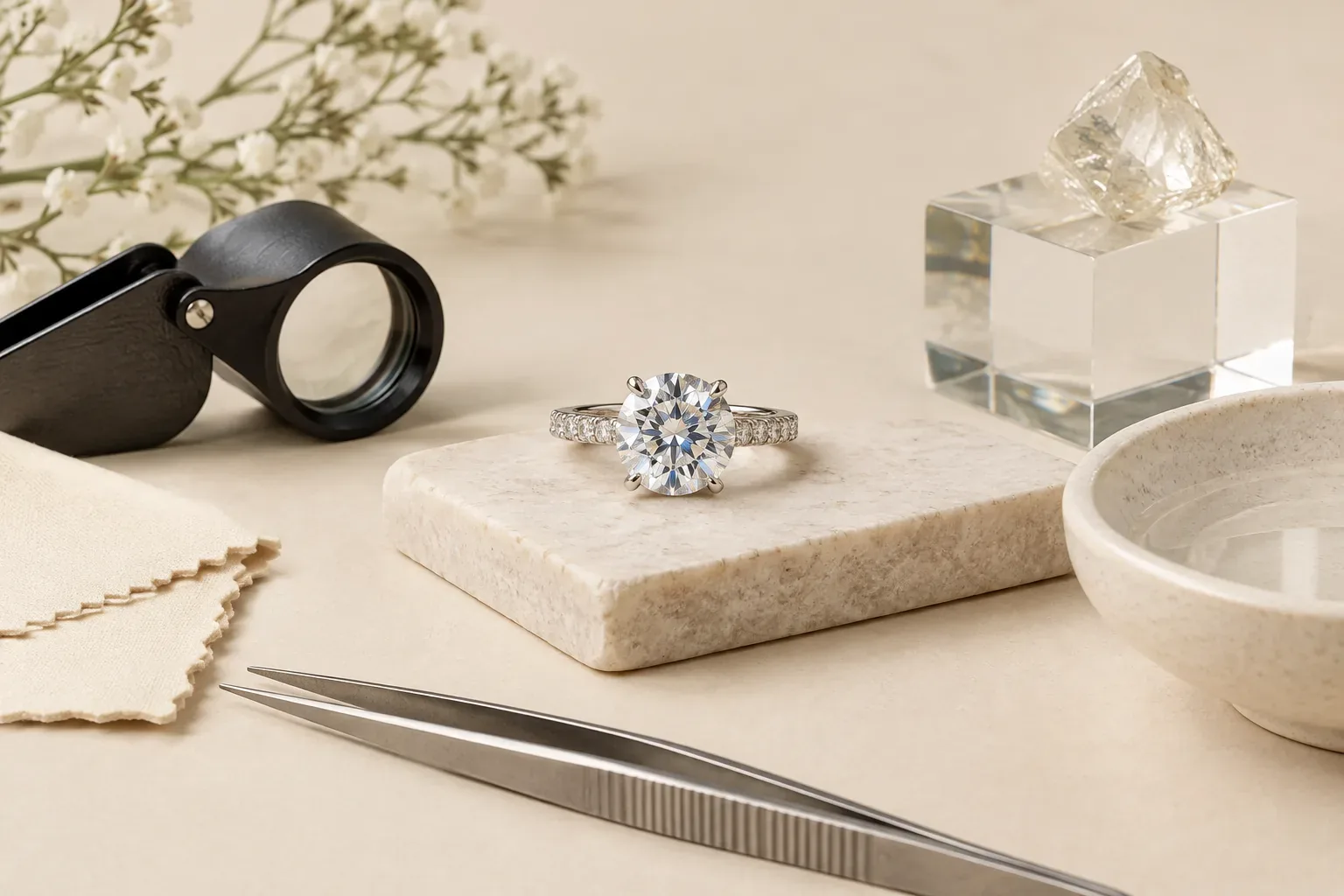
Meaning at a glance
Diamond fluorescence rarely affects a diamond's durability; treat fluorescent diamonds using the same safe cleaning and repair practices as other diamonds, insist on written disclosure and a gemological report, and consult a qualified jeweler or laboratory to confirm fluorescence strength, any treatments, and likely visual impact.
What diamond fluorescence is and why it matters
Gemological authorities record fluorescence as a property that makes some diamonds emit visible light when exposed to ultraviolet (UV) radiation. The important consumer questions concern three distinct issues: how the property affects the diamond's appearance under different lighting, whether the diamond has been treated in any way that should be disclosed, and whether fluorescence changes the gem’s physical durability. The Gemological Institute of America (GIA) treats fluorescence as one of several characteristics that are tested and reported and explains how detection and disclosure fit into gemological practice.
Historical evidence and cultural context
There is no widely documented cultural symbolism for 'diamond fluorescence' in ancient or pre‑modern societies; references to the property appear primarily in modern gemological literature and testing practice rather than as part of historic cultural traditions. The GIA and other modern gemological organizations record fluorescence as a laboratory‑measurable property within the last century of systematic gem grading. Consumer protection guidance from the Federal Trade Commission (FTC) also frames fluorescence as a modern disclosure and trade issue rather than a topic with long historical ceremonial meanings.
Distinguishing documented gemological facts from personal or modern interpretations
Documented facts: professional gemological laboratories test and report fluorescence and any treatments, and consumer law and guidance require clear disclosure of material facts about gemstones and treatments. These procedural and legal points are supported by organizations such as the GIA and the FTC. Modern interpretations: some buyers and sellers attach stylistic or emotional value to fluorescence—viewing it as desirable because it can make near‑colorless diamonds appear 'whiter' under certain lighting, or undesirable because it may change a stone’s look in strong UV light. These are individual preferences and market opinions, not universal historical meanings.
How fluorescence appears in jewelry
Fluorescent diamonds are used in the same jewelry types as other diamonds, including engagement rings, diamond studs, tennis bracelets, pendants and cocktail pieces. Market demand for these forms—engagement rings, studs, necklaces and tennis bracelets—remains strong, which means fluorescence can be a factor in the purchase decision for those categories. The visual effect of fluorescence depends on the stone’s strength and the lighting environment: in some lighting it is imperceptible, in others faintly visible, and in rare cases strongly apparent. Because appearance matters most in set jewelry, evaluating the mounted stone in the actual setting and lighting where it will be worn is an important step.
Durability: what the evidence says
Professional gemological guidance makes a clear distinction between optical properties (like fluorescence) and structural integrity. Existing gemological practice treats fluorescence as an optical response rather than a chemical or mechanical treatment that would normally weaken a diamond. The GIA explains that detectability of treatments and the need for disclosure create specific consumer questions; when a diamond has been subjected to treatments that could affect durability, a reputable laboratory report will state this. In other words, fluorescence alone is not typically a sign of reduced hardness or structural instability, but the only reliable way to rule out treatments or anomalies that could affect durability is a laboratory report and an inspection by a qualified jeweler.
Cleaning guidance for fluorescent diamonds
Treat chemically untreated fluorescent diamonds the same as other diamonds for routine cleaning. Gentle warm soapy water, a soft brush, and thorough rinsing are widely recommended for diamond jewelry; ultrasonic and steam cleaners are frequently safe for regular, untreated diamonds but you should confirm suitability with your jeweler for each mounted piece. If the diamond has known treatments—information that should appear on a laboratory report—follow any special care instructions stated on that report. Because the FTC requires sellers to disclose treatments and material facts, always request written disclosures and a laboratory report before relying on a seller’s cleaning advice.
Repair precautions and working with a jeweler
When having diamond jewelry repaired, disclose any lab report or seller documentation that mentions fluorescence or treatments to the jeweler. Repair processes such as soldering, resizing, prong work and stone removal should be performed by a qualified professional who can protect the setting and stone. The presence of fluorescence does not in itself change standard repair precautions, but if a lab report shows treatments, your jeweler may recommend avoiding certain procedures that could interact with those treatments. If you are uncertain whether a stone has been treated, obtain a current laboratory report before major repair work.
Selection and gifting guidance
When selecting or gifting a diamond where fluorescence might be a consideration, start by asking for a recent, reputable laboratory report and written disclosure from the seller. View the diamond mounted in the intended setting under typical lighting conditions for the recipient; a stone that looks pleasing in a display light may differ in daylight or fluorescent store lighting. For engagement rings and other frequently worn pieces, choose the appearance that best fits the recipient’s taste and lifestyle rather than following blanket rules about fluorescence. If budget is a major factor, fluorescence can be a trade‑off: some buyers find better-looking color grades at a given price when fluorescence is present, but this is a visual and market trade‑off, not a consistent rule about durability or worth.
What you can and cannot verify without a lab or qualified jeweler
You can verify basic visual effects yourself: compare a candidate diamond under daylight, incandescent light and a moderate UV source to see whether fluorescence is noticeable and whether you like the appearance. What you cannot reliably verify at home is the stone’s fluorescence grading or whether any treatments affecting appearance or durability have been applied. For those verifications you need a reputable gemological laboratory report or the opinion of a qualified jeweler. The FTC advises consumers to obtain clear written disclosure about treatments and origins; gemological laboratories provide the formal testing that supports those disclosures.
Making a balanced decision: practical trade‑offs
A balanced consumer decision weighs appearance in actual wear conditions, the seller’s disclosure and documentation, price, and personal preference. If a stone’s fluorescence makes it visibly attractive in the lighting where it will be worn, that is a defensible reason to buy. If you are buying sight unseen or for resale, insist on a full laboratory report and a return policy. Use the GIA’s testing practices and the FTC’s disclosure expectations as a framework: ask for independent, written verification and prioritize sellers who provide it.
Final checklist before purchase or repair
Before you buy or send a fluorescent diamond for repair, obtain the written laboratory report and seller disclosures, evaluate the mounted stone in the lighting where it will be worn, ask your jeweler about cleaning and repair recommendations based on the report, and insist on documented return terms if the stone’s appearance is critical. If a seller cannot provide clear disclosure or lab documentation, treat that as a red flag and seek a qualified opinion before proceeding.
Frequently asked questions
Does fluorescence make a diamond less durable?
No reliable evidence from professional gemological practice indicates that fluorescence alone reduces a diamond’s hardness or structural durability. However, if a laboratory report shows that a diamond has been treated in ways that could affect durability, those treatments require careful handling. For clarity and safety, obtain and keep the laboratory report and discuss any repair work with a qualified jeweler.
How can I tell if fluorescence affects how a diamond looks?
You can compare the diamond under the lighting conditions it will normally be worn in—daylight, indoor incandescent or LEDs, and in a setting with moderate UV light—to judge appearance. A lab report will state the stone’s fluorescence grade, which helps predict whether it is likely to be noticeable, but the final judgement about pleasing appearance is a personal decision best made by viewing the mounted stone.
Can I verify fluorescence at home?
You can observe visible fluorescence effects with a basic UV light, but accurate grading of fluorescence strength and confirmation of treatments requires a reputable gemological laboratory. The FTC recommends obtaining written disclosure about treatments and origins; for formal verification you will need a lab report.
Should I avoid ultrasonic or steam cleaners for fluorescent diamonds?
Not automatically. Many untreated diamonds—including fluorescent ones—can be safely cleaned in ultrasonic or steam cleaners, but you should confirm that the stone and its mounting have no treatments or inclusions that make those methods unsafe. If a lab report or your jeweler indicates a specific treatment or concern, follow the professional care recommendations.
What documentation should I request when buying a fluorescent diamond?
Ask for a current laboratory report from a reputable gemological laboratory that describes fluorescence and any treatments, and insist on written seller disclosures. The FTC advises consumers to seek clear distinctions among natural, lab‑created, treated and imitation materials and to keep written documentation.
Sources and further reading
- Imaginaire Digital — Imaginaire Digital
- Gemological Institute of America — Gemological Institute of America
- Federal Trade Commission — Federal Trade Commission