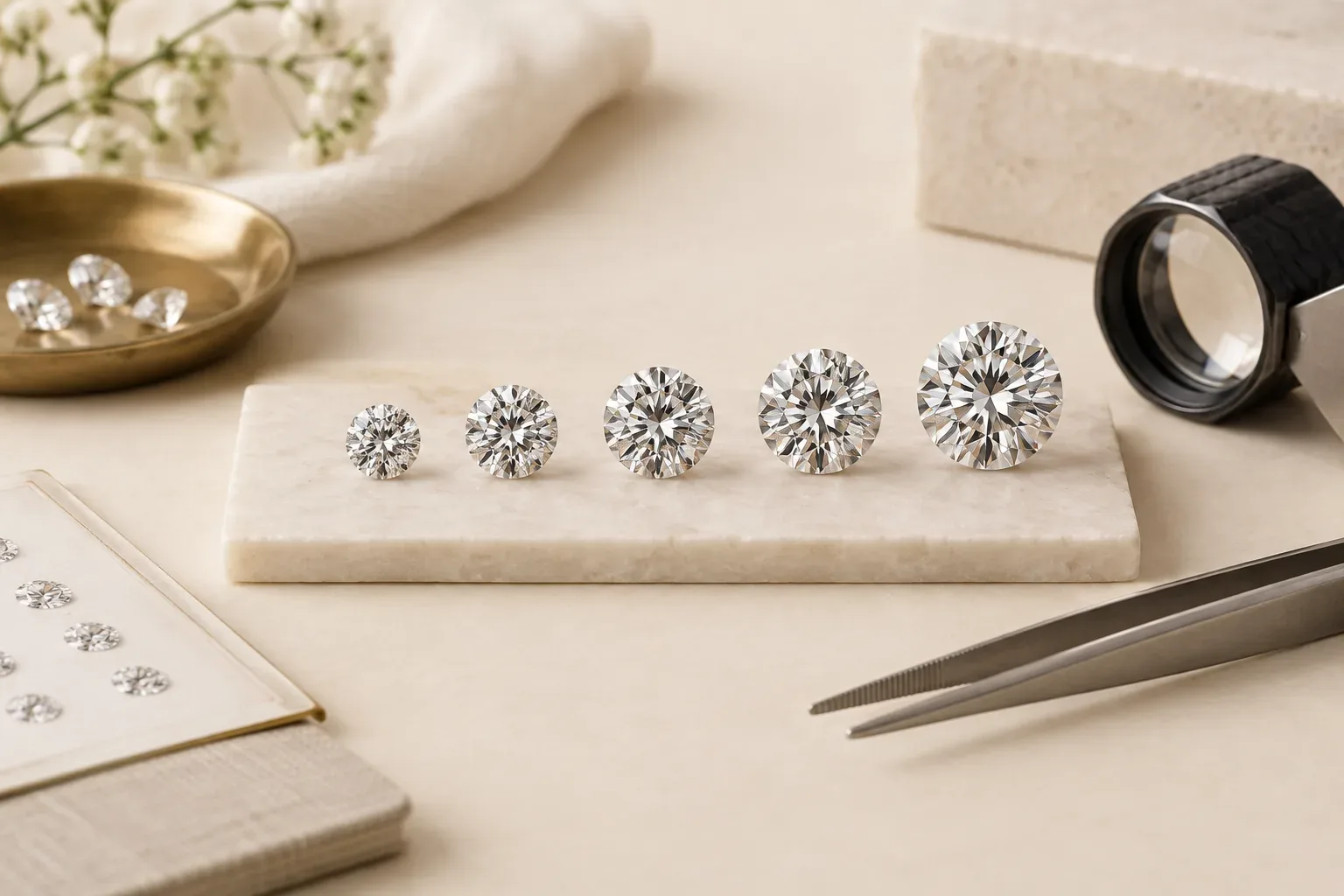
Meaning at a glance
In short: this diamond carat weight comparison guide defines carat weight, explains how appearance and price change with weight and other factors, lists decision criteria and practical trade-offs, offers safe care guidance, and clarifies what only a qualified jeweler or a gemological laboratory can verify.
Direct answer — what this guide covers
This guide explains what carat weight means, how carat interacts with cut, measurements and setting to change a diamond’s visible size, why price does not rise in direct proportion to weight, and what trade-offs buyers typically choose. It also gives practical selection and gifting guidance, outlines safe care, and clearly states which attributes require a qualified jeweler or an accredited gemological laboratory to verify.
What exactly is carat weight?
Carat is a unit of mass used for gemstones. In retail practice, carat weight is the primary numeric measure of how heavy a diamond is, and it is one of several variables that determine its appearance and price. Carat alone does not describe how large a diamond will look when mounted, because visual size depends on the stone's proportions, cut quality and how the piece is set.
Historical evidence: what the approved sources cover and what they do not
The set of approved sources for this article does not include primary historical research about cultural meanings of diamonds or a chronological account of carat measurement practices. The approved references speak to modern market behavior, treatment and disclosure, and buyer protections rather than detailed cultural history. For example, Imaginaire Digital reports on contemporary search and consumer interest in particular ring styles and diamond jewelry categories, showing what shoppers look for today. The Gemological Institute of America (GIA) focuses on gem treatment, detectability, durability and consumer questions that arise from those technical issues. The U.S. Federal Trade Commission provides guidance on required disclosures and distinctions among natural, lab-grown, treated and imitation materials. Because none of these authoritative sources presents a documented chronological cultural history, I do not present unsupported historical claims here. Researchers looking for historically attested cultural meanings should consult museum collections, period-specific texts and academic histories that specialize in the culture and era of interest.
Documented historical meanings versus modern personal interpretation
Documented historical meanings require evidence from period sources, inventories, legal records or scholarly study. The approved evidence for this guide does not include those types of historical documents, so this article distinguishes documented claims from contemporary interpretations by noting where independent verification is needed. Modern personal or marketing-driven interpretations of diamonds—such as those promoted around engagement rings and milestone gifts—are attested by current consumer behavior and search patterns rather than by the kinds of historical records that prove long-term cultural significance. Imaginaire Digital’s market visibility data indicates strong present-day demand for engagement rings and diamond studs among other categories, which helps explain why certain carat weights and styles are emphasized in retail. That contemporary emphasis should not be conflated with a universal or ancient symbolic meaning.
How carat weight affects appearance in jewelry
Carat weight describes mass, not diameter, and two diamonds of equal carat weight can appear different in size. Cut proportions—table size, depth percentage and girdle thickness—determine how much of the carat weight contributes to visible spread (the face-up diameter). A shallow or very deep cut can make a heavier diamond look smaller when viewed from above because more weight sits in the depth.
The setting and jewelry style also alter perceived size. A halo or cluster setting adds surrounding metal or stones that visually enlarge a center diamond, making a lower-carat center stone appear larger. Tapered shoulders, bezel settings and ring shanks of different widths change the perceived scale of a center stone relative to the wearer’s finger. These matters are observable without laboratory equipment: a shopper can compare face-up diameter measurements and view stones in the metal to judge how they read visually on the hand.
How carat weight affects price—and common trade-offs
Price increases with carat weight, but not in a strictly linear way. Market demand, rarity within a given weight range, and consumer search behavior produce price 'jumps' at popular thresholds. Contemporary retail emphasis on specific weights—driven by shopper interest in engagement rings and related categories—helps explain why certain round-number weights are often priced at a premium. Imaginaire Digital’s analysis of search interest identifies those product categories as high-demand areas in current UK search behavior, which aligns with why retailers highlight round-weight milestones.
Buyers typically face practical trade-offs among carat, cut quality, color and clarity within a budget. A slightly smaller well-cut stone often looks more lively than a larger poorly cut one. Settings and side stones can compensate visually for a smaller center diamond. Choosing a lab-grown diamond is another route many buyers take to achieve a larger face-up size for the same budget; the Federal Trade Commission requires sellers to disclose whether a diamond is lab-grown or natural. The Gemological Institute of America emphasizes that treatments and detectability affect consumer questions and care, and that disclosure is central to buyers’ ability to make informed trade-offs.
What a shopper can verify and what needs an expert or laboratory
At a minimum, consumers can verify the following at purchase with the seller: the quoted carat weight, whether the stone is natural or lab-grown, and whether the seller provides a laboratory grading report. The Federal Trade Commission explicitly advises consumers that written disclosures are required and that distinctions among natural, lab-created, treated and imitation materials matter for value and care.
Only a qualified jeweler with appropriate instruments or an accredited gemological laboratory can reliably verify other attributes such as exact proportions, whether a diamond has been treated, and a formal color and clarity grading. The Gemological Institute of America explains that treatments, detectability and durability issues create distinct consumer questions and that laboratory testing is the authoritative method to answer them. If provenance, treatment history or formal grading are important to the purchase, insist on an independent laboratory report from a recognized lab and ask the seller to document any treatments in writing.
Safe care guidance tied to weight, treatments and settings
General care for diamonds benefits both the stone and the setting: remove jewelry for heavy manual tasks, avoid exposure to harsh chemicals and store pieces separately to prevent metal scratching. While diamonds are hard, some treatments and certain settings make stones more vulnerable to damage; the Gemological Institute of America warns that treatments, detectability and durability inform special-care recommendations and that consumers should ask whether a stone has been treated and what special care is needed.
If a diamond has been treated, or is lab-grown, follow any additional care instructions provided by the seller or documented in the lab report. When cleaning at home, use mild soap and water and a soft brush, but if a piece has fragile settings or significant side stones, have it cleaned and inspected by a professional jeweler periodically to check for loose mounts and worn prongs.
Practical and respectful selection and gifting guidance
Start with the recipient: consider finger size and lifestyle. A very active wearer or someone whose work risks impact on jewelry may be better served by a lower-profile setting rather than a higher-carat solitaire with exposed prongs. Think about everyday practicality as well as appearance.
Decide in advance which attributes matter most: face-up size, brilliance (a function of cut), or a high color and clarity grade. If visual presence is the priority, a well-cut stone of slightly lower carat with a halo or tapered shoulders can achieve the desired look at better value. If carat weight itself is central to the gift’s meaning for your recipient, prioritize a trustworthy seller who provides clear written disclosure and an independent laboratory report. For gifts that mark cultural or family traditions, avoid assuming universal symbolism; discuss preferences when appropriate, and when you cannot, choose a reputable seller and a flexible return policy to respect the recipient’s tastes.
How to compare stones in practice
When comparing stones, ask for the actual measurements (diameter and depth), the carat weight, and any available lab report. View the stones mounted in settings similar to the one you plan to buy, because metal color and setting style change perceived size and color. Compare the face-up diameter for a direct sense of visual size, but balance that with cut quality: two diamonds with identical diameters can differ dramatically in brightness and scintillation because of how they were cut.
When uncertain, get an independent opinion from a qualified jeweler and request a current lab report. The Gemological Institute of America and the Federal Trade Commission both underline that laboratory verification and written disclosure are the appropriate ways to confirm treatments, origin and other technical attributes.
Conclusion: clear limits and smart questions
Carat weight matters, but it is one part of a multi-dimensional decision. Ask for written disclosures, independent lab reports if you care about origin or treatments, and view stones in the intended setting. Prioritize cut quality and appropriate settings if visual impact matters most, and remember that only trained professionals or accredited gemological laboratories can authoritatively verify treatments, precise grading and origin information. Use these practical trade-offs and verification limits to make an informed, respectful purchase or gift choice.
Frequently asked questions
What's the difference between carat and size?
Carat measures mass; apparent size (face-up diameter) depends on cut proportions and how the stone is set. Two diamonds with the same carat weight can look different in size when mounted.
Do prices rise linearly with carat?
No. Price typically increases with carat but not in a linear way; market demand and premium pricing at popular weight thresholds influence retail prices. Consumers should compare stones across cut, color and clarity as well as weight.
Can I tell if a diamond is natural or lab-grown myself?
You cannot reliably determine origin by eye. The Federal Trade Commission advises buyers to request written disclosure, and verification of origin requires specialized equipment and an accredited laboratory report.
What can a lab report tell me that a salesperson cannot?
An independent gemological laboratory can provide standardized grading for carat, color, clarity and cut, and can detect many treatments and whether a diamond is lab-grown or natural. The Gemological Institute of America notes that lab testing is the authoritative way to answer technical questions about treatments and detectability.
How should I care for a diamond ring?
Follow seller guidance and general precautions: remove jewelry for heavy work, avoid harsh chemicals, clean with mild soap and water and a soft brush, and have prongs and settings checked by a professional periodically—especially if the piece has been treated or contains fragile settings.
Sources and further reading
- Imaginaire Digital — Imaginaire Digital
- Gemological Institute of America — Gemological Institute of America
- Federal Trade Commission — Federal Trade Commission