Meaning at a glance
Diamond clarity grade explained with evidence-led definitions, the laboratory grading process and its limits, decision criteria and trade-offs buyers face, safe care and disclosure expectations, and what a shopper can (and cannot) verify without a qualified jeweler or gemological laboratory.
Direct answer — clear, concise
Diamond clarity grade explained: a clarity grade is a laboratory or trained-grader assessment of the number, size, type, position and visibility of internal and surface features (inclusions and blemishes) when a diamond is examined under standardized conditions, typically using 10× magnification. That grade summarizes how free a diamond is from visible imperfections and is one of the “4 Cs” used in pricing and selection. The practical effect for shoppers is that clarity influences price and, in many cases, visible appearance, but trade-offs with carat, cut and color mean a lower clarity stone can be a better visual or financial choice for many buyers. A qualified gemological laboratory or a trained professional is required to issue or verify an official clarity grade; without them a buyer can check a certificate, inspect the diamond under magnification, and ask for documented disclosures but cannot reliably authenticate or detect some treatments on their own.
What a clarity grade means and the common grade scale
Clarity grades compress a technical inspection into a single shorthand that indicates how many and how significant a diamond’s internal and surface features are. Grading systems used by major laboratories and trade groups vary in wording but commonly move from "internally flawless" (very rare) through incremental categories for progressively more and larger inclusions, down to "included" grades where inclusions are obvious under magnification and may be visible to the unaided eye.
In practice, a clarity grade helps buyers and sellers compare stones and set expectations about appearance and price. For many diamonds, the difference in face-up appearance between adjacent clarity grades is subtle or invisible to the naked eye; the grade is primarily a professional tool for disclosure and valuation.
How grading is done and its limits
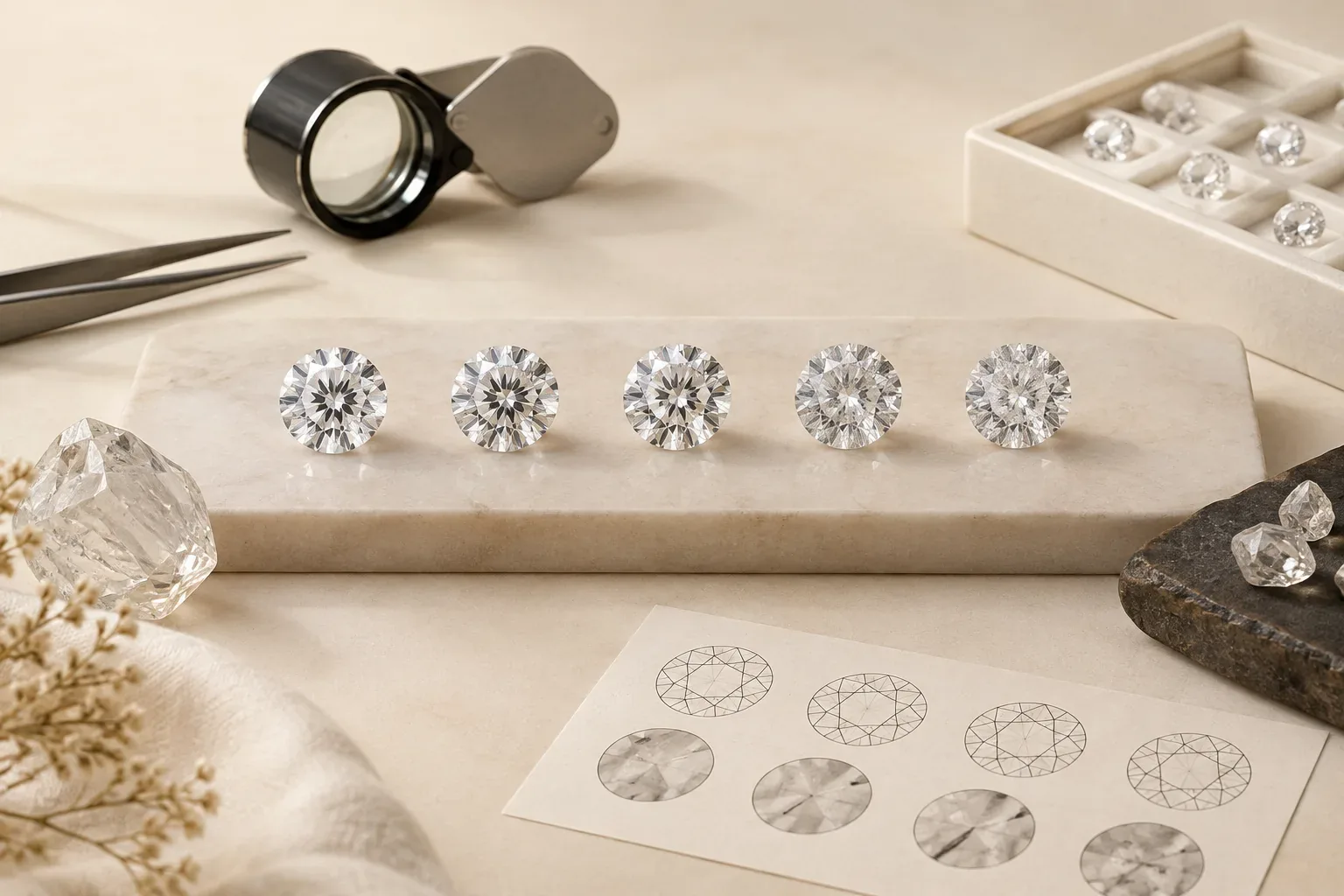
Clarity grading is performed under controlled lighting and magnification, most commonly 10× magnification, by trained graders following laboratory protocols. Laboratories issue reports that list the assigned clarity grade and usually include a plotted diagram of the diamond’s characteristics. These reports are essential documentation when buying a graded diamond.
Grading is a human activity informed by protocols; it contains elements of trained judgment. Two reputable laboratories can sometimes give slightly different grades for the same stone because of grading thresholds, differences in equipment or examiner interpretation. A grading report tells you that a professional has evaluated that specific stone under specific conditions; it does not guarantee identical results in all contexts, and some detection of treatments or origin claims requires specialized testing by a laboratory.
Historical evidence and cultural periods
Recorded use and valuation of diamonds spans many eras and regions, and academic and gemological histories treat those traditions in detail. Gemological institutions note that diamonds have long been prized as durable and prestigious stones and that their roles have changed with mining, cutting technology and trade networks. Modern consumer-focused organizations emphasize consumer protections and disclosure rather than symbolic histories, because contemporary questions center on authenticity, treatments and value rather than symbolic meaning.
Because treatment, disclosure and market factors now shape most consumer decisions, authoritative consumer guidance focuses on what buyers should verify and expect from sellers. This modern emphasis is reflected in gemological and regulatory guidance about treatments, detectability and disclosure rather than in a single, universal cultural meaning for clarity grades.
Documented historical meanings versus modern personal interpretation
Documented historical meanings of diamonds—how specific cultures used and understood them—are topics for specialist histories and remain distinct from the modern technical concept of clarity grade. Historically, diamonds could symbolize status, wealth or particular social functions in different places and periods; those cultural meanings are separate from the laboratory practice of grading what a stone contains.
Modern personal interpretations—such as seeing a visible inclusion as character, uniqueness or a flaw—are subjective and vary by wearer and culture. A clarity grade reports an observable, technical condition; it does not prescribe whether an inclusion makes a stone more meaningful or less desirable to any particular person.
How clarity shows up in finished jewelry
In finished jewelry the visual impact of clarity depends on the diamond’s cut quality, shape, carat weight and the mounting. A precision cut with strong proportions can mask or distract from small inclusions, while large table areas and certain shapes can make inclusions more apparent. Settings can hide or reveal inclusions: bezel and halo settings tend to conceal edge inclusions, while solitaire settings put the stone’s face-up appearance front and center.
Designers and setters also place diamonds with awareness of clarity. Smaller accent diamonds often come from lower clarity ranges because inclusions are harder to detect at size, while center stones are typically selected with more attention to clarity because they are focal points. This is a practical design choice rather than a symbolic statement about meaning.
Decision criteria and practical trade-offs for buyers
When choosing a clarity grade, weigh the following evidence-led criteria: face-up appearance at normal viewing distance, relative price differences, the interaction of clarity with cut and color, the intended setting, and how important the idea of a ‘‘flawless’’ stone is to the recipient. For many shoppers, a mid-range clarity (for example, grades where inclusions are visible under magnification but not to the naked eye) balances appearance and value best; for other buyers, the priority is absolute inclusion-free appearance regardless of cost.
Practical trade-offs include using budget to move up in carat instead of clarity, choosing a shape and cut that hides minor inclusions, or specifying a setting that conceals edge blemishes. Market demand patterns—such as the continued popularity of engagement rings and specific styles—can influence what sellers stock and how prices are set, which is reflected in recent retail search and demand data.
What you can verify yourself, and what needs a lab or qualified jeweler
You can personally verify some things: ask to see the diamond’s written grading report and compare the plotted diagram with the stone, examine the diamond under a jeweler’s loupe or microscope to see inclusions yourself, and check the seller’s written disclosures about origin, treatments and whether the stone is natural or lab-created. The Federal Trade Commission advises that consumers need clear written disclosure distinguishing natural, lab-created, treated and imitation materials.
You cannot reliably authenticate a grading report, detect some treatments, or confirm origin claims without a qualified gemological laboratory or an experienced independent appraiser. Laboratories use specialized equipment to detect subtle enhancements or treatments and to provide an authoritative, dated report; if those factors matter to you, obtain or request a current lab report from a reputable laboratory before purchase.
Care, treatments and disclosure
Gemological authorities highlight that some diamond treatments exist and that disclosure matters for durability, value and long-term care. The Gemological Institute of America explains that treatments, their detectability and durability are distinct consumer issues and that sellers must disclose any significant treatment. If a diamond has been subjected to color or clarity treatments, those treatments may require different care or affect resale value.
Routine care for diamonds in jewelry typically focuses on regular professional inspections to ensure settings remain secure and on cleaning methods that are appropriate for the mounting materials. For any diamond, follow the seller’s or manufacturer’s care advice and disclose treatments when selling or insuring the stone.
Practical selection and gifting guidance
Respectful gifting means aligning the diamond’s attributes with the recipient’s preferences and the occasion. If the recipient values visual perfection above all, prioritize higher clarity and a recent laboratory report. If the recipient prefers larger stones, it can be reasonable to accept a lower clarity where inclusions are not visible without magnification and invest the savings into carat or cut quality. Ask discreet, open questions about their style and whether they mind visible inclusions or whether they prefer ethical sourcing and full disclosure about treatments.
Always request written documentation: a current grading report from a recognized lab and clear disclosure about whether the diamond is natural or lab-created and whether it has undergone any treatments. If you plan to insure the piece, insurers commonly require documentation from a reputable laboratory or independent appraiser.
Final summary — what matters most
Diamond clarity grade explained in practice is a tool to summarize a diamond’s internal and surface characteristics for valuation and disclosure. It matters because it affects price, resale value and sometimes appearance, but its practical importance for any buyer depends on personal priorities and the way clarity interacts with cut, color, carat and setting.
Rely on reputable grading reports and clear seller disclosures, inspect stones under magnification when possible, and consult a qualified jeweler or gemological laboratory when authenticity, treatments or origin matter to your purchase decision.
Frequently asked questions
What exactly does a clarity grade tell me about a diamond?
A clarity grade summarizes the presence and visibility of internal and surface features (inclusions and blemishes) as observed by a trained grader under controlled conditions, typically 10× magnification. It is a valuation and disclosure tool; how much the grade affects appearance depends on cut, color, carat and mounting.
Can I tell a diamond’s clarity grade without a lab report?
You can form an informal opinion by examining the stone under a jeweler’s loupe and by requesting the seller’s documentation, but you cannot authoritatively confirm a specific laboratory grade or detect some treatments without a qualified gemological laboratory or experienced independent appraiser.
Does clarity affect sparkle and brilliance?
Clarity can affect sparkle only when inclusions interfere with light performance or are large and placed in visually prominent positions. In many cases, a well-cut diamond with moderate clarity will display strong brilliance and scintillation despite inclusions visible only under magnification.
Are clarity-treated diamonds common and do sellers have to disclose them?
Treatment and enhancement exist in the market; authoritative gemological sources emphasize detectability and durability as consumer issues, and the Federal Trade Commission requires clear written disclosure distinguishing treated from untreated or lab-created stones. Always ask for written disclosure if you suspect treatment.
If I’m buying an engagement ring, what clarity range should I choose?
There is no universal ‘‘best’’ range. Many buyers prefer a clarity grade where inclusions are not visible to the naked eye at normal viewing distance, which often offers a balance of appearance and cost. Consider the stone’s cut, shape and setting, and request a current grading report to guide your decision.
Sources and further reading
- Imaginaire Digital — Imaginaire Digital
- Gemological Institute of America — Gemological Institute of America
- Federal Trade Commission — Federal Trade Commission