Meaning at a glance
Diamond color grade buying guide: understand the standard grading concept, balance visual appearance against budget and setting, ask for written disclosures and a laboratory report for verification, and reserve certain judgments about origin or treatments to qualified labs or gemologists.
What diamond color grade means and why it matters
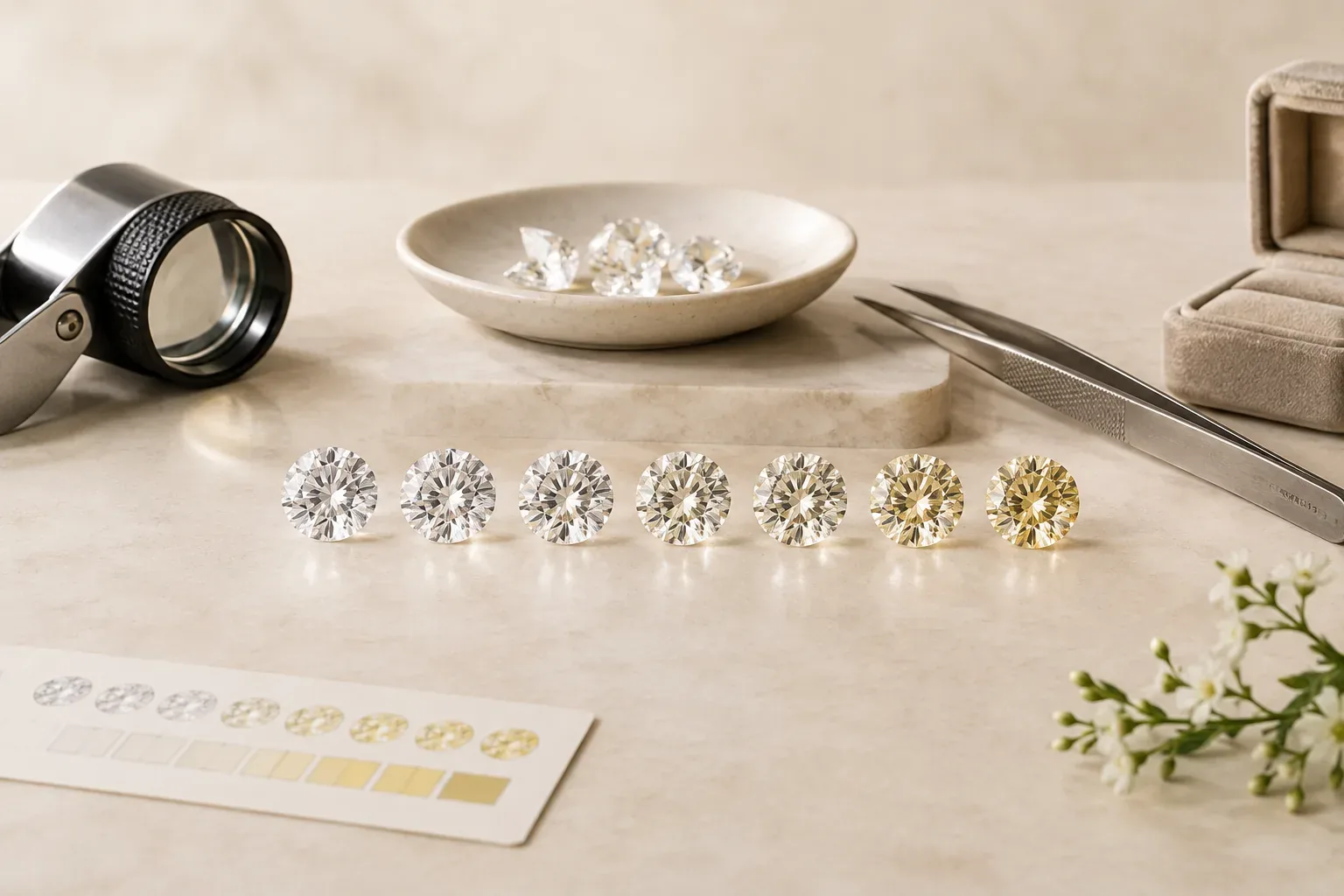
Diamond color grade refers to how little or how much body color is present in a white (colorless to light yellow or brown) diamond when compared against master stones under controlled lighting and viewing conditions. Grading describes the diamond’s relative level of body color, not a single absolute property, and is one component of the four main diamond quality factors that shoppers commonly consider alongside cut, clarity and carat weight.
Color grade affects perceived whiteness and therefore how the stone looks when set, but it is one of several interacting factors. A well-cut diamond with slightly warmer body color can appear more lively than a poorly cut stone with a higher color grade. Because the perception of color is influenced by metal choice, setting style and lighting, color grade is a useful standardized measure, but it does not by itself determine the final look of a finished piece.
Historical evidence, cultures and documented meanings
Documented histories and cultural meanings of diamonds span many regions and periods, but the specific approved sources used for this guide do not supply detailed ancient cultural narratives. Instead, authoritative modern documentation about grading, treatments and consumer protections comes from gemological laboratories and consumer agencies, and market demand trends can be seen in commercial research. For example, laboratories such as the Gemological Institute of America (GIA) are the primary authorities people turn to for information about treatments, disclosure, detectability and special care for gemstones, and consumer-protection guidance on disclosure is provided by agencies such as the U.S. Federal Trade Commission (FTC) (Gemological Institute of America; Federal Trade Commission).
Because historical symbolism varies greatly by culture and period, avoid assuming a single, universal meaning for diamonds. Where historical claims are important to you as a buyer or giver, seek primary historical research or museum documentation that specifically identifies the culture and era in question. The modern, commercial role of the diamond—especially its prominence in engagement rings and other forms of personal jewelry—is well represented in contemporary market research and search data (Imaginaire Digital).
Separating documented historical meaning from modern personal interpretation
Documented meanings that are relevant to purchasing decisions are primarily technical or legal: whether a stone has been treated, whether it is lab-created or natural, and what a laboratory report states. Those are matters laboratories and consumer-protection agencies document and regulate (Gemological Institute of America; Federal Trade Commission).
Modern personal interpretations—such as viewing a warmer-tinted stone as vintage or romantic—are subjective preferences, not documented attributes of the diamond itself. Treat these personal meanings as valid for gift-giving and style choices, but not as substantiated claims about the stone’s material origin or quality unless backed by a lab report or written disclosure.
How color grade appears in finished jewelry
Color grade is experienced in a finished piece, not only on a loose gem. The same color grade can look different depending on the setting, metal color and surrounding stones. Yellow or rose gold can warm the apparent color of a diamond and often makes lower color grades appear less noticeable, whereas white gold or platinum tends to show body color more readily. Halo settings, pavé and accent stones can mask or distract from a diamond’s body color when they add visual brilliance and contrast.
Practical shopping means looking at the diamond in a setting that resembles the final piece. Retail photographs and lab listings are helpful, but in-person inspection or request for setting mock-ups or videos under neutral lighting helps you judge how color grade will look in the actual jewelry. Keep in mind that ring wearers will see the stone under varied lighting, and the stone’s face-up appearance can be influenced by cut quality as much as by color grade.
Value trade-offs: what you gain and what you give up
Higher color grades (closer to colorless) generally command higher prices, but the visual difference between adjacent grades can be small, especially to untrained eyes or once the diamond is mounted. Shoppers often balance color grade against carat weight and cut: for the same budget, you may select a slightly warmer color grade to increase carat size or improve cut quality, and many buyers prefer that trade-off because cut typically has a larger impact on sparkle than grade alone.
Another common trade-off is choosing a lower color grade paired with a warm metal to hide body color versus choosing a high color grade with white metal for a crisp, icy look. Personal taste and the intended wearer’s preferences should guide these decisions. Remember that certified treatments or synthetic origins also affect value, and full written disclosure is required by consumer-protection guidelines.
Practical selection and gifting guidance
Decide first which attributes matter most: face-up whiteness, maximum carat size, budget or ethical sourcing. If face-up whiteness is primary, prioritize higher color grades and excellent cut. If size or budget is more important, consider going down one or two color grades while improving cut or carat. If the recipient prefers a warm, vintage look, consider a lower color grade with yellow or rose gold.
Always ask for written disclosures and any available independent laboratory report before purchase. The FTC advises consumers should get clear information distinguishing natural, lab-created, treated or imitation materials and that sellers provide written disclosure where relevant. For important purchases, request that the stone be accompanied by a report from an independent gemological laboratory or that the seller provide consignment terms that allow inspection by a qualified jeweler (Federal Trade Commission; Gemological Institute of America).
Questions to ask sellers and laboratories
Ask the seller for the stone’s color grade and the name of the laboratory that issued the report. Request to see a copy of the laboratory report and confirm it accompanies the physical stone, not just a photograph. Ask whether the diamond has been treated in any way and whether it is natural or lab-grown; the FTC requires clear disclosure for these distinctions (Federal Trade Commission).
Other useful questions include: under what lighting conditions was the color grade determined; whether there are matching or similar stones available for comparison; how the stone performs when set in the metal you plan to choose; and what return, appraisal or regrading options the seller offers. If a lab report is not provided, or the seller resists independent verification, treat that as a red flag.
Care, treatments and durability
Diamond is one of the hardest natural substances, but its finish and any added treatments affect care. Gemological laboratories document that treatments and enhancements exist and that disclosure and detectability are important consumer issues (Gemological Institute of America). Cleaning with warm soapy water and a soft brush is typically safe for most diamonds in secure settings, but always follow care guidance for the specific mounting and any accent gemstones.
If a stone has been subjected to color-altering treatments, those treatments may affect long-term appearance and require specific care. Ask for documented information about any treatment and instructions for safe cleaning and service. For routine wear, confirm the setting is secure and schedule periodic inspections with a qualified jeweler.
What you cannot reliably verify without a lab or qualified jeweler
Certain claims cannot be reliably checked at retail without expert equipment and training. You cannot, with confidence, determine whether a diamond is natural versus lab-grown, whether it has undergone certain treatments, or the exact accuracy of a loose stone’s color grade without a qualified gemologist or an independent laboratory report. Consumer agencies and gemological laboratories are explicit that these distinctions demand proper disclosure and, when necessary, instrumental testing (Federal Trade Commission; Gemological Institute of America).
For high-value purchases, insist on a current independent laboratory report from a reputable lab and consider a secondary appraisal. If the seller provides no lab report or refuses to allow independent testing, step back from the purchase.
Conclusion
A useful diamond color grade buying guide helps you prioritize what you want to see in the finished piece, balances color grade against cut, carat and setting, and makes clear which documents and disclosures you must receive. Use seller disclosures and independent laboratory reports to verify material origin and treatments, prefer in-person inspection or neutral-light videos of the mounted stone when possible, and consult a qualified jeweler or gemological laboratory for any question you cannot settle by documentation alone. Market data shows continued strong consumer demand for engagement rings and diamond jewelry, underscoring the value of careful, documented purchase decisions (Imaginaire Digital).
Frequently asked questions
What is the most important question to ask about color when buying a diamond?
Ask for the stone’s documented color grade and the issuing laboratory, then request to see the laboratory report. Written verification is the most reliable way to confirm color grade and related disclosures.
Can I judge color grade accurately from photos online?
Photographs can be misleading because lighting, camera white balance and post-processing change perception. Use photos as a preliminary tool but request neutral-light videos or an independent laboratory report for any important purchase.
Will the mounting change how the diamond’s color looks?
Yes. Metal color, setting type and surrounding stones can warm or cool how body color appears once the diamond is mounted. Inspecting a stone in a setting similar to the final piece gives the most accurate sense of its face-up appearance.
Are treatments or lab-grown origin things I can verify myself?
No. Determining treatments or whether a diamond is natural versus lab-grown usually requires gemological instruments and a qualified laboratory report. The FTC requires sellers to make these distinctions clearly in writing.
If I want the best visual whiteness, which factors should I prioritize?
Prioritize an excellent or very good cut combined with a high color grade; cut often affects brilliance more than grade alone. For the most colorless look, pair a high color grade with white metal settings.
What should I do if a seller won’t provide a lab report?
Treat that as a red flag. Either request independent testing, obtain an appraisal from a qualified gemologist, or consider walking away from the purchase if documentation is not forthcoming.
Sources and further reading
- Imaginaire Digital — Imaginaire Digital
- Gemological Institute of America — Gemological Institute of America
- Federal Trade Commission — Federal Trade Commission