Meaning at a glance
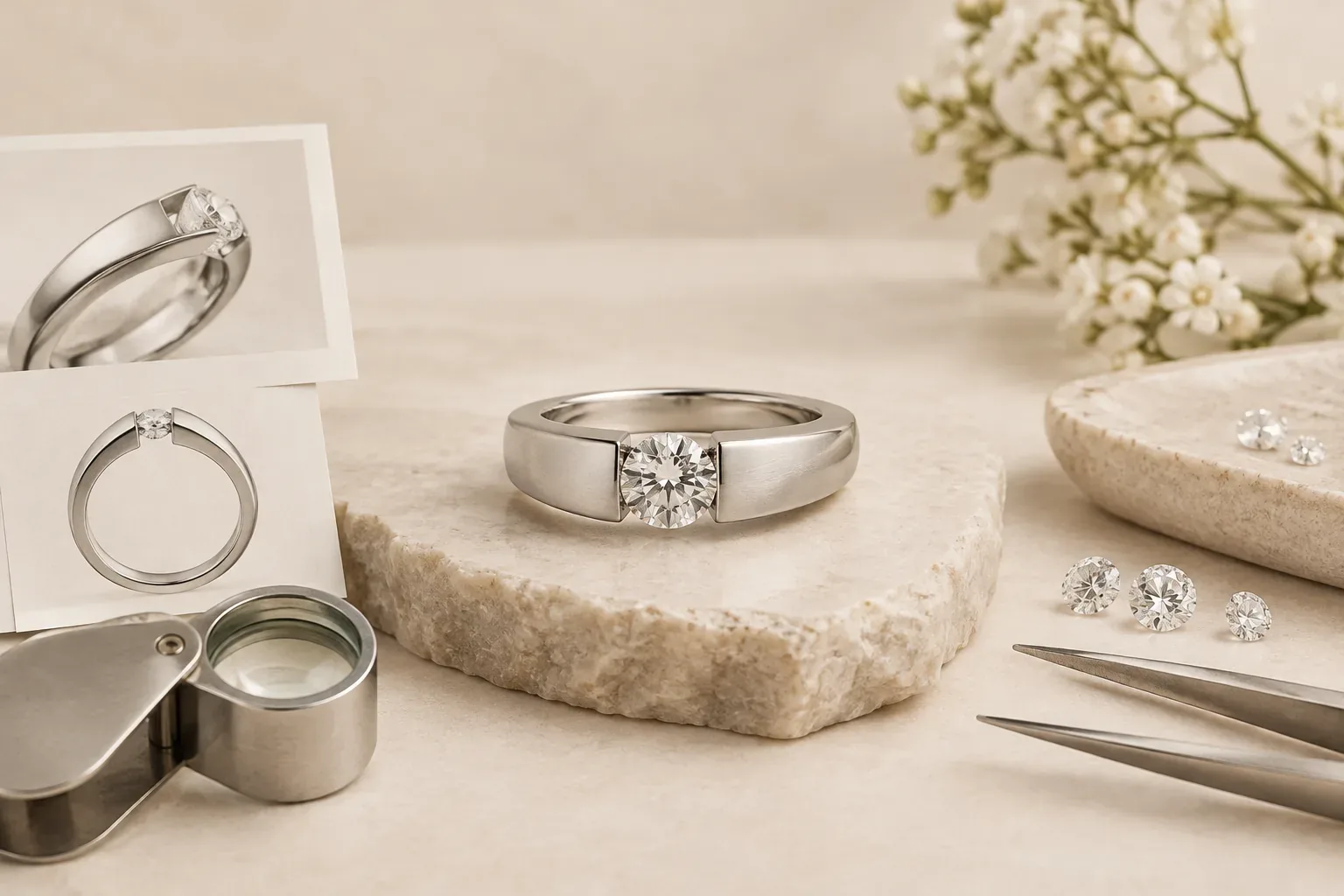
Tension-setting engagement rings are a modern, engineering-driven style that clamps a gemstone between two springy metal walls so the stone appears suspended; this guide defines the setting, lists clear pros and cons, explains which gemstones and lifestyles suit it best, gives practical selection and gifting guidance, and identifies what only a qualified jeweler or gemological laboratory can confirm.
What a tension setting is and how it works
A tension setting secures the center gemstone between two opposing sections of the ring shank. The metal is engineered and finished so that spring-like pressure holds the stone by its girdle. Visually, the effect is a stone that appears to float above the band with maximum light exposure to the pavilion and crown.
Because the stone is clamped at the girdle rather than seated in a traditional bezel or prong cup, the setting relies on precise metallurgy and exact sizing. That engineering is what makes the look distinctive and what creates both the benefits and the limitations discussed below.
Documented historical evidence and cultural context
There is little documented historical evidence tying tension settings to any pre-modern culture or period as a traditional motif. The tension setting is primarily an engineering and modern design development rather than a symbol with deep roots in older cultural jewelry practices.
Because tension settings are a recent, technique-driven style, most meanings associated with them are contemporary personal or stylistic interpretations rather than long-established cultural symbols. This is a practical distinction: documented history for the form is sparse, while modern designers and buyers create new interpretations.
Documented meanings versus modern personal interpretations
Documented historical meanings are absent for this specific setting; there is no historical record from a named culture that assigns an established symbolic meaning to the tension-style mount itself. In contrast, modern buyers and writers often interpret the floating look as symbolic of balance, trust, independence or contemporary minimalism. Those are personal or fashion-based readings rather than historically documented associations.
How the setting appears and is used in jewelry
In practice, the tension motif appears most commonly in single-stone solitaires where the center gem is the showpiece. Designers also combine tension mounts with accent stones set into the shank or with partial bezels and halos to add sparkle while maintaining the suspended center.
Metals commonly used for tension settings include springy, high-strength alloys and precious metals that can be engineered to hold the required compressive force. The visual vocabulary ranges from ultra-minimal thin bands to heavier, sculpted profiles that emphasize the mechanical hold.
Pros: Why shoppers choose tension settings
The most compelling advantage is optics: tension settings maximize visible surface area and allow light to reach the stone from unusual angles, producing a dramatic floating effect. This creates a modern, minimalist aesthetic that many buyers find striking.
Because the center is exposed, cleaning and appreciating the stone's features is easier than many closed settings. Tension mounts also tend to appear sleek and contemporary, aligning with current demand for fluid forms and gender‑neutral styling noted in industry trend reporting by Jewelers Mutual and Imaginaire Digital.
Cons and risks: what to consider
Because the stone is secured only by compressive force at the girdle, tension settings place more demand on the gemstone's toughness and on the stone having an intact, regular girdle free of deep inclusions. Softer or heavily included stones are at higher risk of chipping or cracking under clamping stress.
Resizing and repair can be more complex. Altering the band affects the compressive tension and must be done by a jeweler experienced with the technique. Insurance, routine professional inspections and a clear written warranty are more important than with ordinary prong or bezel settings.
Gemstone and metal selection: practical criteria
Choose gemstones known for toughness and minimal internal weaknesses for tension settings. Gemstones that are hard and durable are commonly recommended because they resist surface abrasion and chipping when clamped. Ask a qualified jeweler about a stone's suitability and any known treatments that could change its durability.
Select metals designed to retain spring tension without deforming. Platinum and certain high-grade alloys are commonly used because they can be engineered for the necessary compressive force; gold alloys can work if properly designed but differ in long-term behavior and cost. Ask your jeweler which alloy grade they use and whether they provide a written tension-testing certificate.
Care, maintenance, and what only a professional or lab can verify
Routine at-home care includes gentle cleaning and avoiding hard knocks. Because the setting exposes the stone, it is more likely than closed mounts to encounter blunt impacts in daily wear. Have the ring professionally inspected and tension-tested at intervals recommended by the maker or your jeweler.
There are important limits to what a buyer can verify alone. You cannot reliably determine a gemstone's treatments, origin, or exact durability by sight. The Gemological Institute of America documents that treatments and detectability require specialist equipment and expert analysis. The Federal Trade Commission also requires sellers to make clear written disclosures about whether a gem is natural, lab-created, treated, or an imitation. For provenance, treatment status and absolute identification, obtain a laboratory report from a respected gemological laboratory and keep written seller disclosures and warranties.
Practical buying and gifting guidance
When buying or commissioning a tension-setting engagement ring, request a written tension warranty, any laboratory report for the center stone, the seller's treatment disclosures as required by the FTC, and a clear return policy. Ask the jeweler to demonstrate a tension test or provide a certificate showing the setting's specifications and recommended maintenance interval.
For gifting, confirm size carefully because resizing a tension ring is often more difficult or limited. If you must surprise, consider borrowing a well-fitting ring from the recipient to get an accurate size, or plan for a professional resize clause in the purchase agreement. Be mindful that engraving space may be limited on thinner tension-style bands.
Insurance, warranty and aftercare
Insure the ring against loss, theft and damage as soon as you purchase it. Because tension settings involve different risks and repair needs, compare warranty terms and consider appraisal documentation to set replacement values. Jewelers Mutual and other industry bodies emphasize craftsmanship, versatility and maintenance as factors buyers currently value; ensure you understand who pays for periodic tension checks and for repairs if the stone is damaged.
Keep all paperwork, lab reports and receipts. Regular professional inspections and documented maintenance history will help if you ever need a claim or resale.
Where to shop and what to ask the seller
Shop with jewelers experienced in tension settings and who provide written tension-test certificates, clear treatment disclosures and access to independent lab reporting. Ask for references or examples of previous tension pieces and inquire how the jeweler handles resizing, repairs and long-term maintenance.
Before purchase, request the FTC-required disclosures and, if applicable, a GIA or equivalent lab report. Confirm the return policy, ask whether the maker offers on-site periodic tension testing, and clarify how the ring will be insured during shipping or service.
Conclusion
Tension-setting engagement rings offer a show-stopping, modern look and can be a wonderful choice for buyers prioritizing an exposed, floating aesthetic. They demand careful gemstone selection, a reliable maker, clear warranties and periodic professional checks. Use laboratory reports and seller disclosures to verify stone identification and treatments, and involve an experienced jeweler for sizing, installation and maintenance decisions.
Frequently asked questions
Are tension settings safe for everyday wear?
Tension settings can be safe for everyday wear if the center stone is durable, the setting is professionally engineered, and you follow recommended maintenance. Because the stone is exposed and clamped at the girdle, it is more vulnerable to hard knocks than fully enclosed settings. Have the setting inspected and tension-tested periodically by the maker or an experienced jeweler.
Which gemstones are best for tension settings?
Gemstones that are hard, tough and free of deep inclusions are generally better suited to tension settings because they resist chipping and can tolerate the clamping force. A qualified jeweler can advise about a specific stone's suitability and whether any treatments affect its durability; for confirmation of treatments or origin, obtain a gemological laboratory report as outlined by the GIA.
Can a tension-set ring be resized?
Resizing a tension-set ring is often more complicated than resizing a conventional ring because changing the band diameter alters the setting's compressive force. Some tension rings can be resized by experienced makers, but options may be limited. Confirm the jeweler's resizing policy and any associated warranty before you buy.
How do I verify a diamond's treatment or origin for a tension set?
You cannot reliably verify treatment or origin by sight. The Gemological Institute of America notes that detectability of treatments requires specialist testing, and the Federal Trade Commission requires sellers to disclose material facts. Request a laboratory report from a recognized gemological lab and written seller disclosures to confirm treatment and origin.
What warranties and documentation should I insist on?
Insist on a written tension warranty, the seller's treatment disclosures, any laboratory report for the center stone, a clear return policy, and details about routine inspection intervals and repair terms. Keep all paperwork for insurance and future resale.
Sources and further reading
- Imaginaire Digital — Imaginaire Digital
- Jewelers Mutual — Jewelers Mutual
- Gemological Institute of America — Gemological Institute of America
- Federal Trade Commission — Federal Trade Commission