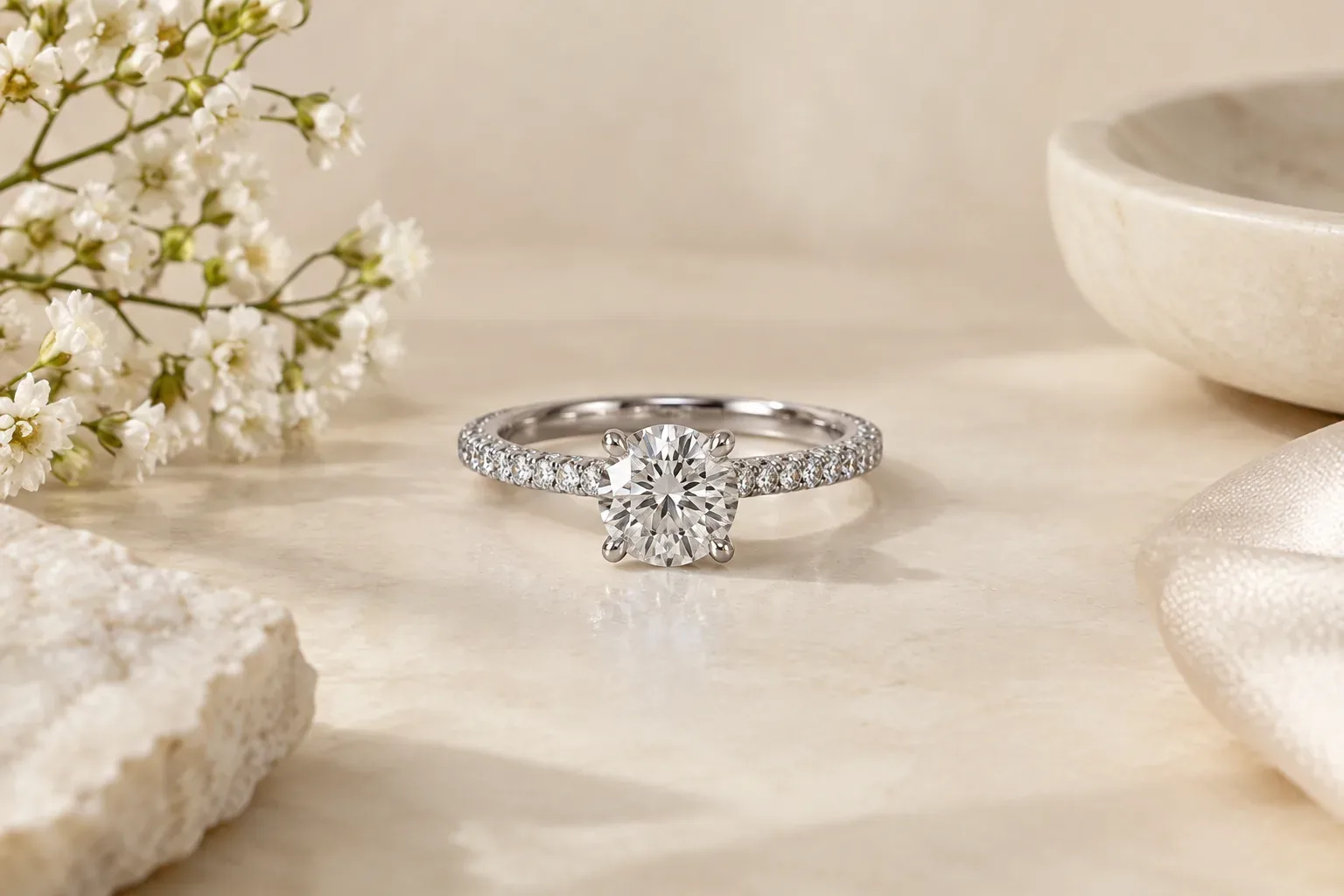
Meaning at a glance
A pavé setting engagement ring features many small stones set close together to create a sparkling surface; choose pavé if you value maximum sparkle, delicate visual texture, and refined craftsmanship, but expect higher maintenance, occasional stone loss, and a need for clear disclosures and regular inspections from a jeweler or insurer.
Quick answer
A pavé setting engagement ring is best described as a ring with many small stones set tightly together so metal is minimally visible, creating a continuous shimmer; it suits shoppers who prioritize dense sparkle and refined detailing and are prepared for higher maintenance, careful sizing choices, and to verify stone disclosures with a seller or lab report before purchase. This guide provides a practical definition, decision criteria, common trade-offs, safe care guidance, and clear limits on what a shopper can verify without a qualified jeweler or gemological laboratory.
What a pavé setting is and its common variations
In jewelry terminology, pavé refers to a setting style in which many small gemstones—usually diamonds—are set close together across a surface or along a band so the metal is mostly hidden and the stones produce a textured field of light. Variations include full pavé shanks that run around the band, partial pavé limited to the shoulders, pavé halos around a central stone, and micro-pavé where very small stones are set extremely close using finer metalwork.
Documented historical evidence and cultural notes
Among the professional references supplied for this guide there is no single, documented historical symbolism attached to the pavé setting across a particular culture or ancient period; modern industry sources focus on technique, consumer preferences and technical concerns rather than an originating cultural meaning. The absence of a consistent historical symbolism in the provided sources means any historical claims about pavé should be treated cautiously and verified against specialized historical research or museum records rather than general trade guidance.
Modern interpretations versus documented history
Because the professional sources used here emphasize contemporary trends, disclosure and gem treatment rather than historical symbolism, most meanings attached to pavé today are personal or stylistic rather than documented cultural meanings. Modern buyers and designers commonly read pavé as a sign of glamor, attention to detail, or vintage-inspired elegance, but those are contemporary interpretations and not universal historical facts.
How pavé appears in engagement ring design
Designers use pavé to increase apparent surface area of sparkle without dramatically increasing center-stone carat weight, often pairing pavé shanks with a modestly sized center stone for a high-impact look. Pavé appears in halos that amplify a center gem, in split shoulders to visually widen the ring, and as delicate bands where it creates texture and contrast to planished or brushed metals. Metals commonly used include platinum and 14k or 18k gold; choice of metal affects longevity and how securely small stones are set.
Pros: why buyers choose pavé
Pavé maximizes surface sparkle and can make a ring look more intricate and luxurious without relying solely on a large center gemstone. The setting style allows designers to create visual width and richness while using smaller stones, which often makes a striking ring at different price points. Pavé is also versatile in design language: it can read as vintage, modern, or minimalist depending on metal finishes and how it’s combined with other elements, which aligns with current market interest in craftsmanship and versatility (Jewelers Mutual, 2026).
Cons and practical trade-offs
The main trade-offs for pavé are maintenance and durability. Small stones are held by tiny beads or prongs and can work loose over time, especially if the wearer leads an active life or frequently encounters abrasive contact. Cleaning, repolishing and re-tipping prongs may be required more often than for a plain, low-profile solitaire. Additionally, pavé can be harder to size and repair because work near tiny settings risks loosening stones; these practical concerns mean shoppers should factor in inspection and repair costs when comparing price tags.
Selection checklist: what to ask and verify before buying
Ask the seller for written disclosures and documentation about whether the stones are natural, lab-grown, treated, or imitations; consumer protections require clear distinctions and written disclosure (Federal Trade Commission). For the center stone, request a grading report from an independent laboratory if it is a diamond or ask for lab verification of origin for colored gems. For pavé stones, ask about the size range and the setting technique (for example micro-pavé versus standard pavé) plus how the retailer secures and inspects those stones. Confirm the vendor’s policy on resizing, repairs and warranty coverage for lost stones, and ask about typical service intervals recommended by their bench jewelers.
Care, inspection, insurance, and safe cleaning
Because pavé settings have many small points of contact, periodic professional inspection is important; an annual check by a qualified jeweler can spot loose stones or worn beads before stones fall out. Follow care guidance for each gemstone type: some treated or fragile gems need gentler cleaning methods or should avoid ultrasonic cleaners (Gemological Institute of America). Consider insuring the ring or adding it to a homeowners or renters policy endorsement, and check whether the retailer recommends routine maintenance plans—industry insurers and trade bodies emphasize craftsmanship, repairability and service as part of modern consumer expectations (Jewelers Mutual, 2026).
What you cannot verify without a professional or lab
A buyer cannot reliably determine gemstone treatments, origin (natural versus lab-grown), or full durability characteristics solely by eye or standard retail tools; detecting many treatments and confirming origin often requires gemological testing. The Federal Trade Commission advises shoppers to require clear, written disclosure about whether gemstones are treated, lab-created, or imitations, and the Gemological Institute of America explains that detectability of treatments and the need for disclosure are central consumer questions. If provenance or treatment status matters to you, plan to obtain written lab reports or independent verification before completing a purchase.
Who pavé suits — practical profiles
Pavé suits someone who prioritizes surface sparkle and decorative detail over the single largest possible center stone, who is comfortable with modestly higher maintenance, and who values craftsmanship and versatility in styling. It also works well for buyers who like stacking or mixed-metal looks because pavé bands can layer visually with engagement or wedding rings. Pavé is less practical for people with very hands-on or physically abrasive jobs unless they are committed to frequent inspections and potential repairs.
Final considerations before purchase
Balance aesthetics with lifestyle and aftercare costs. If you choose pavé, insist on written disclosures about stones and treatments, obtain grading or verification for the center gem if applicable, confirm resizing and repair policies, and budget for periodic professional inspections. Use the vendor’s documentation and independent lab reports where necessary to confirm claims you cannot assess in-store. Current market demand emphasizes craftsmanship and versatile styling, so a well-made pavé ring bought with clear documentation is consistent with contemporary buyer priorities (Imaginaire Digital; Jewelers Mutual).
Frequently asked questions
What exactly is a pavé setting?
A pavé setting is a technique where many small stones are set very close together so that little metal shows, creating a continuous field of sparkle; micro-pavé is the finer, more delicate version that uses smaller stones and closer setting.
Is a pavé engagement ring durable for everyday wear?
Pavé rings can be worn daily but require more maintenance than plain bands because the many small stones are held by tiny beads or prongs that can wear over time; routine inspections and occasional repairs are advisable.
What should I ask the jeweler about the pavé stones?
Ask whether the pavé stones are natural or lab-grown, whether they have been treated, how they are set (micro-pavé or standard), the jeweler’s inspection and repair policy for lost stones, and whether any documentation about the stones is provided in writing.
Can I verify stone treatments and origin myself?
You cannot reliably verify treatments, origin, or some durability characteristics without gemological testing; the Federal Trade Commission recommends written disclosures and the Gemological Institute of America explains that lab testing is often required to detect certain treatments.
How do I clean and care for a pavé ring?
Follow care recommendations for each gemstone type, avoid aggressive cleaning if stones are treated or fragile, and have a professional jeweler clean and inspect the settings periodically; some treatments and gems should not be cleaned in ultrasonic machines (GIA).
Should I insure a pavé engagement ring?
Because pavé settings have many small stones and potentially higher repair needs, insuring the ring or adding it to an established jewelry insurance policy is recommended; industry sources emphasize the value of warranty and repair plans for modern, crafted pieces (Jewelers Mutual).
Sources and further reading
- Imaginaire Digital — Imaginaire Digital
- Jewelers Mutual — Jewelers Mutual
- Gemological Institute of America — Gemological Institute of America
- Federal Trade Commission — Federal Trade Commission