Meaning at a glance
A cluster setting engagement ring groups multiple small stones—often around a central gem or arranged to mimic one larger stone—offering a high-impact look at lower cost but with trade-offs in durability, maintenance and authentication; shoppers should weigh style, lifestyle, gemstone treatments, disclosure and whether to seek a gemological report before purchase.
What a cluster setting is, simply put
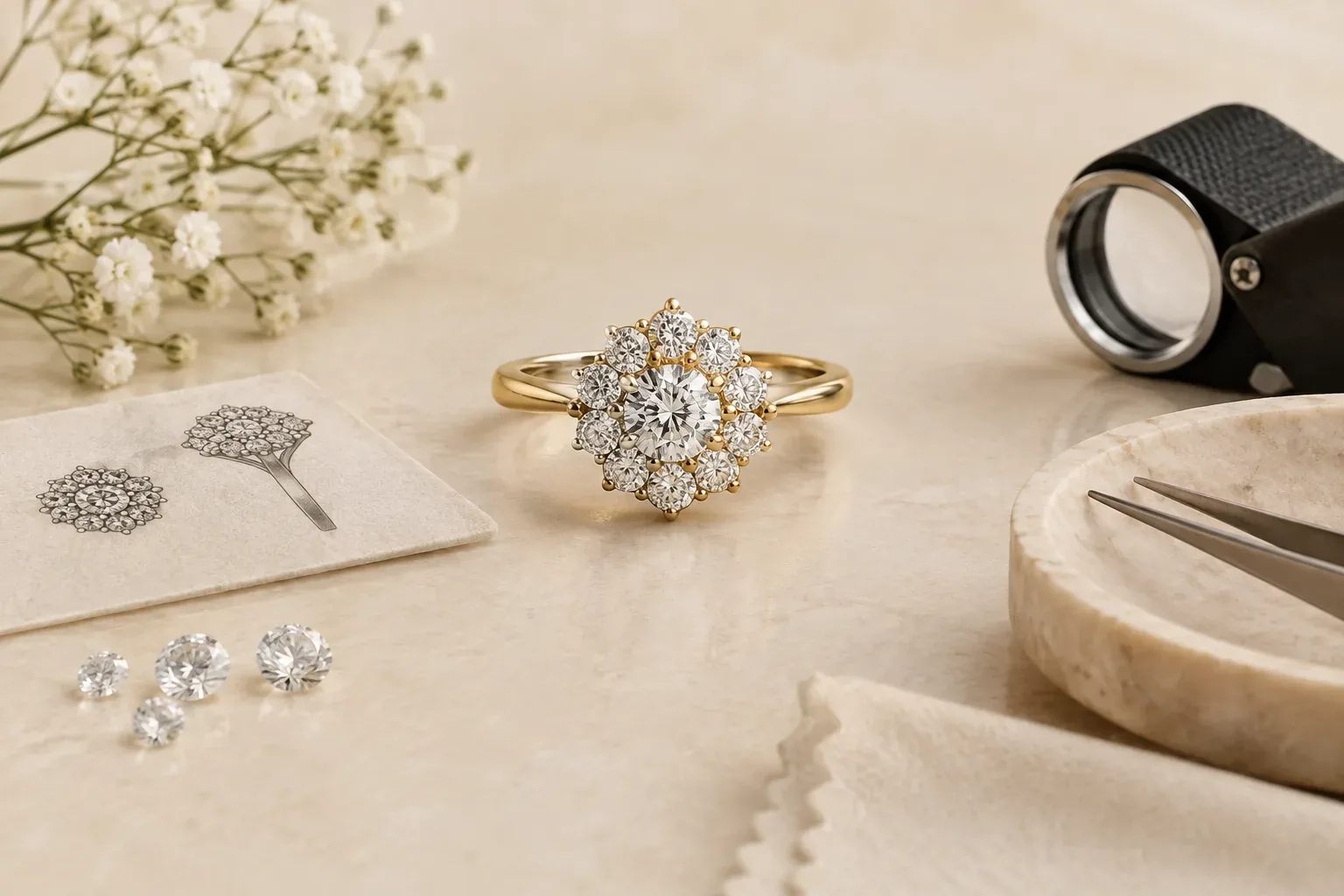
A cluster setting collects multiple stones together on a single head or face of the ring. The stones may be diamonds, colored gems, or mixed materials, and they can be arranged around a true centre stone, in a floral or pavé cluster, or in geometric clusters that read from a distance as one larger gem. The effect is visual amplification—more facets and surfaces catch light—without the cost of one very large single stone.
Historical evidence and limitations in the record
The approved industry and consumer sources used for this guide do not provide detailed primary historical records tying cluster settings to precise symbolic meanings in specific cultures or periods. Contemporary industry references concentrate on current consumer preferences, disclosures, and gemstone care rather than original cultural attributions. Because that is the available evidence base, this guide separates verifiable documentary material—about trade practices, treatments and modern trends—from later personal and cultural interpretations that are not documented in these sources.
Documented meanings versus modern personal interpretations
Documented meanings in the approved sources focus on practical and market-level concerns—materials, treatments, disclosure and styling—rather than long-standing symbolic claims. Modern personal interpretations of cluster rings often emphasize togetherness (many stones representing many facets of a relationship) or vintage romance, but those are contemporary readings rather than historical facts recorded by the sources used for this article. Treat modern symbolism as personal or cultural preference, not universal truth.
How the motif and gemstones appear in jewelry
Cluster settings appear in multiple visual motifs: floral clusters that echo petals, cushion or halo clusters that frame a center stone, geometric clusters that form squares, ovals or bars, and mixed-metal designs that use contrast to increase perceived depth. Jewelers frequently use pavé-set melee diamonds to create a continuous sparkling surface, or colored gemstones grouped to produce a color wash or focal contrast. According to industry trend reporting, modern demand has shifted toward fluid forms and colored gemstones, which makes cluster formats particularly compatible with contemporary stacking and gender-neutral styling trends.
Pros of a cluster setting engagement ring
Cluster settings can offer a stronger visual impact for a lower price than a single large stone because many small stones combined present more visible surface area of sparkle. They suit buyers who prioritize brilliance and texture over a single large carat weight. Clusters provide stylistic flexibility: they accommodate mixed gemstones and creative shapes easily, and they pair well with stacked rings and modern, fluid silhouettes. From a trend perspective, industry reporting shows consumer interest in colored stones, versatility, and craftsmanship, which cluster arrangements readily support.
Cons and practical trade-offs
Cluster rings have more edges, prongs and tiny stones, which increases potential points of failure. They generally require more frequent inspection and cleaning than a simple solitaire. Small stones can loosen or fall out if the setting is bumped or if routine maintenance is neglected. Clusters make it harder to resize the ring without disturbing the arrangement, and certain cluster styles can snag on fabric. Because clusters use many small stones, accurate assessment of origin, treatments, and exact total weight can be more complex and may require a gemological laboratory to verify.
Decision criteria: how to choose a cluster engagement ring
Start with style priorities: do you want the look of a large single stone or an obviously multi-stone texture? Think about lifestyle: if you work with your hands, a low-profile cluster with bezel or secure prongs will endure better than a high, delicate head. Consider gemstone choice next. If you prefer diamonds, ask for clear disclosure about whether melee stones are natural, treated or lab-created. For colored gemstones check for stability and treatments because some enhancements affect care and durability. The Gemological Institute of America underscores that treatments, detectability and disclosure are distinct consumer concerns, and the Federal Trade Commission similarly emphasizes clear written disclosure on natural versus lab-grown or treated materials. If provenance and untreated material are important, be prepared to request lab reports.
What you can and cannot verify without a lab or qualified jeweler
You can confirm basic facts yourself: the metal type by hallmarks, the overall ring size, and receive a written item description from the seller that lists materials and treatments. You can visually inspect the finish, joinery and general quality of work. What you cannot reliably verify without a qualified jeweler or gemological laboratory includes identification of whether a gemstone is natural, treated, lab-created or an imitation, and precise gemstone weight or origin claims. The Federal Trade Commission advises consumers to insist on written disclosures and recognizes that certain identifications require expert testing. For detectability and the nuances of treatment, the Gemological Institute of America explains why laboratories and disclosure are important for consumer protection.
Care guidance and maintenance
Cluster rings need regular cleaning and periodic professional inspection. Use gentle cleaning methods for most gemstones; avoid harsh chemicals or ultrasonic cleaning for stones where treatment or fragility is a concern until you confirm suitability with a jeweler. The Gemological Institute of America outlines how treatments affect durability and cleaning choices. Insurers and trade professionals recommend routine checks of prongs and settings to prevent loss of melee stones. Consider insurance for higher-value pieces or rings worn daily; Jewelers Mutual highlights the modern focus on craftsmanship and durability when advising customers about protection and repair options.
Selection and gifting guidance—practical and respectful
Respect recipient style and values when choosing a cluster ring. If they prefer low-key or active wear, choose a low-profile design with secure bezeling or flush-set melee stones. If provenance, sustainability, or natural stones matter to them, request written disclosure and, if possible, a gemological report before purchase. Be transparent about treatments, origin and whether stones are lab-grown or natural. When gifting as a surprise, choose a return-friendly seller and keep documentation so the recipient can verify or exchange. The industry’s current trends toward versatility and gender-neutral styling mean cluster settings can suit many preferences, but personal taste remains decisive.
A short buyer's checklist
Ask the seller for a complete written description that lists metal, gemstone types, treatments and whether any stones are lab-grown. Request photos showing the setting from multiple angles and ask about prong construction and profile height. Decide whether you need a gemological report for stone identity and treatments; remember that accurate verification often requires a laboratory. Factor in maintenance needs and insurance, and choose a trusted jeweler who provides aftercare. Finally, match the ring profile to the wearer’s lifestyle and wardrobe to ensure the piece will be enjoyed daily rather than stored away.
Conclusion
Cluster setting engagement rings offer a compelling balance of sparkle, creative design and relative cost-effectiveness, but they come with maintenance and verification trade-offs that buyers must accept or plan for. Use written disclosures, professional inspection and, when necessary, laboratory reports for any provenance or treatment claims you consider important. Combining careful selection with appropriate care and insurance will allow you to enjoy the visual richness of a cluster ring while managing its practical demands.
Frequently asked questions
Are cluster engagement rings a good value compared with a single large diamond?
Cluster rings can provide a visibly larger, sparkly look for less cost than one larger diamond, because multiple smaller stones typically cost less per visible surface area. The trade-offs are higher maintenance and more complex verification of treatments and origin; ask the seller for written disclosure and consider whether you need a gemological report.
How durable are cluster settings for everyday wear?
Durability varies with design. Low-profile clusters with secure bezels or well-made prongs withstand daily wear better than high, delicate cluster heads. Expect more frequent inspections and potential maintenance because many small stones create more points of failure.
Can I tell if the small stones are lab-grown or treated by looking?
No. Visual inspection alone is not reliable for distinguishing natural, lab-grown or treated stones. The Federal Trade Commission recommends written disclosures, and the Gemological Institute of America explains that laboratory testing is often required for definitive identification.
What care does a cluster ring need?
Gentle cleaning and regular professional inspections are recommended. Avoid harsh chemicals until you confirm a stone's treatment and durability, and follow any specific care guidance from a qualified jeweler or the laboratory report if you obtain one.
Is a cluster ring a modern trend or a traditional choice?
Cluster rings can be styled to look vintage or contemporary. Current industry trend reporting highlights consumer interest in fluid forms, colored gemstones and versatility, showing that cluster formats fit both traditional and modern tastes depending on design.
What documentation should I request when buying a cluster engagement ring?
Request written material descriptions that list metal content, gemstone types, any known treatments, and whether stones are natural or lab-created. If provenance or untreated stones matter, request a gemological laboratory report to verify those claims.
Sources and further reading
- Imaginaire Digital — Imaginaire Digital
- Jewelers Mutual — Jewelers Mutual
- Gemological Institute of America — Gemological Institute of America
- Federal Trade Commission — Federal Trade Commission