Meaning at a glance
An east-west setting engagement ring checklist should define the horizontal orientation and compatible stone shapes, weigh aesthetic and durability trade-offs, confirm disclosures and lab reports for gemstones, check setting security and resize policy, and follow proven care routines—while recognizing that only a qualified jeweler or gemological laboratory can verify treatments or origin.
Direct answer: what this checklist does
An east-west setting engagement ring checklist helps you decide whether a horizontally set center stone is the right aesthetic and functional choice, what technical and disclosure questions to ask a seller, what trade-offs you’re accepting (comfort, durability, and profile), and what you cannot verify without specialist testing. Use this checklist to gather facts, compare options, and make informed trade-offs before purchase.
Definition and how to recognize an east-west setting
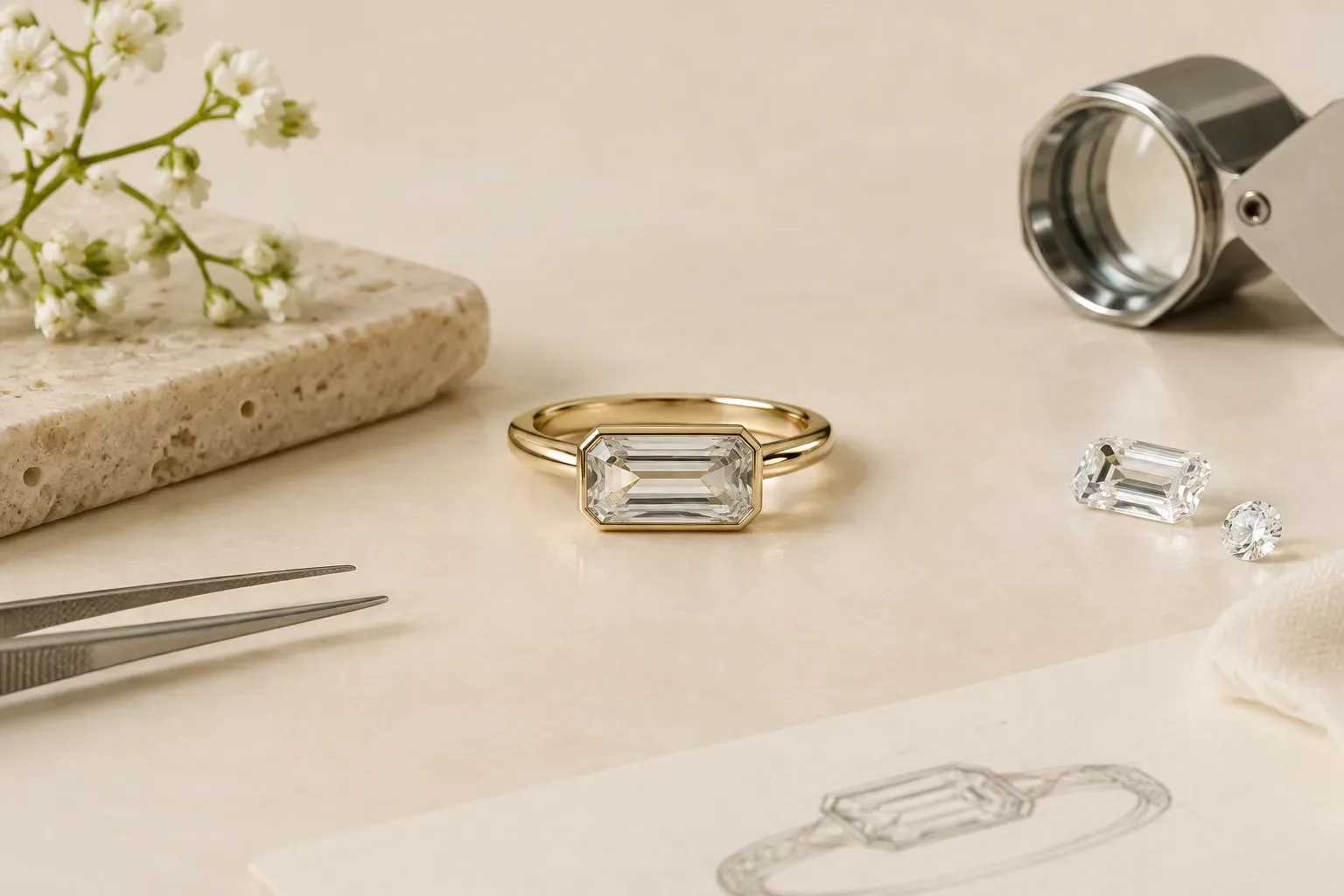
An east-west setting places an elongated or directional center stone so its long axis runs across the finger rather than along it. It is most common with marquise, oval, emerald, pear, and marquise cuts shown sideway. The orientation is a visual and structural choice: the stone sits “sideways” in the head of the ring rather than pointing toward the wearer’s fingertip. The orientation affects silhouette, finger proportion, and how prongs or bezels are located around the stone.
Historical evidence and modern context
Among the approved sources for this guide, there is no evidence presented that east-west orientation is an established symbolic practice tied to a specific ancient culture or historical ritual. Instead, contemporary reporting and professional guidance show the east-west look as a modern stylistic choice. Industry trend reports cite demand for fluid forms, gender-neutral styling and versatility—trends that help explain the popularity of east-west orientations today, rather than a long-documented ritual meaning (Jewelers Mutual; Imaginaire Digital).
Treat any claim that an east-west setting carries a documented religious or cultural symbolism with caution unless you can point to primary academic or museum sources; the sources used here frame east-west primarily as a design variation within ongoing stylistic trends, not as an ancient symbolic convention.
Documented historical meanings vs modern personal interpretations
Documented historical meanings require primary evidence from cultural or art-historical scholarship. The approved evidence for this article does not document such historical meanings for east-west settings. Modern wearers, designers, and retailers assign personal meanings—such as non-traditional commitment, balance, or a desire for a distinctive silhouette—and those interpretations are valid as personal symbolism. Distinguish clearly between historically recorded symbolism (absent in our sources for east-west orientation) and contemporary individual or cultural fashion meanings reported by industry sources (Jewelers Mutual; Imaginaire Digital).
How the motif and stone choices appear in jewelry
In practice, jewelers apply east-west orientation to elongated and directional cuts. Ovals, marquises, emeralds and pears can sit across the finger, often within a low-profile bezel or multi-prong head engineered to support lateral forces. Designers may pair an east-west center stone with side stones, a halo, or a bypass shank to reinforce the sideways visual flow. Metalwork and setting types change the practical behavior: a full bezel wrapping an east-west oval protects the girdle from lateral knocks, while prong sets can be more open but require more frequent inspection for loose prongs.
Practical selection checklist: what to ask and verify before buying
1) Ask how the stone is oriented and why the maker chose that orientation—photos from multiple angles will show how high the setting sits and how the stone overhangs the shank. 2) Confirm the stone shape and dimensions, and ask how those dimensions change the perceived size when turned east-west. 3) Request written disclosures on origin, whether the gem is natural, lab-grown, treated, or an imitation; the Federal Trade Commission requires clear language about these distinctions (Federal Trade Commission). 4) For diamonds or valuable colored gems, ask for a gemological report from a recognized laboratory (for example, GIA or other reputable labs) that documents treatments and identification; remember that a seller’s invoice is not the same as an independent lab report. 5) Check the setting type—bezel, partial bezel, prong or tension—and ask how it protects the stone against lateral impact and wear. 6) Verify the return policy, warranty, service intervals and whether resizing is offered; east-west settings may affect resizing options because the head orientation can interact with shank adjustments. 7) Inspect metal marks and ask for karat or plating details and for any metal allergy notes. 8) Ask about insurance and recommended inspection intervals; Jewelers Mutual emphasizes craftsmanship, versatility and the importance of proper care and protection. 9) If you value resale or future upgrades, ask about how common the stone shape and orientation are for the brand or maker and whether the ring can be serviced or re-set later.
Common trade-offs to weigh
Comfort and finger profile: east-west settings can read shorter on the finger but sometimes feel wider. If the stone overhangs, it may catch on clothing. Durability: a sideways stone can receive lateral knocks on its girdle or corners, so setting choice matters—bezels and well-placed prongs are stronger. Visual scale: many shoppers find east-west ovals or marquises appear larger across the hand; others prefer the classic lengthened look of a north-south orientation. Resizing and future repairs: some east-west heads complicate resizing or re-setting and may require a skilled bench jeweler. Cost: specialty mounts and additional protective metalwork can add to labor and price. Make these trade-offs explicit and request written notes from the seller.
Care, maintenance and limits on what you can verify
For care, follow general gemstone and jewelry guidance: avoid harsh chemicals and ultrasonic cleaning for stones that can be damaged. Have the prongs and setting professionally inspected at least once a year, or more frequently if the design exposes the girdle. A bezel or low-profile setting typically needs less frequent adjustment than thin prongs. The Gemological Institute of America explains that treatments, detectability and durability affect care and disclosure expectations—treated stones may need gentler care or different service routines (Gemological Institute of America).
Know the limits: you cannot reliably confirm a gem’s natural origin, whether it is lab-grown, or the full range of treatments without an independent gemological laboratory report. Sellers must provide disclosures under FTC guidance, but independent verification is the only way to definitively establish origin and treatment status (Federal Trade Commission). Visual inspection, metal stamps and seller documents are useful but not definitive. If origin or treatment materially affects your purchase decision, budget for a lab report and an independent appraisal.
Practical and respectful gifting guidance
Respect personal preference: some recipients prefer non-traditional silhouettes and will value an east-west ring, while others may prefer classic orientations. If the ring is a surprise, check return, resizing and warranty policies in advance and confirm metal/allergy and ring size. Consider asking about personalization options—engraving, matching wedding band compatibility, and how the east-west head will sit with a potential future band. If the recipient values provenance, secure written documentation about the stone and a lab report when possible. Finally, if the ring is a family heirloom adapted into an east-west style, document modifications and retain pictures for provenance.
When to consult a qualified jeweler or laboratory
Consult a qualified bench jeweler for questions about resizing, prong reinforcement, or converting a north-south head to east-west orientation; these are technical interventions that require bench skill. Seek a recognized gemological laboratory report if the stone’s origin, treatment status, or grading materially affects value or personal preference. Use seller documentation and lab reports together: written disclosure is required by consumer protection authorities, but only a laboratory can provide definitive gemstone identification and treatment detection (Federal Trade Commission; Gemological Institute of America).
Quick purchase checklist (one-sentence summary you can print)
Confirm stone shape and photos, request written disclosure and any lab report, verify setting type and protection, check resizing/return policies, ask about warranty and inspection intervals, evaluate comfort and everyday wear, and plan an independent appraisal if origin or treatments matter to you.
Frequently asked questions
What exactly is an east-west engagement ring setting?
An east-west setting orients an elongated or directional center stone so its long axis runs across the finger rather than along it. It is a design and structural choice most commonly used with oval, marquise, emerald and pear shapes.
Is an east-west ring less durable than a traditional orientation?
Not inherently, but orientation changes how force is applied: lateral knocks can stress girdles and corners. A protective setting such as a bezel or reinforced prongs reduces risk. Have the setting inspected regularly.
What documentation should I request before buying?
Request written seller disclosures identifying whether the gem is natural, lab-grown, treated, or imitation, and ask for any independent laboratory report or grading certificate if available. FTC guidance requires clear disclosure of material facts.
Can I verify a gemstone’s origin or treatments myself?
No. While you can confirm seller disclosures and visible details like metal stamps and symmetry, definitive identification of origin or treatments requires a recognized gemological laboratory report.
Will an east-west head affect resizing or future modifications?
Possibly. The head’s orientation and how it connects to the shank may complicate some resizing or re-setting procedures. Ask a bench jeweler or the seller about resizing limits before purchase.
How should I care for an east-west engagement ring?
Avoid harsh chemicals and follow care recommendations for the center stone type; schedule professional inspections at least annually to check prongs and settings. The GIA notes that treatments and durability affect care needs.
Is an east-west style trendy or timeless?
Industry reports show east-west and other non-traditional silhouettes are part of current trends emphasizing fluid forms and versatility, but whether it is timeless depends on personal preference and how you weigh contemporary styling versus classic forms (Jewelers Mutual; Imaginaire Digital).
Sources and further reading
- Imaginaire Digital — Imaginaire Digital
- Jewelers Mutual — Jewelers Mutual
- Gemological Institute of America — Gemological Institute of America
- Federal Trade Commission — Federal Trade Commission