Meaning at a glance
High-profile setting engagement ring durability depends on design choices and materials: higher seats increase exposure to knocks and snagging, so buyers must weigh visibility and light performance against greater repair risk and maintenance needs. Use decision criteria—setting height, prong strength, metal, stone hardness and lifestyle—and follow safe-care measures; only a qualified jeweler or gem lab can verify structural integrity, treatment status, or precise risk of fracture.
What a “high-profile” setting means and the durability trade-offs
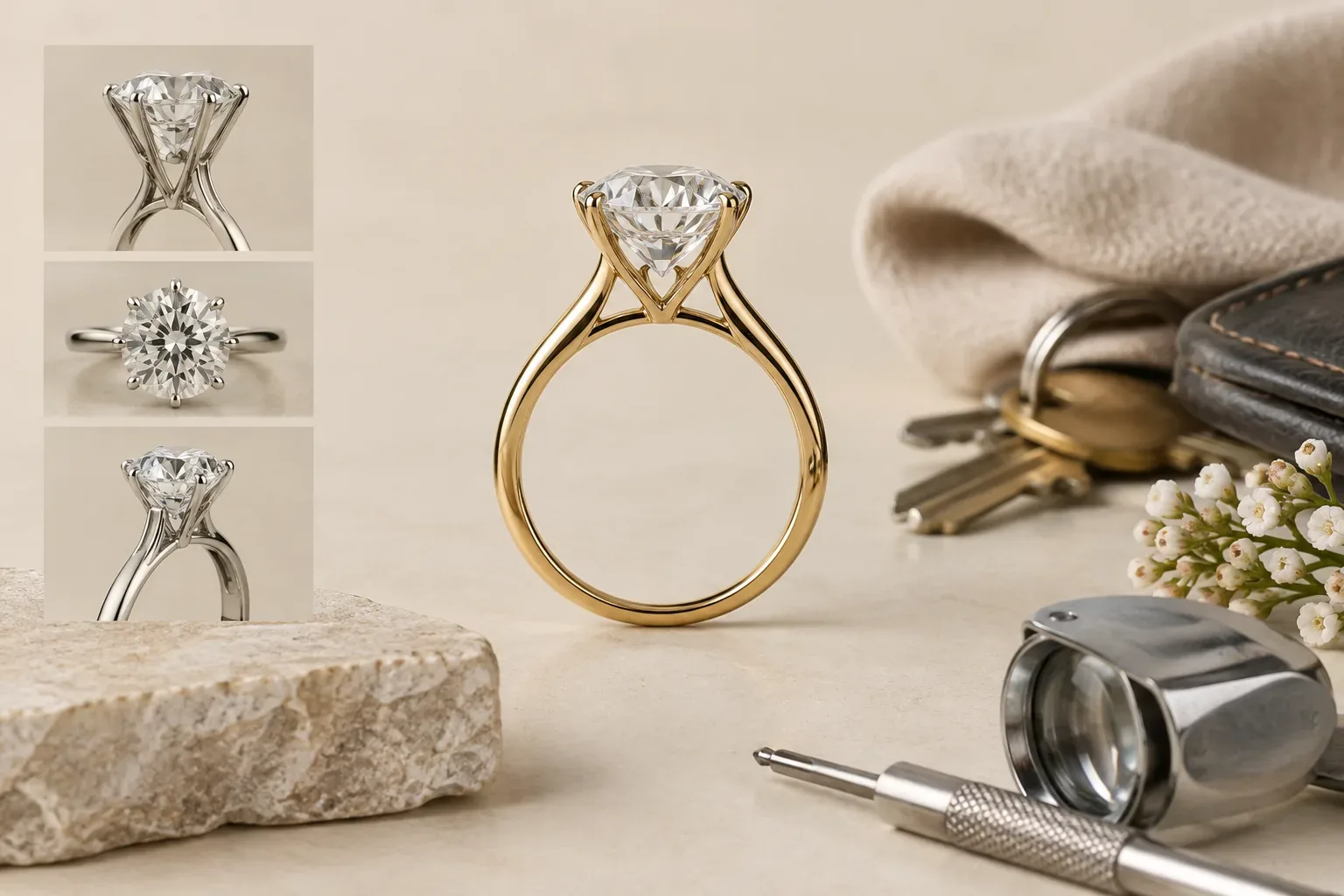
A high-profile setting places the center stone on a taller seat above the shank. That elevation can be a few millimetres or more depending on design. The main durability trade-off is exposure: a stone set higher is easier to catch on clothing, tools or doorframes and transfers impact forces to its mounting during knocks. Higher seats commonly require longer prongs or gallery work, which themselves are points of wear. Those features increase service needs and the statistical likelihood of bent or fractured prongs compared with a flush or low-profile mount.
Durability also depends on material choices: harder metals such as platinum resist deformation differently from softer gold alloys, and gemstone hardness and toughness vary widely. The Gemological Institute of America notes that gemstone treatments, disclosure and care needs create distinct consumer questions, so the stone’s treatment history affects its resistance to chipping and thermal or chemical damage. Finally, design features that add visibility—open galleries, cathedral arches, or tall crowns—improve optical performance but often create additional surfaces to catch or pry.
Historical evidence and cultural context
Documented historical evidence specifically linking tall or high-profile ring settings to particular cultures or periods is not provided in the approved sources. Contemporary market and design reports instead show where consumer demand and stylistic interest currently lie. Imaginaire Digital’s 2026 search analysis and Jewelers Mutual’s 2026 trends reporting identify demand centers for modern shapes, craft details, versatility and attention to design rather than offering a precise historical lineage for high-profile settings.
Because the allowed sources focus on present-day trends and consumer questions about gemstone treatment and disclosure, any historical or symbolic meanings that shoppers attach to high-profile settings should be treated as modern personal interpretation unless you have primary historical documentation. Separate documented historical facts from personal or contemporary symbolic meanings: the approved professional and consumer sources highlight current buyer priorities—craftsmanship, versatility and gemstone choices—rather than traditional cultural symbolism assigned to a particular mounting height.
How high-profile settings and gemstones appear in jewelry
High-profile settings appear in many contemporary engagement-ring styles: cathedral mounts, tall prong settings, halo rings with raised centers, and multi-level gallery designs. The visible intent is optical—more light reaches the stone and the profile reads larger on the finger—but that same visibility is what increases snagging and impact exposure. Designers often combine tall settings with multiple prongs, accent stones on the gallery, or openwork to balance visual lightness with structural support.
Gemstones in high-profile mounts vary. Diamonds are common because of their high Mohs hardness and familiarity, but Gemological Institute of America guidance reminds buyers that treatments and material types create different durability requirements. Colored gemstones with lower toughness or with surface-reaching treatments may be more vulnerable when exposed on a tall setting, and the FTC directs sellers to make clear distinctions among natural, lab-created, treated and imitation materials so buyers can understand those risks before purchase.
Practical selection and gifting guidance
Begin by matching the ring’s design to the recipient’s lifestyle. If the wearer is physically active, works with their hands, or frequently wears fitted clothing or gloves, a lower profile or protective bezel may be the safer choice. If visual impact is the priority and the wearer understands maintenance trade-offs, a high-profile setting can be appropriate if you choose robust prongs, a higher prong count, or a setting that offers protective gallery structure.
Check materials and disclosures at purchase. Ask the seller for written information about the metal alloy, the number and size of prongs, and any gemstone treatments or origin statements. The Federal Trade Commission requires clear seller disclosure about treated, lab-created and imitation materials; insist on those disclosures in writing. If the stone is a softer or treated gem, request explicit care guidance from the retailer and consider a protective design instead of an exposed high setting.
For gifting, center the conversation around long-term care expectations. Explain the expected maintenance schedule—regular prong checks, occasional re-tipping, and potential re-setting after impact. If you are buying a surprise ring for someone who values low maintenance, opt for a lower-profile or bezel-style alternative. When in doubt, choose a middle-ground setting height that gives presence but keeps much of the stone’s girdle close to the band for protective benefit.
Daily care, snagging prevention, and minimizing repair risk
Preventative behaviour reduces most accidental damage. Remove the ring for heavy manual work, sports, gardening or frequent contact with abrasive surfaces. Foldable layers of gloves, careful dressing techniques, and designated days for ring-free chores cut down exposure and snag risk. Routine inspection is essential: visually inspect prongs and the setting every few weeks for bending, loosening, or visible gaps, and have a professional check prong integrity at least annually or after any hard impact.
Cleaning practices matter. Use gentle soap and warm water with a soft brush to remove dirt from under the stone; avoid ultrasonic cleaners or steam if the gem’s treatment status is unknown, since the Gemological Institute of America highlights that treatments and detectability alter recommended care. For metals, polish and re-tipping of prongs are routine services; expect that high-profile settings require these more often than low-mounted rings. Budget for servicing in the same way you would for any frequently worn jewellery.
What you can and cannot verify without a qualified jeweler or gemological lab
You can visually check some factors at point of sale: perceived prong thickness, the number of prongs, overall symmetry, and whether the setting has obvious interference points that will catch fabric. Ask for detailed photographs and a close-up of the prong tips and gallery. You can also request written disclosures on metal alloy, gemstone origin and whether the stone has known treatments, per FTC guidance.
You cannot reliably verify internal structural issues, the adequacy of solder joints, microscopic fissures or the presence and extent of many treatments without professional equipment. A gemological laboratory or qualified independent jeweler is required to confirm treatment types, detect internal cleavage planes that increase fracture risk, or test the precise hardness and toughness relevant to daily impact resistance. The thesis directing this article—define decision criteria, trade-offs, safe care, and clear limits—means accept that those deeper risks require expert assessment before you can be confident about long-term durability.
Final practical checklist
Before you buy or gift a high-profile engagement ring: confirm written disclosures about treatments and material origin; inspect prong count and thickness; choose a harder metal alloy if deformation risk is a concern; consider a raised but partially protective gallery or a bezel when appropriate; budget for regular maintenance; and schedule at least annual professional checks. If any doubt remains about a stone’s treatment or structural soundness, obtain a lab report or an independent jeweler inspection. These steps convert the abstract concept of durability into concrete, verifiable actions.
Frequently asked questions
Are high-profile engagement rings less durable for daily wear?
High-profile rings are more exposed and therefore statistically at higher risk of snagging and prong damage than low-profile mounts. Durability depends on setting design, prong count and thickness, metal hardness and the gemstone’s treatment and toughness. Routine inspection and professional maintenance reduce—but do not eliminate—those risks.
How can I reduce snagging if I want a taller setting?
Choose more robust prongs (or additional prongs), a protective gallery, or a semi-bezel design that keeps the stone elevated but less exposed. Adjust daily habits by removing the ring for heavy tasks and inspect prongs monthly. Budget for more frequent professional checks and re-tipping as needed.
What routine maintenance does a high-profile ring need?
Expect regular cleaning, monthly visual checks, and a professional inspection at least annually. Prong re-tipping and occasional straightening or soldering of small gallery elements are common. If the wearer experiences a hard knock, have a jeweler inspect the mount rather than assuming all is well.
Can I verify gemstone treatments and structural integrity myself?
You can request written disclosures from the seller about treatments and origin, but many treatments and internal structural issues require a gemological laboratory or qualified jeweler with testing equipment to confirm. The FTC requires clear disclosure, and the Gemological Institute of America explains that detectability and treatment type affect care.
Should I buy insurance for a high-profile engagement ring?
Yes, consider insurance or an extended service plan because high-profile settings typically need more maintenance and have a higher probability of needing repair after impacts. Discuss coverage terms with your insurer and Jewelers Mutual or other professionals to understand what the policy covers.
Sources and further reading
- Imaginaire Digital — Imaginaire Digital
- Jewelers Mutual — Jewelers Mutual
- Gemological Institute of America — Gemological Institute of America
- Federal Trade Commission — Federal Trade Commission