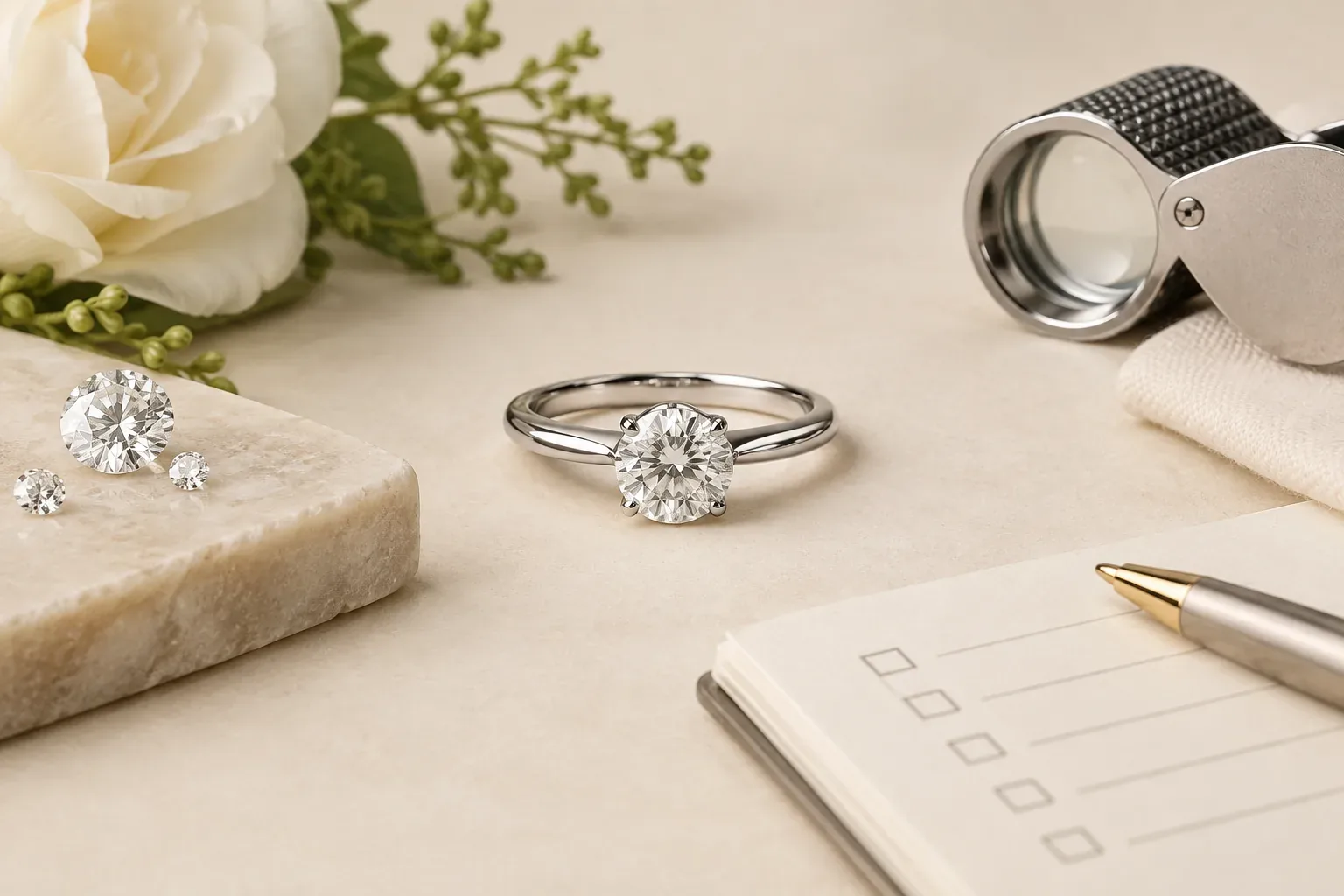
Meaning at a glance
A low-profile setting engagement ring checklist helps you evaluate comfort, wearability, stone security, band compatibility, gemstone durability and seller disclosures; ask clear questions about setting type, gemstone treatments and lab or seller documentation, and understand what you can verify yourself versus what requires a qualified jeweler or laboratory.
Direct answer — what to ask right away
If you need a short checklist to guide an immediate purchase decision, ask these five questions first: What exact setting type is this (bezel, flush, low prong, channel)? How does the setting affect stone security and daily comfort? Is the gemstone natural, lab-created or treated, and is that disclosed in writing? Will my wedding band fit flush with this profile? What are the return, resizing and maintenance terms? These questions map directly to the decision criteria in this article: definitions, trade-offs, safe care and what requires expert verification.
What ‘low-profile setting’ means (evidence-led definition)
A "low-profile setting" is a general design category rather than a single technical term. It describes engagement rings where the top of the setting sits close to the finger, minimizing the vertical height of the stone above the band. Common approaches that achieve a low profile include bezel settings, flush (gypsy) settings, low prongs, and channel-set accents. The practical design aim is comfort and reduced snagging; it also changes how light interacts with the stone compared with higher prong settings.
Historical evidence and cultural context
Among the approved sources consulted for this article, there is no primary historical record that ties the modern phrase "low-profile setting" to a particular ancient culture or historical period. Contemporary trade and consumer-research sources frame low-profile preferences as recent trends. Jewelers Mutual identifies demand in the 2020s for fluid, versatile forms and gender-neutral styling, which aligns with the functional goals of low-profile rings. Imaginaire Digital's 2026 analysis of search demand shows strong consumer interest in engagement rings and modern shapes, indicating that the present popularity of lower-profile designs is a 21st-century market trend rather than a revived, well-documented historical tradition.
Documented historical meanings versus modern personal interpretations
Because the phrase and design emphasis are primarily modern, there are no documented historical meanings recorded in the sources used here that assign symbolic significance specifically to "low-profile" settings. Any symbolism—such as practicality, understated elegance, or modern minimalism—is a contemporary personal interpretation rather than a historically documented meaning. Distinguish these modern interpretations from verified historic symbolism: the sources in this article provide contemporary market and consumer context, not archaeological or vintage-cultural attributions.
How the setting, gemstone, and motifs appear in jewelry
Low-profile techniques appear across metals, gemstones and motifs. Bezel settings encircle a stone’s girdle with metal for a continuous silhouette. Flush settings embed the stone into the band so its table is nearly level with the metal. Low prongs secure a stone with shortened claws to reduce height. Designers also apply low-profile approaches to halos, side stones and channel-set bands to maintain a smooth plane for stacking. The choice of gemstone affects the design: harder stones like diamonds and sapphires are more adaptable to low settings because they resist abrasion and chipping, whereas softer stones may be placed in protective bezels as a conservative approach.
Checklist: Questions to ask before buying
Ask the seller to name the precise setting style and show close photos or a video of the ring from multiple angles. Request a scale or size reference so you can judge the actual profile height. Ask whether the center stone and any accents are natural, lab-created or treated, and request written disclosure of treatments and origin; the Federal Trade Commission advises consumers to demand clear written distinctions among natural, lab-created, treated and imitation materials. Ask whether the ring comes with any certificates or grading reports and who issued them; for diamonds, independent gemological reports add verifiable data. Confirm the band width and whether a wedding band will sit flush against the engagement ring. Request details on resizing limits, return and warranty policies, and any recommended maintenance intervals. Finally, ask if the setting style affects stone security under daily wear and what the recommended care routine is for that setting and gemstone.
Practical trade-offs to weigh
Comfort and low snag risk are the main benefits of low-profile rings, but there are trade-offs. Lower settings usually reduce the visible depth of a stone, which can change perceived brilliance because less light may enter and reflect out compared to taller prong settings. Bezels and flush settings offer superior protection but can make the stone appear smaller. Low prongs preserve more light return but can be less protective than a bezel. Certain design choices restrict future resizing or stone replacement, so ask about long-term serviceability. Jewelers Mutual's trend analysis highlights that shoppers increasingly prioritize versatility and craftsmanship, so compare finish quality and construction rather than only surface appearance.
Care, maintenance and durability guidance
Care needs depend on both setting and gemstone. Bezel and flush settings offer strong protection against knocks and reduce the chance of catching, so they are often recommended for active wearers. However, tight bezels can trap dirt and require more thorough cleaning. Use manufacturer- or seller-recommended cleaning methods; many rings tolerate mild soap, warm water and a soft brush, but some stones and treatments need gentler handling. The Gemological Institute of America provides guidance on treatments and durability: treated or enhanced stones may need special care and can affect long-term stability. Always follow written care recommendations and schedule professional inspections to check prongs, bezels and settings for wear.
What you can verify yourself and what requires a qualified jeweler or lab
You can visually inspect and measure profile height, band width and overall finish. You can confirm written seller disclosures about whether a stone is natural, lab-created or treated, and you can request to see any certificates or grading reports. You can also test basic comfort by wearing a sample or a ring of similar profile. However, you generally cannot verify gemstone treatments, origin, clarity grading, or whether a stone is natural versus lab-grown without expert tools. The Federal Trade Commission advises insisting on written disclosure, and the Gemological Institute of America explains that detecting many treatments and origins requires laboratory analysis. For definitive verification of treatments, origin or precise grading, you need a qualified jeweler or a gemological laboratory report.
Selection and respectful gifting guidance
Match the ring profile to the recipient’s lifestyle. If they work with their hands, prefer a secure low-profile bezel or flush setting. If they value maximum sparkle and are careful with jewelry, consider low-prong styles that allow more light in. Ask about correct ring size at the time of gifting and the seller’s resizing policy. Gift with clear documentation: include any grading reports, written disclosures about treatments or origin, and the warranty. When choosing a gemstone, be respectful of personal and cultural preferences—documented historical symbolism is not associated with low-profile forms in the consulted sources, so avoid presuming a universal symbolic meaning. Finally, discuss long-term maintenance expectations honestly so the recipient knows what inspections and cleaning frequency are recommended.
Final summary
A low-profile setting engagement ring checklist focuses on setting type, stone security, gemstone durability, seller disclosures, band compatibility and care. Ask for precise setting names, written disclosures about treatments and origin, grading documents if applicable, and clear return and maintenance policies. Use the checklist to weigh comfort and lifestyle benefits against optical trade-offs and serviceability, and remember that some verifications—like treatment detection or origin—require a qualified jeweler or gemological laboratory.
Frequently asked questions
Is a low-profile setting more durable than a high-prong setting?
Low-profile styles like bezels and flush settings generally offer greater protection against knocks and catching because the stone sits closer to the band and is more enclosed. However, durability depends on construction quality and the gemstone: some stones require extra care regardless of setting. For questions about treatments or a stone’s suitability for a particular setting, consult the seller’s written disclosures and consider a professional inspection.
Can I verify that a stone is untreated or natural without a lab report?
You can request written disclosure and any grading or certification documents, but many treatments and the origin of a stone (natural versus lab-grown) cannot be conclusively determined without laboratory analysis. The Federal Trade Commission recommends insisting on clear written distinctions, and the Gemological Institute of America notes that detecting certain treatments requires specialized testing.
Will a wedding band sit flush with a low-profile engagement ring?
Some low-profile engagement rings are designed for flush pairing, but not all. Ask the seller for band width and a photo of the two rings together, or request a sample pairing in-store. Confirm resizing limits and whether the engagement ring’s profile allows a comfortable and continuous fit.
Do low-profile settings make the stone look smaller?
Yes, settings that surround or sit close to the stone—such as bezels and flush mounts—can visually reduce perceived size because less of the stone’s girdle and pavilion are exposed. Low prong designs can offer a compromise by keeping the stone lower while preserving more visible facets for sparkle.
How should I clean a low-profile ring?
For many settings, warm water, mild dish soap and a soft brush are safe for routine cleaning, but care depends on the gemstone and any treatments. Tight bezels and flush settings can trap dirt and may need more frequent professional cleaning. Follow written care instructions from the seller and consult a professional if unsure; the Gemological Institute of America provides additional guidance on treatment-related care.
Sources and further reading
- Imaginaire Digital — Imaginaire Digital
- Jewelers Mutual — Jewelers Mutual
- Gemological Institute of America — Gemological Institute of America
- Federal Trade Commission — Federal Trade Commission