Meaning at a glance
Bezel settings generally increase day-to-day durability and reduce snag risk compared with prongs, but they change how a gemstone looks, complicate some repairs and resizing, and require professional verification for treatments and origin.
Quick answer
A bezel setting engagement ring is typically more durable for daily wear and far less likely to snag than a prong-set ring because a continuous metal rim protects the stone’s girdle and edges. That protection comes with trade-offs: bezels can reduce visible light return compared with open prong designs, make some repairs and resizing more complex, and hide chips or internal features that a qualified jeweler or laboratory should inspect. Use the bezel when you want low snagging and secure holding; expect to ask for professional checks on tightness, treatments and origin.
Historical evidence and where bezel settings appear in the record
Bezel-style mountings are one of the older mounting approaches in the history of jewelry. Trade and museum literature record bezel-like metal rims used to hold stones in place in multiple periods and regions. Specialist catalogues and archaeological reports trace continuous use from antiquity through medieval and early modern jewellery traditions; these examples are widely discussed in jewellery history overviews and museum explanations.
Those historical uses are distinct from modern bezel mills and machine-made bands. Contemporary bezel execution (thin, precise rims, micro-bezels, and low-profile flush bezels) benefits from modern tools, alloys and production methods, even when the overall idea—the metal surrounding a stone—has ancient antecedents. For current market context and demand for bezel and low-profile options among engagement buyers, see recent trade trend reporting from industry sources such as Jewelers Mutual and Imaginaire Digital.
Documented historical meanings versus modern personal interpretation
Documented historical meanings attached to bezel-mounted jewels are usually contextual and pragmatic rather than universal symbols. Museums and conservation reports often describe bezel work in period objects in terms of technology, status, or available materials rather than as carrying a single, consistent symbolic message. When historians discuss symbolism, they typically rely on contemporary texts, find contexts, and iconography rather than the bezel itself being an across-the-board symbol.
Modern buyers and givers sometimes attach personal meanings to a bezel engagement ring—protection, minimalism, practicality, or a preference for a low profile that fits active lifestyles. Those personal interpretations are valid for the giver and wearer, but they are modern meanings layered on top of a long technical lineage. Separate the two: documented historical notes belong to specialist scholarship and object records; contemporary symbolic value is personal and market-driven.
How bezel settings and gemstones appear in jewelry
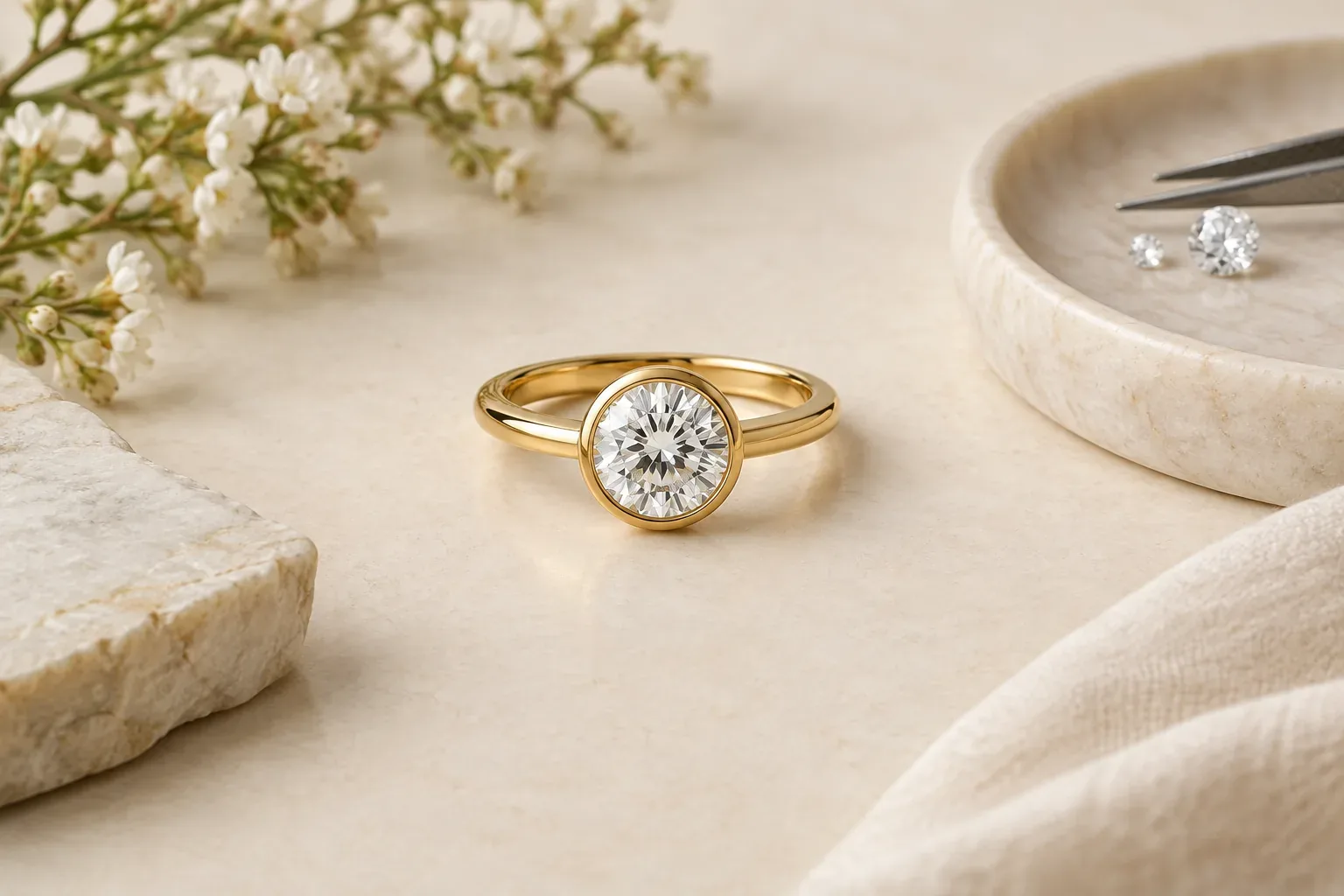
A bezel setting uses a continuous (full) or partial metal rim to embrace the stone. Full bezels fully encircle the girdle and can be raised above the table or set level with the metal; partial or half-bezels cover only part of the stone’s circumference and leave open areas to reveal more of the gemstone. There are also flush (set within the band), low-profile, and micro-bezel variants used for small accent stones.
Visually, a bezel hides the stone’s girdle and can make the gem appear slightly smaller or darker because it masks some of the side facets that contribute to sparkle. For diamonds and faceted gems this can mean lower apparent light return than an open prong mount; for cabochons and opaque stones a bezel can enhance contrast and silhouette. Contemporary market data shows a steady demand for low-profile and protective designs that align with bezel choices, reflecting preferences for modern stacking, versatility and wearability reported by Jewelers Mutual and Imaginaire Digital.
Durability in daily wear: what a bezel protects and what it doesn’t
A well-made bezel is excellent at protecting a stone’s edges, girdle and points from knocks. Because the metal surrounds the perimeter, there are fewer exposed prongs to bend or catch; that means significantly lower snag risk on fabrics, hair or gloves compared with prong settings. Bezels are commonly recommended for active lifestyles or for people who work with their hands because the risk of a sudden prong failure is reduced.
However, bezels are not invulnerable. A very hard impact can still crack or chip the stone (especially for brittle gems like opal or emerald). A thin or poorly formed bezel can deform under force, allowing movement or looseness over time. Also, because bezels cover more of the stone, surface chips at the table or internal issues may be harder to spot during casual inspection, making periodic professional checks important.
Repair risk, resizing and long-term maintenance
Bezels can complicate some repairs. A jeweler resizing a ring with a continuous bezel must work carefully to preserve the bezel’s shape and the stone’s seating. Removing and re-setting a bezel-held stone requires skill, especially for delicate or heat-sensitive gems. In some instances a jeweler will remove the stone, alter the shank, then re-fabricate the bezel; that adds time and labor compared with lifting and re-tipping prongs.
Because bezels protect the stone, they often postpone the need for urgent repair, but when repair is required the work can be more involved. For stones that have had treatments or enhancements, professional handling is essential—consult the Gemological Institute of America guidance on treatments and special care and ask for written disclosure. The Federal Trade Commission also advises buyers to seek clear disclosures about material origin and treatments from sellers.
What you can and cannot verify without a qualified jeweler or lab
You can verify a few practical things at home: whether the bezel feels secure, whether the stone is visibly loose, and whether there are obvious chips or discoloration. You can also assess comfort, snagging (by wearing the ring during routine activities for a short trial), and how the ring stacks with other bands.
You cannot reliably determine gemstone origin (natural versus lab-grown), certain treatments, or internal damage that is not visible without magnification. For those questions, only a qualified jeweler with appropriate tools or a gemological laboratory can provide authoritative testing. The FTC recommends obtaining written disclosures from sellers, and the GIA notes that treatments and detectability affect durability and care needs—so ask for documentation and laboratory reports when provenance or treatment status matters to you.
Practical selection and gifting guidance
If the recipient leads an active life, works with their hands, or prefers low-maintenance jewelry, a bezel setting is a strong functional choice because it reduces snagging and offers daily protection. Choose a full bezel for maximum protection; consider a partial or low-profile bezel if you want more visible stone surface and more light return.
When buying or gifting, ask the seller for specific written disclosures about whether the stone is natural, lab-grown or treated, and whether a lab report accompanies the gem; the Federal Trade Commission recommends clear labeling. Also ask the jeweler how the bezel is constructed (one-piece, soldered to the shank, or reeded) and request to see the ring under magnification so you can confirm the bezel seat is even and the stone sits squarely. If future resizing is likely, discuss expected costs and process with the jeweler in advance.
Care tips to minimize repair risk and keep a bezel ring safe
Clean a bezel ring gently with warm water, mild soap and a soft brush; avoid ultrasonic cleaners for stones known to be treated or fragile unless a professional confirms they are safe for that stone. Periodically inspect the bezel rim for deformation and have a jeweler check seat tightness annually or if you notice any movement.
Avoid repeated hard knocks and remove the ring during manual tasks that could bend metal. If a bezel becomes dented or the stone feels loose, stop wearing the ring and take it to an experienced jeweler promptly; catching issues early reduces the chance of losing the stone or needing major re-fabrication.
Decision checklist for shoppers
Decide if low snagging and edge protection are more important to you than maximum visible brilliance. Ask for written disclosures about gemstone treatments and origin because treatments affect repair and care needs, as described by the GIA and recommended by the FTC. Confirm the maker’s or jeweler’s approach to resizing and future service, and prefer a jeweler who documents work and provides a clear care and service plan.
If you need independent verification, request a gemological laboratory report for significant stones and confirm the seller’s return and repair policies. Industry reporting shows demand for protective and versatile ring designs, so reputable sellers often provide the information buyers require; check trends and seller reputation as part of your purchase decision.
Closing: balancing protection and trade-offs
A bezel-setting engagement ring is a strong choice for durability and low snag risk, particularly for those who value everyday wearability. The trade-offs—less visible light from faceted stones, potentially more complex repairs and the need for professional verification of treatments—are manageable if you buy from a transparent seller and plan for periodic professional checks.
Use the bezel when protection and a streamlined look are priorities, and insist on written disclosures and appropriate gemological documentation when it matters to you. For broader buying guidance and to connect meanings to gift choices, see our related guides on Jewelry Guides and How to Choose Meaningful Jewelry: A Practical Gift Guide.
Frequently asked questions
Are bezel settings less likely to snag than prongs?
Yes. Because a bezel surrounds the stone with metal, it presents fewer exposed points to catch on fabric or hair; this typically results in lower snag risk than prong settings.
Can a bezel setting be resized easily?
Resizing a ring with a continuous bezel is possible but usually more complex than resizing a plain shank or prong-set ring. A jeweler often needs to remove and later re-seat the stone to preserve the bezel’s shape.
Will a bezel setting protect a fragile stone like opal or emerald?
A bezel offers better edge protection but cannot prevent all damage. Brittle or cleavable gems remain vulnerable to heavy impacts or sudden shocks, and some treated stones require specialized care—consult a qualified jeweler or gemological lab for specifics.
How do I verify if the stone in a bezel ring is natural or treated?
You cannot reliably verify origin or many treatments at home. Ask the seller for written disclosure and a gemological laboratory report for significant stones; the FTC recommends clear labeling and the GIA explains that treatments affect durability and care.
Is a bezel setting a good choice for an engagement ring gift?
Yes, if the recipient values durability, low snagging and a streamlined look. Balance those priorities against the appearance trade-offs and confirm seller disclosures, resizing policies and available documentation before purchasing.
Sources and further reading
- Imaginaire Digital — Imaginaire Digital
- Jewelers Mutual — Jewelers Mutual
- Gemological Institute of America — Gemological Institute of America
- Federal Trade Commission — Federal Trade Commission