Meaning at a glance
A kite cut's durability depends mainly on the stone's material, how the kite's acute points are set and protected, and the owner's daily activities; protective settings, written disclosures and a gemological report are the only reliable ways to reduce repair and snag risk without specialist inspection.
What the historical record shows (and what it does not)
Within the evidence approved for this article there is no primary historical documentation that ties the ‘kite cut’ as a named faceting tradition to any specific ancient culture or period. The approved sources used for this piece focus on modern consumer behaviour, gem treatment disclosure, and industry trends rather than antique cutting lineages.
Modern market reports and industry commentary make clear that demand in the 2020s favors distinctive, modern shapes and fluid forms. Imaginaire Digital’s 2026 UK search analysis shows strong consumer interest in a broad range of engagement styles, and Jewelers Mutual’s 2026 trends overview highlights contemporary appetite for fluid forms, modern stacking and craftsmanship. These contemporary sources indicate that kite-shaped faceting is primarily a modern design choice rather than a historically documented ritual cut in the sources we can cite here.
Documented historical meanings vs. modern personal interpretation
Because the approved evidence does not supply historical meanings assigned to a kite shape by specific cultures, any ‘traditional’ symbolism for a kite cut must be treated as modern or personal interpretation. Sellers and wearers today commonly assign meanings—such as individuality, dynamic motion, or a stylized arrowhead—but those are contemporary attributions rather than documented cultural symbols in the sources available for this article.
If you want historically grounded symbolism for a motif or shape, do not assume it is universal. Treat any meaning you are given by a retailer as a modern narrative unless they can point to documented historical sources. For guidance on researching meanings of jewelry symbols, see our related articles on Jewelry Symbols for New Beginnings and How to Research the Meaning of a Jewelry Symbol.
How the kite motif and kite‑cut gemstones appear in jewelry
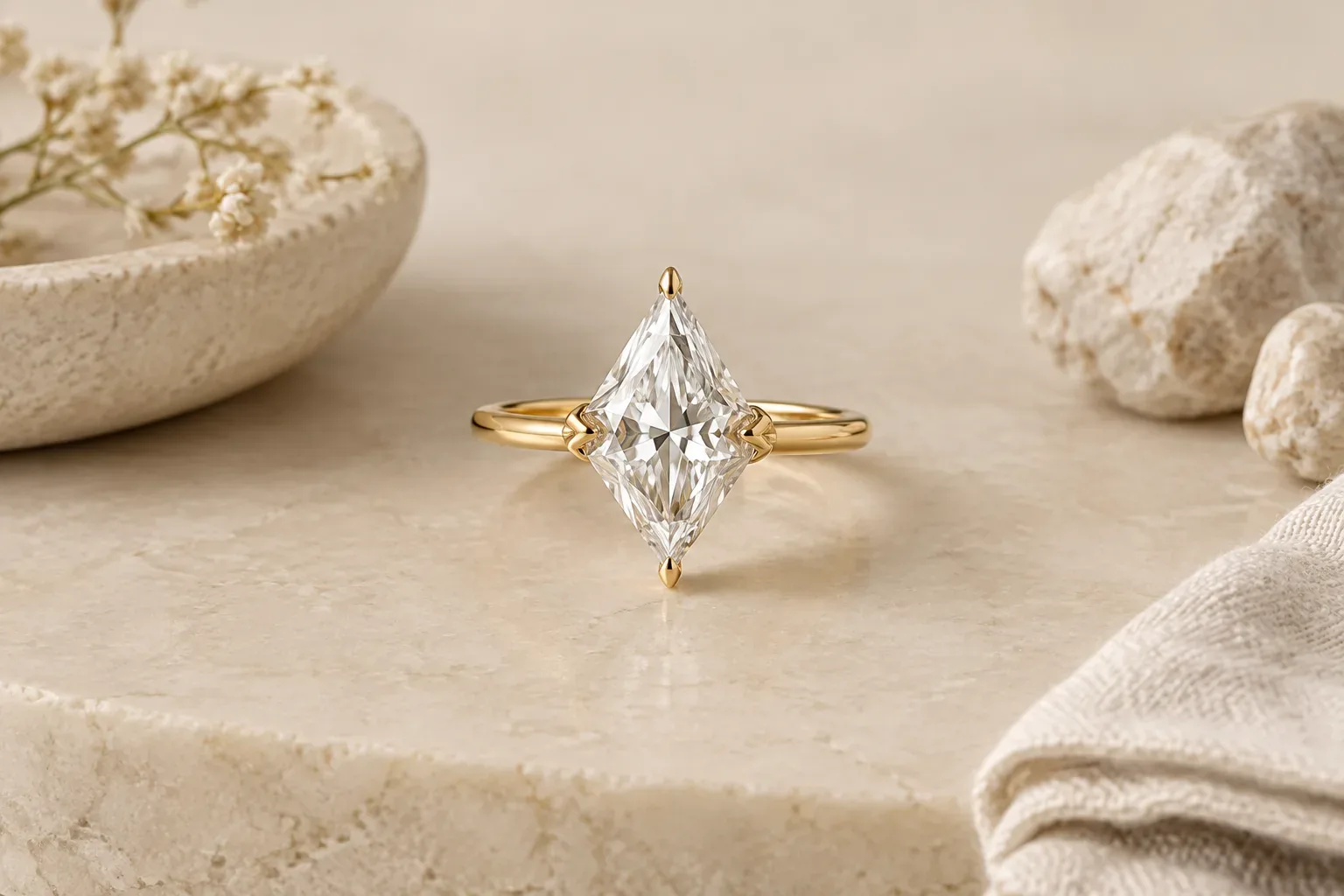
In contemporary jewelry design the kite cut is an angular, elongated outline with two acute points and a broader midsection. Designers use that silhouette set as a single centre stone, as part of a trio or cluster, or as an accent stone in halos and side‑stone arrangements. The shape's sharp points give visual drama but also create literal points of mechanical vulnerability unless the setting protects them.
Instrumentation of the stone—whether it is a diamond, sapphire, or other gem—matters more than the name ‘kite’. Treatments such as filling, coating, or fracture‑filling can change how the stone responds to heat, solvents or knocks, which is why the Gemological Institute of America emphasizes that treatments, detectability and care are important consumer concerns. The Federal Trade Commission requires clear seller disclosure about natural versus lab‑created materials and treatments, so a seller's paperwork will tell you what you need to plan for in care and durability.
Daily wear risks: snagging, points and prong wear
The two main daily‑wear risks for a kite‑cut stone are snagging and chipping at the acute points. Acute points catch fabric and fibrous materials more easily than rounded shapes, and repeated catching can loosen prongs or cause micro‑fractures at the stone's tip. Prong wear is a routine mechanical issue: metal prongs can thin or bend with time, increasing the chance the stone will move and be damaged.
How quickly these problems occur depends on the stone's inherent toughness and the quality of the setting. Hard, tough materials like diamond and sapphire generally resist surface scratches and chips better than softer gems, but even hard stones can chip at thin, acute points if struck. Because everyday activities vary, Jewelers Mutual’s trend and consumer guidance suggest choosing designs and settings aligned with the wearer’s lifestyle to reduce repair frequency.
Repair risk and what repairs typically involve
Repairs for kite‑cut engagement rings commonly involve re‑tipping or rebuilding prongs, resetting the stone, polishing and occasionally replacing a damaged accent stone. Soldering or reshaping a setting near a stone carries some risk to treated or fragile gems; the Gemological Institute of America notes that treatments and special care requirements should factor into repair decisions. A skilled jeweller can usually stabilize a loose kite‑cut stone, but the successful outcome depends on the stone’s condition and the availability of matching materials.
Because repair work sometimes involves heat or mechanical pressure, a laboratory or qualified jeweller is the only reliable way to establish whether a stone has internal fractures, fills or treatments that raise the risk of further damage during repair. Without a professional inspection and disclosure paperwork you cannot definitively know the repair risk.
Practical selection and gifting guidance
If you are choosing or gifting a kite‑cut engagement ring for daily wear, prioritise three verification steps before purchase. First, ask for written disclosure about whether the gem is natural, lab‑created or treated; the Federal Trade Commission requires clear distinctions among those categories. Second, request a gemological report from a recognized laboratory when the stone is expensive or when its material or treatments materially affect durability; the Gemological Institute of America explains how reports help with treatment and durability questions. Third, have a qualified jeweller show how the points are protected and describe routine care and inspection intervals.
Choose protective settings when daily durability is important. A thin bezel that wraps the points or a secure V‑prong at the kite tips reduces snagging and point damage. Opt for stronger mounting metals and wider shanks if the wearer uses their hands a lot. If the intended wearer has a very active or manual lifestyle, consider an alternative shape with fewer acute points or select a harder gem material. Finally, arrange insurance and regular professional inspections. Jewelers Mutual and other specialist insurers can advise on coverage and recommended maintenance schedules.
Care, safe handling and inspection schedule
For daily care, remove the ring during heavy manual work, gardening, or when using household chemicals. Even when a kite‑cut stone is set protectively, chemicals or abrasive cleaners can weaken prongs over time or interact with certain treatments, so follow the seller’s cleaning recommendations and be cautious about ultrasonic cleaners if the stone has unknown treatments.
Have the setting and prongs checked by a qualified jeweller at least once a year or more frequently if you notice catches, bends, or a change in how the stone sits. Keep a record of seller disclosures and any gem reports; those documents are essential for repair decisions and insurance claims.
What you cannot verify without a jeweller or laboratory
You cannot reliably determine a gemstone’s internal condition, treatments, or exact identity by eye alone. The Gemological Institute of America explains that treatments can affect detectability, durability and care requirements, and that laboratory testing is often necessary to identify them. Similarly, determining whether a stone is prone to cleavage or internal fracture that raises repair risk requires specialist inspection.
Sellers should provide clear written disclosures as required by the Federal Trade Commission, but to know how those disclosures translate to real‑world durability you still need a qualified jeweller or a lab report. Ask the seller for documentation and allow a jeweller to perform a pre‑purchase inspection when you plan for everyday wear.
Making an informed decision: trade‑offs and final considerations
The kite cut offers distinctive aesthetics and can be robust if paired with the right gem material and a protective setting. The trade‑offs are straightforward: you can preserve the dramatic points with a protective setting and conservative care at the cost of a slightly less exposed look, or you can prioritise maximum visual drama with pronged, open settings that increase snag and repair risk. Current market guidance from Imaginaire Digital and Jewelers Mutual highlights that consumers are actively balancing design, versatility and durability when choosing engagement rings today.
When in doubt, ask for written disclosures, a lab report when appropriate, a clear explanation of the proposed setting's protective features, and a professional inspection. That combination gives the realistic, evidence‑based reassurance you need to match a kite‑cut engagement ring to a lifestyle and to accept the practical trade‑offs involved.
Frequently asked questions
Is a kite cut more likely to chip than a round cut?
A kite cut can be more susceptible to chipping at its acute points than a rounded shape because the points can catch and take concentrated impact. Whether that susceptibility is meaningful depends on the specific gemstone, its toughness and the protection offered by the setting. You should request seller disclosures and a jeweller’s inspection to understand real repair risk.
What settings best protect a kite‑cut engagement stone?
Settings that offer metal protection at the kite’s tips—such as a partial or full bezel or secure V‑prongs—reduce snagging and point damage. Wider shanks and lower‑profile mounts also lower the chance of knocks. Ask the jeweller to show how the points are protected before you buy.
How often should a kite‑cut ring be inspected?
Have a qualified jeweller check prongs and the stone’s seating at least once a year, and sooner if you notice catching, movement, or a change in how the stone sits. Active wearers may want inspections every six months.
Can a jeweller repair a chipped kite point?
Minor chips and loose prongs are commonly repairable by a skilled jeweller through re‑tipping, resetting or polishing. Significant damage to a treated or internally fractured stone may limit repair options, which is why a professional assessment and the stone’s documentation are important.
What documentation should I ask for when buying a kite‑cut engagement ring?
Request written disclosures about whether the stone is natural, lab‑created or treated (FTC guidance). For higher‑value stones, ask for a gemological report from a recognized laboratory to clarify treatments and durability considerations (see GIA). Keep the paperwork for insurance and future repair work.
Sources and further reading
- Imaginaire Digital — Imaginaire Digital
- Jewelers Mutual — Jewelers Mutual
- Gemological Institute of America — Gemological Institute of America
- Federal Trade Commission — Federal Trade Commission