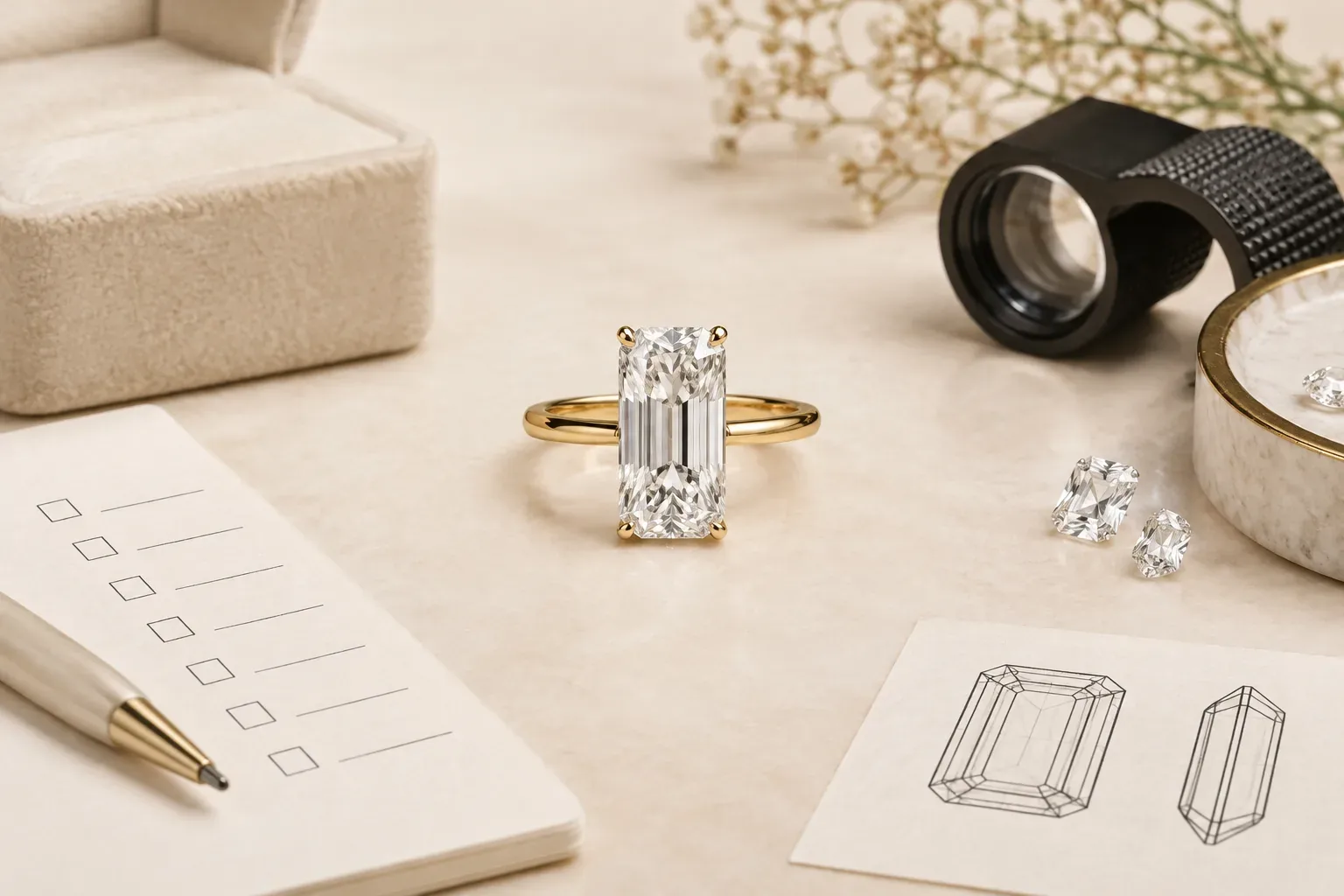
Meaning at a glance
Before buying a portrait cut engagement ring, ask about the cut's exact dimensions and proportions, the gemstone's identity and treatments, written disclosures and lab reports, setting compatibility and durability, return and warranty terms, and what only a qualified jeweler or gem lab can verify.
Quick direct answer
Ask about exact dimensions and proportions, gemstone identity and any treatments, written disclosures and lab reports, setting and sizing details, durability and care needs, warranty and return policies, and what requires a qualified jeweler or gemological laboratory to confirm.
What people mean by 'portrait cut' and why clarity matters
The phrase portrait cut is used in the trade to describe an elongated or face-forward orientation of a faceted stone meant to emphasize length or a likeness-like appearance, but it is not a formally standardized cut name like 'round brilliant' or 'princess.' Because terminology varies among designers and sellers, your first question should be: exactly what shape, length-to-width ratio and facet style are being described as a portrait cut in this listing?
Historical evidence (what is documented and what is not)
There is little documented historical scholarship in the standard industry sources supplied here that traces a distinct, long-standing cultural history or symbolic meaning specifically tied to a named 'portrait cut' as a historic cut type. The available professional and market sources focus on modern demand, craftsmanship and materials rather than an older cultural lineage for that exact cut term.
When a cut name is not standardized, it is safest to treat historical claims about meaning or origin as seller narrative or modern marketing rather than established cultural history. For today’s demand patterns and stylistic trends, industry reporting such as imaginaire’s search analysis and Jewelers Mutual’s 2026 trends provide current context about what shoppers are looking for, but they do not supply ancient or traditional cultural meanings attached to this particular term.
Documented meanings versus modern personal interpretation
Because no authoritative source provided here documents a historic symbolic meaning for a 'portrait cut' specifically, any symbolic claims you encounter in product copy are modern interpretations or stylistic talk rather than verifiable historical fact. Separate the seller’s storytelling from what can be corroborated: treat narratives about personal meaning, likeness, portrait-like sentiment or vintage revival as contemporary, subjective framing that may be perfectly meaningful to the giver or recipient but not universally or historically established.
If symbolism matters to you, decide whether you value a documented cultural tradition or the private meaning you and your partner will place on the ring. Both are valid, but they are different kinds of meaning: documented cultural symbolism requires citation; personal symbolism is created by the gift-giver and wearer.
How the motif, gemstone and traditions appear in jewelry today
In contemporary jewelry, labels such as portrait cut most often indicate a visual motif—an elongated silhouette, a vertical emphasis or a stone cut and set to read like a small portrait when viewed from the top. Designers may pair that motif with colored gemstones, halo settings, or custom engravings to reinforce the portrait idea.
Market analysis and trend reporting indicate interest in shaped stones, colored gems and versatile styling. Jewelers Mutual’s 2026 trends note demand for fluid forms, colored gemstones and modern versatility, which aligns with sellers offering more varied cuts and personalized settings. Imaginaire’s 2026 search estimates likewise show strong consumer interest across many engagement-ring styles, underscoring that portrait-oriented cuts are part of a broader appetite for diverse shapes rather than a single dominant tradition.
Portrait cut engagement ring checklist: essential questions to ask the seller
What exactly do you mean by 'portrait cut'? Ask for the stone’s full description including actual shape name, length-to-width ratio in millimetres, facet style, and clear photographs from multiple angles so you can compare what the seller calls a portrait cut to the piece you will receive.
Checklist: gemstone identity, treatments and certification
What is the gemstone species and variety (for example, diamond, sapphire, emerald, etc.)? Request a written statement. The Federal Trade Commission requires clear distinctions among natural, lab-created, treated, cultured and imitation materials, so insist on that disclosure in writing.
Checklist: treatments and detectability
Has the stone undergone any treatments (heat, fracture filling, irradiation, clarity enhancement, coating)? The Gemological Institute of America explains that treatments, disclosure, detectability and durability create distinct consumer questions for gemstones, so ask what tests or lab reports accompany the stone and whether any treatments may affect durability or future cleaning options.
Checklist: lab reports and what labs tell you
Is there a gemological laboratory report or certificate for the stone? Ask which laboratory issued it and request a copy. A lab report can confirm identity and note many treatments; however, some provenance claims and subtle enhancements may require specialized analysis. Expect a reputable seller to provide or reference independent testing when a certificate is claimed.
Checklist: setting, metal, sizing and practical wear
How is the stone set? Ask about prong count, bezel presence, flush settings or other security features and whether the design suits the wearer’s daily activities. Also ask the metal type, any plating, ring size, options for resizing and how resizing might affect the stone’s orientation or the portrait effect.
Checklist: warranty, returns, insurance and aftercare
What are the return policies, warranty terms and recommended insurance options? Confirm whether routine repairs like prong tightening are covered, whether the seller offers a buy-back or upgrade program, and what aftercare the seller advises.
Practical trade-offs to weigh
A longer, portrait-oriented stone can appear larger face-up than a squatter shape of the same carat weight, but elongated stones may show inclusions differently and can be more vulnerable at narrow points if not well-set. Choosing a halo or bezel can protect corners and tips but will change the visual silhouette and potentially conceal more of the stone’s surface.
Limits on what you can verify without a pro or lab
You can verify dimensions, weight (carat), visible inclusions and overall finish with good photos, videos, and independent inspection by a local jeweler. However, detection of many treatments, origin claims or subtle enhancement processes often requires gemological instruments and laboratory testing. The GIA guidance on treatments and FTC consumer guidance together make clear that some material attributes and provenance details are beyond unaided consumer verification and demand written disclosure or lab confirmation.
Safe care and handling guidance
Ask the seller for specific care instructions for the gemstone used in the portrait cut. As a general rule, avoid harsh household chemicals, store jewelry separately to prevent scratches, check settings periodically for loose prongs and follow any laboratory or seller recommendations about ultrasonic or steam cleaning especially if a stone has been treated or is porous.
Gifting considerations and respectful selection advice
Match the ring’s durability and setting to the wearer’s lifestyle—active hands-on occupations or hobbies benefit from protective settings such as bezels or lower profiles. If the proposal is a surprise, verify exchange/resize policies and consider temporary sizing options. Personalize with a private meaning or inscription rather than relying on purported historical symbolism for a cut that has no documented cultural meaning in the provided sources.
Final practical steps before you buy
Request written disclosures about identity, treatments and any lab reports; ask for clear photographs and exact measurements; verify return and warranty terms; confirm aftercare and whether the seller will provide servicing; and be prepared to obtain an independent appraisal or lab report if provenance, treatment-free status or origin is essential to your purchase.
Frequently asked questions
What exactly is a portrait cut?
The term portrait cut generally refers to a stone cut and set to emphasize a vertical or likeness-like appearance, but it is not a formally standardized cut name. Ask the seller for exact shape terminology, length-to-width ratio and photos to understand what they mean by the term.
Can I verify treatments and origin at home?
You can check dimensions, weight and visible condition at home or with a local jeweler, but detection of many treatments and confirmation of origin usually requires gemological instruments and laboratory analysis. Request written disclosures and any lab reports from the seller.
What should I ask about durability and care?
Ask the seller for specific care instructions for the stone and any treatments. Confirm whether ultrasonic or steam cleaning is recommended or discouraged and whether protective settings are advisable for everyday wear.
Is a lab certificate necessary?
A certificate from a reputable gemological laboratory is highly useful, especially if treatment status, identity or provenance matters to you. A report can verify many attributes, though some claims may require further specialized testing.
How do I handle sizing or surprises?
If the proposal is a surprise, confirm return and resizing policies in writing and consider temporary sizing or an easy-exchange option. Ensure the seller documents exchange windows and any fee structure beforehand.
Sources and further reading
- Imaginaire Digital — Imaginaire Digital
- Jewelers Mutual — Jewelers Mutual
- Gemological Institute of America — Gemological Institute of America
- Federal Trade Commission — Federal Trade Commission