Meaning at a glance
Portrait cut engagement ring styling is about matching the stone's vertical silhouette, visible top coverage, and setting choices to the wearer’s finger proportions while balancing durability, care needs, and what only a jeweler or lab can verify.
What people mean by a 'portrait cut' and why proportion matters
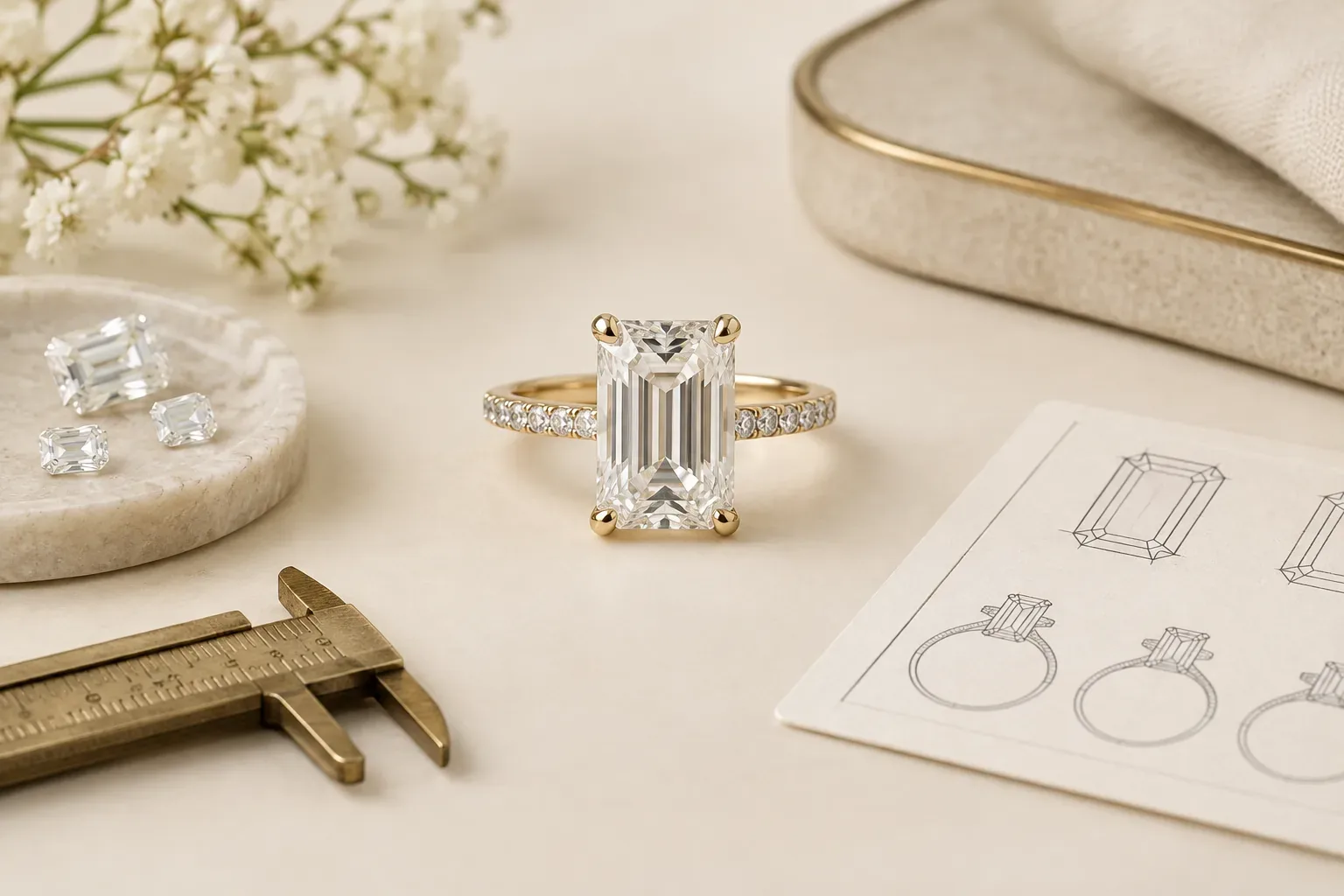
Shoppers searching for portrait cut engagement ring styling are usually describing an elongated central stone or shaped outline intended to read vertically on the finger so the gem appears like a small portrait. In modern styling terms this often means a longer length-to-width ratio and a setting that emphasizes the stone’s vertical axis rather than a circular top view.
Proportion matters because the same stone silhouette will read differently on a short, wide finger than on a long, narrow finger. Top-to-bottom coverage (how much of the finger from base of the nail to the knuckle the visible stone occupies), length-to-width ratio, and shank or shoulder width all interact to create either a balanced look that elongates or a dominant look that may overwhelm the hand.
Documented history and cultural context
There is no detailed, documentary historical record about a specifically named "portrait cut" appearing in a particular culture or period in the sources approved for this article. Modern search and retail trends, however, are documented by industry observers and insurers. Imaginaire Digital reports 2026 UK search data showing continued strong demand for engagement rings and specific interest in elongated shapes among other styles. Jewelers Mutual’s 2026 trend summary documents contemporary consumer demand for fluid forms, modern stacking, colored gemstones, craftsmanship, versatility and gender-neutral styling. These contemporary sources describe market behavior and preferences rather than an historical genealogy of a named cut.
Documented meanings versus modern personal interpretation
When it comes to symbolic meaning, the approved sources do not record a historical symbolic meaning unique to a portrait cut. Any symbolic interpretation—such as choosing a portrait-like shape to suggest permanence, focus, or personalization—is a modern personal interpretation rather than a documented traditional meaning.
Make a careful distinction in conversation and gifting: if you want the ring to carry symbolic weight, state whether the symbolism is personal (built between giver and wearer) or based on a documented tradition. The marketplace sources above describe what people currently want and search for, not long-standing symbolic attributions tied to particular cultures or eras.
How the portrait silhouette appears in jewelry
In practice, a portrait-style silhouette in an engagement ring appears as a central gemstone or diamond whose visible table and outline are elongated along the finger’s axis. Settings can emphasize that portrait effect by using tapered shoulders, elongated halos, baguette side stones aligned vertically, or bezel and prong arrangements that create a continuous vertical line.
Jewellery makers often adapt the motif to varied gemstones and metalwork: colored gems, step cuts, or elongated cushions and ovals are common ways to achieve a portrait direction. Modern styling trends documented by Jewelers Mutual show a preference for versatile forms and gender-neutral styling, which can make portrait silhouettes appealing across a wide audience.
Styling by finger coverage and proportion: practical rules
Decide whether you want elongation or presence. To create the illusion of a longer finger, choose a stone and setting that present a greater vertical span with modest width. If you want the ring to feel substantial, select greater top coverage where the visible length and width of the stone occupy more of the finger’s nail-to-knuckle area.
Match visible coverage to finger proportions. For shorter or broader fingers, a shorter length-to-width ratio with slimmer shoulders can avoid overwhelming the hand. For longer or narrower fingers, a more elongated stone will feel balanced and intentional. Consider the visible length of the stone relative to the nail bed—if more than about half the nail length is covered by the stone, the ring will read as noticeably elongated; less coverage reads more reserved.
Balance shank width with stone size. A narrow shank can make an elongated stone appear more dramatic, whereas a wider shank can ground a larger stone and provide more comfort. Wider shanks also distribute weight and can be more comfortable for daily wear, but they reduce the appearance of elongation.
Consider finger movement and knuckles. If the wearer has prominent knuckles, a very long stone may feel awkward when fingers bend; a lower-profile setting or slightly reduced length can increase comfort while maintaining the portrait effect.
Settings, trade-offs and visibility
Solitaire and low bezel settings keep the silhouette clear and are easier to clean, but thin prongs or high crowns increase the risk of snagging and damage. Halo settings magnify presence and can make a portrait stone read larger, but they add height and more edges to care for. Vertical side stones or tapered shoulders reinforce the portrait axis; broad side stones can reduce the perceived elongation.
Trade-offs include durability and maintenance. Thin prongs and high-set stones may require more frequent inspection and repair, while bezels protect edges better but can slightly reduce sparkle. Larger visible surface area also increases the rate at which dirt and oils affect appearance, so plan for periodic professional cleaning or careful at-home maintenance.
Gemstone choices, treatments and verification limits
Choose gemstones with an eye to durability and expected wear. The Gemological Institute of America explains that treatments, disclosure, detectability and durability vary by material, and these factors affect long-term performance and care needs. Harder stones like sapphires generally resist scratches better than softer gem varieties.
The Federal Trade Commission requires clear distinctions among natural, lab-created, treated, cultured and imitation materials, and it requires written seller disclosures. That means you should receive explicit documentation about whether a stone is natural or lab-grown and whether it has been treated. However, visual inspection alone cannot reliably establish treatment history, origin, or whether a stone is natural or lab-created. For those determinations, you need a qualified jeweler with proper instruments or a recognized gemological laboratory.
Care and durability in daily wear
Plan care according to stone hardness and treatments. The GIA’s guidance on gem treatment and durability indicates that treated stones may have different care needs and that some treatments can affect long-term stability. Avoid exposure to harsh chemicals, strong impacts and extreme temperature changes; regular gentle cleaning with mild soap, warm water and a soft brush is usually safe for most settings, but always check manufacturer or jeweler recommendations for specific materials.
Insurance and routine professional checks recommended by industry bodies like Jewelers Mutual can reduce risk. Regular inspections help identify loose settings or wear on prongs and shanks before a stone is lost.
Respectful selection and gifting guidance
When selecting or gifting a portrait cut engagement ring, put the wearer’s comfort and lifestyle first. Ask about daily activities, hand use, wardrobe and whether the wearer prefers low-profile or more dramatic jewelry. If you plan a surprise, discreetly confirm ring size and general preferences for metal color, stone color and how bold the wearer likes their rings to be.
Communicate what is known and what is personal meaning. If you wish the portrait silhouette to carry a particular symbolic message, explain whether that symbolism is a contemporary personal meaning you are assigning, rather than a documented historical meaning. Provide the recipient with the seller’s written disclosures and recommend a professional appraisal and a gemological report for material claims that matter to you both.
What you can and cannot verify without experts
You can verify visible characteristics yourself: approximate length and width, how much of the finger the stone covers, whether the setting is low or high, and how comfortable the ring feels on the hand. You can also check seller paperwork for basic disclosures about material type and stated treatments.
You cannot reliably verify treatment history, geographic origin, or whether a stone is natural or lab-grown by sight. The FTC and GIA both make clear that these questions require laboratory testing or evaluation by a qualified jeweler. If provenance or treatment status is important, insist on a recognized gem report or an independent laboratory analysis and get written documentation.
Final styling checklist
Start with the wearer’s proportions and lifestyle, then choose length-to-width ratio and setting style to achieve either elongation or presence. Balance shank width for comfort and proportion. Ask the seller for full disclosures and lab reports where origin and treatments matter, and plan for routine care and professional inspections. These practical steps unite style, safety and long-term satisfaction.
Frequently asked questions
What finger shapes suit portrait cut engagement rings?
Portrait silhouettes typically flatter long, narrow fingers by reinforcing vertical lines, but you can achieve a balanced look on shorter or broader fingers by reducing the stone’s visible length-to-width ratio and choosing slimmer shoulders.
How do I judge finger coverage before buying?
Try a sample mockup or use an in-store sizing tool to visualize how much of the nail-to-knuckle area the stone occupies; more than about half the nail length will read as visibly elongated, while less coverage appears more subtle.
Can I tell if a stone is treated or lab-grown by sight?
No. According to the Gemological Institute of America and the Federal Trade Commission, treatment history and whether a stone is natural or lab-grown require proper disclosure and, when necessary, laboratory testing.
Is a halo better for the portrait look than a solitaire?
A halo increases perceived size and magnifies presence, which can enhance a portrait effect, but it adds height and maintenance; a solitaire preserves a clear elongated silhouette and is often lower-profile and easier to clean.
What routine care does a portrait cut ring need?
Regular gentle cleaning with mild soap and warm water, avoidance of harsh chemicals and impacts, periodic professional inspection of prongs and settings, and consideration of insurance or appraisal documentation are recommended.
Sources and further reading
- Imaginaire Digital — Imaginaire Digital
- Jewelers Mutual — Jewelers Mutual
- Gemological Institute of America — Gemological Institute of America
- Federal Trade Commission — Federal Trade Commission