Meaning at a glance
Portrait cut wedding band pairing requires matching the vertical orientation and profile of the center stone with a band that complements its shape and setting while balancing comfort, durability, and disclosure requirements; buyers should rely on a qualified jeweler or lab for verification of treatments and precise fit.
What ‘portrait cut’ means here and why definitions matter
The term portrait cut is used in retail and custom design to signal a gem or setting that is oriented or proportioned to emphasize vertical, face-up presentation. This guide uses a practical, shopper-centered definition: a portrait-oriented center stone or setting whose longer axis runs along the finger, which affects how a wedding band meets the engagement ring and how gaps form between rings.
Because the phrase does not have a single, standardized, historic gemological definition in the approved evidence set, retailers and designers may use it differently. That variability is exactly why a buyer-focused approach—measuring profile, trying metal matches, and insisting on disclosure—matters more than relying on a label alone.
Historical evidence and cultural context (what the sources document)
The approved sources for this article do not document a historic cultural meaning specific to a ‘portrait cut’ shape in any named period or culture. Contemporary market data emphasize current demand patterns rather than historical symbolism. For example, 2026 UK search estimates highlight strong consumer interest in engagement rings and specific shapes such as ovals, which indicates current popularity but not a historic symbolic lineage (Imaginaire Digital).
Jewelry trade reporting for 2026 shows a modern demand for fluid forms, modern stacking, colored gemstones, craftsmanship and gender-neutral styling, which frames portrait-oriented designs as part of present-day aesthetic trends rather than as items with a traceable, universal cultural history (Jewelers Mutual).
Documented historical meanings vs modern personal interpretations
Documented historical meanings are not available from the approved sources for the specific term portrait cut. When shoppers ask about symbolic or cultural meanings, it is appropriate to separate two things: documented history (what contemporary research or archives show) and personal or cultural interpretation (what an individual or group attaches today). The sources used for this guide document market preferences and consumer-protection issues, not a historic symbolic canon for portrait-oriented cuts.
Modern personal interpretations are common and legitimate: people may choose a portrait-cut engagement ring for reasons such as an elongated silhouette that complements finger proportions, an association with vintage portrait-style miniature shapes, or an aesthetic preference for vertical emphasis. Those meanings arise from personal and cultural taste rather than a single documented tradition.
How the motif, gemstone, or tradition appears in jewelry
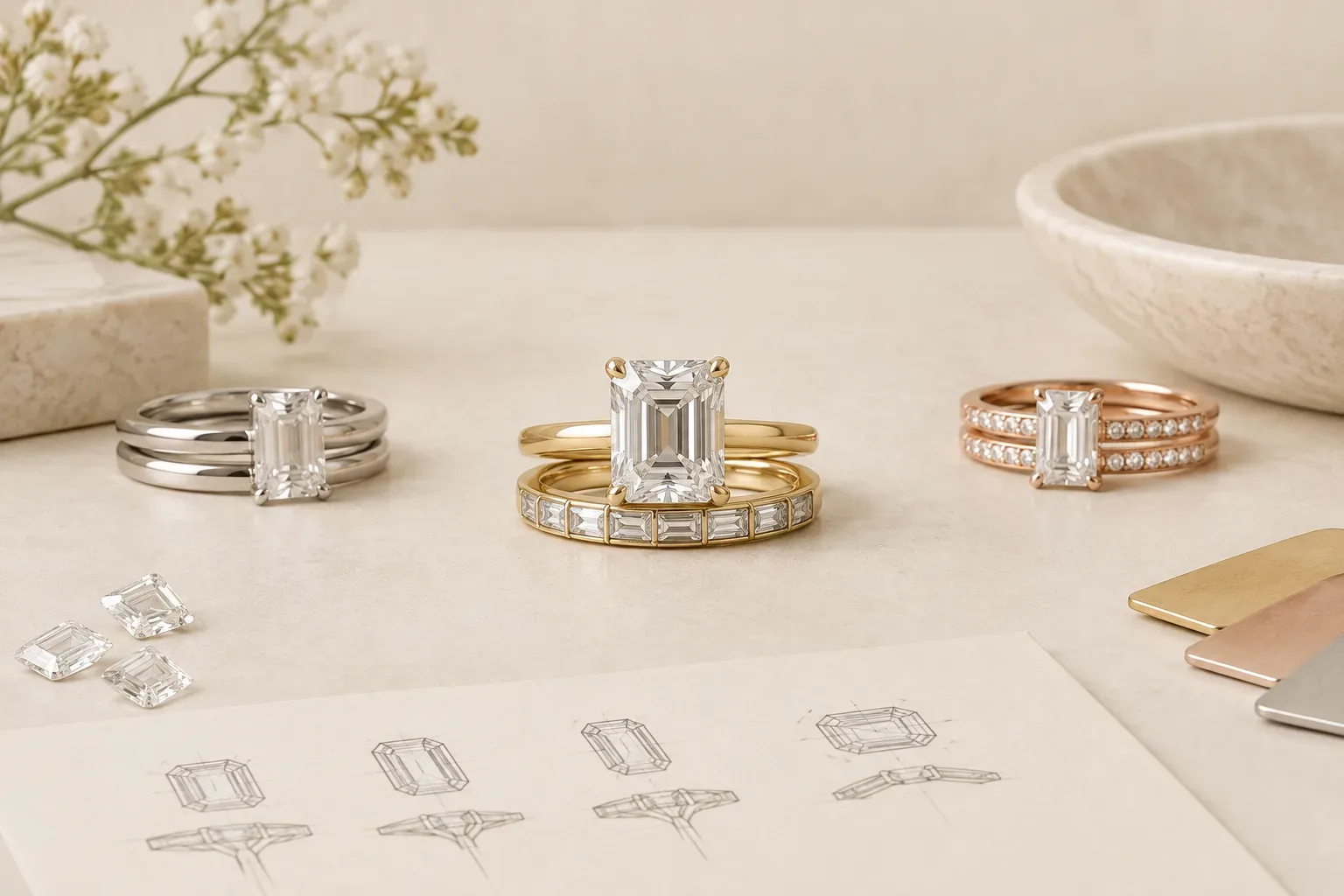
In practice, portrait-oriented designs show up as elongated stones (ovals, marquises, emerald cuts) or as settings that present a stone vertically to the viewer. The way the setting is raised, the bezel profile, and the gallery architecture all influence how a wedding band will meet the engagement ring. A high-profile prong setting creates a different gap and stack than a low bezel setting, and that mechanical difference matters more to pairing than the label ‘portrait cut.’
Designers use contour bands, chevrons, half-round bands, or tapered styles to accommodate vertical silhouettes. Metal continuity—matching metals (for example, platinum with platinum) or choosing a complementary contrast (yellow gold against rose gold)—is a visual decision; wear patterns and durability should also factor into metal choice.
Decision criteria: shape, gap, and metal trade-offs
Shape: Assess the engagement ring’s profile from the side as well as from the top. A long, narrow stone needs a band that either follows its curve (contour) or narrows to a point to nestle against the setting. Wider bands may hide slender stones, while narrow bands can be lost next to larger profiles. The choice depends on appearance, comfort, and how much of the engagement ring you want visible.
Gap: Gaps form because of differing ring profiles. A slight gap can be acceptable and can be minimized with a precision contoured or soldered-to-fit ring. A sealed or invisible fit requires custom contouring, which raises cost and limits future resizing options. If flexibility for future sizing is important, choose a standard-shaped band and accept a small gap or use a temporary spacer for daily wear.
Metal trade-offs: Harder metals like platinum resist wear and maintain shape for flush pairings, while gold alloys can be softer and show wear in high-contact pairings. Matching the engagement metal minimizes differential wear and color mismatch; however, mixed-metal stacks are a valid stylistic choice and increasingly popular in gender-neutral and stacking trends (Jewelers Mutual, Imaginaire Digital). Consider allergy or skin-sensitivity factors and ask for karat and alloy disclosures.
Practical selection and respectful gifting guidance
Fit and comfort come first. Have the wearer try the engagement ring with potential bands in person, preferably at different times of day because finger size varies with temperature and activity. Trial sets reveal whether a contoured ring is necessary or if a simple half-round will suffice. If you’re buying as a gift without an immediate try-on, choose a retailer with flexible return and resizing policies and ask about temporary sizing options.
Respect personal meaning. Don’t assume symbolic intent from a portrait orientation; ask about preferences. If the wearer values tradition, match the engagement metal or choose a classic silhouette. If they value modern versatility, consider a thin stackable band or mixed-metal choices that reflect current demand for gender-neutral styling (Jewelers Mutual, Imaginaire Digital).
Budget and customization: Custom contouring gives the best visual fit but increases cost and may complicate resizing later. If budget is a constraint, select a standard band and plan for a later custom upgrade. Always request written metal and gemstone disclosures and any information about treatments or lab certification before purchasing.
Care, treatments, and verification limits
Treatments and durability: Many gemstones are treated to improve color or clarity, and those treatments affect care and durability. The Gemological Institute of America explains that treatments, detectability, and disclosure are important for consumers to understand because they change maintenance and value considerations (GIA). Ask the seller for a written statement about any treatments and how they affect care.
What you can verify without a professional: Visual inspection can confirm basic things such as apparent metal color, obvious repairs, or a certificate’s presence. You can check that the ring fits and that the setting seems secure. What you cannot reliably verify yourself are the origin of a stone, the presence of certain treatments, or specific durability characteristics. The Federal Trade Commission advises consumers to require clear distinctions between natural, lab-created, treated, cultured, and imitation materials in writing (FTC). A gemological laboratory or qualified jeweler is required for authoritative verification.
Maintenance advice: For everyday wear, keep rings clean with mild soap and water and avoid harsh chemicals. For stones that may be treated or softer, follow specific care instructions the seller provides. If you suspect a treatment or need appraisal, get a lab report or an independent appraisal from a qualified professional.
Summary and next steps
Pairing a wedding band with a portrait-oriented engagement ring is a practical design problem: match silhouette and profile first, then consider metal, comfort, and disclosure. Use trial fittings, prefer written disclosures about treatments and metal content, and accept that some certainties—treatment history, origin, or precise durability metrics—require a lab or qualified jeweler to verify.
For further reading on choosing meaningful jewelry, consider resources about gift selection, symbols for new beginnings, and how to research jewelry symbols at JewelryMeaning.com.
Frequently asked questions
Can I pair a standard straight wedding band with a portrait-cut engagement ring?
Yes, you can, but expect a visible gap if the engagement setting has a tall or contoured profile. A straight band is the most flexible for future resizing and is typically less expensive than a custom contoured band. If a seamless look is your priority, consider a contoured or custom-fit band, understanding that custom work may increase cost and complicate future resizing.
Should my wedding band metal match the engagement ring metal?
Matching metals gives the cleanest visual and wear consistency, especially for flush-fitting pairs. However, mixed metals are a current design trend and acceptable when done intentionally. Ask the seller for alloy and karat disclosures, and consider durability and wear patterns: harder metals like platinum resist deformation for tight fits better than softer gold alloys.
How can I know if a gemstone in a portrait cut has been treated?
You cannot reliably detect many treatments with unaided visual inspection. The Gemological Institute of America recommends asking for written disclosure of treatments, and the Federal Trade Commission advises consumers to require clear distinctions between natural, lab-created, treated, and imitation materials. A gemological laboratory report or an evaluation by a qualified jeweler is necessary for authoritative verification.
Is custom contouring the only way to avoid a gap?
No. Some off-the-shelf contour bands are designed to nest with common profiles and may eliminate small gaps. For a truly seamless fit with an unusual setting, custom contouring or soldering to the engagement ring is often required. Consider the trade-off: custom work gives the best fit but can limit future resizing and increase price.
What care does a portrait-cut piece need?
Care depends on the stone and any treatments it has received. For many gems, routine cleaning with mild soap and water and periodic professional inspection is sufficient. If a stone is treated, follow the seller’s care guidance because treatments can reduce resistance to heat, chemicals, or abrasion. When in doubt, request written treatment disclosure and follow professional care instructions.
Sources and further reading
- Imaginaire Digital — Imaginaire Digital
- Jewelers Mutual — Jewelers Mutual
- Gemological Institute of America — Gemological Institute of America
- Federal Trade Commission — Federal Trade Commission