Meaning at a glance
A focused checklist helps buyers verify an Old European Cut engagement ring’s age, cut characteristics, diamond origin/treatment, setting integrity, and value, while recognizing what only a qualified jeweler or gemological laboratory can confirm.
Direct answer — what this checklist does
If you’re searching for an 'Old European Cut engagement ring checklist,' you want specific, practical questions to help identify authentic vintage-style hand-cut diamonds, assess condition and value, understand treatment and disclosure issues, and know what must be confirmed by a qualified jeweler or a gemological laboratory. This article gives a compact set of evidence-led decision points, explains the limits of what a buyer can verify without specialist testing, and offers care and gifting guidance grounded in consumer-protection and gem-handling principles.
What collectors and sellers mean by 'Old European Cut'
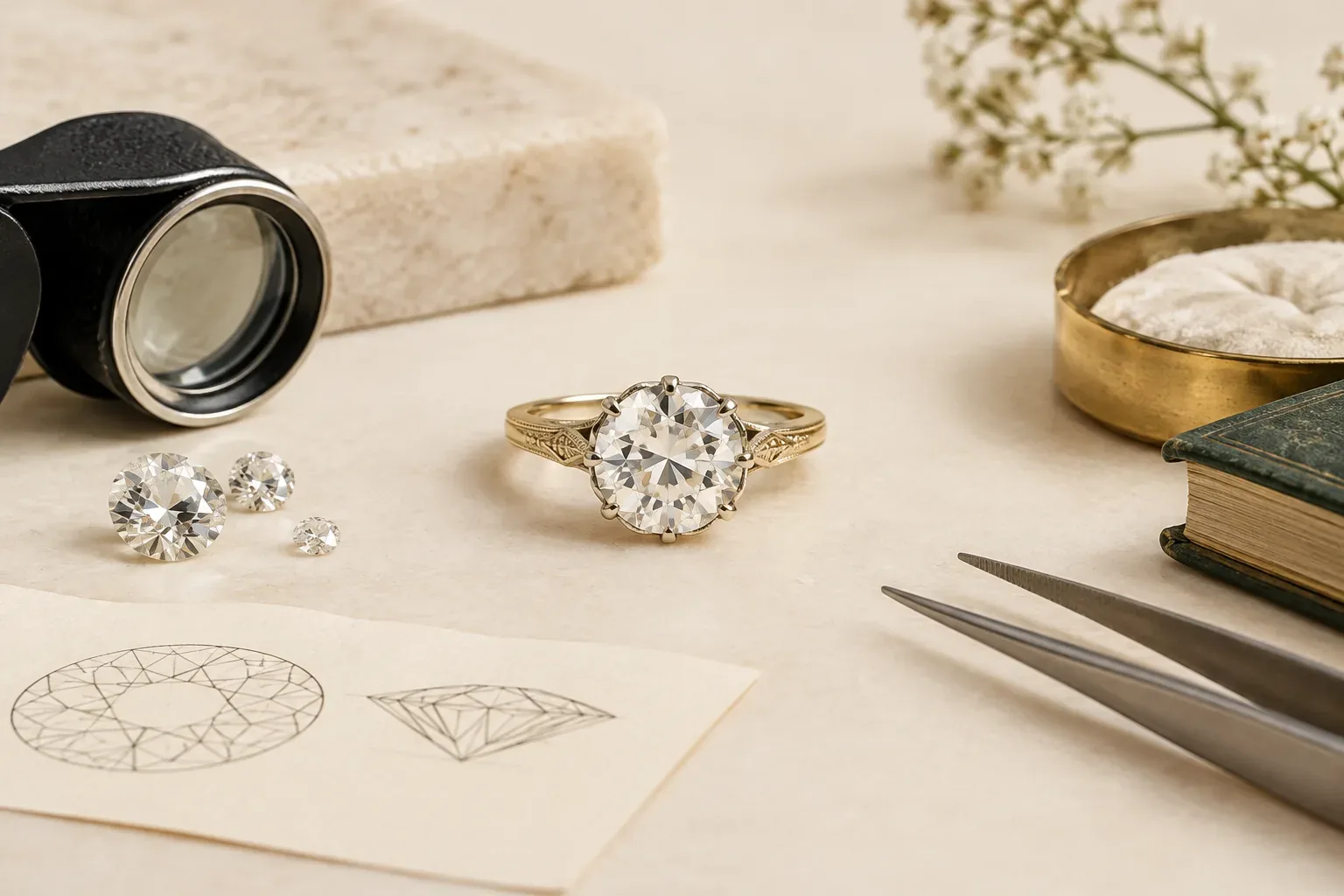
In trade usage, Old European Cut refers to a hand-cut, roughly round diamond style that predates modern machine-cut round brilliants; it is associated with earlier workshop practices and vintage engagement rings. Physical traits often cited in the trade include a smaller table, higher crown, and larger culet than a modern brilliant, producing a different light pattern. Because precise dating and workshop origin require specialist assessment, buyers should treat labels like 'Old European' as a descriptive starting point rather than an absolute provenance statement.
Historical evidence and how to interpret period claims
Descriptions of Old European Cut diamonds appear in period and trade literature as part of the late 19th to early 20th century jewelry vocabulary; however, surviving pieces vary because many were altered, reset, or recut over decades. Trade and consumer resources emphasize that apparent age in style does not guarantee unaltered historic manufacture. For this reason, when sellers assert a ring is 'from [a given period]' or was 'original to that era,' buyers should request documented provenance or a written appraisal that explains the basis for dating.
Clearly separate documented facts from modern interpretation
Documented facts are items that can be verified objectively: diamond weight, measurable proportions, the presence of treatments, inscriptions, and the metal purity hallmarks. Modern interpretations include sentimental attributions, statements about symbolic meaning, or subjective assessments like 'most romantic cut.' Consumer authorities recommend treating symbolic or emotional claims as personal or marketing language, and relying on technical documentation for purchase decisions. The Federal Trade Commission requires clear disclosure for natural versus lab-created materials and for treatments, making disclosure a verifiable element to request in writing.
How Old European Cut characteristics and related motifs appear in rings
An Old European Cut diamond typically appears in period-style settings: closed backs, filigree, milgrain edges, knife-edge shanks, or three-stone arrangements. The cut’s optical character—often softer, warmer flashes and a noticeable culet—affects perceived sparkle compared with modern brilliants. Gemstones and motifs common in the same period include rose-cut accent stones, engraved metalwork, and mixed-metal settings, all of which change how the central stone reads on the hand. If a ring is marketed as 'period original,' ask whether the setting and stone have been altered or if the stone was later repolished or recut.
Evidence-led checklist: questions to ask the seller
Request a clear, recent photo set (top, pavilion, girdle, profile) and ask whether any stones have been recut, re-polished, or replaced. Ask for written disclosure of the diamond’s origin claims and whether the stone is natural, lab-grown, treated, or imitated; the Federal Trade Commission requires these distinctions in consumer transactions. Request documentation for metal hallmarks and ask whether a recent bench test for metal content was performed. Ask for a current independent appraisal or report and clarify whether it was produced by a qualified appraiser or a gemological laboratory; note that only a gemological laboratory can provide standardized grading that distinguishes natural from treated stones for many treatments. Ask whether the seller can supply a history of the piece, receipts, past appraisals, or repair records that support age and provenance claims. Ask about current condition: prong security, stone tightness, evidence of hairline fractures, or old repair solder joints. Finally, ask about return policy, authentication guarantees, and insurance or valuation advice for resale and coverage.
Practical trade-offs to weigh before buying
Authentic vintage Old European Cut stones and settings command a premium for rarity and craftsmanship but can require compromises in wearability, repairability, and optical performance compared with modern cuts. A genuine vintage diamond may have internal characteristics and stability concerns that affect setting options and durability. Recutting to modern proportions may increase sparkle and marketability but destroys the historic cut. Conversely, selecting a modern stone cut to vintage proportions or a new stone set into a vintage setting offers a balance between aesthetics and long-term practicality. Jewelers Mutual’s recent trend observations point to buyers valuing craftsmanship and versatility, so consider whether you prefer preservation of an original piece or a ring intended for daily modern wear.
What you cannot reliably verify without experts
You cannot reliably determine origin (natural vs lab-grown), some treatments, precise age, or permanence of past repairs by eye or by photos alone. The Gemological Institute of America explains that certain treatments, their detectability, and implications for durability require laboratory-grade testing. Similarly, a qualified bench jeweler or a conservator is needed to assess metal fatigue, previous re-soldering, or structural integrity. If provenance or treatment status matters for price or sentiment, budget for a laboratory report or an independent appraisal before finalizing the purchase.
Safe care guidance and handling for Old European Cut rings
Treat vintage settings gently because older metal and small prongs are more vulnerable to knocks and repeated resizing. For daily wear, check prong security regularly and have a trusted bench jeweler assess structural integrity annually. For cleaning, avoid harsh chemicals and ultrasonic cleaners unless a jeweler confirms they are safe for the specific stone, setting, and any accent stones; the Gemological Institute of America notes that treatments and some materials react differently to cleaning methods. When not worn, keep the ring in a padded compartment to avoid abrasion and consider separate insurance coverage reflecting an up-to-date valuation as Jewelers Mutual recommends for valuable pieces.
Selection and gifting guidance — practical and respectful
When gifting an Old European Cut engagement ring, respect the recipient’s lifestyle: consider ring profile, comfort, and how often they will wear it daily. If the recipient prioritizes authenticity and vintage character, be transparent about any known alterations, previous repairs, and the evidence for age or provenance. If the priority is durability and sparkle, discuss options such as a modern brilliant cut in a vintage-style setting or professionally conserving the original stone. Always provide the buyer or recipient with any available documentation and advise obtaining a formal valuation and suitable insurance; this shows respect for both the piece’s history and the practical needs of ownership.
Where to get trustworthy verification and what it costs
For grading and treatment detection, a report from a recognized gemological laboratory is the gold standard; prices and turnaround vary by lab and by whether the stone requires additional tests. For structural and conservation advice, seek an experienced bench jeweler familiar with vintage work or a jewelry conservator. For insurable value and provenance assessment, use an independent certified appraiser. Expect to budget separately for a laboratory report, an independent appraisal, and any conservation work; these services protect both buyer and seller and are recommended when price, sentiment, or rarity justifies the expense.
Final checklist in plain language
Before you buy, get clear photos and condition notes, request written disclosure of natural versus lab-grown and of any treatments, ask for provenance and appraisal documents, confirm return and authentication policies, have a plan for verification by a lab or qualified jeweler if needed, understand the trade-offs between originality and modern wearability, and plan for appropriate care and insurance. Follow this set of questions and documentation requests to reduce risk and to make an informed decision.
Frequently asked questions
How can I tell if an 'Old European Cut' diamond is original to a vintage setting?
You can look for hallmarks on the metal, consistent wear patterns, and historical repair evidence, but absolute confirmation of original pairing or precise dating typically requires provenance documents or evaluation by a qualified appraiser or gemological laboratory.
Can I verify treatments or whether a diamond is natural without a lab report?
No. Many treatments and distinctions between natural and lab-grown diamonds require laboratory testing to detect reliably; request written disclosure from the seller and obtain a gemological laboratory report for certainty.
Is it safe to clean vintage rings in an ultrasonic cleaner?
Not without an assessment. The Gemological Institute of America notes some treatments and materials can be damaged by ultrasonic cleaning; consult a jeweler who knows the ring’s construction and any treatments before using ultrasonic cleaners.
Should I expect an Old European Cut ring to sparkle like a modern brilliant?
Not necessarily. Old European Cut diamonds typically return light differently from modern brilliants; softer, warmer flashes and a visible culet are common, which is an aesthetic quality rather than a defect.
What documentation should I ask for when buying?
Request clear photos, written disclosure of natural vs lab-grown status and any treatments, any available provenance or receipts, a recent independent appraisal, and the seller’s return and authentication policy.
Do I need extra insurance for a vintage Old European Cut engagement ring?
Yes. Jewelers Mutual and industry guidance recommend insuring valuable or unique pieces with an up-to-date valuation and checking that your policy covers damage, loss, and restoration of vintage settings.
Sources and further reading
- Imaginaire Digital — Imaginaire Digital
- Jewelers Mutual — Jewelers Mutual
- Gemological Institute of America — Gemological Institute of America
- Federal Trade Commission — Federal Trade Commission