Meaning at a glance
Treat "portrait cut" as a contemporary, seller-defined description rather than a single standardized gemological grade; prioritize written disclosures, visual inspection, and professional verification when size, origin, or treatments matter, and weigh aesthetic pros (elongation, modern styling) against practical trade-offs (varying naming, possible special care and resale considerations).
What the phrase "portrait cut" means (and what it does not)
The phrase "portrait cut" is not a standardized gemological grade in the material provided here. Jewelers and sellers sometimes use trade names to describe proportions, face-up appearance, or stylistic intent; in practice, sellers can mean a variety of elongated or face-forward shapes when they use that label. Treat the term as a stylistic descriptor rather than a technical certification.
Historical evidence and cultural notes
None of the approved evidence for this article documents a clear historical or cultural origin for a named "portrait cut" as a long-established, discrete cut type. The sources used in this guide focus on contemporary market behavior, consumer protection and gem-treatment issues rather than an historical lineage for the term.
What is documented in recent industry reporting is relevant to a buyer: 2026 UK search trends reported by Imaginaire Digital identify strong demand for engagement ring shapes such as ovals among overall engagement-ring queries, suggesting that elongated and face-oriented styles are fashionable in current search behavior. Jewelers Mutual’s 2026 trends reporting describes demand centers that include fluid forms, modern stacking and versatility, signaling that contemporary tastes favor adaptable, modern silhouettes rather than strictly traditional, period-specific forms.
Documented historical meanings versus modern personal interpretation
Because the approved sources do not record an historical symbolic meaning for a "portrait cut," any asserted historical symbolism for that phrase should be treated as modern interpretation or seller storytelling rather than verified tradition. In contrast, modern interpretations—what buyers or gift-givers mean when they choose such a look—are valid personal meanings but they are not documented historical facts.
When deciding on an engagement ring, separate the documented from the personal by asking sellers to identify what is factual (metal, gemstone type, documented treatments, certificates) and what is narrative (names, sentimental stories, aesthetic labels). The Federal Trade Commission’s consumer guidance emphasizes the importance of clear written distinctions among natural, lab-created, treated, cultured and imitation materials and of receiving written disclosures from the seller.
How the motif, gemstone, or tradition appears in jewelry today
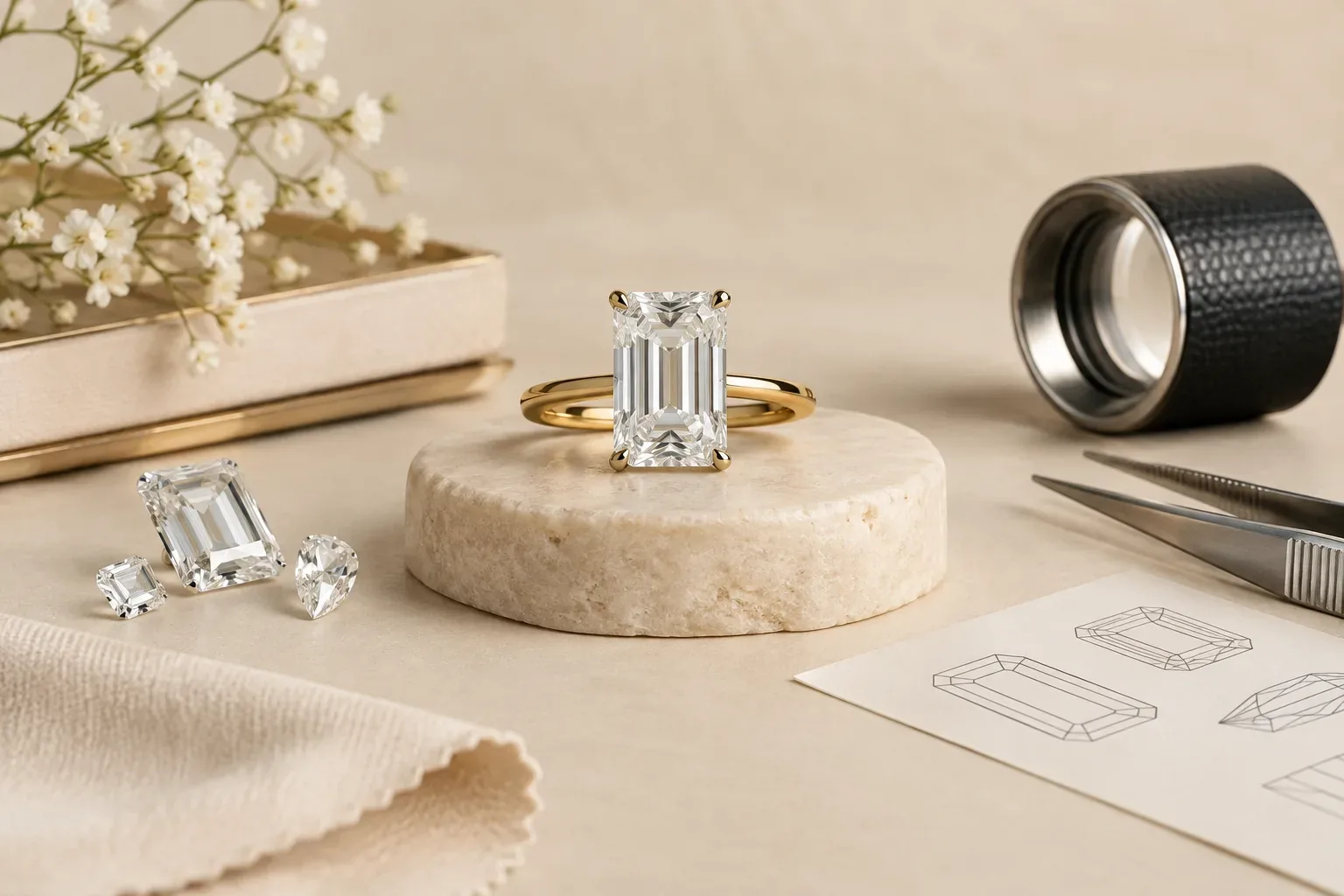
In contemporary retail, a portrait-style descriptor usually appears as a descriptive line in product listings or as part of a designer’s collection name. It is commonly applied to center stones and cuts that emphasize a vertical, face-up orientation or an elongated silhouette, whether the center is a diamond, sapphire, emerald or another gemstone. Jewelers Mutual’s trend analysis notes consumer interest in colored gemstones and versatile styles, so you will see portrait language applied across both diamonds and colored stones.
Because the phrase is not standardized, you will find variability in setting choices and metal treatments. Sellers may present portrait-cut rings in simple solitaire settings for focus, or with halos and side stones to enhance perceived size. When the design involves treated or colored gems, the GIA’s guidance about treatments is directly relevant: treatments affect durability and care, and they should be disclosed to buyers.
Pros: Why buyers choose a portrait cut look
Aesthetically, buyers often choose an elongated or face-forward center because of the modern, flattering silhouette it creates. Recent search and trend data show ongoing consumer interest in oval and elongated shapes, which aligns with the portrait-style naming some retailers use. Jewelers Mutual documents demand for fluid and gender-neutral styling, meaning a portrait aesthetic can fit a wide range of personal tastes and contemporary wardrobes.
Practically, some elongated shapes can create stronger face-up presence relative to their carat weight, but because trade names vary, buyers should confirm the visible dimensions, proportions and how the stone sits in the setting rather than relying on the label alone.
Cons and practical trade-offs
The main trade-offs are not inherent to a single cut but arise from the variable use of the term and from material differences. Because "portrait cut" is a seller-applied descriptor, the same label may describe different proportions or finishes at different retailers, which can make comparisons by label alone unreliable. Resale and appraisal can also be affected by naming inconsistency if the cut is not commonly recognized by appraisers.
Another practical issue is the need to confirm whether a gemstone has been treated or is lab-created. GIA guidance explains that treatments and their detectability matter to durability and care. The FTC requires written disclosures so consumers are not misled about natural versus lab-grown or treated stones. Buyers should therefore factor in the need for documentation and possible additional care and insurance costs.
What you can (and cannot) verify without a qualified jeweler or laboratory
You can verify some facts on your own: visual proportion and how a ring looks on the hand, the seller’s written metal and gemstone descriptions, the presence of any retail-grade certificates shown with the listing, return policy, warranty and basic measurements such as carat weight and millimeter dimensions. Imaginaire Digital’s search reporting reinforces that shoppers often begin with visual preferences and shape searches online.
You cannot, with any reliable certainty, verify claims about treatments, origin (natural versus lab-grown), or many durability-related processes by sight alone. For those claims you need a qualified jeweler’s inspection or a gemological laboratory report. Following FTC guidance, insist on written disclosures from the seller and seek laboratory confirmation if origin or treatment status will affect your decision or the insurance value.
Selection and gifting guidance
Start with the wearer’s style: observe jewelry they already wear for metal color, ring width, and finishing. Because modern trends favor versatility and fluid forms, as Jewelers Mutual reports, a portrait-style ring can suit someone who prefers contemporary or minimalist looks, but it can also be dressed up with halos and accents for a more classic appearance.
Ask the seller for clear, written disclosures about gemstone type, any treatments, carat weight, metal purity and return and repair policies. For diamonds or valuable gemstones ask for a grading report from an established laboratory; for significant purchases, budget for an independent appraisal and insurance. If provenance or treatment status is important to you, include laboratory verification in your purchasing conditions and understand that only a qualified lab can reliably confirm many of those claims.
Care and maintenance
Care needs depend on the gemstone and any treatments. GIA’s resources explain that treatments affect detectability and sometimes durability, which in turn affects suitable cleaning methods and service intervals. Ask the seller what, if any, treatments have been applied and follow their care advice; if treatment details are unavailable, be cautious with home cleaning solutions and avoid harsh chemicals.
For mechanical care, have prongs and settings checked annually by a professional jeweler and consider insurance for significant pieces. Jewelers Mutual’s trend guidance underlines the value of craftsmanship and longevity; regular servicing preserves both appearance and value.
Final decision checklist
Before you buy, confirm these items in writing: an accurate photograph or video of the actual ring, the metal and gemstone descriptions, disclosure of any treatments, the seller’s return and warranty terms, and whether the piece comes with a laboratory report or retailer certificate. Decide which attributes are non-negotiable for you (for example, certification of a diamond or confirmation of natural origin) and require those in writing.
If something important—treatment status, origin, or grading—cannot be verified by the seller or through a reputable lab report, be prepared to delay the purchase or choose a piece where those facts are documented.
Frequently asked questions
Is "portrait cut" a standardized gemological term?
No. "Portrait cut" is a seller-applied or marketing descriptor rather than a standardized gemological grade; buyers should confirm specific proportions, measurements and any certifications rather than relying on the name alone.
How do I know if a portrait cut ring is a good fit for my partner’s style?
Look at the wearer’s existing jewelry for metal color, ring width and overall silhouette. Contemporary trend reporting highlights a preference for fluid, versatile forms, so a portrait-style silhouette typically suits someone who prefers modern or adaptable pieces, but personal taste should guide the choice.
Can I tell if a gemstone in a portrait cut ring has been treated or is lab-grown by looking at it?
No. Many treatments and lab-grown origins are not discernible by eye. The FTC recommends getting written disclosures from the seller, and the GIA advises laboratory evaluation when treatment or origin matters to you.
What written items should I ask the seller for before buying?
Ask for a clear photo or video of the actual piece, metal and gemstone descriptions, disclosure of any treatments, certification or laboratory reports if available, warranty and return policy, and any independent appraisals if included.
How should I care for a portrait cut engagement ring?
Care depends on the stone and any treatments. Follow the seller’s guidance; if treatment details are unknown, use gentle cleaning methods, avoid harsh chemicals, have settings checked regularly by a jeweler, and consider insurance for significant pieces in line with Jewelers Mutual guidance.
When should I seek a gemological laboratory report?
Seek a laboratory report if origin (natural vs lab-grown), the presence or absence of treatments, or an authoritative durability or grading opinion will affect the purchase price, resale or insurance value.
Sources and further reading
- Imaginaire Digital — Imaginaire Digital
- Jewelers Mutual — Jewelers Mutual
- Gemological Institute of America — Gemological Institute of America
- Federal Trade Commission — Federal Trade Commission