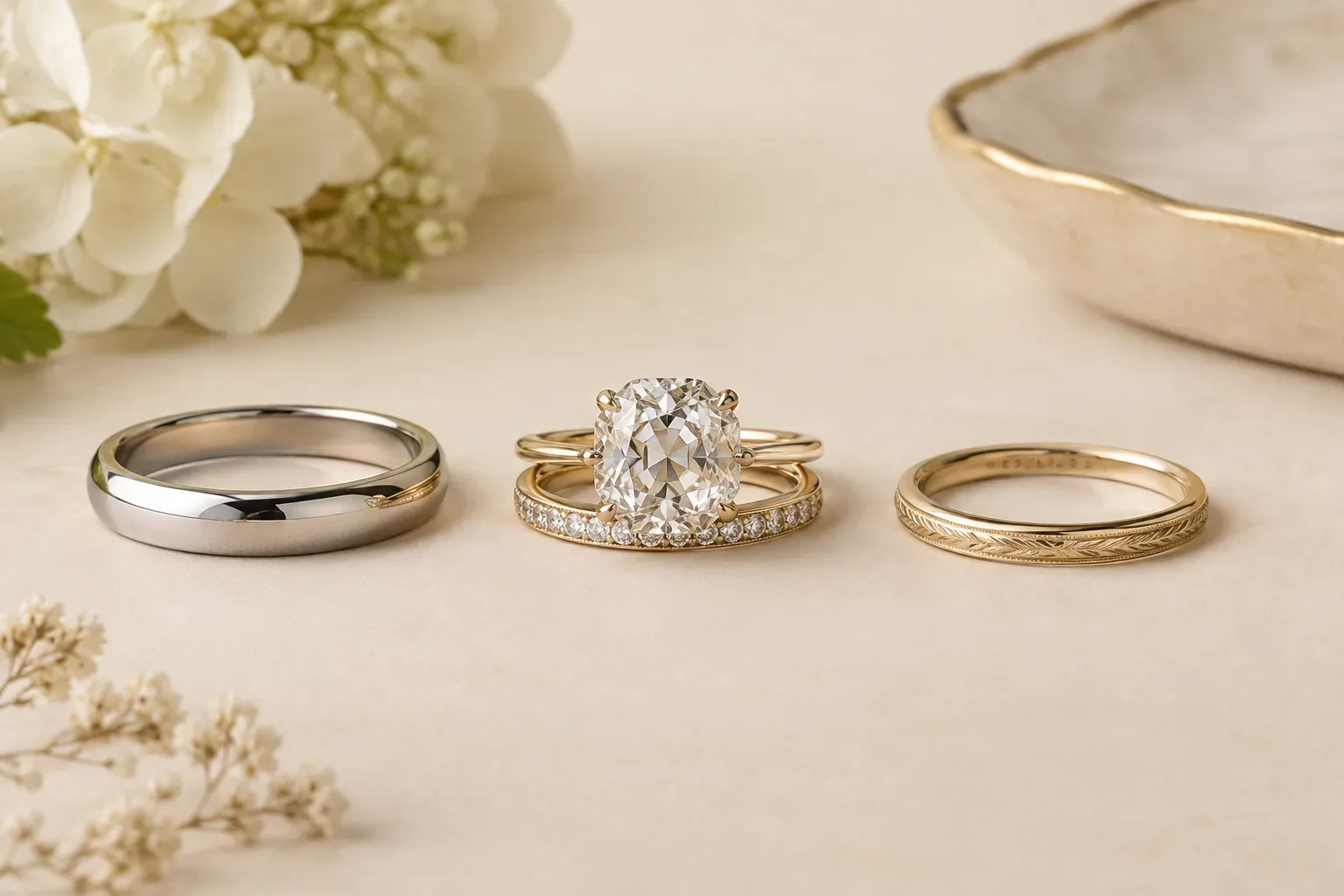
Meaning at a glance
When shoppers search for "Old European Cut wedding band pairing" they want clear decision criteria: how the antique cut visually and physically meets a band, which metal and profile choices reduce gaps, what trade-offs (reshaping versus preserving) to expect, how to verify claims using seller disclosures or a gemological lab, and how to care for the finished set. Use written disclosures, consult a qualified jeweler or laboratory for provenance and treatments, and balance conservation of the antique stone with modern wearability.
Quick answer
If you mean pairing an Old European Cut diamond or ring with a wedding band, focus first on the physical profile (edge, height and shank width) and the visual gap between rings, then choose a metal and band profile that either minimizes that gap or celebrates it. For safety and certainty, require written seller disclosures about origin and treatments and consult a qualified jeweler or a gemological laboratory for any claims about authenticity, grading or treatments. This article explains practical decision criteria, trade-offs, safe care, and what you cannot reliably verify without expert testing—consistent with consumer guidance from the Federal Trade Commission and gemological guidance from the Gemological Institute of America.
What the phrase usually denotes and why shoppers ask it
In contemporary jewelry commerce the phrase "Old European Cut wedding band pairing" is typically used by shoppers and sellers to discuss how an antique-style cut—often found in engagement rings or antique rings—looks and fits next to a wedding band. This covers two related concerns: the optical fit (how the cuts, pavé or bezel settings, and band profiles look together) and the physical fit (whether there will be a gap when rings are stacked).
Modern demand signals for ring styles and stacking behavior support this search intent. Industry reporting and trend research from Jewelers Mutual and Imaginaire Digital identify a 2026 marketplace interest in modern stacking, fluid forms, and craftsmanship, showing that shoppers are actively considering how individual rings work as a set rather than as isolated pieces. Those trends explain why pairing advice is frequently requested by buyers of antique-cut stones.
Historical evidence and provenance: what the approved sources say
The set of approved evidence for this guide does not include specialist historical or museum publications about the Old European Cut’s origin or period-specific usage, so detailed historical claims and cultural attributions lie beyond the sources used here. The industry and consumer sources we have instead supply guidance on modern buying behavior, disclosure, and gem-treatment issues: Jewelers Mutual and Imaginaire Digital describe contemporary trends that affect how buyers approach pairing and stacking, while the Gemological Institute of America and the Federal Trade Commission outline consumer protections, treatment disclosure, detectability limits, and why laboratory verification matters.
Because the supplied sources do not document precise historical meanings or provenance, any historical assertions beyond what a qualified appraiser or museum catalog can verify should be treated as interpretation or trade usage rather than proven fact. For reliable historical attribution—period, country of manufacture, or workshop—request documentation from a qualified appraiser or a recognized institutional catalog rather than relying on marketplace descriptions alone.
Documented historical meanings vs modern personal interpretations
Documented historical meanings are established only when supported by contemporary period records, museum provenance, or certified appraisal reports. The approved sources for this guide do not provide those period records, so we cannot present historically documented symbolic meanings for the Old European Cut from these materials.
Modern personal interpretations—why a buyer prefers an Old European Cut paired with a certain band—are common and legitimate, but they are personal or trend-driven. Jewelers Mutual and Imaginaire Digital show that modern styling preferences (such as gender-neutral stacking or celebrating craftsmanship) drive many pairing choices. Those contemporary meanings are valid for the wearer but do not substitute for documentary provenance.
How the motif, cut and traditions appear in jewelry and how that affects pairing
In trade practice, ‘‘pairing’’ can refer to matching an antique-style center stone to a plain or decorated band, aligning profiles to eliminate gaps, or deliberately leaving a gap as a stylistic choice. The visual effect is influenced by the center stone’s table, crown and girdle proportions and by the setting style—prongs, bezel, or channel—though the specific geometric details are not documented in the sources used here.
Gemstone treatments, origin claims, and material type matter for long-term wear and for buyer expectations. The Gemological Institute of America emphasizes that treatments affect detectability, durability and care. The Federal Trade Commission advises that sellers must clearly disclose if a stone is treated, lab-created, or an imitation. Those factors should influence pairing choices: for example, certain treatments or weaker materials may rule out thin, low-profile bands that transmit impact to the stone.
Decision criteria: shape, gap, and metal choices
Start by examining the profile: does the ring’s setting sit high or low on the finger? Taller settings can create a visible gap when paired with a flat band; a contoured or notched band can minimize that gap. Decide whether you want the wedding band to sit flush, nest closely with a contour, or be visibly separate—each choice implies different band shapes and widths.
Choose metal for appearance and durability. Contemporary consumer trends highlight versatile, gender-neutral styling and craftsmanship, which often favor metals that match or complement the engagement ring’s color and wear characteristics. White metals can be plated and may require re-plating over time; yellow or rose gold will patina differently. Consider whether the wedding band should be soldered to the engagement ring for a permanently flush look, or kept separate for flexibility.
Width and thickness affect both comfort and the look of the pair. A very thin band can accentuate an antique cut but might not protect the setting during daily wear. A wider band can hide gaps but changes the overall silhouette. Think about trade-offs between historical conservation—preserving an old ring untouched—and modern practicality—altering the shank to improve fit or comfort.
Practical trade-offs and preservation considerations
If the ring is genuinely antique or has collector value, altering the original shank or resetting the stone can reduce provenance and resale value. For valuable or historically significant pieces, consult a qualified appraiser before any permanent modification. If the piece is mainly sentimental and will be worn daily, more intervention (shank reshaping, soldering, or adding a contour band) may be reasonable to improve wearability.
If you prioritize preserving an original antique, choose a custom-contoured or thin band that reduces pressure on the original setting rather than cutting or reframing the historical mounting. Weigh costs and risks: custom contours and careful soldering by a skilled jeweler typically cost more but protect the antique stone while achieving a close visual fit.
What you can and cannot verify without expert testing
You can verify certain things without a laboratory: visible hallmarks or stamps indicating metal fineness, obvious indications of damage, and whether the seller provides written documentation about treatments or origin. The Federal Trade Commission advises buyers to insist on clear written disclosures for natural versus lab-created stones, treatments, and any enhancements.
You cannot reliably verify gem treatments, origin, or exact grading attributes without a qualified gemological laboratory or the Gemological Institute of America-style report. The GIA notes that treatments and some origin claims require specific testing equipment and professional analysis to detect and identify. If origin, treatments, or authenticity affect your purchase decision, budget for a laboratory report or independent appraisal.
Care guidance for a paired set
Routine care depends on metal and any treatments the stone has received. Follow the GIA’s general guidance that treatments and durability differences change cleaning and wear recommendations—some treatments reduce toughness or change safe cleaning methods. Ask the seller for written care guidance tied to any documented treatments.
For everyday wear, avoid exposing the set to harsh chemicals, high-impact activities, or extreme heat that could affect either the mount or the stone. Jewelers Mutual’s trend and consumer materials emphasize craftsmanship and practical wear considerations; many insurance and jeweler-care recommendations suggest regular inspections by a jeweler to ensure settings remain secure, and insurance for irreplaceable antique pieces.
Selection and gifting guidance—practical and respectful
If you are buying a pair as a gift, focus on the recipient’s daily lifestyle first. Do they work with their hands? Do they prefer a flush, minimalist look, or an eclectic stacked aesthetic? Use those preferences to choose between a flush, contoured, or intentionally gapped band. If the ring may be an heirloom with historical value, ask the gift recipient in advance (if appropriate) whether they want the piece altered, or give a contemporary partner band that preserves the antique ring untouched.
Insist on written disclosures and documentation at the time of sale. The FTC requires clear disclosure of treatments and origin claims; keep that paperwork with the jewelry. If provenance or grading matters to you, pay for a laboratory report. Finally, discuss insurance options—Jewelers Mutual and similar insurers highlight how coverage and repair plans protect long-term value and wearability.
Frequently asked questions
Can I make an Old European Cut engagement ring sit flush with a wedding band?
Possibly, but it depends on the original ring’s profile and how much alteration you are willing to authorize. A jeweler can add a contoured band, reshape the shank, or solder bands together to achieve a flush look. If the engagement ring is antique or valuable, consult a qualified appraiser before any permanent modification because changes can affect provenance and value.
How can I verify if an Old European Cut stone is treated or lab-created?
You should ask the seller for written disclosure. For authoritative verification you need a gemological laboratory report from a recognized lab; the Gemological Institute of America explains that some treatments and origin claims require laboratory testing to detect and identify reliably.
Are there metal choices to avoid when pairing with an antique ring?
Avoid metals or finishes that will require frequent invasive maintenance if you want to minimize interventions on the antique ring. For example, plated white metals may need re-plating over time and can complicate matching. Discuss long-term maintenance with your jeweler and consider metals that match the engagement ring’s tone for a cohesive look.
Is it better to preserve an antique ring untouched or to alter it for comfort?
That depends on your priorities. Preserving the original setting maintains historical integrity and potential collector value; altering the ring can improve daily wearability. If the piece is likely to be an heirloom with historical value, seek advice from a qualified appraiser before altering it.
What documentation should I insist on when buying an Old European Cut set?
Ask for written disclosures about whether stones are natural, treated, lab-created or imitations, any known provenance or appraisal reports, and clear metal fineness marks. The Federal Trade Commission advises buyers to keep written disclosures as part of the purchase record.
Sources and further reading
- Imaginaire Digital — Imaginaire Digital
- Jewelers Mutual — Jewelers Mutual
- Gemological Institute of America — Gemological Institute of America
- Federal Trade Commission — Federal Trade Commission