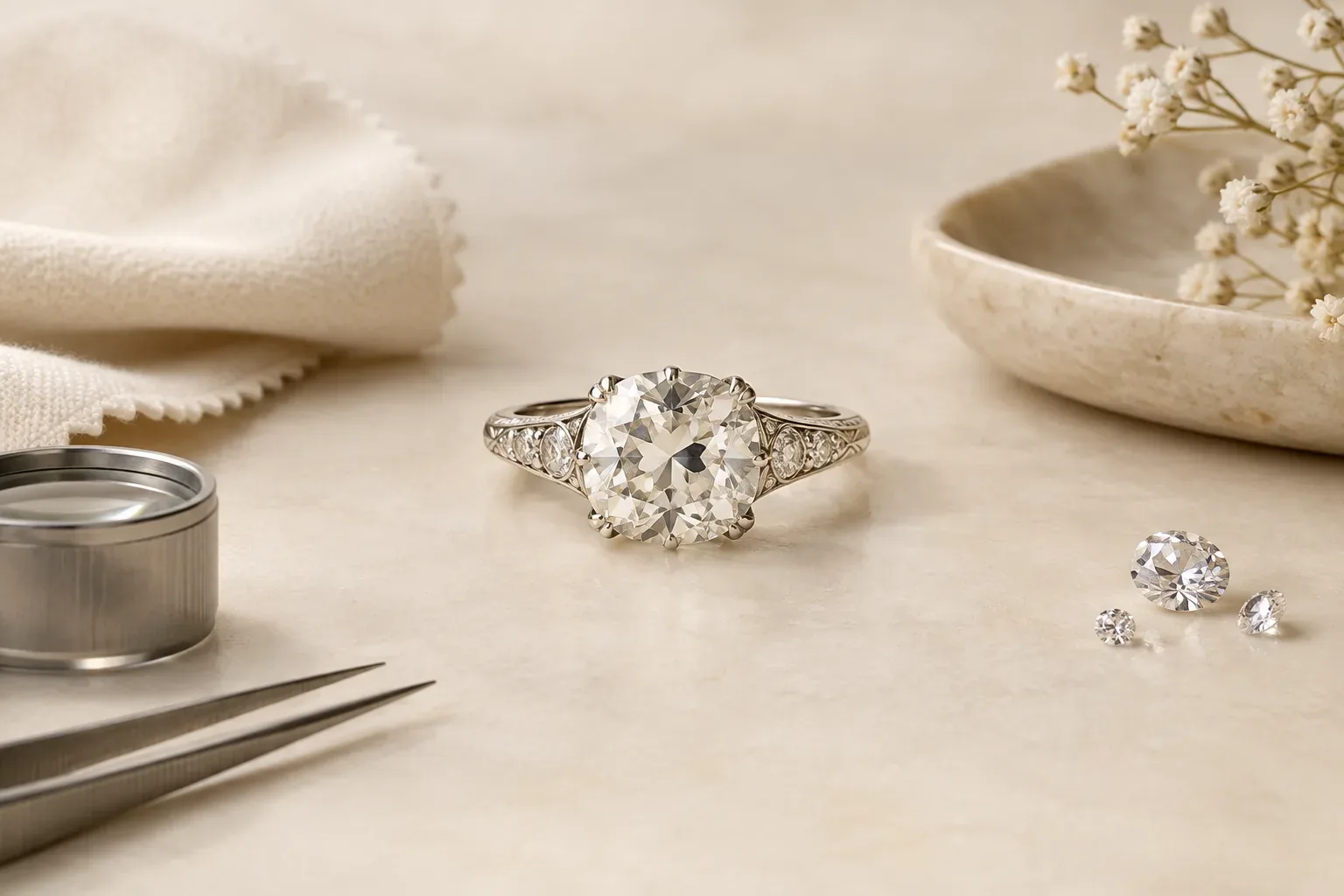
Meaning at a glance
Old European Cut engagement rings can be worn daily if mounted and maintained appropriately, but their vintage settings, higher crowns and hand-worked details make snagging and prong wear more likely; buyers should rely on a qualified jeweler or gemological laboratory to verify structural integrity, treatments and provenance, and consider lower-profile settings, durable metals, routine inspections and insurance to manage trade-offs.
Direct answer — short and practical
Old European Cut engagement ring durability depends less on the cut itself than on the setting, mounting height, metal and previous repairs. With a low, secure setting and routine inspection an Old European Cut can be suitable for daily wear, but vintage mounts, raised crowns, hand-set prongs and open filigree increase the chances of snagging and of prong wear that requires professional repair.
Historical evidence and cultural context (what the approved sources cover and what they don’t)
The sources approved for this article do not provide primary historical documentation about the cultural origins or symbolic meanings of the Old European Cut. Trade and consumer trend sources such as Imaginaire Digital and Jewelers Mutual focus on current demand patterns and design trends rather than originating histories. Because the available evidence does not include specialist historical scholarship on specific regions or periods for the Old European Cut, this piece does not attempt to invent precise cultural origin claims without proper historical citation.
If your interest includes provenance, period attribution or the cultural meaning of a particular vintage ring, those questions require consultation with specialist references, archival catalogs or a qualified vintage-jewelry appraiser. The practical durability issues discussed below rely on observable ring construction and general gem-care principles rather than speculative cultural history.
Documented technical concerns versus modern personal interpretation
Documented technical concerns are about physical construction, metal fatigue, prong condition, gemstone treatments and the need for professional inspection. The Gemological Institute of America (GIA) reminds consumers that treatments, disclosure and detectability influence durability and care needs for gemstones. The Federal Trade Commission (FTC) emphasizes that consumers should receive clear written disclosures about whether a gemstone is natural, lab-created, treated or an imitation. Those are verifiable, technical issues: whether a diamond has been fracture-filled, whether gold has been soldered, or whether an earlier repair used inappropriate materials.
Modern personal interpretation — for example describing an Old European Cut as ‘romantic,’ ‘handmade’ or ‘full of character’ — is valid as sentiment but not a technical durability claim. Treat aesthetic meanings as personal or market-driven; treat structural and material conditions as matters to confirm with a qualified jeweler or gemological laboratory.
How the cut and typical vintage mountings appear and why that matters for wear
In commercial and collector descriptions, Old European Cut diamonds are often in vintage mounts that display handwork: open galleries, filigree, milgrain and raised crowns. Those decorative choices affect durability. An elevated setting exposes the stone to knocks and can increase the length of prongs, which are the most common failure point on rings worn daily. Open galleries and pierced work create edges and cavities that can catch on fabric, gloves and skin, increasing the likelihood of snagging.
The stone itself is generally a hard material, and diamonds remain one of the most durable gemstones for everyday use. However, the GIA cautions that treatments and certain structural conditions can change care needs; if a stone has been fracture-filled, laser-drilled or otherwise treated, its response to impact and repair may differ from an untreated stone. The FTC’s consumer guidance underscores the importance of written disclosures so a buyer knows what they are dealing with.
Common repair risks and what typically needs professional attention
Prong wear and re-tipping: Repeated knocks and everyday abrasion can thin prongs. A jeweler will need to re-tip, reinforce or replace worn prongs; this is a routine repair but one that should be done before a prong fails and a stone is lost.
Soldering and previous repairs: Vintage rings often have prior solder joints or non-original posts. Those joints can hide stress points or incompatible alloys. Only a qualified jeweler can assess structural soundness and recommend safe repairs.
Stone work: Re-cutting or re-polishing an Old European Cut to modern proportions removes vintage character and provenance. Re-cutting is a specialized service and will change both appearance and market value; this decision should be made with informed consent from the owner.
Settings with open filigree and delicate shoulders are more likely to deform; resizing a thin shank or a ring with extensive sidework increases repair complexity and risk. A jeweler can advise whether the ring can be safely resized or whether a more conservative approach (such as guard rings or small adjustments) is preferable.
Practical selection and gifting guidance
Match the ring to the recipient’s lifestyle. If the wearer cooks, gardens or works with tools, favor a lower-profile mounting or a bezel-style setting to reduce knocks and snagging. If the recipient values visible vintage details, accept that more ornate mounts require more vigilance and periodic maintenance.
Choose metal with durability in mind. Platinum is highly resistant to corrosion and withstands many re-tippings without significant loss of metal. Higher-karat gold is softer; 18k offers a balance between color richness and wear resistance, while 14k is harder and often better for everyday use. A qualified jeweler can explain the trade-offs for specific alloys.
Ask for written disclosures and documentation at purchase. Per the FTC, buyers should receive clarity on whether the stone is natural, lab created or treated, and any known repairs. Request a condition report or inspection, and if possible secure a current appraisal and photographs of the ring from multiple angles.
Insure and schedule inspections. Jewelers Mutual and other professional bodies note modern consumer interest in protecting valuable pieces; obtaining insurance for a vintage engagement ring and scheduling at least annual inspections helps catch wear before it becomes loss.
Care and everyday practices to reduce snagging and repair risk
Inspect prongs and shoulders monthly: look for thinning, mobility of the stone or any catching when you run a fingernail over the setting. Catching is an early sign of a snag risk and of prong wear.
Remove the ring for manual tasks and sports that expose it to hard knocks or chemicals that could affect metal or treated stones. Even durable materials benefit from occasional removal.
Clean gently and professionally: regular household cleaners and ultrasonic machines can be safe for many diamonds but may be inappropriate for treated stones or fragile antique settings; the GIA notes that treatments and special care needs make professional advice important. When in doubt, have a jeweler clean or advise on safe methods.
Keep records of any repairs or changes and update the insurance appraisal after major work. Proper documentation protects provenance and makes claims or future sales smoother.
What you can and cannot verify without a professional
You can visually check for loose prongs, missing stones, obvious solder seams, and signs of corrosion or metal fatigue, but visual checks cannot determine internal treatments, fracture filling, laser drill channels, or the exact condition of microscopic chips.
Only a qualified jeweler can open and inspect solder joints, test metal alloys with appropriate equipment, or safely perform required repairs. Only a gemological laboratory can provide an independent grading report, detect many treatments or confirm natural versus lab-grown status to the standards recommended by the GIA and the FTC.
Because treatments affect durability, and because legal disclosure is required for many treatments, ask the seller for laboratory reports and previous repair history before purchase; where this documentation is absent, budget for an independent examination.
Decision criteria and practical trade-offs summarized
Prioritize setting security and metal hardness for daily wear; prioritize original, high-character mounts and provenance if the goal is preservation of a vintage piece. Expect trade-offs: more visible vintage detail typically means higher snag and repair risk. Budget for periodic maintenance and for insurance, and accept that any heavy restoration or re-cutting will change the ring’s historic character and potentially its market value.
Where possible, have a qualified jeweler prepare a condition report at purchase and ask the seller for any known documentation or lab reports. Per GIA and FTC guidance, informed buyers who verify treatment and condition will reduce surprises later.
Frequently asked questions
Is an Old European Cut diamond durable enough for everyday wear?
The diamond material is hard, but durability in daily use depends on the setting, prongs and any treatments. With a secure, low-profile mount and regular inspections an Old European Cut can be worn daily; however, ornate vintage mounts raise the risk of snagging and prong wear. A qualified jeweler can evaluate an individual ring’s suitability.
Will an Old European Cut engagement ring catch on clothing more than modern cuts?
Vintage mounts with open filigree, raised crowns and longer prongs are more likely to catch on fabric than low modern settings. The risk comes from the mounting’s shape and hand-worked details rather than the cut itself.
Can I verify treatments or previous repairs myself?
You can spot obvious signs such as visible solder seams or loose stones, but many treatments and the full history of repairs require a professional inspection or a laboratory report. The GIA and FTC recommend independent verification for treatments and disclosure.
Should I insure a vintage Old European Cut engagement ring?
Yes. Insuring a vintage ring is prudent because repair, replacement and provenance issues differ from modern pieces. Jewelers Mutual and similar insurers can advise on the right coverage for vintage or heirloom jewelry.
Will resizing or repairing ruin an Old European Cut ring’s value?
Minor, well-executed repairs and conservative resizing done by experienced professionals usually preserve value and function. Major changes, such as re-cutting the diamond or removing hallmark details, will alter the ring’s historical character and may change its market value, so proceed only after informed consultation.
Sources and further reading
- Imaginaire Digital — Imaginaire Digital
- Jewelers Mutual — Jewelers Mutual
- Gemological Institute of America — Gemological Institute of America
- Federal Trade Commission — Federal Trade Commission