Meaning at a glance
An Old European cut engagement ring buying guide helps shoppers decide whether a hand-faceted, pre‑modern round cut—favored for vintage character rather than modern brilliance—fits their aesthetic and practical needs by defining the cut, listing selection criteria and trade-offs, explaining what a buyer can reasonably verify without a lab, and giving safe care and gifting advice.
What an Old European cut is (definition and visual cues)
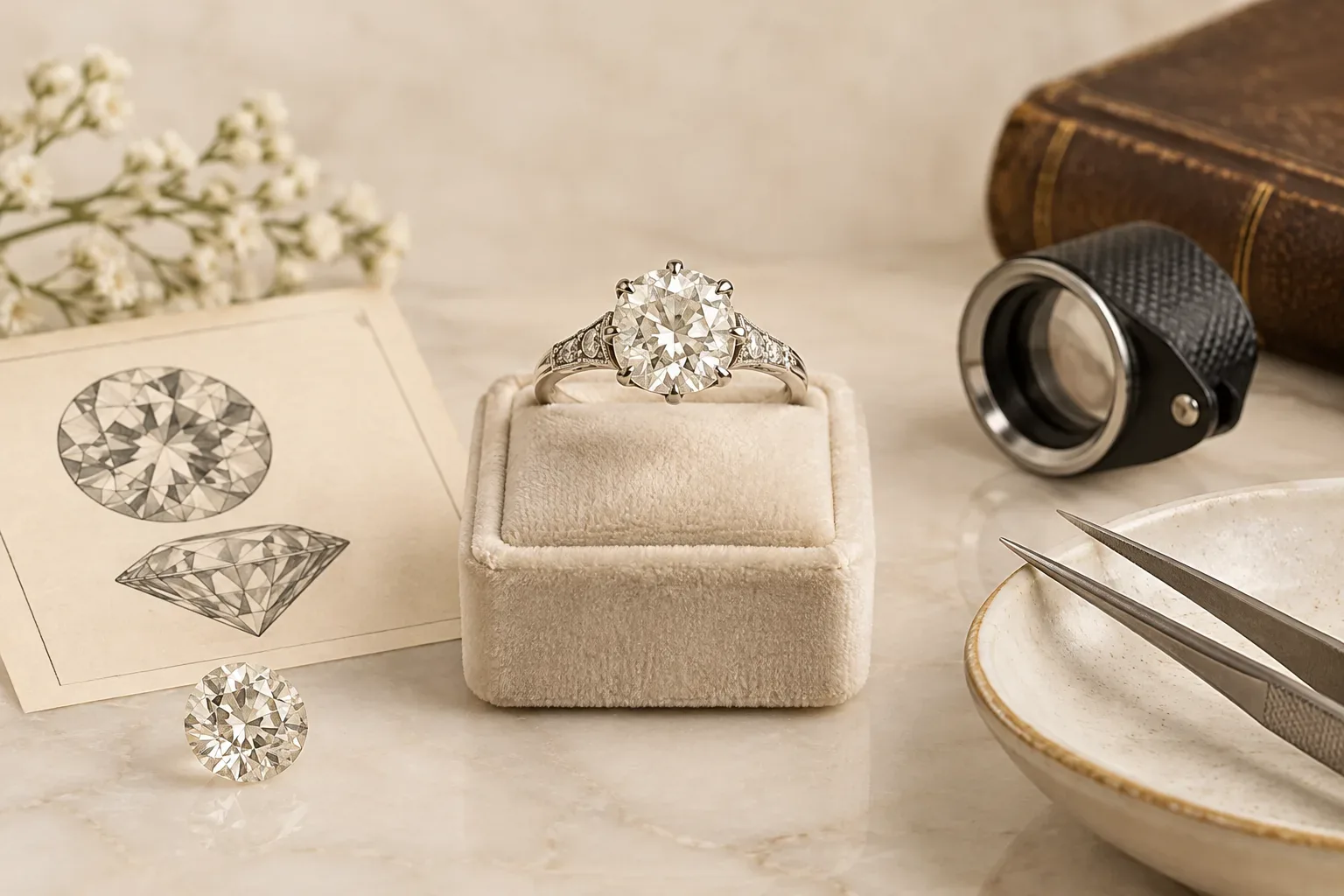
The Old European cut is a round, faceted diamond shape that predates modern brilliant-cut standards. Typical visual cues include a relatively small table facet, a high crown, large facets that reflect light in broader flashes rather than the pinpoint scintillation of modern brilliant cuts, and a noticeable culet or small flat facet at the bottom. Many surviving examples were hand-faceted, which creates subtle irregularities in facet size and alignment that collectors and wearers often find attractive. When evaluating a candidate ring, examine the table proportion, crown height, girdle thickness, culet presence, and for hand-faceted irregularities—these are the immediate visual indicators someone can use without specialized equipment.
Historical evidence and cultural periods
Most gemological and auction literature associates the Old European cut with Western Europe and North America during the late 19th century through the early 20th century, a period that overlaps broadly with late Victorian, Edwardian and early Art Deco jewelry styles. That association is based on surviving period jewelry, trade records and museum catalogs compiled by historians and dealers. If you need documentary proof of a specific ring’s date or country of origin, these are specialist determinations best made by museum catalogues, certified appraisers or a gemological laboratory report rather than by visual inspection alone.
Be clear: the sources provided for this guide focus on modern market trends, consumer protections and gem treatment detection rather than primary historical archives. For provenance, consult specialist references or a qualified appraiser who can cite period hallmarks, mounting styles and other documentary markers.
Documented historical meanings versus modern personal interpretations
There is no single documented symbolic meaning attached historically to the Old European cut across all cultures; historical jewelry catalogs and auction records typically note style and workmanship more than assigned symbolism. Any claims that the cut itself had a universal symbolic meaning in a specific culture should be treated cautiously and verified against primary historical sources.
Modern wearers, however, attach personal meanings to Old European cut rings. Today, people commonly interpret them as symbols of heritage, continuity, artisanal craftsmanship, and an appreciation for antique or handed-down objects. Those are contemporary, subjective readings and not universal historical facts—treat them as modern personal interpretations you might reference when gifting or explaining the ring’s appeal.
How the motif and gemstone tradition appears in jewelry
In engagement rings, the Old European cut most often appears as a center diamond set in period-appropriate settings: closed-back or low-profile bezels, filigree and milgrain details, tapered baguette or rose-cut side stones in earlier mounts, and hand-forged platinum or 18k gold shanks. Jewelers and collectors also mount Old European cuts in modern-style bezels or halos to combine vintage center-stone character with contemporary silhouettes. Expect to see small table sizes and large individual facet planes that emphasize broader flashes of white light and fire rather than the crisp, pin‑prick scintillation of modern round brilliants.
Practical selection criteria and decision trade-offs
Define your priorities first: do you value authentic period character, maximum sparkle, size appearance, or long-term resale liquidity? An Old European cut prioritizes vintage character and the look of hand-crafted faceting over the optical performance metrics used to grade modern brilliants. If optical brilliance measured by modern cut standards is your priority, a contemporary brilliant cut will usually outperform an Old European of the same carat weight and clarity.
Key selection criteria to balance include the following. Inspect the center stone for typical Old European proportions (small table, high crown, visible culet) and accept the hand-faceted irregularities if you want vintage authenticity. For size versus visual presence, note that high crowns and smaller tables can make carat weight look less 'face-up' than a modern shallow brilliant. Evaluate clarity and color with the mounting in mind: warm color tones in older settings may be entirely desirable aesthetically but might not meet modern colorless preferences. Finally, consider settings—period mounts with thin filigree are beautiful but more delicate than modern, heavier shanks, so factor wearability into everyday use decisions.
What you can verify without a lab or qualified appraiser
Without a gemological laboratory report, you can still verify several useful facts: visible cut characteristics (table size, crown height, culet), evidence of hand‑faceting versus machine faceting, presence of surface wear on the mounting, and basic metal markings or hallmarks that suggest geographic origin or alloy. For consumer protections and to understand gem treatments or material origins, follow the Federal Trade Commission’s guidance that sellers should disclose whether a stone is natural, lab-created, treated, or an imitation. For definitive answers about treatments, origin, or whether a stone has been recut or modified, you will need a gemological laboratory report or an independent appraiser.
Verification and documentation to request
Ask the seller for any existing paperwork: invoices, previous appraisals, museum or auction provenance, and any lab reports. Per the FTC, sellers are required to make clear written disclosures about whether gems are natural, lab-created, treated, or simulants. For diamonds where treatment, durability or disclosure is in question, the Gemological Institute of America (GIA) is a recognized resource for understanding treatments and the limits of detectability. If you care about insurance or replacement value, Jewelers Mutual and similar professional bodies recommend independent appraisal reports prepared to current market standards.
Care and maintenance guidance
Old European cut diamonds and their vintage settings often require gentler care than modern settings. Avoid harsh mechanical cleaning for delicate filigree and use soft, non‑abrasive cloths and mild detergent solutions for routine cleaning. Before using ultrasonic cleaners or steamers, check whether the mounting or side stones have treatments or fracture fillings; GIA guidance notes that certain treatments affect durability and require special care. Insure valuable vintage rings and consider having prongs, mounts and settings professionally checked annually. For everyday wear, choose a setting and metal weight that match how frequently the ring will be worn to reduce long-term stress on older mounts.
Gifting and selection ethics
When gifting a vintage or antique ring, treat provenance and seller disclosures with the same seriousness as you would for a new diamond. Respect family and cultural meanings: if you intend to repurpose an heirloom, check for engravings, maker’s marks or other signs of cultural significance that should be preserved. If you buy from a dealer, request written disclosures per FTC guidance and ask whether the ring has been altered from its original state. If the ring is meant as an engagement gift, discuss expectations about resizing and potential recutting with the recipient before irreversible work is done.
Who suits an Old European cut engagement ring
Old European cuts suit buyers and wearers who appreciate vintage aesthetics, hand-crafted character, and unique optical patterns rather than the maximum scintillation of a modern brilliant. They are well-matched to people who prefer period styling—filigree, milgrain and thinner bands—or who want a ring with visible historical character. They are less well-suited to someone whose highest priority is the absolute brightest, most modern brilliance, or to wearers who need a very rugged, low-maintenance everyday setting without professional upkeep.
Final practical checklist before you buy
Prioritize these steps: view the ring in person if possible to confirm the visual vintage qualities you want; obtain written disclosures about the stone’s nature and any treatments in line with FTC guidance; request any provenance or appraisal documents; consider an independent lab report for substantial purchases; budget for potential mounting repairs, resizing, and annual checks; and arrange insurance through a specialist insurer or jeweler as recommended by Jewelers Mutual.
Frequently asked questions
How can I tell an Old European cut from a modern round brilliant in person?
Look for a small table facet, a high crown, broader individual facet planes, and a visible culet. Hand-faceted stones often show slight irregularities in facet alignment. These are visual checks you can do without a lab, but a gemological report or an experienced appraiser is required to confirm age, provenance or any significant alteration.
Do sellers have to disclose treatments or whether the diamond is lab-created?
Yes. The Federal Trade Commission requires clear written disclosures distinguishing natural, lab-created, treated, cultured and imitation materials. Ask for explicit documentation and a seller statement if there is any question about the stone’s origin or treatment.
Can an Old European cut be recut into a modern brilliant?
Technically yes, but recutting removes original character and reduces historical value. Recutting can increase brilliance and face-up size but is irreversible; consult an independent appraiser before any modification.
Should I get a lab report for an Old European cut purchase?
For substantial purchases, a lab report or independent appraisal is recommended. A report provides objective information about treatments, enhancements and material identification. Jewelers Mutual also recommends independent appraisal for insurance and replacement value purposes.
How should I clean and care for a vintage Old European cut ring?
Use gentle, non-abrasive cleaning with mild soap and a soft brush for routine care and avoid ultrasonic cleaners or steamers unless you are certain the mounting and any treatments are compatible. The GIA notes that certain treatments affect durability and cleaning choices, so verify any treatments before applying intensive cleaning methods.
Is an Old European cut a good investment?
Value depends on market demand, condition, provenance and rarity. Current consumer trends show strong interest in craftsmanship and vintage styling, but investment returns are not guaranteed; document provenance, keep appraisals, and insurer recommendations from professional bodies like Jewelers Mutual if resale or investment is a concern.
Sources and further reading
- Imaginaire Digital — Imaginaire Digital
- Jewelers Mutual — Jewelers Mutual
- Gemological Institute of America — Gemological Institute of America
- Federal Trade Commission — Federal Trade Commission