Meaning at a glance
Heart cut engagement ring durability depends on cut geometry, mounting choice, gemstone type, and care; they can be worn daily when set and cared for properly, but their cleft and pointed tip raise snagging and chip risk compared with round cuts, so buyers should weigh protecting settings, verified material disclosures, and routine inspections by a qualified jeweler.
What the approved evidence shows about the market and why that matters
Contemporary trade and consumer sources in our approved evidence emphasize demand and design trends rather than antique symbolism. Imaginaire Digital reports ongoing consumer interest in engagement rings and certain cuts as part of broader search demand trends, which helps explain why heart-shaped options remain available to buyers choosing distinctive shapes. Jewelers Mutual highlights 2026 demand for craftsmanship, versatility and fluid forms, which reinforces that shoppers are seeking both visual impact and wearable designs. These modern market signals matter because professional jewelers and insurers factor them into common mounting styles, recommended care, and insurance guidance.
Historical evidence — what we can and cannot say from available sources
The set of approved sources used for this article does not provide primary historical research on the origin or historic meanings of the heart-shaped gemstone cut across specific cultures or periods. Because accurate historical attribution requires primary or specialized secondary sources, we avoid asserting precise historical origins or cross-cultural timelines that are not documented in the referenced materials.
That said, a useful distinction for readers is between documented marketplace history and personal symbolism. The approved sources document modern market behaviour and professional concerns (what people buy now, what professionals advise about durability and disclosure). They do not supply vetted statements about antique uses of heart-shaped cuts in particular cultures. Any historical narrative about heart shapes in jewelry that is not supported by specialist references should be treated as interpretive or anecdotal rather than strictly documented history.
Documented meanings vs modern personal interpretations
Documented: The approved professional and consumer sources focus on design, craftsmanship, care, treatments and buyer disclosures rather than declaring a single symbolic meaning for a heart cut. For consumers and industry professionals, the key documented facts are practical: market demand, need for disclosure of treatments and origins, and advice on durability and care.
Modern personal interpretation: Today many buyers and wearers associate a heart cut with romantic meanings such as love or affection. Those interpretations are contemporary and personal rather than universal; they vary by individual, community and culture. The sources used here do not claim a universal symbolic meaning for the heart cut, so any personal or cultural symbolism should be acknowledged as modern or subjective rather than an established historical fact.
How the heart cut appears in jewelry and why that affects durability
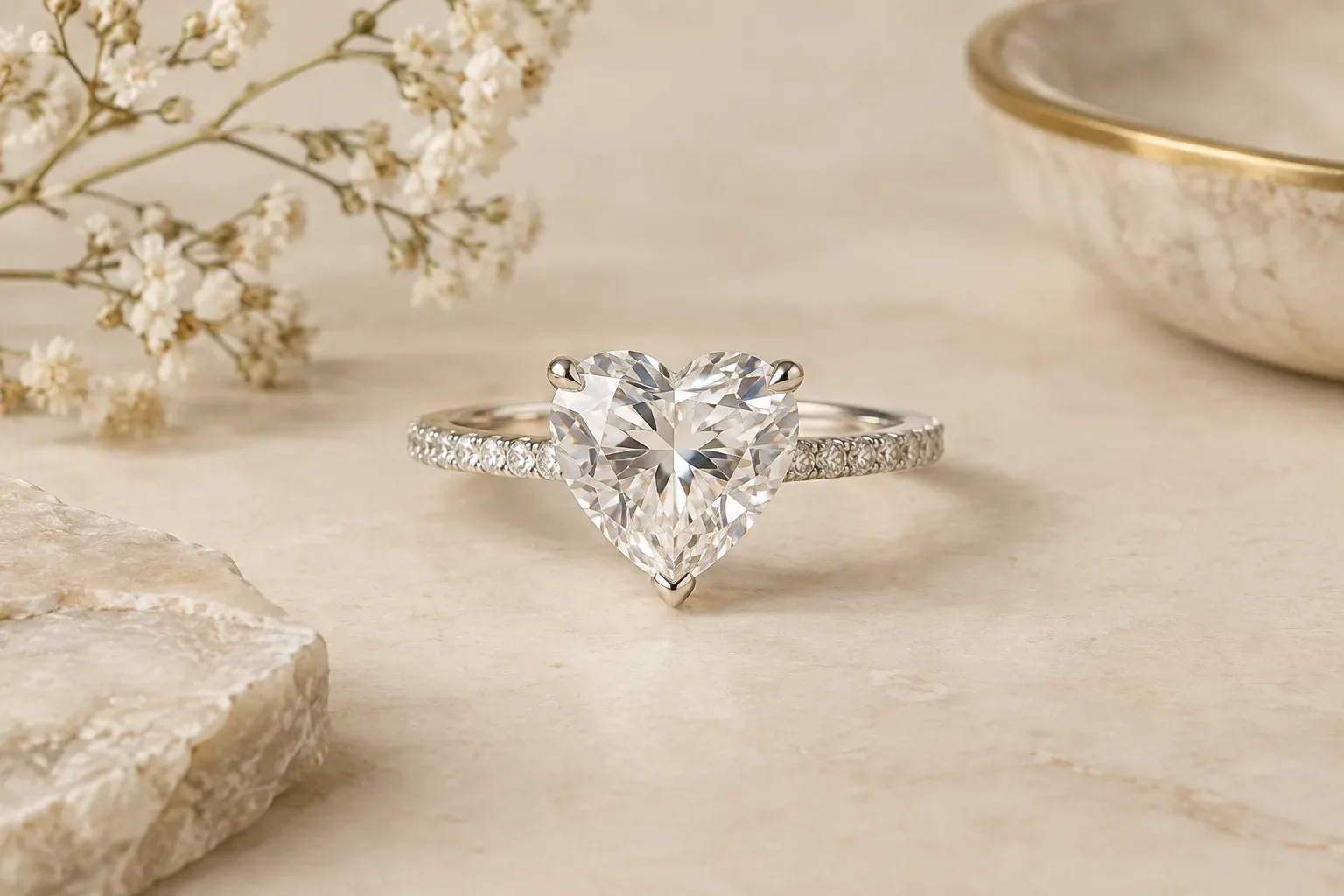
The heart cut is a fancy or modified brilliant-style cut intended to show a symmetrical heart outline when viewed from above. Two physical features relevant to durability are the central cleft at the top of the heart and the lower pointed tip. Those features create small contact points where the stone is more likely to catch on fabric or suffer impact.
Because mountings must both display the heart profile and protect vulnerable parts of the stone, jewelers often use particular settings. Common protective choices include secure prong placements, a V-shaped prong or basket at the pointed tip, partial or full bezels around the outline for added protection, and halos that add metalwork buffer while preserving the heart silhouette. These setting decisions trade off maximum light return and apparent size against protection and day-to-day practicality.
Durability trade-offs by gemstone and cut
The overall durability of a heart cut engagement ring is a combination of the gemstone’s inherent toughness and hardness, the vulnerability introduced by the cut geometry, and the chosen setting. The Gemological Institute of America (GIA) emphasizes that treatments, detectability and special care create distinct consumer questions for gemstones, so the material—and whether it has been treated—matters as much as the cut.
For example, stones that are hard and tough (such as diamond) resist surface abrasion and chipping better than softer gems, but even a hard stone with a sharp point can chip if struck at the tip. Treated or fragile materials require more careful handling and may be more likely to need repair if used for daily-wear engagement rings. Because the approved sources call attention to disclosure and detectability, shoppers should insist on clear documentation about any treatments that affect durability.
Practical selection and gifting guidance
If your priority is everyday durability, choose a material and a setting that reduce exposure of the heart’s weakest points. Ask for or request a setting that reinforces the point (V-prong or bezel detail) and positions prongs to protect the cleft. Jewelers Mutual’s 2026 trend analysis highlights the market emphasis on craftsmanship and versatility, which supports choosing well-executed settings rather than purely decorative ones.
Request written disclosures and, where available, a gemological report. The Federal Trade Commission advises consumers to expect clear distinctions and written disclosure about natural, lab-created, treated and imitation materials. A reputable seller will provide or arrange a lab report for significant purchases and will disclose treatments that influence durability and care.
Balance aesthetics and risk: a halo or bezel can make a heart cut appear larger or more integrated with metalwork but may also slightly change the visual profile. Conversely, an open, low-profile setting maximizes sparkle but increases the chance of snagging. Choose based on the wearer’s lifestyle: active daily wearers and those who frequently wear knit or delicate fabrics will benefit from more protective options.
Care, inspection, and realistic expectations for repairs
Routine care reduces repair risk. Clean the piece gently as recommended by the seller or a qualified jeweler; GIA emphasises that different gemstones and treatments require different care protocols. Avoid harsh chemicals, extreme temperature changes, and situations where the ring could be struck. Remove the ring for manual labor, sports, or tasks that could catch the cleft or tip.
Schedule periodic inspections with a qualified jeweler to check prong security, the integrity of any bezel or V-prong, and to detect damage early. Jewelers Mutual’s industry perspective supports proactive maintenance and insurance as practical steps for engagement rings expected to be worn daily. If a chip or snag occurs, only a trained jeweler should attempt repairs; certain repairs (for example re-tipping prongs or filling chips) are feasible, but others—especially when the stone’s integrity is compromised—may require stone replacement or specialist restoration.
Finally, recognize limits to what a shopper can verify: without a gemological laboratory report and a qualified jeweler’s inspection you cannot confirm internal treatments, exact origin, or subtle durability impairments. For any high-value purchase, obtain documentation and, where appropriate, independent verification.
Decision checklist before buying or gifting
Before purchasing or gifting a heart cut engagement ring, verify the following: written seller disclosures about whether the gem is natural, lab-grown, or treated; whether a lab report is available; what setting type is used to protect the heart’s point and cleft; the seller’s policy on returns and repairs; and recommendations for care and inspection frequency. Insure valuable rings if they will be worn daily.
Using the market context from Imaginaire Digital and Jewelers Mutual, prioritize craftsmanship and clear documentation. These factors will most reliably reduce the risk of unexpected repairs and maintain wearability for a heart cut chosen for its distinctive appearance and personal meaning.
Frequently asked questions
Are heart cut engagement rings suitable for everyday wear?
They can be suitable for everyday wear if the stone is a durable material, the setting protects the pointed tip and cleft, and you follow recommended care and inspection routines; however, they typically carry higher snag and impact risk than round brilliant cuts.
What settings best protect a heart cut’s vulnerable areas?
Protective options include a V-prong or reinforced prong at the pointed end, partial or full bezels around the outline, or a halo that buffers the profile; the best choice depends on the wearer’s lifestyle and the jeweler’s craftsmanship.
Can I tell if a stone has been treated or is lab-created when buying online?
No—clear written disclosures and a lab report are needed. The Federal Trade Commission advises consumers to insist on written information about natural, lab-created, treated or imitation materials. Independent verification often requires a gemological laboratory report.
How often should a heart cut ring be inspected by a jeweler?
Frequency depends on wear patterns, but an annual inspection is a reasonable baseline; more active wearers should inspect the setting and prongs more frequently or after any suspected knock.
If my heart cut stone chips, can it be repaired?
Some damage (such as a small chip) can be repaired by a trained jeweler through re-cutting, re-polishing, or resetting, but the feasibility and cost depend on the stone type, extent of damage, and whether the stone’s integrity can be restored; a qualified jeweler should assess the stone.
Sources and further reading
- Imaginaire Digital — Imaginaire Digital
- Jewelers Mutual — Jewelers Mutual
- Gemological Institute of America — Gemological Institute of America
- Federal Trade Commission — Federal Trade Commission