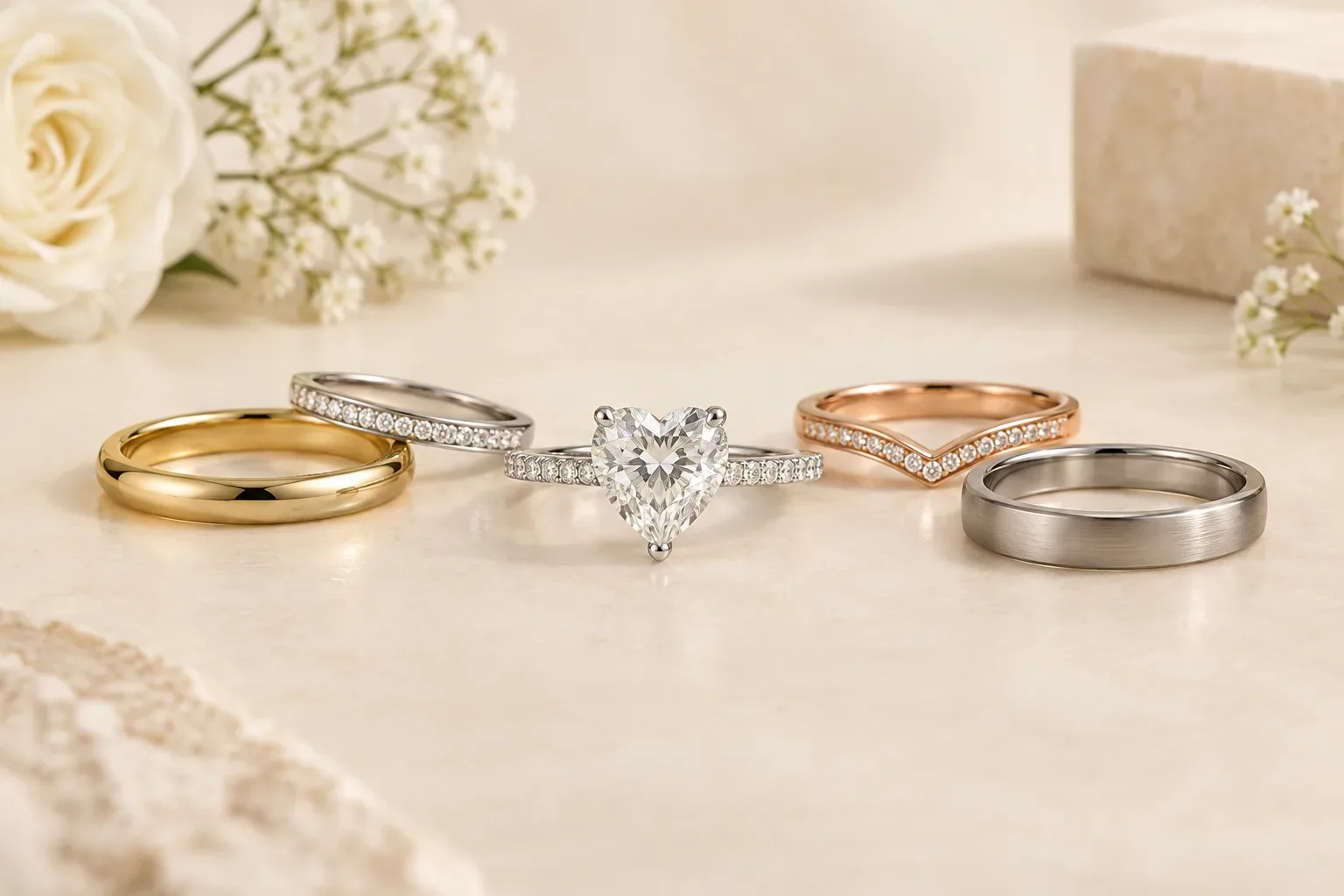
Meaning at a glance
Pairing a heart-cut engagement stone with a wedding band is a design and practical decision: prioritize band contours that follow the heart's lobes, plan for a small intentional gap or use a contoured or chevron band for a flush look, match or intentionally contrast metal for longevity and aesthetic coherence, and use FTC and GIA guidance for care and disclosure; lab testing is needed to verify treatments or origin.
What the historical evidence shows (and what it does not)
There is little in the supplied professional and industry sources that treats a long, continuous history of the heart-cut gemstone or the exact practice of pairing heart-cut engagement stones with wedding bands as a discrete ritual spanning named ancient cultures. Contemporary visibility and demand for distinctive engagement shapes, including heart cuts, are documented in market analyses rather than in primary historical accounts. For example, Imaginaire Digital reports 2026 UK search estimates showing strong demand for engagement rings alongside other popular categories, indicating a modern market interest in distinctive cuts and forms.
Industry reporting from Jewelers Mutual identifies recent demand patterns—fluid forms, modern stacking, colored gemstones, craftsmanship and versatility—that help explain why heart-shaped stones and pairing strategies have become common in the contemporary marketplace. Those sources document recent consumer behavior and design trends rather than ancient symbolic meanings tied to a specific culture or period.
Documented meanings versus modern personal interpretations
Because the approved evidence focuses on modern marketplace trends and consumer protections, there is clear distinction between documented, enforceable facts and personal or cultural interpretations. The Federal Trade Commission provides guidance that consumers should receive clear written disclosures about whether a gemstone is natural, lab-created, treated, or an imitation. That is a documented, verifiable expectation for sellers.
By contrast, any claim that a heart-cut ring 'means' a particular feeling, promise, or cultural value is a modern or personal interpretation unless supported by a specific historical source. Many people now choose heart-cut stones because of their obvious symbolic resonance with love; that usage is contemporary and personal rather than universally documented. Separate personal meanings (for example, a heart shape as a romantic promise) from legal and gemological facts (for example, whether a diamond has been clarity-enhanced, which GIA says should be disclosed).
How the heart motif and heart cuts appear in jewelry
In modern jewelry, the heart motif appears as a shaped center stone, as engraved or cut motifs on metal, and as repeating forms within pavé or cluster settings. A 'heart cut' is a faceted gemstone shaped to resemble a stylized heart with two lobes and a cleft at the top and a point at the bottom. Designers also use heart outlines in band profiles and as negative-space elements around a setting.
Functionally, a heart-cut stone has asymmetrical surface geometry where the lobes and cleft create two directions that a band must accommodate if worn with a second ring. Jewelers will set heart cuts in prong, bezel, or half-bezel settings; each setting choice changes how the engagement ring meets a band and how much gap or contouring you will need.
Decision criteria: shape, gap, and band profile
Shape: Decide whether you want a flush look or a deliberately separated look. For a flush appearance, a contoured band or a chevron (V-shaped) band that mirrors the heart's point and lobes will usually sit closest to the engagement ring. For a deliberately separated look, a plain straight band or a rounded comfort-fit band can be paired with a small, intentional gap so both rings are comfortable and less likely to rub prongs or stones.
Gap: Consider wear and comfort: a tiny gap can prevent prong wear and make cleaning easier, while a flush fit reduces snagging and visually unifies the pair. If the engagement ring has pronounced prongs at the lobes or an open cleft, you may want a small gap or a low-profile band to avoid interference.
Band profile: Bands that are tapered, contoured, or feature a chevron profile will better follow a heart cut. Wider bands can create visual balance for larger heart stones but can also make seeing the stone's shape more difficult on smaller hands. Thin stackable bands emphasize the heart cut but may offer less protection to the engagement mounting.
Metal choices and practical trade-offs
Matching metal between engagement ring and wedding band produces a coordinated look and simplifies resizing or soldering later. However, deliberate contrasts—for example, a yellow gold band with a white gold or platinum engagement ring—can emphasize the heart shape and suit mixed-metal wardrobes. Jewelers Mutual notes a market trend toward gender-neutral styling and versatility, which supports intentional contrasts that reflect personal style.
Durability trade-offs are important. Platinum is very durable and resists wear without regular replating, while white gold usually requires rhodium replating to maintain a bright white finish over time. Yellow and rose gold show scratches differently and may need more frequent polishing. Consider lifestyle and hands-on work when choosing metal: harder alloys will fare better under heavy wear but may be more difficult to resize.
If the engagement stone is a colored gemstone rather than a diamond, metal color can affect the perceived hue. For example, warm metal tones often enhance warmer stones; cooler metals can make cooler stones appear crisper. These are aesthetic choices rather than universal rules.
Practical selection and gifting guidance
Measure and mock up. Ask your jeweler to provide a paper or wax mock-up of the engagement ring and candidate wedding bands together so you can see how the silhouettes interact before committing. Many jewelers offer fitting services or will hold the wedding band against the engagement ring to check for gaps or pressure points.
Decide on tolerance and comfort. If you or the wearer prefer a ring that never catches on clothing, allow a small gap or choose a low-profile, rounded band. If you prefer visual unity and greater security for the center stone, prioritize a contoured band and a setting with low, secure prongs.
Communicate intended wear. If the band is a surprise gift, ask about return or resizing policies and request a sizing safety margin. For an heirloom heart-cut engagement stone, consider whether the existing mounting allows for a contoured band or whether a jeweler can alter the band rather than altering the engagement mounting when possible.
Respect personal meaning. When gifting a heart-cut pair, be mindful that the motif carries strong romantic associations for many people but not the same meaning for everyone. If symbolism matters, a short note explaining your intent avoids assumptions.
Care guidance, disclosure, and what needs expert verification
Treatments and disclosures: Follow GIA guidance that treatments, detectability, durability and special care create consumer questions and should be disclosed by sellers. The Federal Trade Commission also requires clear distinctions among natural, lab-created, treated, cultured and imitation materials and written seller disclosures. Always obtain written statements describing whether the stone is natural or lab-created and whether any clarity or color treatments are present.
Everyday care: Heart-cut stones with pointed tips can be vulnerable at the point. A low bezel or protective prong design reduces risk. Clean gently using a soft brush and recommended solutions for the specific gemstone and metal. Avoid ultrasonic cleaners for certain treated stones; check GIA resources for treatment-specific care notes.
What you can verify without a lab: you can confirm ring size, visual fit, metal stamps (karat or plat marks), warranty or return policies, and written seller disclosures. What requires a qualified jeweler or gemological laboratory: confirmation of treatments, origin (natural vs. lab-grown), precise grading of cut, color, clarity and any undisclosed enhancements. If these verifications matter to you, request a gemological report or independent lab testing before final purchase.
Putting it together: recommended pairing scenarios
Everyday wearable pair: For daily wearers who value comfort, choose a slightly rounded, low-profile comfort-fit band in the same metal as the engagement ring, accept a small gap, and protect the heart point with a low bezel or secure prongs.
Flush, formal pair: For a seamless, formal look, order a custom contoured or chevron band that nests into the heart shape and choose a metal that matches the engagement mounting for a unified appearance.
Statement contrast pair: For a fashion-forward statement, pick a contrasting metal band that emphasizes the heart silhouette. Consider thinner bands or stackable rings to keep the heart cut visually dominant while maintaining comfort.
Final notes and limits to claims
Market sources indicate increased interest in distinctive engagement shapes and stackable, versatile styles; use those trends to guide choices but respect personal taste above trends. Imaginaire Digital and Jewelers Mutual document modern demand patterns rather than prescribing symbolic meaning.
Do not assume symbolic claims about a heart cut are universal; they are modern personal interpretations unless tied to a documented cultural practice. Use FTC and GIA guidance as your factual baseline for disclosure, treatment, and care, and obtain a gemological report if verification of origin, treatment or precise grading is important to you.
Frequently asked questions
Will a contoured band always fit a heart-cut engagement ring?
A contoured band designed to nest the engagement stone is the most reliable way to achieve a flush fit, but exact fit depends on the engagement setting's prongs and the heart cut's proportions. Ask a jeweler for a mock-up or a custom contour and verify the fit in person.
Can I mix metals between a heart-cut engagement ring and the wedding band?
Yes. Mixing metals can create a deliberate contrast and works well with modern, versatile styling trends. Consider durability and maintenance differences: for example, white gold will likely require periodic rhodium plating while platinum does not.
Should I leave a small gap between the rings?
A small gap can reduce wear on prongs and make cleaning easier. If you prefer a seamless look, plan for a contoured or chevron band. Choose based on comfort, maintenance willingness, and how the rings interact when worn together.
How do treatments affect my care routine?
Gemological Institute of America guidance notes that treatments affect durability and care. Some treatments make stones less tolerant of heat or ultrasonic cleaning. Always get written disclosure from the seller and follow the care instructions appropriate to that treatment.
What can I verify myself and what needs lab testing?
You can verify ring size, visual fit, metal stamps, and written seller disclosures yourself. Verification of a gemstone's treatment status, origin (natural vs. lab-grown), and precise grading requires a qualified jeweler or a recognized gemological laboratory report.
Is a heart-cut ring more likely to snag or be damaged?
A heart point can be vulnerable. Protective settings such as low bezels or secure prongs minimize risk. Choose a band profile and setting that shield the point if durability is a high priority.
Sources and further reading
- Imaginaire Digital — Imaginaire Digital
- Jewelers Mutual — Jewelers Mutual
- Gemological Institute of America — Gemological Institute of America
- Federal Trade Commission — Federal Trade Commission