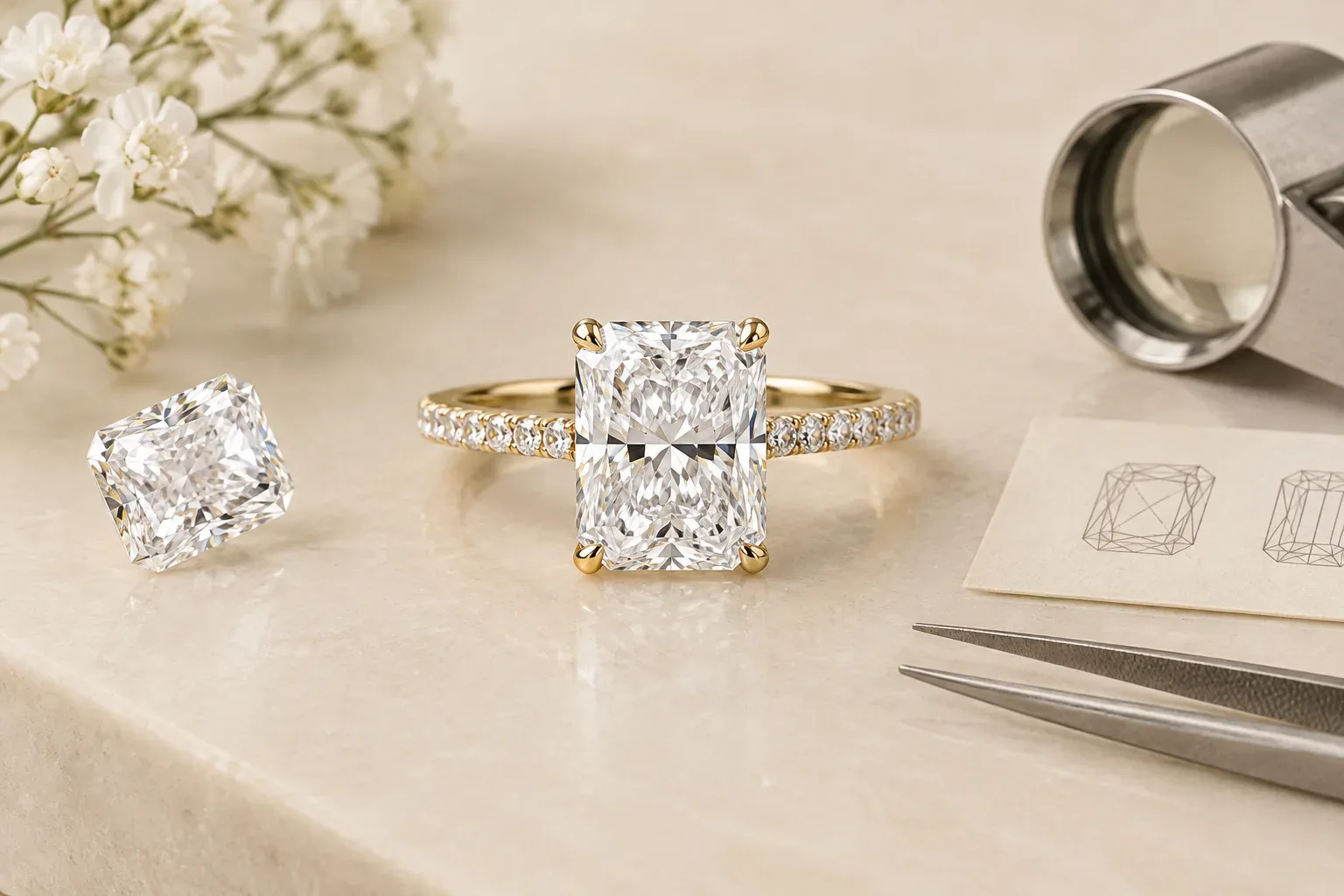
Meaning at a glance
This guide explains what shoppers should consider when choosing a radiant cut engagement ring: the cut’s visual trade-offs, how it’s commonly set, selection criteria (stone proportions, setting, metal, treatments), care and inspection steps, and clear limits on what you can verify without a qualified jeweler or gem lab, backed by consumer and industry sources.
Historical evidence and what we can say with confidence
There is no documented historical symbolism specific to the radiant cut in the evidence supplied for this article. Contemporary sources used here focus on market trends and consumer questions rather than cultural or premodern meanings. Imaginaire Digital reports 2026 UK search patterns showing strong ongoing demand for engagement rings alongside other popular styles, which places the radiant cut in a modern, trend‑driven shopping context. Jewelers Mutual’s 2026 trends note that consumers are favoring fluid forms, versatility, colored gemstones and gender‑neutral styling, which helps explain why a faceted, hybrid cut like the radiant cut may be included among contemporary choices.
Documented history versus modern personal interpretation
Documented history in the approved sources addresses present‑day consumer preferences and industry practices rather than symbolic meanings tied to historical cultures. Where modern wearers attach personal meaning to a radiant cut—for example, valuing its perceived brightness, a distinctive rectangular or square silhouette, or a modern look—those are personal or stylistic interpretations, not universal historical facts. Distinguish your own symbolic intentions from documented history by noting whether an association comes from family, personal values, or current fashion coverage versus archival evidence or academic sources; the sources for this article support the former type of contemporary interpretation.
How the radiant cut appears in jewelry and common settings
In retail and design contexts the radiant cut commonly appears as a center stone set in solitaire, halo, three‑stone and vintage‑inspired mountings that emphasize facets and sparkle. Jewelers Mutual’s trend overview highlights craftsmanship, versatility and modern stacking as consumer priorities, which informs how jewelers present radiants—as adaptable center stones that work in both single‑stone and accented settings. Retail listings and showrooms will typically pair radiant cuts with settings that protect cropped or trimmed corners and balance the stone’s optical properties against the metal color and side stones.
Practical selection guidance: decision criteria and trade‑offs
Start with the practical trade‑offs: different cuts trade face‑up size, brilliance, and durability. Compare stones of the same carat weight in person or in consistent photos to judge the face‑up size you prefer. Ask the seller for measurements and proportions so you can compare how a given radiant looks relative to other cuts. Demand clear, written disclosure on whether the stone is natural, lab‑created, treated or an imitation, in line with Federal Trade Commission guidance that consumers should receive accurate descriptions. The Gemological Institute of America points out that treatments and disclosure are common consumer concerns, so prioritize sellers who provide transparent information.
Practical selection guidance: setting, metal and side stones
Consider settings that protect corners and reduce snagging if you expect frequent wear. Choose metal color to complement the stone: warmer metals can mask slight warmth in a diamond or colored gemstone, while white metals emphasize brightness. Side stones and halos change perceived size and brightness; use them if you want more apparent size or more surface sparkle. Jewelers Mutual’s trend analysis also supports selecting rings that work with modern wear patterns, such as stackable bands or low‑profile settings that suit active lifestyles.
Care, durability and treatments: what to watch for
Ask for and save any paperwork that describes treatments, whether the stone is natural or lab‑created, and any warranties or insurance options. The Gemological Institute of America explains that treatments affect detectability, durability and care needs, so know whether cleaning or routine wear could alter the stone’s appearance. For consumer protection, the Federal Trade Commission requires clear seller disclosure of origin and treatment, and those disclosures should be in writing before purchase. For insurance and repair, Jewelers Mutual’s resources on trends and care suggest choosing reputable insurers and repairers who understand modern styling and treatments.
What you can verify yourself and what requires experts
You can verify retail statements such as carat weight, millimeter measurements, visible inclusions under a loupe, and metal hallmarks by simple inspection and by asking the seller for metrics and photos. However, you cannot reliably confirm whether a stone is natural versus lab‑created, whether it has been subjected to certain treatments, or its geographic origin without a qualified jeweler’s instruments or a gemological laboratory report. The Federal Trade Commission and the Gemological Institute of America both emphasize that certain determinations require lab testing and that written disclosure from the seller is essential for these attributes.
Budgeting and negotiation
Decide which attributes matter most to you—face‑up size, color and clarity grade, natural versus lab origin, or setting details—and allocate budget accordingly. Sellers often price center stones relative to the combination of these variables. If treatment, origin or grading are important, budget for a laboratory report and for insurance. Jewelers Mutual’s market commentary suggests that consumers are placing value on craftsmanship and versatility, so consider investing in a well‑made setting that will support future resizing or remounting.
Gifting and respectful selection guidance
If you are choosing a radiant cut engagement ring as a surprise gift, prioritize reversible decisions: select a classic setting that can be resized or modified later, keep receipts and documentation, and confirm the seller’s return or resize policies. Communicate openly about budgets and preferences when possible; Jewelers Mutual’s trend coverage and general consumer practice both favor transparency about materials and care. When gifting a ring with added cultural or personal symbolism, emphasize that meanings are personal and encourage the recipient to adapt or reinterpret the piece to their own values.
Final practical checklist before you buy
Get measurements, proportions and close photographs; request written disclosure on whether the stone is natural, lab‑created, treated or an imitation; compare similarly described stones in the same metal and setting; ask about warranty, return policy and insurance; and pay for a gem lab report if origin or treatment is important to you. When in doubt about durability or treatment claims, consult a qualified jeweler or request independent laboratory testing prior to finalizing a higher‑value purchase.
Frequently asked questions
Is a radiant cut diamond more durable than other cuts?
Durability depends on setting and how the corners are protected rather than the name of the cut alone. A protective setting that shields corners reduces the risk of chipping. For specific durability concerns or to understand whether any treatments affect strength, consult the seller’s disclosures and consider an expert evaluation.
Can I tell if a radiant cut stone is natural or lab‑created by looking at it?
You generally cannot reliably distinguish natural from lab‑created stones by unaided visual inspection. The Federal Trade Commission requires sellers to disclose origin and the Gemological Institute of America notes that laboratory testing is often necessary to confirm origin and treatments.
Should I buy a radiant cut with a halo or solitaire setting?
Choose a halo if you want extra apparent size and surface sparkle; choose a solitaire if you prefer a cleaner, more classic look. Also consider lifestyle: low‑profile solitaires tend to snag less, while halos can add protection but may also add height and complexity to maintenance.
Does a radiant cut hide color or inclusions better than other cuts?
Some faceting styles can mask color or inclusions to a degree, but trade‑offs exist between face‑up brightness and color performance. Ask for comparison photos or view stones side by side and request measurements and grading information when available.
What paperwork should I get with a radiant cut engagement ring?
Get written disclosure from the seller stating whether the stone is natural, lab‑created, treated or imitation, a receipt listing measurements and metal hallmarks, any warranty or return policy, and a laboratory report if origin or treatments are important to you.
Sources and further reading
- Imaginaire Digital — Imaginaire Digital
- Jewelers Mutual — Jewelers Mutual
- Gemological Institute of America — Gemological Institute of America
- Federal Trade Commission — Federal Trade Commission