Meaning at a glance
Pairing a marquise cut engagement ring to a wedding band is a decisions-based process: match or complement the marquise’s elongated profile, choose a metal that fits lifestyle and color preference, manage the gap with a contoured/chevron or slim straight band, follow safe-care guidelines, and rely on a qualified jeweler or gem lab to verify gemstone treatments, origin, and precise metal assays.
What the historical evidence supports (and what it does not)
The material provided for this guide does not include primary historical studies specifically about marquise cut wedding-band pairings, nor does it document cultural meanings tied to pairing decisions. In other words, the approved sources used here do not supply period-specific or culture-specific historical evidence about how different societies paired marquise stones with bands.
Because these particular sources lack a detailed historical record on that topic, avoid attributing a single documented cultural meaning to marquise band pairings. When people today ascribe symbolic meanings to shapes or pairing styles, those are modern personal or marketing interpretations rather than documented traditions in the sources consulted for this article. The modern marketplace context for ring styles and preferences is, however, addressed by the trade and trend sources cited below.
Modern context and trends that shape pairing choices
Recent jewellery-market reporting shows strong contemporary demand for fluid forms, modern stacking, colored gemstones, and gender-neutral styling. Jewelers Mutual identifies demand centers for versatility and modern stacking as core consumer preferences, which explains why many shoppers now think in terms of multiple-band combinations rather than a single matching set. Imaginaire Digital’s 2026 search data confirms strong consumer interest in engagement rings and related shapes and styles in the UK market, which helps explain why marquise pairing questions appear frequently in searches.
Use these trend observations as context, not as prescriptive meaning: they explain why certain pairing options are widely available and popular today, but they do not replace individual taste or the need for proper technical verification of materials and settings.
How the marquise motif appears in jewellery and what that means for pairing
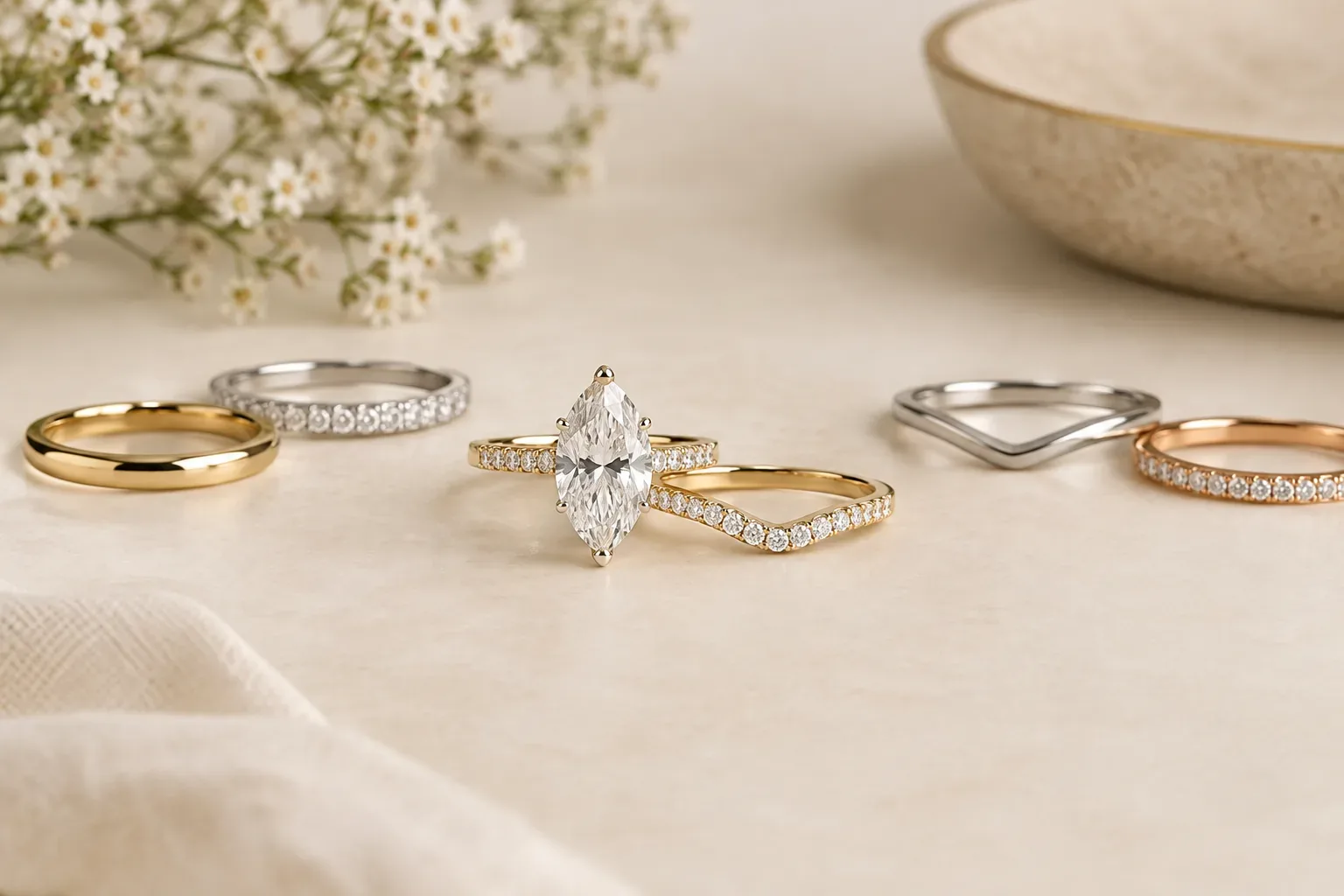
In practice, marquise-cut stones have an elongated, pointed-oval profile that creates distinctive negative space where a wedding band meets the engagement ring. Designers address that space in a few consistent ways: contouring the band so it nests around the marquise profile, using chevron or V-shaped bands that visually echo the points, choosing thin straight bands that leave a visible gap, or adding accent stones in a matching shape to bridge the gap. These are design strategies rather than universal symbolic rules.
Because the marquise’s elongated silhouette emphasizes length, pairing choices affect perceived finger length, ring balance, and how securely the engagement stone is supported by the setting. Those are practical, visual, and wearability considerations shoppers should weigh against stylistic preferences.
Decision criteria and practical trade-offs
Start by prioritizing what matters most for the wearer: visual continuity, maximum sparkle, comfort, low maintenance, or budget. A contoured band offers the cleanest visual fit but can limit future resizing options and often costs more because of custom shaping. A slim straight band is versatile and easier to resize, but it will leave a visible gap that some buyers dislike. A chevron or V band creates intentional negative space and can be a compromise between contour and straight styles.
Consider metal and finish trade-offs. Platinum is highly durable and hypoallergenic but generally more expensive and heavier. Gold alloys (yellow, white, rose) offer color options and are easier to resize; white gold may require occasional rhodium plating to maintain its bright finish. Choosing mixed metals is stylistic but can complicate future repairs or soldering if the jeweler needs a perfect match.
Managing the gap: fit, measurements, and practical guidance
Define the gap you’ll accept by trying on combinations in person, or ask for exact ring shank dimensions (millimetres for width and thickness) before buying online. When possible, test a sample or a 3D rendering. A shallow gap can trap dirt and require more frequent cleaning; an overly tight seat risks stress on prongs or setting shoulders. Ask a jeweler whether the engagement setting’s gallery and prong configuration will contact the band at any point; this affects comfort and potential wear.
If a custom contour is needed, accept the trade-off that custom work often prevents easy resale and can complicate future resizing. A carefully chosen spacer band or slim eternity ring can visually bridge small gaps without full custom work.
Metal choices and compatibility considerations
Match metal color to the engagement ring’s color for a seamless look, or deliberately contrast for modern mixed-metal styling. Think about daily wear: platinum and higher-karat golds have different hardness and scratch behaviour, so choose a metal that meets the wearer’s lifestyle. For example, an active wearer who uses their hands a lot may prefer a stronger metal and a lower-profile setting to reduce snagging.
Ask the seller for written disclosure of metal fineness and whether any plating or surface treatment has been applied. The Federal Trade Commission emphasizes that consumers need clear written distinctions among natural, lab-created, treated, and imitation materials, and also needs disclosure about metals and plating. Obtain that information before purchase.
Care guidance and routine maintenance
Follow general safe-care practices and any stone-specific advice provided by the seller. The Gemological Institute of America explains that treatments, disclosure, detectability, durability, and special care differ by gemstone; for example, some treated gems need gentler cleaning. For most diamonds and hard gemstones set in durable metals, routine cleaning with mild soap, a soft brush, and warm water is appropriate, and periodic professional inspections are recommended to check prongs and settings.
If your band bridges a small gap, inspect the gap area regularly for trapped dirt or loose accent stones. Keep receipts and any certification paperwork, and consider insuring valuable pieces. Jewelers Mutual’s advice about craftsmanship and versatility supports buying from reputable providers who offer warranties, resizing policies, and inspection services.
What you can verify yourself and what needs a pro or lab
You can verify comfort, visual fit, and basic material appearance yourself by trying rings on, requesting exact shank dimensions, and asking for written disclosure and return policies. You can also confirm whether the seller will provide a grading report or certificate for a diamond or major gemstone.
The Federal Trade Commission and the Gemological Institute of America make clear that more technical facts—gemstone treatments, precise metal fineness assays, origin, or whether a stone is laboratory-grown versus natural—often require examination by a qualified jeweler or independent gemological laboratory. If the seller claims a stone is untreated, lab-grown, or of a certain origin, ask for a reputable lab report and keep in mind that some claims are detectable only with specialized equipment and expertise.
Practical and respectful selection or gifting guidance
When selecting or gifting a wedding band to pair with a marquise cut engagement ring, respect the wearer’s established preferences: observe their current metal choices, ring width, and whether they prefer snug fits or room for stacking. If gifting without full certainty, choose a versatile option such as a simple slim band in the same metal tone and include an easy exchange or resizing policy.
Communicate intentions openly if the recipient might want input. Offer the band as part of a joint decision where possible. If buying to surprise, include a clear return or exchange policy and a resizing allowance. For high-value purchases, insist on written material disclosures, a certificate for significant gemstones, and a written warranty or service plan from the jeweler.
Summary
Pairing a marquise cut engagement ring involves three linked decisions: shape (contoured vs straight vs chevron), gap management (visual seat and comfort), and metal choice (color, durability, cost). Use the practical trade-offs above to prioritize what matters for the wearer, obtain written disclosures, request sizing and dimensional details, and rely on a qualified jeweler or gemological laboratory to verify technical claims about treatments, metal fineness, and gemstone origin.
Contemporary market patterns favor flexible, stackable solutions and craftsmanship-driven options, so there are many stylistic choices available; choose the one that meets both daily-wear needs and personal taste, and keep documentation for future care and verification.
Frequently asked questions
What wedding band style works best with a marquise engagement ring?
There is no single 'best' choice—contoured or chevron bands give the cleanest seat, slim straight bands are versatile and easy to resize, and half-eternity or accent-stone bands add sparkle. Choose based on the wearer’s comfort priorities and whether you want a seamless look or a contrasting stack.
Will a contoured band make resizing more difficult?
Yes. Custom contoured bands that are precisely shaped to nest against an engagement ring can be harder to resize without altering the fit. If future resizing is likely, discuss options with the jeweler before purchase.
How can I check whether the main stone has been treated or is lab-grown?
Ask the seller for written disclosure and a reputable lab report. The Gemological Institute of America notes that treatments and lab-grown identifications sometimes require specialized testing, so a qualified jeweler or independent gemological laboratory is the reliable route for definitive verification.
Which metal is best for everyday wear with a marquise ring?
Select a metal that balances durability and color preference. Platinum is very durable and low-maintenance but costlier; gold alloys are available in different colors and are easier to resize. Consider the wearer’s activity level when choosing.
How often should I have a paired marquise engagement ring and band inspected?
Have a professional inspection at least once a year, or more frequently if the rings are worn daily or after any significant knock. Regular inspection helps catch loose prongs, worn shanks, or other issues before they cause stone loss.
Can I mix metal colors between the engagement ring and wedding band?
Yes. Mixed-metal pairings are a modern stylistic choice and widely accepted, but they can complicate repairs or soldering down the line. If choosing mixed metals, keep documentation and work with a jeweler experienced in handling different alloys.
Sources and further reading
- Imaginaire Digital — Imaginaire Digital
- Jewelers Mutual — Jewelers Mutual
- Gemological Institute of America — Gemological Institute of America
- Federal Trade Commission — Federal Trade Commission