Meaning at a glance
A marquise cut engagement ring offers an elongated, eye-catching silhouette that can make a diamond appear larger face-up and lengthen the look of the finger; buyers should weigh its pointed‑end vulnerability and specific setting needs, insist on clear seller disclosures and, for treatments or origin questions, obtain a gemological report because those facts usually require qualified laboratory testing.
What the marquise cut is and how it’s used in rings
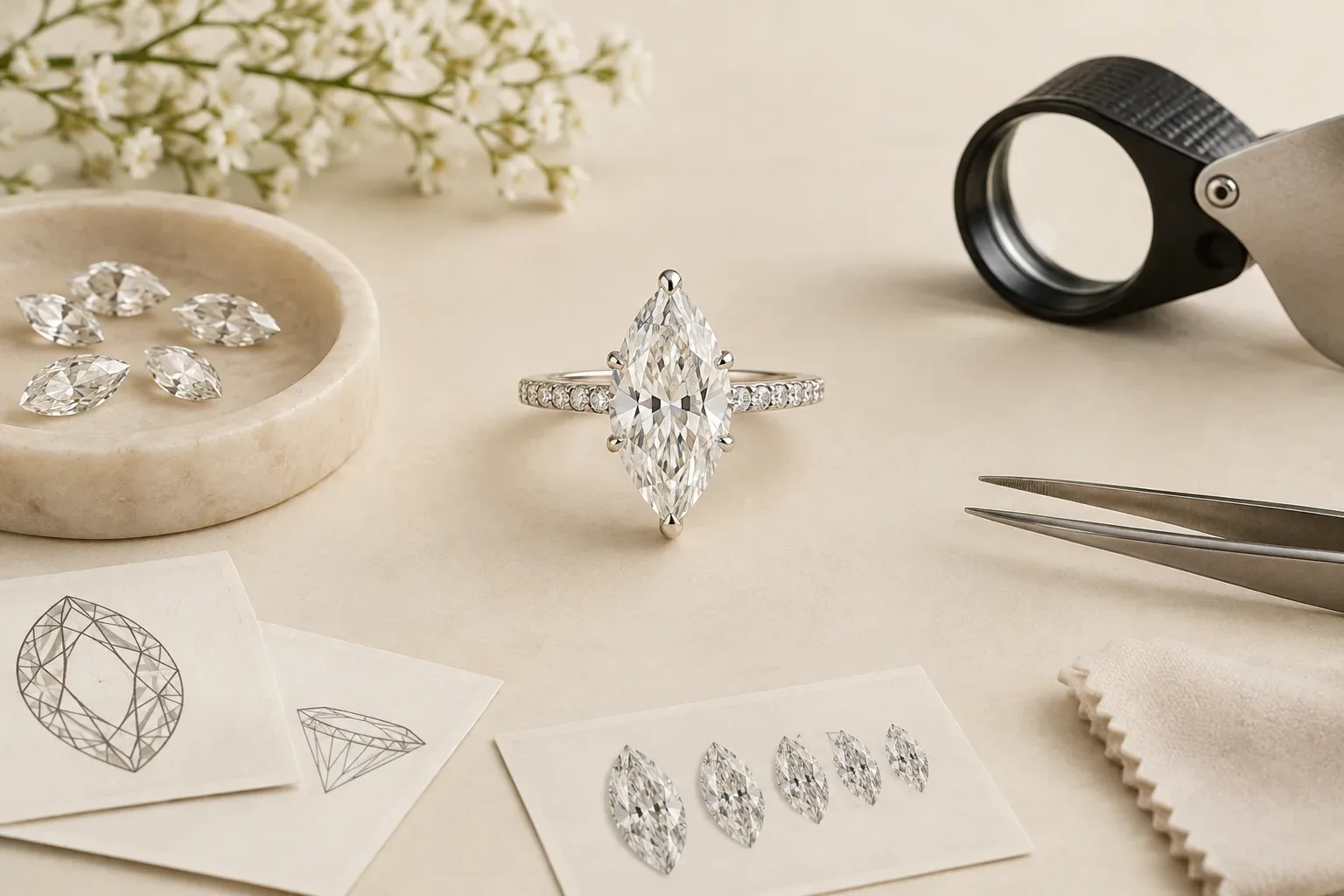
The marquise cut is an elongated, pointed-oval shape commonly used for diamonds and other faceted gemstones in rings. Jewelers also call the same shape a navette in reference to the narrow, boat-like profile used as a design motif. In engagement rings it appears as a single solitaire stone, as the center of three-stone layouts, set within halos, or as part of cluster and vintage-inspired settings that emphasize the length of the stone.
Because the marquise increases surface area relative to some cuts with the same carat weight, it often reads as larger face-up. That optical effect is one reason shoppers choose it for engagement rings when they want a dramatic, elongated look without increasing carat weight.
Historical evidence and what we can reliably say
Among the sources provided for this article there is no primary archival documentation about the precise origin story of the marquise cut. Popular narratives about its 18th‑century French origins or single‑commission invention are widely repeated in trade and consumer media, but those historical claims are not included among the approved evidence for this guide. Because of that gap, this article treats origin stories about specific historical figures or court commissions as modern lore rather than documented history.
What the approved evidence does show is how contemporary demand and styling preferences shape today’s market. Industry and market reports indicate strong continued interest in engagement rings overall and in shapes that offer distinctive silhouettes. For example, 2026 UK search data highlights steady demand for popular engagement ring shapes and forms, which helps explain why marquise remains an offered option among retailers (Imaginaire Digital). Trade guidance and trend reporting also emphasize modern tastes for fluid forms, stacking compatibility, colored gemstones and gender‑neutral styling—factors that affect how a marquise ring is designed and marketed today (Jewelers Mutual).
Documented historical meanings versus modern personal interpretations
Because the provided evidence does not include verified historical symbolism tied to a particular culture or era, there are no documented, source‑verified symbolic meanings for the marquise cut in the approved materials. That absence means any claim that a marquise ring 'universally' stands for a particular sentiment should be treated as modern interpretation or personal symbolism rather than documented history.
Many buyers and designers today attach personal meanings to the marquise—elongation as elegance, a pointed shape as boldness, or a boat-like navette as a reference to travel or journey. Those contemporary, individual readings are legitimate and valuable when chosen intentionally, but they should be distinguished from historical fact. This distinction matters when you choose a ring for a symbolic reason: you are creating meaning for the wearer, not citing a guaranteed historical tradition unless you have independent historical documentation.
How the motif and shape appear across jewelry styles
The marquise/ navette shape appears not only in solitaires but also as accent stones, in elongated halo settings, and in patterned bands that repeat the boat-like motif. Designers use the shape to create visual length on the hand, to form floral or leaf-like patterns in cluster rings, and to combine with round or pear stones for contrast. Colored gemstones are also frequently cut in the marquise shape, which pairs the distinctive silhouette with hue for a modern or vintage-inspired look.
Because of its pointed ends, the marquise shape influences setting decisions: bezel or V-shaped prongs are commonly used at the points to protect against knocks, and channel or pavé shoulders can complement the long profile without obscuring the stone’s length.
Pros and cons buyers should weigh
The chief visual advantage of a marquise is its elongating silhouette and larger-looking face for a given carat weight; many shoppers choose it for maximum visual impact without proportionally higher cost. It also suits a range of styles from minimalist solitaires to ornate vintage settings and works well with side stones or halos that echo its shape.
The main practical trade-offs are vulnerability at the pointed tips and the need for a setting that protects those points. Pointed tips can catch on fabrics and are more likely to chip if left exposed, so buyers typically choose prong styles designed to shield the ends. Additionally, because the marquise is less symmetrical than a round brilliant, proportions and length-to-width ratios strongly affect its appearance: a very narrow marquise can look delicate or overly sharp, while a very wide one loses the elongating effect.
Decision criteria: how to choose the right marquise ring for you
Start with how you want the ring to look on the hand: if elongation and face-up presence are priorities, select a length-to-width ratio that preserves those qualities—commonly between about 1.75:1 and 2.25:1 for many wearers, though personal preference varies. Consider whether you want a solitaire or a halo; halos increase apparent size and brilliant sparkle but can change the marquise’s pointed visual emphasis.
Think about lifestyle and durability. If the wearer uses their hands a lot for work or sport, choose a protective setting—bezel or added prong guards—and discuss hardness and treatment concerns for the chosen gemstone. Also consider side stone shapes that complement the marquise: tapered baguettes, rounds, and small marquise accents are popular pairings.
Questions to ask sellers and limits on what you can verify
Federal Trade Commission guidance makes clear that consumers should request written disclosures distinguishing natural, lab‑created, treated, cultured and imitation materials. Before you buy, ask the seller to provide written confirmation of whether the stone is natural or lab-created and whether any treatments have been applied (FTC).
For diamonds or gemstones with potential treatments, the Gemological Institute of America advises that treatments, disclosure, detectability and durability are distinct consumer questions and that some treatments require laboratory testing to identify (GIA). If origin, treatment status, or authenticity matters to you, insist on a current gemological report from an accredited laboratory; these are the documents that can establish natural vs lab-grown origin or detect certain treatments. Finally, inspect or request photos of the setting detail at the stone’s points, ask about prong metal thickness, and request a condition report for pre-owned pieces.
Care and maintenance guidance
Routine care for marquise rings emphasizes protection of the pointed ends and attention to settings. Use a soft brush and mild detergent for regular cleaning; avoid ultrasonic cleaners if a stone has known treatments that increase fragility unless a qualified jeweler confirms it is safe. The Gemological Institute of America notes that treatments and durability differences create specific care needs, so ask about any known treatments before choosing a cleaning method (GIA).
Have a professional jeweler check prongs and settings at least once a year or more often for active wearers. If the ring has very narrow points, consider a bezel‑styled guard or custom protective accents to lower the risk of catching and chipping.
Practical buying checklist
Before purchase, obtain written disclosure about the stone’s origin and treatments and ask for any available laboratory reports. Compare length‑to‑width ratios in person or via clear imagery to confirm the silhouette you prefer. Confirm the setting protects the marquise points, and discuss repair or resizing policies with the seller. Finally, factor in ring insurance or coverage options for loss, theft and sudden damage, and schedule professional inspections after purchase to maintain security of the setting.
How market trends affect availability and styling
Recent market reporting shows steady demand for distinctive engagement ring shapes and for design flexibility such as stacking and gender-neutral styling; those trends influence how retailers stock marquise options and how designers combine the cut with colored gems or contemporary settings (Imaginaire Digital; Jewelers Mutual). Expect a range from classic solitaire marquise diamonds to modern pieces that pair marquise centers with colored side stones or minimalist bands.
Final recommendation
A marquise cut engagement ring is a strong choice when you value an elongated, striking silhouette and are willing to specify a protective setting and to verify material details with written disclosures or a laboratory report. Distinguish historical anecdotes from documented history when symbolism matters to you, and prioritize setting protection and clear documentation when it comes to durability and treatment questions.
Frequently asked questions
Does a marquise cut make a diamond look bigger?
Yes—because the marquise is elongated it often has a larger face-up appearance compared with some other cuts at the same carat weight; buyers should compare face-up measurements and photos and ask for length-to-width ratios to confirm the visual effect.
Are marquise cuts more likely to chip?
Pointed ends are more vulnerable than rounded cuts, so protecting the tips with V-prongs, bezels, or guards is recommended; routine professional inspections help ensure prongs remain secure.
Can I tell if a marquise diamond is treated or lab-grown from photos alone?
No—treatment status and origin often require laboratory testing or reliable written disclosure. The Federal Trade Commission advises requesting written seller disclosures, and the Gemological Institute of America notes that some treatments are detectable only with professional equipment.
What length-to-width ratio should I choose for a marquise engagement ring?
There is no single correct ratio; common preferences fall roughly between 1.75:1 and 2.25:1. Choose by trying on rings or viewing accurate photos to see whether you prefer a narrower, more dramatic look or a wider, fuller appearance.
How should I clean and care for a marquise ring?
Clean with a soft brush and mild soap for regular care. Avoid ultrasonic cleaning if the stone has uncertain treatments unless a qualified jeweler confirms it’s safe. Schedule professional checks of prongs and settings at least annually.
What documents should I ask for when buying a marquise engagement ring?
Request written disclosures about whether the stone is natural or lab-created and any known treatments, ask for any available gemological laboratory reports, and get a clear return, repair, and insurance policy from the seller per FTC guidance.
Sources and further reading
- Imaginaire Digital — Imaginaire Digital
- Jewelers Mutual — Jewelers Mutual
- Gemological Institute of America — Gemological Institute of America
- Federal Trade Commission — Federal Trade Commission